
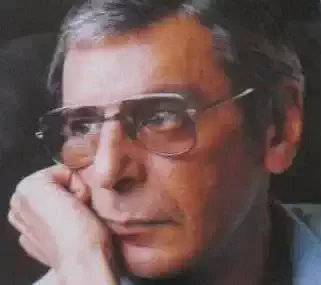
Rui Knopfli
1932–1997
· lived 65 years
 MZ
MZ
MZ
Rui Knopfli was a Portuguese poet and journalist whose work stands out for its exploration of themes such as identity, memory, and the human condition, often approached with a careful language and a reflective tone. His poetry is marked by strong introspection and subtle musicality, exploring the nuances of everyday life and the complexities of human relationships, which earned him a unique place in contemporary Portuguese-language poetry.
n. 1932-08-10, Inhambane · m. 1997-12-25, Lisboa
52
Views
Bio
Identification and Basic Context
Rui de Sousa Toscano Martins Horta e Costa, known as Rui Knopfli, was born in Lourenço Marques (now Maputo), Mozambique, on May 10, 1932, and died in Lisbon, Portugal, on August 24, 1997. He was the son of a Portuguese colonial administrator and a Mozambican of European descent. He was a Portuguese-Mozambican poet and journalist.Childhood and Education
He spent his childhood and youth in Mozambique, where he attended Liceu Salazar (now Liceu 7 de Abril). His education was marked by colonial culture and the social realities of Mozambique. From an early age, he showed an interest in reading and writing, absorbing influences from Portuguese and foreign literature.Literary Career
He began his literary activity in Mozambique, collaborating in local publications. In 1961, he published his first book, "O Livro de Job" (The Book of Job). His work evolved over time, exploring different facets of his experience and worldview. He was also a journalist, having worked in various media outlets in Portugal.Work, Style, and Literary Characteristics
His main works include "O Livro de Job" (1961), "Homenagem a Walt Whitman" (1963), "Maria Macária" (1965), "Filho da Terra" (1974), "A Ilha de Moçambique" (1978), and "O Grande Roxo" (1985). The dominant themes in his poetry are identity (particularly Portuguese-African), memory, the human condition, the land, and spirituality. His style is characterized by careful language, a reflective tone, and subtle musicality. He frequently uses free verse and explores an imagistic density that evokes the landscapes and sensations of Mozambique. His poetic voice is often personal and confessional, but with universal aspirations.Cultural and Historical Context
Rui Knopfli lived in a period of great transformations in Africa and Portugal, including the process of decolonization. His work subtly reflects the tensions and ambiguities of his identity as a Portuguese person born in Africa. He was associated with the African cultural movement and post-symbolist poetry.Personal Life
His personal journey was profoundly marked by his connection to Mozambique and, later, to Portugal. His experiences as a writer and journalist shaped his worldview and his work. Affective and family relationships, as well as life experiences in different cultural contexts, are elements that resonate in his poetry.Recognition and Reception
Although he did not achieve mass notoriety during his lifetime, Rui Knopfli is recognized by critics as one of the most important poets of his generation. His work has been rediscovered and valued, and is considered essential for understanding contemporary Portuguese-language poetry.Influences and Legacy
Influenced by poets such as Fernando Pessoa and Walt Whitman, Rui Knopfli left an important legacy in Portuguese-language poetry, particularly regarding the exploration of African and Lusophone identity. His work continues to inspire new poets and to be the subject of academic study.Interpretation and Critical Analysis
Rui Knopfli's work has been analyzed from the perspective of his dual identity (Portuguese and Mozambican) and his deep connection to his homeland. His poetry is seen as a reflection of the complexities of the colonial and post-colonial experience, as well as a meditation on the human condition.Curiosities and Lesser-Known Aspects
His pseudonym "Knopfli" originates from a family surname. His connection to Mozambique is a central and defining aspect of his identity and work. His vast culture and literary sensibility allowed him to transition masterfully between different genres and themes.Death and Memory
Rui Knopfli died in Lisbon, from illness. His memory endures through his work, which continues to be published and studied, keeping his poetic legacy alive.Poems
0No poems found
Videos
50
Comments (0)
Log in
to post a comment.
No comments yet. Be the first to comment.