
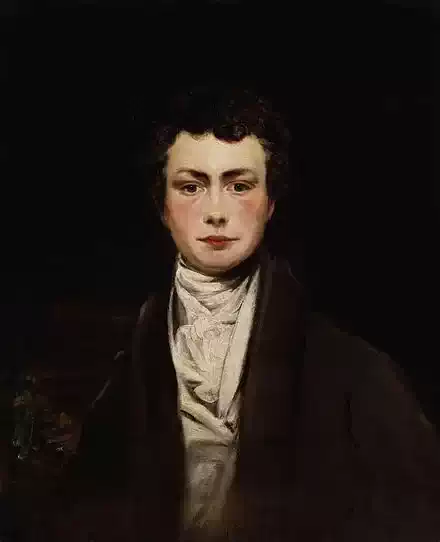
Identification and basic context
Thomas Moore was an Irish poet, lyricist, composer, and political satirist. He is widely regarded as Ireland's national poet.
Childhood and education
Born in Dublin, Moore came from a Catholic background during a time of significant Protestant Ascendancy. He received a good education, attending Trinity College, Dublin, where he studied law. This period exposed him to the political currents of Ireland and fostered his literary talents.
Literary trajectory
Moore's literary career began with translations and satires. His breakthrough came with the "Irish Melodies," a collection of songs that he set to existing Irish folk tunes, imbued with new lyrics. These became immensely popular, establishing him as a leading lyrical poet. He also wrote longer narrative poems, political satires, and a biography of Lord Byron.
Works, style, and literary characteristics
Moore's most significant contribution is the "Irish Melodies," which include famous songs like "The Minstrel Boy" and "Oft, in the Stilly Night." His poetry is characterized by its lyrical flow, romantic sensibility, and exploration of themes such as love, loss, patriotism, and exile. He often employed simple, evocative language and a graceful, musical rhythm, making his verses highly singable. His "Lalla Rookh" was a long, exotic Oriental romance poem that also achieved great success.
Cultural and historical context
Moore wrote during a period of intense political and cultural ferment in Ireland and Europe. He was a staunch advocate for Irish rights and a supporter of Catholic Emancipation, often expressing his sentiments through his writings, sometimes subtly and sometimes through direct political satire. His work tapped into a growing sense of Irish national identity.
Personal life
Moore had a long and successful literary career. He married Bessy Dyke, an actress, and they had several children. He maintained friendships with many prominent literary and political figures of his day, including Lord Byron, whose life and works he later chronicled.
Recognition and reception
Moore was immensely popular during his lifetime, both in Ireland and Britain. His "Irish Melodies" were translated into numerous languages and became a staple of drawing-room music. He was widely celebrated for his wit, charm, and poetic talent, though later critics sometimes found his sentimentality excessive.
Influences and legacy
Moore was influenced by classical poets and the burgeoning Romantic movement. His "Irish Melodies" played a crucial role in preserving and popularizing Irish folk music and in fostering a sense of national pride among the Irish diaspora. He is considered a key figure in the Romantic era of Irish literature.
Interpretation and critical analysis
Moore's work is often interpreted as a romantic expression of Irish identity and longing. His patriotic sentiments, while celebrated, are sometimes seen through the lens of a nationalist romanticism that can be both empowering and potentially simplistic. His ability to blend music and poetry was a significant achievement.
Curiosities and lesser-known aspects
Beyond his poetry, Moore was known for his social life and his ability to entertain. He was also a composer, though his primary fame rests on his lyrics. His extensive travels and correspondence reveal a keen observer of society and politics.
Death and memory
Thomas Moore died on February 25, 1852. He is remembered as Ireland's most beloved poet and songwriter, whose "Irish Melodies" continue to resonate and evoke a deep connection to Irish culture and history.