
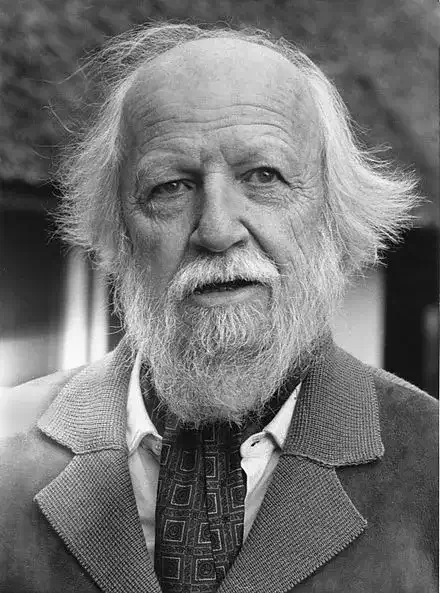
William Golding
1911–1993
· lived 81 years
 GB
GB
GB
Sir William Golding (1911-1993) was an English novelist, winner of the Nobel Prize in Literature in 1983. His most famous work is "Lord of the Flies" (1954), a dystopian novel that explores the nature of evil and the fragility of civilization. Golding wrote other novels that frequently deal with themes of morality, human nature, and the confrontation between order and chaos, often with historical or mythological settings.
n. 1911-09-19, Newquay · m. 1993-06-19, Perranarworthal
3,830
Views
Bio
William Golding was born on September 19, 1911, in Newquay, Cornwall, England. He is one of the most influential British novelists of the 20th century, known for his exploration of the complexities of human nature. His best-known novel, "Lord of the Flies" (1954), tells the story of a group of British boys who, after a plane crash, find themselves isolated on a deserted island and gradually succumb to savagery. The book is a powerful allegory about the struggle between civilization and primal instinct. Golding received the Nobel Prize in Literature in 1983, "for, with the breadth of realistic imaginative power and anthropological depth, has helped to-day to illuminate the human condition in the world to-day". Other important works include "Inheritors" (1955), "Marquess of" (1958), and "The Spire" (1964). His novels often address themes such as evil, original sin, social order, and the search for meaning in a seemingly chaotic world. Golding's writing is characterized by its robust prose and deep philosophical reflections. He was knighted by Queen Elizabeth II in 1988. William Golding died on June 19, 1993, in Perranarworthal, Cornwall.
Poems
0No poems found
Quotes
6No poems found
Videos
50
Comments (0)
Log in
to post a comment.
No comments yet. Be the first to comment.