
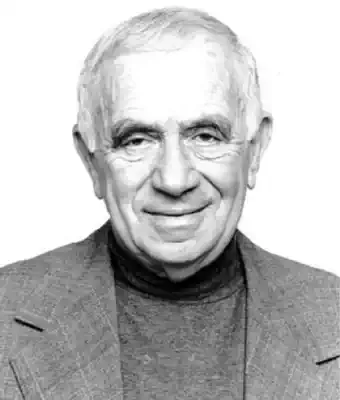
Yehuda Amichai
1924–2000
· lived 76 years
 IL
IL
IL
Yehuda Amichai was one of the most important Hebrew-language poets of the 20th century. His work is marked by a deep reflection on the human condition, exploring themes such as love, death, memory, and religion with a language that is both accessible and rich in symbolism. Amichai fused the sacred and the profane, the personal and the universal, creating poetry that resonates with modern experience and the search for meaning in a constantly changing world.
n. 1924-05-03, Wurtzburgo · m. 2000-09-22, Jerusalém
61
Views
Bio
Identification and Basic Context
Yehuda Amichai, born Yehuda Liebowitz, was an Israeli poet widely considered one of the most significant Hebrew-language poets of the 20th century. Born in Germany, he emigrated to Mandatory Palestine and became a central figure in Israeli literature. His work reflects the complexities of modern life, the experience of the Jewish people, and the universal search for meaning.Childhood and Education
Born in Germany, Amichai's childhood was marked by the rise of Nazism. His family, of Orthodox Jewish origin, fled Germany in 1936, emigrating to Mandatory Palestine, where they settled. This forced transition and the loss of their homeland had a profound impact on his life and work, shaping his sensitivity to themes such as exile, memory, and identity. His education included religious studies and, later, an immersion in Hebrew culture and literature.Literary Career
Amichai began writing poetry in Hebrew after his arrival in Palestine. His literary career flourished in the context of the founding of the State of Israel. He published his first book of poems in 1955, `Akhshav u-bi-yamim ha-eleh` (Now and in These Days), which quickly established him as a prominent voice in the new generation of Israeli poets. Throughout his life, he published numerous poetry books, which were translated into several languages, consolidating his international reputation.Work, Style, and Literary Characteristics
Amichai's work is characterized by the fusion of the personal and the universal, the sacred and the profane. His poems explore themes such as love, death, time, memory, war, faith, and the search for God, often with a confessional and intimate tone. He frequently used colloquial language, but with deep symbolic and imagistic resonance. Amichai is known for his ability to imbue the everyday with an existential and spiritual dimension. His style is accessible, yet dense in meaning, and his poetry often moves between philosophical reflection and concrete observation of the world. He was associated with the modernist movement in Hebrew literature, although he developed a distinctive and personal style.Work, Style, and Literary Characteristics
Cultural and Historical Context Amichai lived during a crucial period in Jewish and Israeli history, from the flight from Nazism to the founding and consolidation of the State of Israel, including the various wars and conflicts in the region. His poetry reflects the anxieties, hopes, and traumas of that era. He was one of the first poets to write openly about the experience of being a modern Israeli, with its social, political, and religious complexities. His work engages with the Jewish tradition, reinterpreting it in light of contemporary experience.Work, Style, and Literary Characteristics
Personal Life Yehuda Amichai was married and had children. His personal life, including his relationships and daily experiences, is echoed in his poetry, giving it an authentic and human tone. Although he lived in a society in conflict, his poetry frequently seeks transcendence and reflection on the human condition beyond immediate political circumstances.Work, Style, and Literary Characteristics
Recognition and Reception Amichai received numerous literary awards in Israel and internationally, being widely recognized as one of the greatest poets of his time. His work has been translated into over 40 languages, attesting to his global reach. He is considered a pillar of modern Hebrew literature, and his poetry continues to be studied and appreciated worldwide.Work, Style, and Literary Characteristics
Influences and Legacy Amichai was influenced by the Hebrew Bible, German poetry, and the Jewish tradition. His legacy lies in his ability to renew Hebrew poetic language, to address universal themes with a unique voice, and to make poetry accessible to a wide audience. He influenced generations of poets in Israel and around the world, setting a new standard for lyrical and existential poetry.Work, Style, and Literary Characteristics
Interpretation and Critical Analysis Amichai's work has been the subject of intense critical analysis, exploring his deep religiosity, his humanism, his relationship with history, and his innovative language. His metaphors and the way he crosses the spiritual with the mundane are frequent points of focus in discussions about his poetry.Work, Style, and Literary Characteristics
Curiosities and Lesser-Known Aspects Amichai, despite having poetry that could seem confessional, was a private person. His transition from Germany to Israel, leaving behind a significant part of his identity and original culture, is a remarkable aspect that profoundly informed his poetry.Work, Style, and Literary Characteristics
Death and Memory Yehuda Amichai passed away in Jerusalem. His death left a void in Hebrew literature, but his work continues to be widely read, studied, and celebrated, keeping his memory and poetic legacy alive.Poems
0No poems found
Quotes
1No poems found
Videos
50
Comments (0)
Log in
to post a comment.
No comments yet. Be the first to comment.