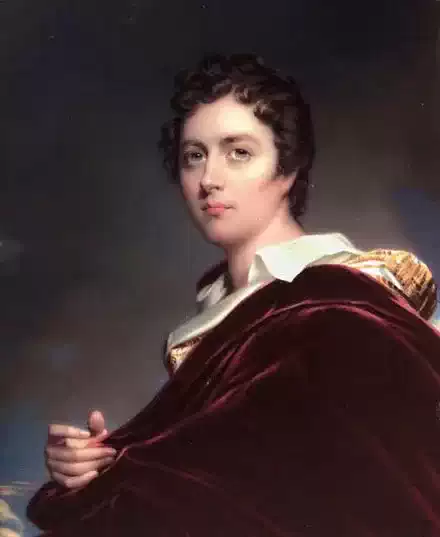
Some Poems

Childe Harold's Pilgrimage: A Romaunt. Canto IV.

Childe Harold's Pilgrimage: A Romaunt. Canto IV.

I.
I stood in Venice, on the Bridge of Sighs;
A palace and a prison on each hand:
I saw from out the wave her structures rise
As from the stroke of the enchanter's wand:
A thousand years their cloudy wings expand
Around me, and a dying Glory smiles
O'er the far times, when many a subject land
Look'd to the winged Lion's marble piles,
Where Venice sate in state, thron'd on her hundred isles!
II.
She looks a sea Cybele, fresh from ocean,
Rising with her tiara of proud towers
At airy distance, with majestic motion,
A ruler of the waters and their powers:
And such she was; her daughters had their dowers
From spoils of nations, and the exhaustless East
Pour'd in her lap all gems in sparkling showers.
In purple was she rob'd, and of her feast
Monarchs partook, and deem'd their dignity increas'd.
III.
In Venice Tasso's echoes are no more,
And silent rows the songless gondolier;
Her palaces are crumbling to the shore,
And music meets not always now the ear:
Those days are gone but
Beauty still is here.
States fall, arts fade but
Nature doth not die,
Nor yet forget how Venice once was dear,
The pleasant place of all festivity,
The revel of the earth, the masque of Italy!
IV.
But unto us she hath a spell beyond
Her name in story, and her long array
Of mighty shadows, whose dim forms despond
Above the dogeless city's vanish'd sway;
Ours is a trophy which will not decay
With the Rialto; Shylock and the Moor,
And Pierre, cannot be swept or worn away The
keystones of the arch! though all were o'er,
For us repeopl'd were the solitary shore.
V.
The beings of the mind are not of clay;
Essentially immortal, they create
And multiply in us a brighter ray
And more belov'd existence: that which Fate
Prohibits to dull life, in this our state
Of mortal bondage, by these spirits supplied,
First exiles, then replaces what we hate;

Watering the heart whose early flowers have died,
And with a fresher growth replenishing the void.

VI.
Such is the refuge of our youth and age,
The first from Hope, the last from Vacancy;
And this worn feeling peoples many a page,
And, maybe, that which grows beneath mine eye:
Yet there are things whose strong reality
Outshines our fairyland;
in shape and hues
More beautiful than our fantastic sky,
And the strange constellations which the Muse
O'er her wild universe is skilful to diffuse:
VII.
I saw or dream'd of such but
let them go;
They came like truth and
disappear'd like dreams;
And whatsoe'er they were are
now but so:
I could replace them if I would; still teems
My mind with many a form which aptly seems
Such as I sought for, and at moments found;
Let these too go for
waking Reason deems
Such overweening fantasies unsound,
And other voices speak, and other sights surround.
VIII.
I've taught me other tongues, and in strange eyes
Have made me not a stranger; to the mind
Which is itself, no changes bring surprise;
Nor is it harsh to make, nor hard to find
A country with ay,
or without mankind;
Yet was I born where men are proud to be Not
without cause; and should I leave behind
The inviolate island of the sage and free,
And seek me out a home by a remoter sea,
IX.
Perhaps I lov'd it well: and should I lay
My ashes in a soil which is not mine,
My spirit shall resume it if
we may
Unbodied choose a sanctuary. I twine
My hopes of being remember'd in my line
With my land's language: if too fond and far
These aspirations in their scope incline,
If my fame should be, as my fortunes are,
Of hasty growth and blight, and dull Oblivion bar
X.
My name from out the temple where the dead
Are honour'd by the nations let
it be And
light the laurels on a loftier head!
And be the Spartan's epitaph on me www.
PoemHunter.com The
World's Poetry Archive


'Sparta hath many a worthier son than he.'
Meantime I seek no sympathies, nor need;
The thorns which I have reap'd are of the tree
I planted: they have torn me, and I bleed:
I should have known what fruit would spring from such a seed.


XI.
The spouseless Adriatic mourns her lord;
And annual marriage now no more renew'd,
The Bucentaur lies rotting unrestored,
Neglected garment of her widowhood!
St. Mark yet sees his lion where he stood
Stand, but in mockery of his wither'd power,
Over he proud Place where an Emperor sued,
And monarchs gaz'd and envied in the hour
When Venice was a queen with an unequall'd dower.
XII.
The Suabian sued, and now the Austrian reigns An
Emperor tramples where an Emperor knelt;
Kingdoms are shrunk to provinces, and chains
Clank over sceptred cities, nations melt
From power's high pinnacle, when they have felt
The sunshine for a while, and downward go
Like Lauwine loosen'd from the mountain's belt;
Oh for one hour of blind old Dandolo!
Th' octogenarian chief, Byzantium's conquering foe!
XIII.
Before St. Mark still glow his steeds of brass,
Their gilded collars glittering in the sun;
But is not Doria's menace come to pass?
Are they not bridled? Venice,
lost and won,
Her thirteen hundred years of freedom done,
Sinks, like a seaweed,
into whence she rose!
Better be whelm'd beneath the waves, and shun,
Even in destruction's depth, her foreign foes,
From whom submission wrings an infamous repose.
XIV.
In youth she was all glory, a new Tyre,
Her very byword
sprung from victory,
The 'Planter of the Lion,' which through fire
And blood she bore o'er subject earth and sea;
Though making many slaves, herself still free,
And Europe's bulwark 'gainst the Ottomite;
Witness Troy's rival, Candia! Vouch it, ye
Immortal waves that saw Lepanto's fight!
For ye are names no time nor tyranny can blight.
XV.
Statues of glass all
shiver'd the
long file

Of her dead Doges are declin'd to dust;
But where they dwelt, the vast and sumptuous pile
Bespeaks the pageant of their splendid trust;
Their sceptre broken, and their sword in rust,
Have yielded to the stranger: empty halls,
Thin streets, and foreign aspects, such as must
Too oft remind her who and what enthralls,
Have flung a desolate cloud o'er Venice' lovely walls.


XVI.
When Athens' armies fell at Syracuse,
And fetter'd thousands bore the yoke of war,
Redemption rose up in the Attic Muse,
Her voice their only ransom from afar:
See! as they chant the tragic hymn, the car
Of the o'ermaster'd victor stops, the reins
Fall from his hands his
idle scimitar
Starts from its belt he
rends his captive's chains,
And bids him thank the bard for freedom and his strains.
XVII.
Thus, Venice! if no stronger claim were thine,
Were all thy proud historic deeds forgot,
Thy choral memory of the Bard divine,
Thy love of Tasso, should have cut the knot
Which ties thee to thy tyrants; and thy lot
Is shameful to the nations most
of all,
Albion, to thee: the Ocean queen should not
Abandon Ocean's children; in the fall
Of Venice think of thine, despite thy watery wall.
XVIII.
I loved her from my boyhood; she to me
Was as a fairy city of the heart,
Rising like watercolumns
from the sea,
Of joy the sojourn, and of wealth the mart;
And Otway, Radcliffe, Schiller, Shakespeare's art,
Had stamp'd her image in me, and even so,
Although I found her thus, we did not part;
Perchance even dearer in her day of woe,
Than when she was a boast, a marvel, and a show.
XIX.
I can repeople with the past and
of
The present there is still for eye and thought,
And meditation chasten'd down, enough;
And more, it may be, than I hoped or sought;
And of the happiest moments which were wrought
Within the web of my existence, some
From thee, fair Venice! have their colours caught:
There are some feelings Time cannot benumb,
Nor Torture shake, or mine would now be cold and dumb.

XX.
But from their nature will the Tannen grow
Loftiest on loftiest and least shelter'd rocks,
Rooted in barrenness, where nought below
Of soil supports them 'gainst the Alpine shocks
Of eddying storms; yet springs the trunk, and mocks
The howling tempest, till its height and frame
Are worthy of the mountains from whose blocks
Of bleak, gray granite into life it came,
And grew a giant tree; the
mind may grow the same.
XXI
Existence may be borne, and the deep root
Of life and sufferance make its firm abode
The bare and desolated bosoms: mute
The camel labours with the heaviest load,
And the wolf dies in silence, not
bestow'd
In vain should such example be; if they,
Things of ignoble or of savage mood,
Endure and shrink not, we of nobler clay
May temper it to bear, it
is but for a day.


XXII
All suffering doth destroy, or is destroy'd,
Even by the sufferer; and, in each event,
Ends: Some,
with hope replenish'd and rebuoy'd,
Return to whence they came with
like intent,
And weave their web again; some, bow'd and bent,
Wax gray and ghastly, withering ere their time,
And perish with the reed on which they leant;
Some seek devotion, toil, war, good or crime,
According as their souls were form'd to sink or climb.


XXIII
But ever and anon of griefs subdued
There comes a token like a scorpion's sting,
Scarce seen, but with fresh bitterness imbued;
And slight withal may be the things which bring
Back on the heart the weight which it would fling
Aside for ever: it may be a sound A
tone of music summer's
eve or
spring A
flower the
wind the
ocean which
shall wound,
Striking the electric chain wherewith we are darkly bound;


XXIV
And how and why we know not, nor can trace
Home to its cloud this lightning of the mind,
But feel the shock renew'd, nor can efface
The blight and blackening which it leaves behind,
Which out of things familiar, undesign'd,
When least we deem of such, calls up to view


The spectres whom no exorcism can bind, The
cold, the changed, perchance the dead anew,
The mourn'd, the loved, the lost too
many! yet how few!


XXV
But my soul wanders: I demand it back
To meditate amongst decay, and stand
A ruin amidst ruins; there to track
Fall'n states and buried greatness, o'er a land
Which was the mightiest in its old command,
And is the loveliest, and must ever be
The master mould of Nature's heavenly hand;
Wherein were cast the heroic and the free,
The beautiful, the brave, the lords of earth and sea,


XXVI
The commonwealth of kings, the men of Rome!
And even since, and now, fair Italy!
Thou art the garden of the world, the home
Of all Art yields, and Nature can decree;
Even in thy desert, what is like to thee?
Thy very weeds are beautiful, thy waste
More rich than other climes' fertility;
Thy wreck a glory, and thy ruin graced
With an immaculate charm which cannot be defaced.


XXVII
The moon is up, and yet it is not night;
Sunset divides the sky with her; a sea
Of glory streams along the Alpine height
Of blue Friuli's mountains; Heaven is free
From clouds, but of all colours seems to be, Melted
to one vast Iris of the West, Where
the Day joins the past Eternity,
While, on the other hand, meek Dian's crest
Floats through the azure air an
island of the blest!


XXVIII
A single star is at her side, and reigns
With her o'er half the lovely heaven; but still
Yon sunny sea heaves brightly, and remains
Roll'd o'er the peak of the far Rhætian hill,
As Day and Night contending were, until
Nature reclaim'd her order: gently
flows
The deepdyed
Brenta, where their hues instil
The odorous purple of a newborn
rose,
Which streams upon her stream, and glass'd within it glows,


XXIX
Fill'd with the face of heaven, which, from afar,
Comes down upon the waters; all its hues,
From the rich sunset to the rising star,


Their magical variety diffuse:
And now they change; a paler shadow strews
Its mantle o'er the mountains; parting day
Dies like the dolphin, whom each pang imbues
With a new colour as it gasps away The
last still loveliest, till
'
tis gone and
all is gray.


XXX
There is a tomb at Arqua; rear'd
in air,
Pillar'd in their sarcophagus, repose
The bones of Laura's lover: here repair
Many familiar with his wellsung
woes,
The pilgrims of his genius. He arose
To raise a language, and his land reclaim
From the dull yoke of her barbaric foes:
Watering the tree which bears his lady's name
With his melodious tears, he gave himself to fame.


XXXI
They keep his dust in Arqua, where he died;
The mountainvillage
where his latter days
Went down the vale of years; and 'tis their pride An
honest pride and
let it be their praise,
To offer to the passing stranger's gaze
His mansion and his sepulchre; both plain
And venerably simple, such as raise
A feeling more accordant with his train
Than if a pyramid form'd his monumental fane.


XXXII
And the soft quiet hamlet where he dwelt
Is one of that complexion which seems made
For those who their mortality have felt,
And sought a refuge from their hopes decay'd
In the deep umbrage of a green hill's shade,
Which shows a distant prospect far away
Of busy cities, now in vain display'd,
For they can lure no further; and the ray
Of a bright sun can make sufficient holiday,


XXXIII
Developing the mountains, leaves, and flowers,
And shining in the brawling brook, whereby,
Clear as its current, glide the sauntering hours
With a calm languor, which, though to the eye
Idlesse it seem, hath its mortality.
If from society we learn to live,
'Tis solitude should teach us how to die;
It hath no flatters; vanity can give
No hollow aid; alone man
with his God must strive:


XXXIV


Or, it may be, with demons, who impair
The strength of better thoughts, and seek their prey
In melancholy bosoms, such as were
Of moody texture, from their earliest day,
And loved to dwell in darkness and dismay,
Deeming themselves predestined to a doom
Which is not of the pangs that pass away;
Making the sun like blood, the earth a tomb,
The tomb a hell, and hell itself a murkier gloom.


XXXV
Ferrara! in thy wide and grassgrown
streets,
Whose symmetry was not for solitude,
There seems as 'twere a curse upon the seats
Of former sovereigns, and the antique brood
Of Este, which for many an age made good
Its strength within thy walls, ad was of yore
Patron or tyrant, as the changing mood
Of petty power impell'd, of those who wore
The wreath which Dante's brow alone had worn before.


XXXVI
And Tasso is their glory and their shame.
Hark to his strain! and then survey his cell!
And see how dearly earn'd Torquato's fame,
And where Alfonso bade his poet dwell:
The miserable despot could not quell
The insulted mind he sought to quench, and blend
With the surrounding maniacs, in the hell
Where he had plunged it. Glory without end
Scatter'd the clouds away; and on that name attend


XXXVII
The tears and praises of all time; while thine
Would rot in its oblivion in
the sink
Of worthless dust, which from thy boasted line
Is shaken into nothing but
the link
Thou formest in his fortunes bids us think
Of thy poor malice, naming thee with scorn:
Alfonso! how thy ducal pageants shrink
From thee! if in another station born,
Scarce fit to be the slave of him thou madest to mourn:


XXXVIII
Thou! form'd to eat, and be despised, and die,
Even as the beasts that perish, save that thou
Hadst a more splendid trough and wider sty:
He! with a glory round his furrow'd brow,
Which emanated then, and dazzles now,
In face of all his foes, the Cruscan quire,
And Boileau, whose rash envy could allow
No strain which shamed his country's creaking lyre,


That whetstone of the teeth monotony
in wire!


XXXIX
Peace to Torquato's injured shade! twas his
In life and death to be the mark where Wrong
Aim'd with her poison'd arrows, but to miss.
O, victor unsurpass'd in modern song!
Each year brings forth its millions; but how long
The tide of generations shall roll on,
And not the whole combined and countless throng
Compose a mind like thine? though all in one
Condensed their scatter'd rays, they would not form a sun.


XL
Great as thou art, yet parallel'd by those,
Thy countrymen, before thee born to shine,
The Bards of Hell and Chivalry: first rose
The Tuscan father's Comedy Divine;
Then, not unequal to the Florentine,
The southern Scott, the minstrel who call'd forth
A new creation with his magic line,
And, like the Ariosto of the North,
Sang ladyelove
and war, romance and knightly worth.


XLI
The lightning rent from Ariosto's bust
The iron crown of laurel's mimick'd leaves;
Nor was the ominous element unjust
For the true laurelwreath
which Glory weaves
Is of the tree no bolt of thunder cleaves,
And the false semblance but disgraced his brow;
Yet still, if fondly Superstition grieves,
Know, that the lightning sanctifies below
Whate'er it strikes; yon
head is doubly sacred now.


XLII
Italia! oh Italia! thou who hast
The fatal gift of beauty, which became
A funeral dower of present woes and past,
On thy sweet brow is sorrow plough'd by shame,
And annals graved in characters of flame.
Oh, God! that thou wert in thy nakedness
Less lovely or more powerful, and couldst claim
Thy right, and awe the robbers back, who press
To shed thy blood, and drink the tears of thy distress;


XLIII
Then might'st thou more appal; or, less desired,
Be homely and be peaceful, undeplored
For thy destructive charms; then, still untired,
Would not be seen the armed torrents pour'd
Down the deep Alps; nor would the hostile horde


Of manynation'd
spoilers from the Po
Quaff blood and water; nor the stranger's sword
Be thy sad weapon of defence, and so,
Victor or vanquish'd, thou the slave of friend or foe.


XLIV
Wandering in youth, I traced the path of him,
The Roman friend of Rome's leastmortal
mind,
The friend of Tully: as my bark did skim
The bright blue waters with a fanning wind,
Came Megara before me, and behind
Ægina lay, Piræus on the right,
And Corinth on the left; I lay reclined
Along the prow, and saw all these unite
In ruin, even as he had seen the desolate sight;


XLV
For Time hath not rebuilt them, but uprear'd
Barbaric dwellings on their shatter'd site,
Which only make more mourn'd and more endear'd
The few last rays of their farscatter'd
light,
And the crush'd relics of their vanish'd might.
The Roman saw these tombs in his own age,
These sepulchres of cities, which excite
Sad wonder, and his yet surviving page
The moral lesson bears, drawn from such pilgrimage.


XLVI
That page is now before me, and on mine
His country's ruin added to the mass
Of perish'd states he mourn'd in their decline,
And I in desolation: all that was
Of then destruction is; and now, alas!
Rome Rome
imperial, bows her to the storm,
In the same dust and blackness, and we pass
The skeleton of her Titanic form,
Wrecks of another world, whose ashes still are warm.


XLVII
Yet, Italy! through every other land
Thy wrongs should ring, and shall, from side to side;
Mother of Arts! as once of arms; thy hand
Was then our guardian, and is still our guide;
Parent of our religion! whom the wide
Nations have knelt to for the keys of heaven!
Europe, repentent of her parricide,
Shall yet redeem thee, and, all backward driven,
Roll the barbarian tide, and sue to be forgiven.


XLVIII
But Arno wins us to the fair white walls,
Where the Etrurian Athens claims and keeps


A softer feeling for her fairy halls.
Girt by her theatre of hills, she reaps
Her corn, and wine, and oil, and Plenty leaps
To laughing life, with her redundant horn.
Along the banks where smiling Arno sweeps
Was modern Luxury of Commerce born,
And buried Learning rose, redeem'd to new morn.


XLIX
There, too, the Goddess loves in stone, and fills
The air around with beauty; we inhale
The ambrosial aspect, which, beheld, instils
Part of its immortality; the veil
Of heaven is half undrawn; within the pale
We stand, and in that form and face behold
What Mind can make, when Nature's self would fail;
And to the fond idolators of old
Envy the innate flash which such a soul could mould:


L
We gaze and turn away, and know not where,
Dazzled and drunk with beauty, till the heart
Reels with its fulness; there for
ever there Chain'd
to the chariot of triumphal Art,
We stand as captives, and would not depart.
Away! there
needs no words nor terms precise,
The paltry jargon of the marble mart,
Where Pedantry gulls Folly we
have eyes:
Blood, pulse, and breast confirm the Dardan Shepherd's prize.


LI
Appear'dst thou not to Paris in this guise?
Or to more deeply blest Anchises? or,
In all thy perfect Goddessship,
when lies
Before thee thy own vanquish'd Lord of War?
And gazing in thy face as toward a star,
Laid on thy lap, his eyes to thee upturn,
Feeding on thy sweet cheek! while thy lips are
With lava kisses melting while they burn,
Shower'd on his eyelids, brow, and mouth, as from an urn?


LII
Glowing, and circumfused in speechless love
Their full divinity inadequate
That feeling to express, or to improve,
The gods become as mortals, and man's fate
Has moments like their brightest; but the weight
Of earth recoils upon us; let
it go!
We can recall such visions, and create,
From what has been, or might be, things which grow
Into thy statue's form, and look like gods below.


LIII
I leave to learned fingers and wise hands,
The artist and his ape, to teach and tell
How well his connoisseurship understands
The graceful bend, and the voluptuous swell:
Let these describe the undescribable:
I would not their vile breath should crisp the stream
Wherein that image shall for ever dwell;
The unruffled mirror of the loveliest dream
That ever left the sky on the deep soul to beam.


LIV
In Santa Croce's holy precincts lie
Ashes which make it holier, dust which is
Even in itself an immortality,
Though there were nothing save the past, and this,
The particle of those sublimities
Which have relapsed to chaos: here repose
Angelo's, Alfieri's bones, and his,
The starry Galileo, with his woes;
Here Machiavelli's earth return'd to whence it rose.


LV
These are four minds, which, like the elements,
Might furnish forth creation: Italy!
Time, which hath wrong'd thee with ten thousand rents
Of thine imperal garment, shall deny,
And hath denied, to every other sky,
Spirits which soar from ruin: thy decay
Is still impregnate with divinity,
Which gilds it with revivifying ray;
Such as the great of yore, Canova is today.


LVI
But where repose the all Etruscan three Dante,
and Petrarch, and, scarce less thatn they,
The Bard of Prose, creative spirit! he
Of the Hundred Tales of love where
did they lay
Their bones, distinguish'd from our common clay
In death as life? Are they resolved to dust,
And have their country's marbles nought to say?
Could not her quarries furnish forth one bust?
Did they not to her breast their filial earth entrust?


LVII
Ungrateful Florence! Dante sleeps afar,
Like Scipio, buried by the upbraiding shore:
Thy factions, in their worse than civil war,
Proscribed the bard whose name forevermore
Their children's children would in vain adore
With the remorse of ages; and the crown
Which Petrarch's laureate brow supremely wore,


Upon a far and foreign soil had grown,
His life, his fame, his grave, though rifled not
thine own.


LVIII
Boccaccio to his parent earth bequeath'd
His dust, and
lies it not her great among,
With many a sweet and solemn requiem breathed
O'er him who form'd the Tuscan's siren tongue?
That music in itself, whose sounds are song,
The poetry of speech? No; even
his tomb
Uptorn, must bear the hyæna bigot's wrong,
No more amidst the meaner dead find room,
Nor claim a passing sigh, because it told for whom!


LIX
And Santa Croce wants their mighty dust;
Yet for this want more noted, as of yore
The Cæsar's pageant, shorn of Brutus' bust,
Did but of Rome's best Son remind her more:
Happier Ravenna! on thy hoary shore,
Fortress of falling empire! honour'd sleeps
The immortal exile; Arqua,
too her store
Of tuneful relics proudly claims and keeps,
While Florence vainly begs her banish'd dead and weeps.


LX
What is her pyramid of precious stones?
Of porphyry, jasper, agate, and all hues
Of gem and marble, to encrust the bones
Of merchantdukes?
the momentary dews
Which, sparkling to the twilight stars, infuse
Freshness in the green turf that wraps the dead,
Whose names are mausoleums of the Muse,
Are gently prest with far more reverent tread
Than ever paced the slab which paves the princely head.


LXI
There be more things to greet the heart and eyes
In Arno's dome of Art's most princely shrine,
Where Sculpture with her rainbow sister vies;
There be more marvels yet but
not for mine;
For I have been accustom'd to entwine
My thoughts with Nature rather in the fields,
Than Art in galleries; though a work divine
Calls for my spirit's homage, yet it yields
Less than it feels, because the weapon which it wields


LXII
Is of another temper, and I roam
By Thrasimene's lake, in the defiles
Fatal to Roman rashness, more at home;
For there the Carthaginian's warlike wiles


Come back before me, as his skill beguiles
The host between the mountains the the shore,
Where Courage falls in her despairing files,
And torrents swoll'n to rivers with their gore,
Reek through the sultry plain, with legions scatter'd o'er,


LXIII
Like to a forest fell'd by mountain winds;
And such the storm of battle on this day,
And such the frenzy, whose convulsion blinds
To all save carnage, that, beneath the fray,
An earthquake reel'd unheededly away!
None felt stern Nature rocking at his feet,
And yawning forth a grave for those who lay
Upon their bucklers for a windingsheet;
Such is the absorbing hate when warring nations meet!


LXIV
The Earth to them was as a rolling bark
Which bore them to Eternity; they saw
The Ocean round, but had not time to mark
The motions of their vessel; Nature's law,
In them suspended, reck'd not of the awe
Which reigns when mountains tremble, and the birds
Plunge in the clouds for refuge, and withdraw
From their downtoppling
nests; and bellowing herds
Stumble o'er heaving plains, and man's dread hath no words.


LXV
Far other scene is Thrasimene now;
Her lake a sheet of silver, and her plain
Rent by no ravage save the gentle plough;
Her aged trees rise thick as once the slain
Lay where their roots are; but a brook hath ta'en A
little rill of scanty stream and bed A
name of blood from that day's sanguine rain;
And Sanguinetto tells ye where the dead
Made the earth wet, and turn'd the unwilling waters red.


LXVI
But thou, Clitumnus! in thy sweetest wave
Of the most living crystal that was e'er
The haunt of river nymph, to gaze and lave
Her limbs where nothing hid them, thou dost rear
Thy grassy banks whereon the milkwhite
steer
Grazes; the purest god of gentle waters!
And most serene of aspect, and most clear;
Surely that stream was unprofaned by slaughters,
A mirror and a bath for Beauty's youngest daughters!


LXVII
And on thy happy shore a Temple still,


Of small and delicate proportion, keeps,
Upon a mild declivity of hill,
Its memory of thee; beneath it sweeps
Thy current's calmness; oft from out it leaps
The finny darter with the glittering scales,
Who dwells and revels in thy glassy deeps;
While, chance, some scatter'd waterlily sails
Down were the shallower wave still tells its bubbling tales.


LXVIII
Pass not unblest the Genius of the place!
If through the air a zephyr more serene
Win to the brow, 'tis his; and if ye trace
Along his margin a more eloquent green,
If on the heart the freshness of the scene
Sprinkle its coolness, and from the dry dust
Of weary life a moment lave it clean
With Nature's baptism, '
tis to him ye must
Pay orisons for this suspension of disgust.


LXIX
The roar of waters! from
the headlong height
Velino cleaves the waveworn
precipice;
The fall of waters! rapid as the light
The flashing mass foams shaking the abyss;
The hell of waters! where they howl and hiss,
And boil in endless torture; while the sweat
Of their great agony, wrung out from this
Their Phlegethon, curls round the rocks of jet
That guard the gulf around, in pitiless horror set,


LXX
And mounts in spray the skies, and thence again
Returns in an unceasing shower, which round,
With its unemptied cloud of gentle rain,
Is an eternal April to the ground,
Making it all one emerald: how
profound
The gulf! and how the giant element
From rock to rock leaps with delirious bound,
Crushing the cliffs, which, downward worn and rent
With his fierce footsteps, yields in chasms a fearful vent


LXXI
To the broad column which rolls on, and shows
More like the fountain of an infant sea
Torn from the womb of mountains by the throes
Of a new world, than only thus to be
Parent of rivers, which glow gushingly,
With many windings, through the vale: Look
back!
Lo! where it comes like an eternity,
As if to sweep down all things in its track,
Charming the eye with dread, a
matchless cataract,


LXXII
Horribly beautiful! but on the verge,
From side to side, beneath the glittering morn,
An Iris sits, amidst the infernal surge,
Like Hope upon a deathbed,
and, unworn
Its steady dyes, while all around is torn
By the distracted waters, bears serene
Its brilliant hues with all their beams unshorn:
Resembling, 'mid the torture of the scene,
Love watching Madness with unalterable mien.


LXXIII
Once more upon the woody Apennine,
The infant Alps, which had
I not before
Gazed on their mightier parents, where the pine
Sits on more shaggy summits, and where roar
The thundering Lauwine might
be worshipp'd more;
But I have seen the soaring Jungfrau rear
Her nevertrodden
snow, and seen the hoar
Glaciers of bleak Mont Blanc both far and near,
And in Chimari heard the thunderhills
of fear,


LXXIV
Th' Acroceraunian mountains of old name;
And on Parnassus seen the eagles fly
Like spirits of the spot, as 'twere for fame,
For still they soared unutterably high:
I've look'd on Ida with a Trojan's eye;
Athos, Olympus, Ætna, Atlas, made
These hills seem things of lesser dignity,
All, save the lone Soracte's height, display'd
Not now in snow, which asks the lyric Roman's aid


LXXV
For our remembrance, and from out the plain
Heaves like a longswept
wave about to break,
And on the curl hangs pausing: not in vain
May he, who will, his recollections rake,
And quote in classic raptures, and awake
The hills with Latian echoes; I abhorr'd
Too much, to conquer for the poet's sake,
The drill'd dull lesson, forced down word by word
In my repugnant youth, with pleasure to record


LXXVI
Aught that recalls the daily drug which turn'd
My sickening memory; and, though Time hath taught
My mind to meditate what then it learn'd,
Yet such the fix'd inveteracy, wrought
By the impatience of my early thought,
That with the freshness wearing out before


My mind could relish what it might have sought,
If free to choose, I cannot now restore
Its health; but what it then detested, still abhor.


LXXVII
Then farewell, Horace; whom I hated so,
Not for thy faults, but mine; it is a curse
To understand, not feel thy lyric flow,
To comprehend, but never love thy verse:
Although no deeper Moralist rehearse
Our little life, nor Bard prescribe his art,
Nor livelier Satirist the conscience pierce,
Awakening without wounding the touch'd heart,
Yet fare thee well upon
Soracte's ridge we part.


LXXVIII
Oh Rome! my country! city of the soul!
The orphans of the heart must turn to thee,
Lone mother of dead empires! and control
In their shut breasts their petty misery.
What are our woes and sufferance? Come and see
The cypress, hear the owl, and plod your way
O'er steps of broken thrones and temples, Ye!
Whose agonies are evils of day A
world is at our feet as fragile as our clay.


LXXIX
The Niobe of nations! there she stands,
Childless and crownless, in her voiceless woe;
An empty urn within her wither'd hands,
Whose holy dust was scatter'd long ago;
The Scipios' tomb contains no ashes now;
The very sepulchres lie tenantless
Of their heroic dwellers: dost thou flow,
Old Tiber! through a marble wilderness?
Rise, with thy yellow waves, and mantle her distress.


LXXX
The Goth, the Christian, Time, War, Flood, and Fire,
Have dealt upon the sevenhill'd
city's pride;
She saw her glories star by star expire,
And up the steep barbarian monarchs ride,
Where the car climb'd the Capitol; far and wide
Temple and tower went down, nor left a site:
Chaos of ruins! who shall trace the void,
O'er the dim fragments cast a lunar light,
And say, 'here was, or is,' where all is doubly night?


LXXXI
The double night of ages, and of her,
Night's daughter, Ignorance, hath wrapt and wrap
All round us: we but feel our way to err:


The ocean hath his chart, and stars their map,
And Knowledge spreads them on her ample lap;
But Rome is as the desert, where we steer
Stumbling o'er recollections; now we clap
Our hands, and cry 'Eureka!' it is clear When
but some false mirage or ruin rises near.


LXXXII
Alas! the lofty city! and alas!
The trebly hundred triumphs! and the day
When Brutus made the dagger's edge surpass
The conqueror's sword in bearing fame away!
Alas, for Tully's voice, and Virgil's lay,
And Livy's pictured page! but
these shall be
Her resurrection; all beside decay.
Alas for Earth, for never shall we see
That brightness in her eye she bore when Rome was free!


LXXXIII
O thou, whose chariot roll'd on Fortune's wheel,
Triumphant Sylla! Thou, who didst subdue
Thy country's foes ere thou wouldst pause to feel
The wrath of thy own wrongs, or reap the due
Of hoarded vengeance till thine eagles flew
O'er prostrate Asia; thou,
who with thy frown
Annihilated senates Roman,
too.
With all thy vices, for thou didst lay down
With an atoning smile a more than earthly crown


LXXXIV
The dictatorial wreath couldst
thou divine
To what would one day dwindle that which made
Thee more than mortal? and that so supine
By aught than Romans Rome should thus be laid?
She who was named Eternal, and array'd
Her warriors but to conquer she
who veil'd
Earth with her haughty shadow, and display'd,
Until the o'ercanopied
horizon fail'd,
Her rushing wings Oh!
she who was Almighty hail'd!


LXXXV
Sylla was first of victors; but our own,
The sagest of usurpers, Cromwell! he
Too swept off senates while he hew'd the throne
Down to a block immortal
rebel! See
What crimes it costs to be a moment free,
And famous through all ages! but beneath
His fate the moral lurks of destiny;
His day of double victory and death
Beheld him win two realms, and, happier, yield his breath.


LXXXVI


The third of the same moon whose former course
Had all but crown'd him, on the selfsame day
Deposed him gently from his throne of force,
And laid him with the earth's preceding clay.
And show'd not Fortune thus how fame and sway,
And all we deem delightful, and consume
Our souls to compass through each arduous way,
Are in her eyes less happy than the tomb?
Were they but so in man's how different were his doom!


LXXXVII
And thou, dread statue! yet existent in
The austerest form of naked majesty,
Thou who beheldest, 'mid the assassins' din,
At thy bathed base the bloody Cæsar lie,
Folding his robe in dying dignity,
An offering to thine altar from the queen
Of gods and men, great Nemesis! did he die,
And thou, too, perish, Pompey? have ye been
Victors of countless kings, or puppets of a scene?


LXXXVIII
And thou, the thunderstricken
nurse of Rome!
Shewolf!
whose brazenimaged
dugs impart
The milk of conquest yet within the dome
Where, as a monument of antique art,
Thou standest: Mother
of the mighty heart,
Which the great founder suck'd from thy wild teat,
Scorch'd by the Roman Jove's ethereal dart,
And thy limbs black with lightning dost
thou yet
Guard thine immoral cubs, nor thy fond charge forget?


LXXXIX
Thou dost; but all thy fosterbabes
are dead The
men of iron: and the world hath rear'd
Cities from out their sepulchres: men bled
In imitation of the things they fear'd,
And fought and conquer'd, and the same course steer'd,
At apish distance; but as yet none have,
Nor could the same supremacy have near'd,
Save one vain man, who is not in the grave,
But, vanquish'd by himself, to his own slaves a slave


XC
The fool of false dominion and
a kind
Of bastard Cæsar, following him of old
With steps unequal; for the Roman's mind
Was modell'd in a less terrestrial mould,
With passions fiercer, yet a judgment cold,
And an immortal instinct which redeem'd
The frailties of a heart so soft, yet bold,
Alcides with the distaff now he seem'd


At Cleopatra's feet, and
now himself he beam'd,


XCI
And came and
saw and
conquer'd ! But the man
Who would have tamed his eagles down to flee,
Like a train'd falcon, in the Gallic van,
Which he, in sooth, long led to victory
With a deaf heart, which never seem'd to be
A listener to itself, was strangely framed;
With but one weakest weakness vanity,
Coquettish in ambition, still he aim'd At
what? can he avouch, or answer what he claim'd?


XCII
And would be all or nothing nor
could wait
For the sure grave to level him; few years
Had fix'd him with the Cæsars in his fate,
On whom we tread; for this the conqueror rears
The arch of triumph and for this the tears
And blood of earth flow on as they have flow'd,
An universal deluge, which appears
Without an ark for wretched man's abode,
And ebbs but to reflow! Renew thy rainbow, God!


XCIII
What from this barren being do we reap?
Our senses narrow, and our reason frail,
Life short, and truth a gem which loves the deep,
And all things weigh'd in custom's falsest scale;
Opinion an omnipotence, whose
veil
Mantles the earth with darkness, until right
And wrong are accidents, and men grow pale
Lest their own judgments should become too bright,
And their free thoughts be crimes, and earth have too much light.


XCIV
And thus they plod in sluggish misery,
Rotting from sire to son, and age to age,
Proud of their trampled nature, and so die,
Bequeathing their hereditary rage
To the new race of inborn slaves, who wage
War for their chains, and rather than be free,
Bleed gladiatorlike,
and still engage
Within the same arena where they see
Their fellows fall before, like leaves of the same tree.


XCV
I speak not of men's creeds they
rest between
Man and his Maker but
of things allow'd,
Averr'd, and known, and daily, hourly seen The
yoke that is upon us doubly bow'd,
And the intent of tyranny avow'd,


The edict of Earth's rulers, who are grown
The apes of him who humbled once the proud,
And shook them from their slumbers on the throne:
Too glorious, were this all his mighty arm had done.


XCVI
Can tyrants but by tyrants conquer'd be,
And Freedom find no champion and no child
Such as Columbia saw arise when she
Sprung forth a Pallas, arm'd and undefiled?
Or must such minds be nourish'd in the wild,
Deep in the unpruned forest, 'midst the roar
Of cataracts, where nursing Nature smiled
On infant Washington? Has Earth no more
Such seeds within her breast, or Europe no such shore?


XCVII
But France got drunk with blood to vomit crime,
And fatal have her Saturnalia been
To Freedom's cause, in every age an clime;
Because the deadly days which we have seen,
And vile Ambition, that built up between
Man and his hopes an adamantine wall,
And the base pageant last upon the scene,
Are grown the pretext for the eternal thrall
Which nips life's tree, and dooms man's worst his
second fall.


XCVIII
Yet, Freedom! yet thy banner, torn, but flying,
Streams like the thunderstorm
against the wind;
Thy trumpet voice, though broken now and dying,
The loudest still the tempest leaves behind;
Thy tree hath lost its blossoms, and the rind,
Chopp'd by the axe, looks rough and little worth,
But the sap lasts, and
still the seed we find
Sown deep, even in the bosom of the North;
So shall a better spring less better fruit bring forth.


XCIX
There is a stern round tower of other days,
Firm as a fortress, with its fence of stone,
Such as an army's baffled strength delays,
Standing with half its battlements alone,
And with two thousand years of ivy grown,
The garland of eternity, where wave
The green leaves over all by time o'er thrown; Where
was this tower of strength? within its case
What treasure lay, so lock'd, so hid? A
woman's grave.


C
But who was she, the lady of the dead,
Tomb'd in a palace? Was she chaste and fair?


Worthy a king's, or more a
Roman's bed?
What race of chiefs and heroes did she bear?
What daughter of her beauties was she heir?
How lived, how loved, how died she? Was she not
So honoured and
conspicuously there,
Where meaner relics must not dare to rot,
Placed to commemorate a more than mortal lot?


CI
Was she as those who love their lords, or they
Who love the lords of others? such have been
Even in the olden time, Rome's annals say.
Was she a matron of Cornelia's mien,
Or the light air of Egypt's graceful queen,
Profuse of joy or
'gainst it did she war
Inveterate in virtue? Did she lean
To the soft side of the heart, or wisely bar
Love from amongst her griefs? for
such the affections are.


CII
Perchance she died in youth: it may be, bow'd
With woes far heavier than the ponderous tomb
That weigh'd upon her gentle dust, a cloud
Might gather o'er her beauty, and a gloom
In her dark eye, prophetic of the doom
Heaven gives its favourites early
death; yet shed
A sunset charm around her, and illume
With hectic light, the Hesperus of the dead,
Of her consuming cheek the autumnal leaflike
red.


CIII
Perchance she died in age surviving
all,
Charms, kindred, children with
the silver gray
On her long tresses, which might yet recall,
It may be, still a something of the day
When they were braided, and her proud array
And lovely form were envied, praised, and eyed
By Rome But
whither would Conjecture stray?
Thus much alone we know Metella
died,
The wealthiest Roman's wife: Behold his love or pride!


CIV
I know not why but
standing thus by thee
It seems as if I had thine inmate known,
Thou Tomb! and other days come back on me
With recollected music, though the tone
Is changed and solemn, like the cloudy groan
Of dying thunder on the distant wind;
Yet could I set me by this ivied stone
Till I had bodied forth the heated mind,
Forms from the floating wreck which Ruin leaves behind;


CV
And from the planks, far shatter'd o'er the rocks,
Built me a little bark of hope, once more
To battle with the ocean and the shocks
Of the loud breakers, and the ceaseless roar
Which rushes on the solitary shore
Where all lies founder'd that was ever dear:
But could I gather from the waveworn
store
Enough for my rude boat, where should I steer?
There woos no home, nor hope, nor life, save what is here.


CVI
Then let the winds howl on! their harmony
Shall henceforth be my music, and the night
The sound shall temper with the owlets' cry,
As I now hear them, in the fading light
Dim o'er the bird of darkness' native site,
Answering each other on the Palatine,
With their large eyes, all glistening gray and bright,
And sailing pinions. Upon
such a shrine
What are our petty griefs? let
me not number mine.


CVII
Cypress and ivy, weed and wallflower grown,
Matted and mass'd together, hillocks heap'd
On what were chambers, arch crush'd, column strown
In fragments, choked up vaults, and frescos steep'd
In subterranean damps, where the owl peep'd,
Deeming it midnight: Temples,
baths, or halls?
Pronounce who can; for all that Learning reap'd
From her research hath been, that these are walls Behold
thee Imperial Mount! 'tis thus the mighty falls.


CVIII
There is the moral of all human tales;
'Tis but the same rehearsal of the past,
First Freedom, and then Glory when
that fails,
Wealth, vice , corruption, barbarism
at last.
And History, with all her volumes vast,
Hath but one page, '
tis better written here
Where gorgeous Tyranny hath thus amass'd
All treasures, all delights, that eye or ear,
Heart, soul, could seek, tongue ask Away
with words! draw near,


CIX
Admire, exult, despise, laugh, weep, for
here
There is such matter for all feeling: Man!
Thou pendulum betwixt a smile and tear,
Ages and realms are crowded in this span,
This mountain, whose obliterated plan
The pyramid of empires pinnacled,
Of Glory's gewgaws shining in the van


Till the sun's rays with added flame were fill'd!
Where are its golden roofs? where those who dared to build?


CX
Tully was not so eloquent as thou,
Thou nameless column with the buried base!
What are the laurels of the Cæsar's brow?
Crown me with ivy from his dwellingplace.
Whose arch or pillar meets me in the face,
Titus or Trajan's? No '
tis that of Time:
Triumph, arch, pillar, all he doth displace
Scoffing; and apostolic statues climb
To crush the imperial urn, whose ashes slept sublime,


CXI
Buried in air, the deep blue sky of Rome,
And looking to the stars; they had contain'd
A spirit which with thee would find a home,
The last of those who o'er the whole earth reign'd,
The Roman globe, for after none sustain'd,
But yielded back his conquests: he
was more
Than a mere Alexander, and unstain'd
With household blood and wine, serenely wore
His sovereign virtues still
we Trajan's name adore.


CXII
Where is the rock of Triumph, the high place
Where Rome embraced her heroes? where the steep
Tarpeian? fittest goal of Treason's race,
The promontory whence the Traitor's Leap
Cured all ambition. Did the conquerors heap
Their spoils here? Yes; and in yon field below,
A thousand years of silenced faction sleep The
Forum, where the immortal accents glow,
And still the eloquent air breathes burns
with Cicero!


CXIII
The field of freedom, faction, fame, and blood:
Here a proud people's passions were exhaled,
From the first hour of empire in the bud
To that when further worlds to conquer fail'd;
But long before had Freedom's face been veil'd,
And Anarchy assumed her attributes;
Till every lawless soldier who assail'd
Trod on the trembling senate's slavish mutes,
Or raised the venal voice of baser prostitutes.


CXIV
Then turn we to her latest tribune's name,
From her ten thousand tyrants turn to thee,
Redeemer of dark centuries of shame The
friend of Petrarch hope
of Italy


Rienzi! last of Romans! While the tree
Of freedom's wither'd trunk puts forth a leaf
Even for thy tomb a garland let it be The
forum's champion, and the people's chief Her
newborn
Numa thou with
reign, alas! too brief.


CXV
Egeria! sweet creation of some heart
Which found no mortal restingplace
so fair
As thine ideal breast; whate'er thou art
Or wert, a
young Aurora of the air,
The nympholepsy of some fond despair;
Or, it might be, a beauty of the earth,
Who found a more than common votary there
Too much adoring; whatsoe'er thy birth,
Thou wert a beautiful thought, and softly bodied forth.


CXVI
The mosses of thy fountain still are sprinkled
With thine Elysian waterdrops;
the face
Of thy caveguarded
spring with years unwrinkled,
Reflects the meekeyed
genius of the place,
Whose green, wild margin now no more erase
Art's works; nor must the delicate waters sleep,
Prison'd in marble bubbling
from the base
Of the cleft statue, with a gentle leap
The rill runs o'er and
round fern,
flowers, and ivy creep,


CXVII
Fantastically tangled: the green hills
Are clothed with early blossoms, through the grass
The quickeyed
lizard rustles, and the bills
Of summerbirds
sing welcome as ye pass;
Flowers fresh in hue, and many in their class,
Implore the pausing step, and with their dyes,
Dance in the soft breeze in a fairy mass;
The sweetness of the violet's deep blue eyes,
Kiss'd by the breath of heaven, seems colour'd by its skies.


CXVIII
Here didst thou dwell, in this enchanted cover,
Egeria! thy all heavenly bosom beating
For the far footsteps of thy mortal lover;
The purple Midnight veil'd that mystic meeting
With her most starry canopy, and seating
Thyself by thine adorer, what befell?
This cave was surely shaped out for the greeting
Of an enamour'd Goddess, and the cell
Haunted by holy Love the
earliest oracle!


CXIX
And didst thou not, thy breast to his replying,


Blend a celestial with a human heart;
And Love, which dies as it was born, in sighing,
Share with immortal transports? could thine art
Make them indeed immortal, and impart
The purity of heaven to earthly joys,
Expel the venom and not blunt the dart The
dull satiety which all destroys And
root from out the soul the deadly weed which cloys?


CXX
Alas! our young affections run to waste,
Or water but the desert; whence arise
But weeds of dark luxuriance, tares of haste,
Rank at the core, though tempting to the eyes,
Flowers whose wild odours breathe but agonies,
And trees whose gums are poisons; such the plants
Which spring beneath her steps as Passion flies
O'er the world's wilderness, and vainly pants
For some celestial fruit forbidden to our wants.


CXXI
Oh, Love! no habitant of earth thou art An
unseen seraph, we believe in thee, A
faith whose martyrs are the broken heart, But
never yet hath seen, nor e'er shall see
The naked eye, thy form, as it should be;
The mind hath made thee, as it peopled heaven,
Even with its own desiring phantasy,
And to a thought such shape and image given,
As haunts the unquench'd soul parch'd,
wearied, wrung, and riven.


CXXII
Of its own beauty is the mind diseased,
And fevers into false creation: where,
Where are the forms the sculptor's soul hath seiz'd?
In him alone. Can Nature show so fair?
Where are the charms and virtues which we dare
Conceive in boyhood and pursue as men,
The unreach'd Paradise of our despair,
Which o'erinforms
the pencil and the pen,
And overpowers the page where it would bloom again?


CXXIII
Who loves, raves '
tis youth's frenzy but
the cure
Is bitterer still, as charm by charm unwinds
Which robed our idols, and we see too sure
Nor worth nor beauty dwells from out the mind's
Ideal shape of such; yet still it binds
The fatal spell, and still it draws us on,
Reaping the whirlwind from the oftsown winds;
The stubborn heart, its alchemy begun,
Seems ever near the prize wealthiest
when most undone.


CXXIV
We wither from our youth, we gasp away Sick
sick;
unfound the boon, unslaked the thirst,
Though to the last, in verge of our decay,
Some phantom lures, such as we sought at first But
all too late, so
are we doubly curst.
Love, fame, ambition, avarice '
tis the same,
Each idle, and all ill, and none the worst For
we all are meteors with a different name,
And Death the sable smoke where vanishes the flame.


CXXV
Few none
find
what they love or could have loved,
Though accident, blind contact, and the strong
Necessity of loving, have removed
Antipathies but
to recur, ere long,
Envenom'd with irrevocable wrong;
And Circumstance, that unspiritual god
And miscreator, makes and helps along
Our coming evils with a crutchlike
rod,
Whose touch turns Hope to dust, the
dust we all have trod.


CXXVI
Our life is a false nature: 'tis not in
The harmony of things, this
hard decree,
This uneradicable taint of sin
This boundless upas, this allblasting
tree,
Whose root is earth, whose leaves and branches be
The skies which rain their plagues on men like dew Disease,
death, bondage all
the woes we see,
And worse, the woes we see not which
throb through
The immedicable soul, with heartaches
ever new.


CXXVII
Yet let us ponder boldly '
tis a base
Abandonment of reason to resign
Our right of thought our
last and only place
Of refuge; this, at least, shall still be mine:
Though from our birth the faculty divine
Is chain'd and tortured cabin'd,
cribb'd, confined,
And bred in darkness, lest the truth should shine
Too brightly on the unpreparèd mind,
The beam pours in, for time and skill will couch the blind.


CXXVIII
Arches on arches! as it were that Rome,
Collecting the chief trophies of her line,
Would build up all her triumphs in one dome,
Her coliseum stands; the moonbeams shine
As 'twere its natural torches, for divine
Should be the light which streams here to illume


This longexplored
but still exhaustless mine
Of contemplation; and the azure gloom
Of an Italian night, where the deep skies assume


CXXIX
Hues which have words, and speak to ye of heaven,
Floats o'er this vast and wondrous monument,
And shadows forth its glory. There is given
Unto the things of earth, which Time hath bent
A spirit's feeling, and where he hath leant
His hand, but broke his scythe, there is a power
And magic in the ruin'd battlement,
For which the palace of the present hour
Must yield its pomp, and wait till ages are its dower.


CXXX
Oh Time! the beautifier of the dead,
Adorner of the ruin, comforter
And only healer when the heart hath bled;
Time! the corrector where our judgments err,
The test of truth, love, sole
philosopher,
For all beside are sophists from
thy thrift,
Which never loses though it doth defer Time,
the avenger! unto thee I lift
My hands, and eyes, and heart, and crave of thee a gift:


CXXXI
Amidst this wreck, where thou hast made a shrine
And temple more divinely desolate,
Among thy mightier offerings here are mine,
Ruins of years, though few, yet full of fate:
If thou hast ever seen me too elate,
Hear me not; but if calmly I have borne
Good, and reserved my pride against the hate
Which shall not whelm me, let me not have worn
This iron in my soul in vain shall
they not mourn?


CXXXII
And thou, who never yet of human wrong
Left the unbalanced scale, great Nemesis!
Here, where the ancient paid thee homage long Thou
who didst call the Furies from the abyss,
And round Orestes bade them howl and hiss
For that unnatural retribution just,
Had it but been from hands less near in
this
Thy former realm, I call thee from the dust!
Dost thou not hear my heart? Awake!
thou shalt, and must.


CXXXIII
It is not that I may not have incurr'd
For my ancestral faults or mine the wound
I bleed withal, and, had it been conferr'd


With a just weapon, it had flow'd unbound;
But now my blood shall not sink in the ground;
To thee I do devote it. thou
shalt take
The vengeance, which shall yet be sought and found,
Which if I have not taken for the sake But
let that pass I
sleep, but thou shalt yet awake.


CXXXIV
And if my voice break forth, 'tis not that now
I shrink from what is suffer'd: let him speak
Who hath beheld decline upon my brow,
Or seen my mind's convulsion leave it weak;
But in this page a record will I seek.
Not in the air shall these my words disperse,
Though I be ashes; a far hour shall wreak
The deep prophetic fulness of this verse,
And pile on human heads the mountain of my curse!


CXXXV
That curse shall be Forgiveness. Have
I not Hear
me, my mother Earth! behold it, Heaven!
Have I not had to wrestle with my lot?
Have I not suffer'd things to be forgiven?
Have I not had my brain sear'd, my heart riven,
Hopes sapp'd, name blighted, Life's life lied away?
And only not to desperation driven,
Because not altogether of such clay
As rots into the souls of those whom I survey.


CXXXVI
From mighty wrongs to petty perfidy
Have I not seen what human things could do?
From the loud roar of foaming calumny
To the small whisper of the as paltry few,
And subtler venom of the reptile crew,
The Janus glance of whose significant eye,
Learning to lie with silence, would seem true,
And without utterance, save the shrug or sign,
Deal round to happy fools its speechless obloquy.


CXXXVII
But I have lived, and have not lived in vain:
My mind may lose its force, my blood its fire,
And my frame perish even in conquering pain;
But there is that within me which shall tire
Torture and Time, and breathe when I expire;
Something unearthly, which they deem not of,
Like the remember'd tone of a mute lyre,
Shall on their soften'd spirits sink, and move
In hearts all rocky now the late remorse of love.


CXXXVIII


The seal is set. Now
welcome, thou dread power!
Nameless, yet thus omnipotent, which here
Walk'st in the shadow of the midnight hour
With a deep awe, yet all distinct from fear;
Thy haunts are ever where the dead walls rear
Their ivy mantles, and the solemn scene
Derives from thee a sense so deep and clear
That we become a part of what has been,
And grow unto the spot, allseeing
but unseen.


CXXXIX
And here the buzz of eager nations ran,
In murmur'd pity, or loudroar'd
applause,
As man was slaughter'd by his fellowman.
And wherefore slaughter'd? wherefore, but because
Such were the bloody Circus' genial laws,
And the imperial pleasure. Wherefore
not?
What matters where we fall to fill the maws
Of worms on
battleplains
or listed spot?
Both are but theatres where
the chief actors rot.


CXL
I see before me the Gladiator lie:
He leans upon his hand his
manly brow
Consents to death, but conquers agony,
And his droop'd head sinks gradually low And
through his side the last drops, ebbing slow
From the red gash, fall heavy, one by one,
Like the first of a thundershower;
and now
The arena swims around him he
is gone,
Ere ceased the inhuman shout which hail'd the wretch who won.


CXLI
He heard it, but he heeded not his
eyes
Were with his heart, and that was far away;
He reck'd not of the life he lost nor prize,
But where his rude hut by the Danube lay,
There where his young barbarians all at play,
There was their Dacian mother he,
their sire,
Butcher'd to make a Roman holiday All
this rush'd with his blood Shall
he expire
And unavenged? Arise! ye Goths, and glut your ire!


CXLII
But here, where Murder breathed her bloody steam;
And here, where buzzing nations choked the ways,
And roar'd or murmur'd like a mountain stream
Dashing or winding as its torrent strays;
Here, where the Roman million's blame or praise
Was death or life, the playthings of a crowd,
My voice sounds much and
fall the stars faint rays
On the arena void seats
crush'd walls
bow'd


And galleries, where my steps seem echoes strangely loud.


CXLIII
A ruin yet
what a ruin! from its mass
Walls, palaces, halfcities,
have been rear'd;
Yet oft the enormous skeleton ye pass,
And marvel where the spoil could have appear'd.
Hath it indeed been plunder'd, or but clear'd?
Alas! developed, opens the decay,
When the colossal fabric's form is near'd:
It will not bear the brightness of the day,
Which streams too much on all years
man
have
reft away.


CXLIV
But when the rising moon begins to climb
Its topmost arch, and gently pauses there;
When the stars twinkle through the loops of time,
And the low nightbreeze
waves along the air
The garlandforest,
which the gray walls wear,
Like laurels on the bald first Cæsar's head;
When the light shines serene but doth not glare,
Then in this magic circle raise the dead:
Heroes have trod this spot '
tis on their dust ye tread.


CXLV
'While stands the Coliseum, Rome shall stand;
'When falls the Coliseum, Rome shall fall;
'And when Rome falls the
World.' From our own land
Thus spake the pilgrims o'er this mighty wall
In Saxon times, which we are wont to call
Ancient; and these three mortal things are still
On their foundations, and unalter'd all;
Rome and her Ruin past Redemption's skill,
The World, the same wide den of
thieves, or what ye will.


CXLVI
Simple, erect, severe, austere, sublime Shrine
of all saints and temple of all gods,
From Jove to Jesus spared
and blest by time;
Looking tranquillity, while falls or nods
Arch, empire, each thing round thee, and man plods
His way through thorns to ashes glorious
dome!
Shalt thou not last? Time's scythe and tyrants' rods
Shiver upon thee sanctuary
and home
Of art and piety Pantheon!
pride
of Rome!


CXLVII
Relic of nobler days, and noblest arts!
Despoil'd yet perfect, with thy circle spreads
A holiness appealing to all hearts To
art a model; and to him who treads
Rome for the sake of ages, Glory sheds


Her light through thy sole aperture; to those
Who worship, here are altars for their beads;
And they who feel for genius may repose
Their eyes on honour'd forms, whose busts around them close.


CXLVIII
There is a dungeon, in whose dim drear light
What do I gaze on? Nothing: Look again!
Two forms are slowly shadow'd on my sight Two
insulated phantoms of the brain:
It is not so; I see them full and plain An
old man, and a female young and fair,
Fresh as a nursing mother, in whose vein
The blood is nectar: but
what doth she there,
With her unmantled neck, and bosom white and bare?


CXLIX
Full swells the deep pure fountain of young life,
Where on the heart and from the heart we took
Our first and sweetest nurture, when the wife,
Blest into mother, in the innocent look,
Or even the piping cry of lips that brook
No pain and small suspense, a joy perceives
Man knows not, when from out its cradled nook
She sees her little bud put forth its leaves What
may the fruit be yet? I know not Cain
was Eve's.


CL
But here youth offers to old age the food,
The milk of his own gift: it is her sire
To whom she renders back the debt of blood
Born with her birth. No; he shall not expire
While in those warm and lovely veins the fire
Of health and holy feeling can provide
Great Nature's Nile, whose deep stream rises higher
Than Egypt's river: from that gentle side
Drink, drink and live, old man! Heaven's realm holds no such tide.


CLI
The starry fable of the milky way
Has not thy story's purity; it is
A constellation of a sweeter ray,
And sacred Nature triumphs more in this
Reverse of her decree, than in the abyss
Where sparkle distant worlds: Oh,
holiest nurse!
No drop of that clear stream its way shall miss
To thy sire's heart, replenishing its source
With life, as our freed souls rejoin the universe.


CLII
Turn to the mole which Hadrian rear'd on high,
Imperial mimic of old Egypt's piles,


Colossal copyist of deformity
Whose travell'd phantasy from the far Nile's
Enormous model, doom'd the artist's toils
To build for giants, and for his vain earth,
His shrunken ashes, raise this dome: How smiles
The gazer's eyes with philosophic mirth,
To view the huge design which sprung from such a birth!


CLIII
But lo! the dome the
vast and wondrous dome,
To which Diana's marvel was a cell Christ's
mighty shrine above his martyr's tomb!
I have beheld the Ephesian's miracle; Its
columns strew the wilderness, and dwell
The hyæna and the jackal in their shade;
I have beheld Sophia's bright roofs swell
Their glittering mass i' the sun, and have survey'd
Its sanctuary the while the usurping Moslem pray'd;


CLIV
But thou, of temples old, or altars new,
Standest alone, with nothing like to thee Worthiest
of God, the holy and the true.
Since Zion's desolation, when that He
Forsook his former city, what could be,
Of earthly structures, in his honour piled,
Of a sublimer aspect? Majesty,
Power, Glory, Strength, and Beauty all are aisled
In this eternal ark of worship undefiled.


CLV
Enter: its grandeur overwhelms thee not;
And why? It is not lessen'd; but thy mind,
Expanded by the genius of the spot,
Has grown colossal, and can only find
A fit abode wherein appear enshrined
Thy hopes of immortality; and thou
Shalt one day, if found worthy, so defined,
See thy God face to face, as thou dost now
His Holy of Holies, nor be blasted by his brow.


CLVI
Thou movest, but increasing with the advance,
Like climbing some great Alp, which still doth rise,
Deceived by its gigantic elegance;
Vastness which grows, but grows to harmonise All
musical in its immensities;
Rich marbles, richer painting shrines
where flame
The lamps of gold and
haughty dome which view
In air with Earth's chief structures, though their frame
Sits on the firmset
ground, and this the clouds must claim.


CLVII
Thou seest not all; but piecemeal thou must break,
To separate contemplation, the great whole;
And as the ocean many bays will make
That ask the eye so
here condense thy soul
To more immediate objects, and control
Thy thoughts until thy mind hath got by heart
Its eloquent proportions, and unroll
In mighty graduations, part by part,
The glory which at once upon thee did not dart,

CLVIII
Not by its fault but
thine: Our outward sense
Is but of gradual grasp and
as it is
That what we have of feeling most intense
Outstrips our faint expression; even so this
Outshining and o'erwhelming edifice
Fools our fond gaze,and greatest of the great
Defies at first our Nature's littleness,
Till growing with its growth, we thus dilate
Our spirits to the size of that they contemplate.

CLVIX
Then pause, and be enlighten'd; there is more
In such a survey than the sating gaze
Of wonder pleased, or awe which would adore
The worship of the place, or the mere praise
Of art and its great masters, who could raise
What former time, nor skill, nor thought could plan;
The fountain of sublimity displays
Its depth, and thence may draw the mind of man
Its golden sands, and learn what great conceptions can.

CLX
Or, turning to the Vatican, go see
Laocoön's torture dignifying pain A
father's love and mortal's agony
With an immortal's patience blending: Vain
The struggle vain, against the coiling strain
And gripe, and deepening of the dragon's grasp,
The old man's clench; the long unvenom'd chain
Rivets the living links, the
enormous asp
Enforces pang on pang, and stifles gasp on gasp.

CLXI
Or view the Lord of the unerring bow,
The God of life, and poesy, and light The
Sun in human limbs array'd, and brow
All radiant from his triumph in the fight;
The shaft hath just been shot the
arrow bright
With an immortal's vengeance; in his eye
And nostril beautiful disdain, and might


And majesty, flash their full lightnings by,
Developing in that once glance the Deity.


CLXII
But in his delicate form a
dream of Love,
Shaped by some solitary nymph, whose breast
Long'd for a deathless lover from above,
And madden'd in that vision are
exprest
All that ideal beauty ever bless'd
The mind with in its most unearthly mood,
When each conception was a heavenly guest A
ray of immortality and
stood
Starlike, around, until they gather'd to a god!


CLXIII
And if it be Prometheus stole from Heaven
The fire which we endure, it was repaid
By him to whom the energy was given
Which this poetic marble hath array'd
With an eternal glory which,
if made
By human hands, is not of human thought;
And Time himself hath hallow'd it, nor laid
One ringlet in the dust nor
hath it caught
A tinge of years, but breathes the flame with which 'twas wrought.


CLXIV
But where is he, the Pilgrim of my song,
The being who upheld it through the past?
Methinks he cometh late and tarries long.
He is no more these
breathings are his last;
His wanderings done, his visions ebbing fast,
And he himself as nothing: if
he was
Aught but a phantasy, and could be class'd
With forms which live and suffer let
that pass His
shadow fades away into Destruction's mass,


CLXV
Which gathers shadow, substance, life, and all
That we inherit in its mortal shroud,
And spreads the dim and universal pall
Through which all things grow phantoms; and the cloud
Between us sinks and all which ever glow'd,
Till Glory's self is twilight, and displays
A melancholy halo scarce allow'd
To hover on the verge of darkness; rays
Sadder than saddest night, for they distract the gaze,


CLXVI
And send us prying into the abyss,
To gather what we shall be when the frame
Shall be resolved to something less than this
Its wretched essence; and to dream of fame,


And wipe the dust from off the idle name
We never more shall hear, but
never more
Oh, happier thought! can we be made the same:
It is enough in sooth that once we bore
These fardels of the heart the
heart whose sweat was gore.


CLXVII
Hark! forth from the abyss a voice proceeds,
A long low distant murmur of dread sound,
Such as arises when a nation bleeds
With some deep and immedicable wound;
Through storm and darkness yawns the rending ground,
The gulf is thick with phantoms, but the chief
Seems royal still, though with her head discrown'd,
And pale, but lovely, with maternal grief
She clasps a babe, to whom her breast yields no relief.


CLXVIII
Scion of chiefs and monarchs, where art thou?
Fond hope of many nations, art thou dead?
Could not the grave forget thee, and lay low
Some less majestic, less beloved head?
In the sad midnight, while thy heart still bled,
The mother of a moment, o'er thy boy,
Death hush'd that pang for ever: with thee fled
The present happiness and promised joy
Which fill'd the imperial isles so full it seem'd to cloy.


CLXIX
Peasants bring forth in safety. Can
it be,
Oh thou that wert so happy, so adored!
Those who weep not for kings shall weep for thee,
And Freedom's heart, grown heavy, cease to hoard
Her many griefs for ONE; for she had pour'd
Her orisons for thee, and o'er thy head
Beheld her Iris. Thou,
too, lonely lord,
And desolate consort vainly
wert thou wed!
The husband of a year! the father of the dead!


CLXX
Of sackcloth was thy wedding garment made;
Thy bridal's fruit is ashes: in the dust
The fairhair'd
Daughter of the Isles is laid,
The love of millions! How we did intrust
Futurity to her! and, though it must
Darken above our bones, yet fondly deem'd
Our children should obey her child, and bless'd
Her and her hopedfor
seed, whose promise seem'd
Like stars to shepherds' eyes: '
twas but a meteor beam'd.


CLXXI
Woe unto us, not her; for she sleeps well:


The fickle reek of popular breath, the tongue
Of hollow counsel, the false oracle,
Which from the birth of monarchy hath run
Its knell in princely ears, till the o'erstung
Nations have arm'd in madness, the strange fate
Which tumbles mightiest sovereigns, and hath flung
Against their blind omnipotence a weight
Within the opposing scale, which crushes soon or late,


CLXXII
These might have been her destiny; but no,
Our hearts deny it: and so young, so fair,
Good without effort, great without a foe;
But now a bride and mother and
now there!
How many ties did that stern moment tear!
From thy Sire's to his humblest subject's breast
Is link'd the electric chain of that despair,
Whose shock was as an earthquake's, and opprest
The land which loved thee so that none could love thee best.


CLXXIII
Lo, Nemi! navell'd in the woody hills
So far, that the uprooting wind which tears
The oak from his foundation, and which spills
The ocean o'er its boundary, and bears
Its foam against the skies, reluctant spares
The oval mirror of thy glassy lake;
And calm as cherish'd hate, its surface wears
A deep cold settled aspect nought can shake,
All coil'd into itself and round, as sleeps the snake.


CLXXIV
And near, Albano's scarce divided waves
Shine from a sister valley; and
afar
The Tiber winds, and the broad ocean laves
The Latian coast where sprung the Epic war,
'Arms and the Man,' whose reascending
star
Rose o'er an empire: but
beneath thy right
Tully reposed from Rome; and
where yon bar
Of girdling mountains intercepts the sight
The Sabine farm was till'd, the weary bard's delight.


CLXXV
But I forget. My
Pilgrim's shrine is won,
And he and I must part, so
let it be, His
task and mine alike are nearly done;
Yet once more let us look upon the sea;
The midland ocean breaks on him and me,
And from the Alban Mount we now behold
Our friend of youth, that Ocean, which when we
Beheld it last by Calpe's rock unfold
Those waves, we follow'd on till the dark Euxine roll'd


CLXXVI
Upon the blue Symplegades: long years Long,
though not very many since
have done
Their work on both; some suffering and some tears
Have left us nearly where we had begun:
Yet not in vain our mortal race hath run;
We have had our reward, and it is here, That
we can yet feel gladden'd by the sun,
And reap from earth, sea, joy almost as dear
As if there were no man to trouble what is clear.


CLXXVII
Oh! that the Desert were my dwellingplace,
With one fair Spirit for my minister,
That I might all forget the human race,
And, hating no one, love but only her!
Ye elements! in
whose enobling stir
I feel myself exalted Can
ye not
Accord me such a being? Do I err
In deeming such inhabit many a spot?
Though with them to converse can rarely be our lot.


CLXXVIII
There is a pleasure in the pathless woods,
There is a rapture on the lonely shore,
There is society, where none intrudes,
By the deep Sea, and music in its roar;
I love not Man the less, but Nature more,
From these our interviews, in which I steal
From all I may be, or have been before,
To mingle with the Universe, and feel
What I can ne'er express, yet cannot all conceal.


CLXXIX
Roll on, thou deep and dark blue Ocean roll!
Ten thousand fleets sweep over thee in vain;
Man marks the earth with ruin his
control
Stops with the shore; upon the watery plain
The wrecks are all thy deed, nor doth remain
A shadow of man's ravage, save his own,
When, for a moment, like a drop of rain,
He sinks into thy depths with bubbling groan,
Without a grave, unknell'd, uncoffin'd, and unknown.


CLXXX
His steps are not upon thy paths, thy
fields
Are not a spoil for him thou
dost arise
And shake him from thee; the vile strength he wields
For earth's destruction thou dost all despise,
Spurning him from thy bosom to the skies,
And send'st him shivering in thy playful spray


And howling, to his Gods, where haply lies
His petty hope in some near port or bay,
And dashest him again to earth: there
let him lay.


CLXXXI
The armaments which thunderstrike the walls
Of rockbuilt
cities. bidding nations quake,
And monarchs tremble in their capitals,
The oak leviathons, whose huge ribs make
Their clay creator the vain title take
Of lord of thee, and arbiter of war These
are thy toys, and, as the snowy flake,
They melt into thy yeast of waves, which mar
Alike the Armada's pride or spoils of Trafalgar.


CLXXXII
Thy shores are empires, changed in all save thee Assyria,
Greece, Rome, Carthage, what are they?
Thy waters wash'd them power while they were free,
And many a tyrant since; their shores obey
The stranger, slave, or savage; their decay
Has dried up realms to deserts: not
so thou; Unchangeable,
save to thy wild waves' play,
Time writes no wrinkle on thine azure brow:
Such as creation's dawn beheld, thou rollest now.


CLXXXIII
Thou glorious mirror, where the Almighty's form
Glasses itself in tempests; in all time, Calm
or convulsed, in breeze, or gale, or storm,
Icing the pole, or in the torrid clime
Darkheaving
boundless,
endless, and sublime,
The image of eternity, the throne
Of the Invisible; even from out thy slime
The monsters of the deep are made; each zone
Obeys thee; thou goest forth, dread, fathomless, alone.


CLXXXIV
And I have loved thee, Ocean! and my joy
Of youthful sports was on thy breast to be
Borne, like thy bubbles, onward: from a boy
I wanton'd with thy breakers they
to me
Were a delight; and if the freshening sea
Made them a terror '
twas a pleasing fear,
For I was as it were a child of thee,
And trusted to thy billows far and near,
And laid my hand upon thy mane as
I do here.


CLXXXV
My task is done, my song hath ceased, my theme
Has died into an echo; it is fit
The spell should break of this protracted dream.


The torch shall be extinguish'd which hath lit
My midnight lamp and
what is writ, is writ;
Would it were worthier! but I am not now
That which I have been and
my visions flit
Less palpably before me and
the glow
Which, in my spirit dwelt is fluttering, faint, and low.

CLXXXVI
Farewell! a word that must be, and hath been A
sound which makes us linger; yet
farewell!
Ye! who have traced the Pilgrim to the scene
Which is his last, if in your memories dwell
A thought which once was his, if on ye swell
A single recollection, not in vain
He wore his sandalshoon
and scallopshell;
Farewell! with him alone may rest the pain
If such there were with
you, the moral of his strain.

Stanzas Composed During A Thunderstorm

Stanzas Composed During A Thunderstorm

Chill and mirk is the nightly blast,
Where Pindus' mountains rise,

And angry clouds are pouring fast
The vengeance of the skies.

Our guides are gone, our hope is lost,
And lightnings, as they play,

But show where rocks our path have crost,
Or gild the torrent's spray.

Is yon a cot I saw, though low?
When lightning broke the gloom


How welcome were its shade!ah,
no!
'Tis but a Turkish tomb.

Through sounds of foaming waterfalls,
I hear a voice exclaim


My wayworn
countryman, who calls
On distant England's name.

A shot is firedby
foe or friend?
Another'
tis to tell

The mountainpeasants
to descend,
And lead us where they dwell.

Oh! who in such a night will dare
To tempt the wilderness?

And who 'mid thunderpeals
can hear
Our signal of distress?

And who that heard our shouts would rise
To try the dubious road?

Nor rather deem from nightly cries
That outlaws were abroad.

Clouds burst, skies flash, oh, dreadful hour!
More fiercely pours the storm!

Yet here one thought has still the power
To keep my bosom warm.

While wandering through each broken path,
O'er brake and craggy brow;

While elements exhaust their wrath,
Sweet Florence, where art thou?

Not on the sea, not on the seaThy
bark hath long been gone:

Oh, may the storm that pours on me,
Bow down my head alone!

Full swiftly blew the swift Siroc,
When last I pressed thy lip;


And long ere now, with foaming shock,
Impelled thy gallant ship.

Now thou art safe; nay, long ere now
Hast trod the shore of Spain;

'Twere hard if aught so fair as thou
Should linger on the main.

And since I now remember thee
In darkness and in dread,

As in those hours of revelry
Which Mirth and Music sped;

Do thou, amid the fair white walls,
If Cadiz yet be free,

At times from out her latticed halls
Look o'er the dark blue sea;

Then think upon Calypso's isles,
Endeared by days gone by;

To others give a thousand smiles,
To me a single sigh.

And when the admiring circle mark
The paleness of thy face,

A halfformed
tear, a transient spark
Of melancholy grace,

Again thou'lt smile, and blushing shun
Some coxcomb's raillery;

Nor own for once thou thought'st on one,
Who ever thinks on thee.

Though smile and sigh alike are vain,
When severed hearts repine

My spirit flies o'er Mount and Main
And mourns in search of thine.

Farewell To The Muse

Farewell To The Muse

Thou Power! who hast ruled me through Infancy's days,
Young offspring of Fancy, 'tis time we should part;
Then rise on the gale this the last of my lays,
The coldest effusion which springs from my heart.


This bosom, responsive to rapture no more,
Shall hush thy wild notes, nor implore thee to sing;
The feelings of childhood, which taught thee to soar,
Are wafted far distant on Apathy's wing.


Though simple the themes of my rude flowing Lyre,
Yet even these themes are departed for ever;
No more beam the eyes which my dream could inspire,
My visions are flown, to return, alas, never!


When drain'd is the nectar which gladdens the bowl,
How vain is the effort delight to prolong!
When cold is the beauty which dwelt in my soul,
What magic of Fancy can lengthen my song?


Can the lips sing of Love in the desert alone,
Of kisses and smiles which they now must resign?
Or dwell with delight on the hours that are flown?
Ah, no! for those hours can no longer be mine.


Can they speak of the friends that I lived but to love?
Ah, surely Affection ennobles the strain!
But how can my numbers in sympathy move,
When I scarcely can hope to behold them again?


Can I sing of the deeds which my Fathers have done,
And raise my loud harp to the fame of my Sires?
For glories like theirs, oh, how faint is my tone!
For Heroes' exploits how unequal my fires!


Untouch'd, then, my Lyre shall reply to the blast'
Tis hush'd; and my feeble endeavors are o'er;
And those who have heard it will pardon the past,
When they know that its murmurs shall vibrate no more.


And soon shall its wild erring notes be forgot,
Since early affection and love is o'ercast:
Oh! blest had my Fate been, and happy my lot,
Had the first strain of love been the dearest, the last.


Farewell, my young Muse! since we now can ne'er meet;
If our songs have been languid, they surely are few:
Let us hope that the present at least will be sweetThe
presentwhich
seals our eternal Adieu.

Translation Of A Romaic Love Song

Translation Of A Romaic Love Song

Ah! Love was never yet without
The pang, the agony, the doubt,
Which rends my heart with ceaseless sigh,
While day and night roll darkling by.


Without one friend to hear my woe,
I faint, I die beneath the blow.
That Love had arrows well I knew;
Alas! I find them poison'd too.


Birds, yet in freedom, shun the net
Which Love around your haunts hath set;
Or, circled by his fatal fire,
Your hearts shall burn, your hopes expire.


A bird of free and careless wing
Was I through many a smiling spring;
But caught within the subtle snare,
I burn, and feebly flutter there.


Who ne'er have loved, and loved in vain,
Can neither feel nor pity pain,
The cold repulse, the look askance,
The lightning of Love's angry glance.


In flattering dreams I deem'd thee mine;
Now hope, and he who hoped, decline'
Like melting wax, or withering flower,
I feel my passion, and thy power.


My light of life! ah, tell me why
That pouting lip, and alter'd eye?
My bird of love! my beauteous mate!
And art thou changed, and canst thou hate?


Mine eyes like wintry streams o'erflow:
What wretch with me would barter woe?
My bird! relent: one note could give
A charm to bid thy lover live.


My curdling blood, my madd'ning brain,
In silent anguish I sustain
And still thy heart, without partaking
One pang, exults while
mine is breaking.


Pour me the poison; fear not thou!
Thou canst not murder more than now:
I've lived to curse my natal day,
And Love, that thus can lingering slay.


My wounded soul, my bleeding breast,
Can patience preach thee into rest?


Alas! too late, I dearly know
That joy is harbinger of woe.

Beppo, A Venetian Story

Beppo, A Venetian Story

I.
'Tis known, at least it should be, that throughout
All countries of the Catholic persuasion,
Some weeks before Shrove Tuesday comes about,
The People take their fill of recreation,
And buy repentance, ere they grow devout,
However high their rank, or low their station,
With fiddling, feasting, dancing, drinking, masking,
And other things which may be had for asking.
II.
The moment Night with dusky mantle covers
The skies (and the more duskily the better),
The Timeless
liked by husbands than by loversBegins,
and Prudery flings aside her fetter,
And Gaiety on restless tiptoe hovers,
Giggling with all the Gallants who beset her;
And there are Songs and quavers, roaring, humming,
Guitars, and every other sort of strumming.
III.
And there are dresses, splendid but fantastical,
Masks of all times and nations, Turks and Jews,
And Harlequins and Clowns, with feats gymnastical,
Greeks, Romans, Yankeedoodles,
and Hindoos;
All kinds of dress, except the ecclesiastical,
All people, as their fancies hit, may choose,
But no one in these parts may quiz the Clergy,Therefore
take heed, ye Freethinkers! I charge ye.
IV.
You'd better walk about begirt with briars,
Instead of Coat and smallclothes, than put on
A single stitch reflecting upon Friars,
Although you swore it only was in fun;
They'd haul you o'er the coals, and stir the fires
Of Phlegethon with every mother's son,
Nor say one Mass to cool the Caldron's bubble
That boil'd your bonesunless
you paid them double.
V.
But saving this, you may put on whate'er
You like by way of doublet, cape, or cloak,
Such as in Monmouth Street, or in Rag Fair,
Would rig you out in Seriousness or Joke;
And even in Italy such places are
With prettier name in softer accents spoke,
For, bating Covent Garden, I can hit on
No place that's called 'Piazza' in Great Britain.
VI.
This feast is named the Carnival, which being

Interpreted implies 'Farewell to Flesh':
So call'd, because the name and thing agreeing,
Through Lent they live on fish, both salt and fresh.
But why they usher Lent with so much glee in
Is more than I can tell, although I guess
'Tis as we take a glass with friends at parting
In the StageCoach
or Packet, just at starting.


VII.
And thus they bid farewell to Carnal dishes,
And solid meats, and highly spiced ragouts,
To live for forty days on illdress’d
fishes,
Because they have no sauces to their stewsA
thing which causes many 'poohs' and 'pishes,'
And several oaths (which would not suit the Muse)
From travellers accustom'd from a boy
To eat their Salmon, at the least, with Soy;
VIII.
And therefore humbly I would recommend
'The Curious in FishSauce,'
before they cross
The Sea, to bid their Cook, or wife, or friend,
Walk or ride to the Strand, and buy in gross
(Or if set out beforehand these may send
By any means least liable to loss)
Ketchup, Soy, ChiliVinegar,
and Harvey,
Or, by the Lord! a Lent will well nigh starve ye.
IX.
That is to say, if your Religion's Roman,
And you at Rome would do as Romans do,
According to the proverb,although
No man
If foreign is obliged to fast, and youIf
Protestant, or sicklyor
a womanWould
rather dine in sin on a ragoutDine
and be d____d! I don't mean to be coarse,
But that's the penalty, to say no worse.
X.
Of all the places where the Carnival
Was most facetious in the days of yore,
For dance, and song, and serenade, and ball,
And Masque, and Mime, and Mystery, and more
Than I have time to tell now, or at all,
Venice the bell from every city bore,
And at the moment when I fix my story,
That Seaborn
City was in all her Glory.
XI.
They've pretty faces yet, those same Venetians,
Black eyes, arch'd brows, and sweet expressions still,
Such as of old were copied from the Grecians,

In ancient Arts by Moderns mimick'd ill;
And like so many Venuses of Titian's
(The best's at Florencesee
it, if ye will),
They look when leaning over the Balcony;
Or stepp'd from out a picture by Giorgione,


XII.
Whose tints are Truth and Beauty at their best;
And when you to Manfrini's palace go,
That Picture (howsoever fine the rest)
Is loveliest to my mind of all the show;
It may perhaps be also to your Zest,
And that's the cause I rhyme upon it so:
'Tis but a portrait of his Son and Wife
And Self; but such a Woman! Love in life!
XIII.
Love in full life and length, not Love ideal,
No, nor ideal Beauty, that fine name,
But something better still, so very real,
That the sweet Model must have been the same;
A thing that you would purchase, beg, or steal,
Were't not impossible, besides a shame;
The face recalls some face, as 'twere with pain,
You once have seen, but ne'er will see again.
XIV.
One of those forms which flit by us, when we
Are young, and fix our eyes on every face;
And, oh! the Loveliness at times we see
In momentary gliding, the soft grace,
The Youth, the Bloom, the Beauty which agree
In many a nameless being we retrace,
Whose course and home we knew not, nor shall know,
Like the lost Pleiad seen no more below.
XV.
I said that like a picture by Giorgione
Venetian women were, and so they are,
Particularly seen from a balcony
(For Beauty's sometimes best set off afar)
And there, just like a heroine of Goldoni,
They peep from out the blind, or o'er the bar;
And truth to say they're mostly very pretty,
And rather like to show it, more's the Pity!
XVI.
For glances beget ogles, ogles sighs,
Sighs wishes, wishes words, and words a letter,
Which flies on wings of lightheel'd
Mercuries,
Who do such things because they know no better;
And then, God knows! what Mischief may arise,

When Love links two young people in one fetter:
Vile assignations, and adulterous beds,
Elopements, broken vows, and hearts, and heads.

XVII.
Shakespeare described the Sex in Desdemona
As very fair, but yet suspect in fame,
And to this day from Venice to Verona
Such matters may be probably the same,
Except that since those times was never known a
Husband whom mere Suspicion could inflame
To suffocate a wife no more than twenty,
Because she had a 'Cavalier Servente.'
XVIII.
Their jealousy (if they are ever jealous)
Is of a fair complexion altogether,
Not like that sooty devil of Othello's,
Which smothers women in a bed of feather,
But worthier of these much more jolly fellows,
When weary of the matrimonial tether
His head for such a wife no mortal bothers,
But takes at once another, or another's.
XIX.
Didst ever see a Gondola? For fear
You should not, I'll describe it you exactly:
'Tis a long cover'd boat that's common here,
Carved at the prow, built lightly, but compactly,
Row'd by two rowers, each call'd 'Gondolier,'
It glides along the water looking blackly,
Just like a Coffin clapt in a Canoe,
Where none can make out what you say or do.
XX.
And up and down the long Canals they go,
And under the Rialto shoot along
By night and day, all paces, swift or slow,
And round the theatres, a sable throng,
They wait in their dusk livery of woe,But
not to them do woeful things belong,
For sometimes they contain a deal of fun,
Like Mourning Coaches when the funeral’s done.
XXI.
But to my story.'
Twas some years ago,
It may be thirty, forty, more or less,
The Carnival was at its height, and so
Were all kinds of Buffoonery and dress;
A Certain Lady went to see the show,
Her real name I know not, nor can guess,
And so we'll call her Laura, if you please,

Because it slips into my verse with ease.

XXII.
She was not old, nor young, nor at the years
Which certain people call a 'certain Age,'
Which yet the most uncertain age appears,
Because I never heard, nor could engage
A person yet by prayers, or bribes, or tears,
To name, define by speech, or write on page,
The period meant precisely by that word,Which
surely is exceedingly absurd.
XXIII.
Laura was blooming still, had made the best
Of Time, and Time return'd the compliment,
And treated her genteelly, so that, 'drest,
She look'd extremely well where'er she went;
A pretty woman is a welcome guest,
And Laura's brow a frown had rarely bent;
Indeed, she shone all Smiles, and seem'd to flatter
Mankind with her black eyes for looking at her.
XXIV.
She was a married woman; 'tis convenient,
Because in Christian countries 'tis a rule
To view their little slips with eyes more lenient;
Whereas if single ladies play the fool
(Unless within the period intervenient
A welltimed
wedding makes the scandal cool),
I don't know how they ever can get over it,
Except they manage never to discover it.
XXV.
Her husband sail'd upon the Adriatic,
And made some voyages, too, in other seas,
And when he lay in Quarantine for Pratique
(A forty days' precaution 'gainst disease),
His wife would mount, at times, her highest attic,
For thence she could discern the ship with ease;
He was a Merchant trading to Aleppo,
His name Giuseppecall'd
more briefly, Beppo.
XXVI.
He was a man as dusky as a Spaniard,
Sunburnt with travel, yet a portly figure;
Though colour'd, as it were, within a tanyard,
He was a person both of sense and vigourA
better Seaman never yet did man yard;
And She, although her manners show'd no rigour,
Was deem'd a woman of the strictest principle,
So much as to be thought almost invincible.

XXVII.
But several years elapsed since they had met;
Some people thought the ship was lost, and some
That he had somehow blunder'd into debt,
And did not like the thought of steering home;
And there were several offer'd any bet,
Or that he would, or that he would not come,
For Most Men (till by losing render'd sager)
Will back their own opinions with a wager.
XXVIII.
'Tis said that their last parting was pathetic,
As partings often are, or ought to be,
And their presentiment was quite prophetic,
That they should never more each other see,
(A sort of morbid feeling, half poetic,
Which I have known occur in two or three)
When kneeling on the shore upon her sad knee
He left this Adriatic Ariadne.
XXIX.
And Laura waited long, and wept a little,
And thought of wearing weeds, as well she might;
She almost lost all appetite for victual,
And could not sleep with ease along at night;
She deem'd the windowframes
and shutters brittle
Against a daring Housebreaker
or Sprite,
And so She thought it prudent to connect her.
With a Vicehusband,
chiefly to protect her.
XXX.
She chose, (and what is there they will not choose,
If only you will but oppose their choice?)
Till Beppo should return from his long cruise,
And bid once more her faithful heart rejoice,
A Man some women like, and yet abuseA
Coxcomb was he by the public voice;
A Count of wealth, they said, as well as quality,
And (in his pleasures) of great liberality.
XXXI.
And then he was A Count, and then he knew
Music, and dancing, fiddling, French and Tuscan;
The last not easy, be it known to you.
For few Italians speak the right Etruscan.
He was a Critic upon Operas, too,
And knew all niceties of the sock and buskin;
And no Venetian audience could endure a
Song, scene, or air, when he cried 'Seccatura!'
XXXII.
His 'Bravo' was decisive—for that sound

Hush'd 'Academie' sigh'd in silent awe;
The fiddlers trembled as he look'd around,
For fear of some false note's detected flaw;
The 'Prima Donna's' tuneful heart would bound,
Dreading the deep damnation of his 'Bah!'
Soprano, Basso, even the ContraAlto,
Wish'd him five fathom under the Rialto.


XXXIII.
He patronised the Improvisatori,
Nay, could himself extemporise some stanzas;
Wrote rhymes, sang songs, could also tell a story,
Sold pictures, and was skilful in the dance as
Italians can bethough
in this their glory
Must surely yield the palm to that which France has;
In short, he was a perfect Cavaliero,
And to his very Valet seem'd a Hero.
XXXIV.
Then he was faithful too, as well as amorous;
So that no sort of female could complainAlthough
they're now and then a little clamourous,
He never put the pretty souls in pain;
His heart was one of those which most enamour us,
Wax to receive, and Marble to retain:
He was a lover of the good old School,
Who still become more constant as they cool.
XXXV.
No wonder such accomplishments should turn
A female head, however sage and steadyWith
scarce a hope that Beppo could return,
In law he was almost as good as dead, he
Nor sent, nor wrote, nor show'd the least concern,
And she had waited several years already;
And really if a Man won't let us know
That he's alive, he's dead, or should be so.
XXXVI.
Besides, within the Alps, to every woman,
(Although, God knows! it is a grievous sin)
'Tis, I may say, permitted to have two men;
I can't tell who first brought the custom in,
But 'Cavalier Serventes' are quite common,
And no one notices nor cares a pin;
And we may call this (not to say the worst)
A Second Marriage which corrupts the First.
XXXVII.
The word was formerly a 'Cicisbeo,'
But that is now grown vulgar and indecent;
The Spaniards call the person a 'Cortejo,'

For the same Mode subsists in Spain, though recent;
In short, it reaches from the Po to Teio,
And may perhaps at last be o'er the Sea sent;
But Heaven preserve Old England from such courses!
Or what becomes of damage and divorces?


XXXVIII.
However, I still think, with all due deference
To the fair single part of the Creation,
That married ladies should preserve the preference
In têteàtête
or general conversationAnd
this I say without peculiar reference
To England, France, or any other nationBecause
they know the world, and are at ease,
And being natural, naturally please.
XXXIX.
'Tis true, your budding Miss is very charming,
But shy and awkward at first coming out,
So much alarm'd, that she is quite alarming,
All Giggle, Blushhalf
Pertness, and halfPoutAnd
glancing at Mamma, for fear there's harm in
What you, she, it, or they, may be about;
The nursery still lisps out in all they utterBesides,
they always smell of Bread and Butter.
XL.
But 'Cavalier Servente' is the phrase
Used in politest circles to express
This supernumary slave, who stays
Close to the lady as a part of dressHer
word the only law which he obeys.
His is no Sinecure, as you may guess;
Coach, Servants, Gondola, he goes to call,
And carries fan and tippet, gloves and shawl.
XLI.
With all its sinful doings, I must say,
That Italy's a pleasant place to me,
Who love to see the Sun shine every day,
And vines (not nail’d to walls) from tree to tree
Festoon'd, much like the back Scene of a play,
Or Melodrame, which people flock to see
When the first act is ended by a dance
In Vineyards copied from the South of France.
XLII.
I like on Autumn evenings to ride out,
Without being forced to bid my Groom be sure
My Cloak is round his middle strapp'd about,
Because the skies are not the most secure;
I know too that, if stopp'd upon my route

Where the green alleys windingly allure,
Reeling with grapes red waggons choke the wayIn
England 'twould be dung, dust, or a dray.


XLIII.
I also like to dine on Becaficas,
To see the Sun set, sure he'll rise tomorrow,
Not through a misty morning twinkling weak as
A drunken man's dead eye in maudlin sorrow,
But with all Heaven t' himself; the Day will break as
Beauteous as cloudless, nor be forced to borrow
That sort of farthing candlelight which glimmers
Where reeking London's smoky Caldron simmers.
XLIV.
I love the language, that soft bastard Latin,
Which melts like kisses from a female mouth,
And sounds as if it should be writ on satin,
With syllables which breathe of the sweet South,
And gentle liquids gliding all so pat in
That not a single accent seems uncouthLike
our harsh Northern whistling, grunting guttural,
Which we're obliged to hiss, and spit, and sputter all.
XLV.
I like the women too (Forgive my folly!)
From the rich peasant cheek of ruddy bronze,
And large black eyes that flash on you a volley
Of rays that say a thousand things at once,
To the high Dama's brow, more melancholy,
But clear, and with a wild and liquid Glance,
Heart on her lips, and Soul within her eyes,
Soft as her clime, and Sunny as her skies.
XLVI.
Eve of the land which still is Paradise!
Italian Beauty! didst thou not inspire
Raphael, who died in thy embrace, and vies
With all we know of Heaven, or can desire
In what he hath bequeath'd us?in
what guise,
Though flashing from the fervour of the Lyre,
Would Words describe thy past and present Glow,
While yet Canova can create below?
XLVII.
'England! with all thy faults I love thee still!'
I said at Calais, and have not forgot it;
I like to speak and lucubrate my fill;
I like the Government (but that is not it);
I like the freedom of the press and quill;
I like the Hapeas Corpus (when we've got it);
I like a parliamentary debate,

Particularly when 'tis not too late;

XLVIII.
I like the taxes, when they're not too many;
I like a seacoal
fire, when not too dear;
I like a beefsteak,
too, as well as any;
Have no objection to a pot of beer;
I like the weatherwhen
it is not rainyThat
is, I like two months of every Year;
And so God save the Regent, Church, and King!
Which means that I like all and every thing.
XLIX.
Our standing Army, and disbanded Seamen,
Poor's rate, Reform, my own, the nation's debt,
Our little Riots just to show we're free men,
Our trifling Bankruptcies in the Gazette,
Our cloudy Climate, and our chilly Women;
All these I can forgive, and those forget,
And greatly venerate our recent glories,
And wish they were not owing to the Tories.
L.
But to my tale of Laurafor
I find
Digression is a sin, that by degrees
Becomes exceeding tedious to my mind,
And, therefore, may the reader too displeaseThe
gentle readerwho
may wax unkind,
And caring little for the Author’s ease,
Insist on knowing what he means, a hard
And hapless situation for a Bard.
LI.
Oh that I had the art of easy writing
What should be easy reading! could I scale
Parnassus, where the Muses sit inditing
Those pretty poems never known to fail!
How quickly would I print (the world delighting)
A Grecian, Syrian, or Assyrian tale;
And sell you, mix'd with Western sentimentalism,
Some samples of the finest Orientalism.
LII.
But I am but a nameless sort of person
(A broken Dandy lately on my travels)
And take for Rhyme, to hook my rambling Verse on,
The first that Walker's Lexicon unravels,
And when I can't find that, I put a worse on,
Not caring as I ought for Critics' cavils;
I've half a mind to tumble down to prose,
But Verse is more in fashionso
here goes!

LIII.
The Count and Laura made their new arrangement,
Which lasted, as Arrangements sometimes do,
For half a dozen years without estrangement;
They had their little differences, too;
Those jealous whiffs, which never any change meant;
In such affairs there probably are few
Who have not had this pouting sort of squabble,
From Sinners of high station to the Rabble.
LIV.
But, on the whole, they were a happy pair,
As happy as unlawful love could make them;
The Gentleman was fond, the Lady fair,
Their chains so slight 'twas not worth while to break them;
The World beheld them with indulgent air;
The Pious only wish'd 'the Devil take them!'
He took them not; he very often waits,
And leaves old Sinners to be young ones’ baits.
LV.
But they were young; Oh! what without our youth
Would Love be! What would youth be without love!
Youth lends it joy, and sweetness, vigour, truth,
Heart, soul, and all that seems as from above;
But, languishing with years, it grows uncouthOne
of few things Experience don't improve,
Which is perhaps the reason why old fellows
Are always so preposterously jealous.
LVI.
It was the Carnival, as I have said
Some six and thirty stanzas back, and so
Laura the usual preparations made,
Which you do when your mind's made up to go
Tonight
to Mrs. Boehm's Masquerade,
Spectator, or Partaker in the show;
The only difference known between the cases
Is here, we have six weeks of 'varnish'd faces.'
LVII.
Laura, when dress'd, was (as I sang before)
A pretty woman as was ever seen,
Fresh as the Angel o'er a new Inn door,
Or frontispiece of a new Magazine,
With all the Fashions which the last month wore,
Colour'd, and silver paper leaved between
That and the titlepage,
for fear the Press
Should soil with parts of speech the parts of dress.
LVIII.
They went to the Ridotto;'
tis a hall

Where people dance, and sup, and dance againIts
proper name perhaps were a masqued Ball,
But that’s of no importance to my strain;
'Tis (on a smaller scale) like our Vauxhall,
Excepting that it can't be spoilt by Rain;
The company is 'mix'd' (the phrase I quote is
As much as saying they're below your Notice).


LIX.
For a 'mix'd company' implies that, save
Yourself and friends and half a hundred more
Whom you may bow to without looking grave,
The rest are but a vulgar setthe
Bore
Of public places, where they basely brave
The fashionable stare of twenty score
Of wellbred
persons call'd 'The World'but
I,
Although I know them, really don't know why.
LX.
This is the case in England, at least was
During the dynasty of Dandies, now
Perchance succeeded by some other class
Of imitated Imitators :how
Irreparably soon decline, alas!
The Demagogues of fashion; all below
Is frail; how easily the World is lost
By Love, or War, and now and then by Frost!
LXI.
Crush'd was Napoleon by the northern Thor,
Who knock’d his army down with icy hammer,
Stopp'd by the Elements, like a Whaler, or
A blundering Novice in his new French grammar;
Good cause had he to doubt the chance of War,
And as for Fortunebut
I dare not d___n her,
Because, were I to ponder to Infinity,
The more I should believe in her Divinity.
LXII.
She rules the present, past, and all to be yet;
She gives us luck in lotteries, love, and marriage;
I cannot say that she’s done much for me yet,
Not that I mean her bounties to disparageWe've
not yet closed accountsand
we shall see yet
How much she'll make amends for past miscarriage.
Meantime the Goddess I'll no more importune,
Unless to thank her when she's made my fortune.
LXIII.
To turnand
to return, the Devil take it!
This Story slips for ever through my fingers,
Because, just as the Stanza likes to make it,

It needs must be, and so it rather lingers:
This form of verse began, I can't well break it,
But must keep time and tune like public Singers;
But if I once get through my present measure,
I'll take another when I'm at leisure.


LXIV.
They went to the Ridotto ('tis a place
To which I mean to go myself tomorrow,
Just to divert my thoughts a little space,
Because I’m rather hippish, and may borrow
Some spirits, guessing at what kind of face
May lurk beneath each mask; and as my sorrow
Slackens its pace sometimes, I'll make or find
Something shall leave it half an hour behind).
LXV.
Now Laura moves along the joyous crowdSmiles
in her eyes, and simpers on her lipsTo
some she whispers, others speaks aloud;
To some she curtsies, and to some she dips,
Complains of warmth and, this complaint avow'd,
Her lover brings the Lemonade she sips;
She then surveys, condemns, but pities still
Her dearest friends for being dress'd so ill.
LXVI.
One has false curls, another too much paint,
A thirdwhere
did She buy that frightful turban?
A fourth's so pale she fears she's going to faint,
A fifth's look's vulgar, dowdyish, and suburban,
A sixth's white silk has got a yellow taint,
A seventh's thin Muslin surely will be her bane,
And lo! an eighth appears'
I'll see no more!'
For fear, like Banquo's kings, they reach a score.
LXVII.
Meantime, while she was thus at others gazing,
Others were leveling their looks at her;
She heard the Men's halfwhisper'd
mode of praising,
And, till ’twas done, determined not to stir;
The women only thought it quite amazing
That, at her time of Life, so many were
Admirers stillbut
Men are so debased,
Those brazen creatures always suit their taste.
LXVIII.
For my part now, I ne'er could understand
Why naughty Womenbut
I won’t discuss
A thing which is a Scandal to the land;
I only don't see why it should be thus;
And if I were but in a gown and bandwww.
PoemHunter.com The
World's Poetry Archive


Just to entitle me to make a fussI'd
preach on this till Wilberforce and Romilly
Should quote in their next speeches from my homily.


LXIX.
While Laura thus was seen, and seeing, smiling,
Talking, she knew not why, and cared not what,
So that her female friends, with envy broiling,
Beheld her airs and triumph, and all that,
And welldress'd
males still kept before her filing,
And passing bow'd and mingled with her chat;
More than the rest, one person seem'd to stare
With pertinacity that's rather rare.
LXX.
He was a Turk, the colour of mahogany;
And Laura saw him, and at first was glad,
Because the Turks so much admire Phylogyny,
Although their usage of their wives is sad;
'Tis said they use no better than a dog any
Poor woman, whom they purchase like a pad;
They have a number, though they ne'er exhibit 'em,
Four Wives by law, and Concubines 'ad libitum.'
LXXI.
They lock them up, and veil and guard them daily;
They scarcely can behold their male relations,
So that their moments do not pass so gaily
As is supposed the case with Northern nations;
Confinement, too, must make them look quite palely;
And as the Turks abhor long conversations,
Their days are either pass'd in doing nothing,
Or bathing, nursing, making love, and clothing.
LXXII.
They cannot readand
so don't lisp in Criticism;
Nor writeand
so they don't affect the Muse;
Were never caught in epigram or witticism,
Have no romances, sermons, plays, reviewsIn
harams Learning soon would make a pretty schism!
But luckily these beauties are no 'Blues;'
No bustling Botherbys have they to show 'em
'That charming passage in the last new poem!'
LXXIII.
No solemn Antique gentleman of rhyme,
Who, having angled all his life for Fame
And getting but a nibble at a time,
Still fussily keeps fishing on, the same
Small 'Triton of the Minnows,' the sublime
Of mediocrity, the furious tame,
The echo’s Echo, usher of the School

Of female Wits, boy bardsin
short, a fool!

LXXIV.
A stalking Oracle of awful phrase,
The approving 'Good!' (By no means GOOD in law)
Humming like flies around the newest blaze,
The bluest of Bluebottles you e'er saw,
Teasing with blame, excruciating with praise,
Gorging the little fame he gets all raw,
Translating tongues he knows not even by letter,
And sweating plays so middling, bad were better.
LXXV.
One hates an Author that's all Author, fellows
In foolscap uniforms turn'd up with ink,
So very anxious, clever, fine, and jealous,
One don't know what to say to them, or think,
Unless to puff them with a pair of Bellows;
Of Coxcombry's worst Coxcombs e'en the pink
Are preferable to these shreds of paper,
These unquench'd snufflings of the midnight taper.
LXXVI.
Of these same we see several, and of others,
Men of the World, who know the world like men,
Scott, Rogers, Moore, and all the better brothers
Who think of something else besides the pen;
But for the Children of the 'Mighty Mother's'The
wouldbe
Wits, and can’tbe
GentlemenI
leave them to their daily 'Tea is ready,'
Smug Coterie, and Literary Lady.
LXXVII.
The poor dear Mussulwomen whom I mention
Have none of these instructive, pleasant people,
And One would seem to them a new Invention,
Unknown as bells within a Turkish steeple;
I think 'twould almost be worth while to pension
(Though bestsown
projects very often reap ill)
A Missionary Author, just to preach
Our Christian usage of the parts of Speech.
LXXVIII.
No Chemistry for them unfolds her gases,
No Metaphysics are let loose in lectures,
No Circulating Library amasses
Religious novels, moral tales, and strictures
Upon the living manners, as they pass us;
No Exhibition glares with annual pictures;
They stare not on the Stars from out their Attics,
Nor deal (thank God for that!) in Mathematics.

LXXIX.
Why I thank God for that is no great matter;
I have my reasons, you no doubt suppose,
And as perhaps they would not highly flatter,
I'll keep them for my life (to come) in prose;
I fear I have a little turn for Satire,
And yet, methinks, the older that one grows
Inclines us more to laugh than scold, though Laughter
Leaves us no doubly serious shortly after.
LXXX.
Oh, mirth and innocence! Oh, milk and water!
Ye happy mixtures of more happy days!
In these sad centuries of sin and slaughter,
Abominable Man no more allays
His thirst with such pure beverage. No matter,
I love you both, and both shall have my praise;
Oh, for old Saturn's reign of sugarcandy!
Meantime I drink to your return in Brandy.
LXXXI.
Our Laura's Turk still kept his eyes upon her,
Less in the Mussulman than Christian way,
Which seems to say, 'Madam, I do you honour,
And while I please to stare, you'll please to stay!'
Could staring win a woman, this had won her,
But Laura could not thus be led astray;
She had stood fire too long and well, is boggle
Even at this Stranger's most outlandish Ogle.
LXXXII.
The Morning now was on the point of breaking,
A turn of time at which I would advise
Ladies who have been dancing, or partaking
In any other kind of Exercise,
To make their preparations for forsaking
The Ballroom
ere the Sun begins to rise,
Because when once the lamps and candles fail,
His Blushes make them look a little pale.
LXXXIII.
I've seen some balls and revels in my time,
And stay'd them over for some silly reason;
And then I look'd (I hope it was no crime)
To see what lady best stood out the Season;
And though I've seen some thousands in their prime,
Lovely and pleasing, and who still may please on,
I never saw but One (the stars withdrawn)
Whose bloom could, after dancing, dare the dawn.
LXXXIV.
The name of this Aurora I'll not mention,

Although I might, for She was nought to me
More than that patent work of God's invention,
A charming woman, whom we like to see;
But writing names would merit reprehension,
Yet if you like to find out this fair She,
At the next London or Parisian ball
You still may mark her cheek, outblooming
all.


LXXXV.
Laura, who knew it would not do at all
To meet the daylight after seven hours' sitting
Among three thousand people at a ball,
To make her curtsy thought it right and fitting;
The Count was at her elbow with her shawl,
And they the room were on the point of quitting,
When lo! those cursed gondoliers had got
Just in the very place where they should not.
LXXXVI.
In this they're like our Coachmen, and the cause
Is much the samethe
Crowd, and pulling, haulingWith
blasphemies enough to break their jawsThey
make a neverintermitted
bawling.
At home, our Bow Street Gem'men keep the laws,
And here a Sentry stands within your calling;
But for all that, there is a deal of swearing,
And nauseous words past mentioning or bearing.
LXXXVII.
The Count and Laura found their boat at last,
And homeward floated o'er the silent tied,
Discussing all the dances gone and past;
The Dancers and their dresses, too, beside.
Some little Scandals eke; but all aghast
(As to their palacestairs
the rowers glide)
Sate Laura by the side of her Adorer,
When lo! the Mussulman was there before her!
LXXXVIII.
'Sir!' said the Count, with brow exceeding grave,
'Your unexpected presence here will make
It necessary for myself to crave
Its importbut
perhaps 'tis a mistake.
I hope it is so, and at once to waive
All complimentI
hope so for your sake;
You understand my meaning, or you shall.'
'Sir' (quoth the Turk), ''tis no mistake at all:
LXXXIX.
'That Lady is my Wife!' Much wonder paints
The Lady's changing cheek, as well it might,
But where an Englishwoman sometimes faints,

Italian females don't do so outright;
They only call a little on their Saints,
And then come to themselves, almost or quite,
Which saves much hartshorn, salts, and sprinkling faces,
And cutting stays, as usual in such cases.


XC.
She said—what could she say? why, not a word:
But the Count courteously invited in
The Stranger, much appeased by what he heard;
'Such things perhaps we'd best discuss within,'
Said he, 'don't let us make ourselves absurd
In public, by a Scene, nor raise a din,
For then the chief and only satisfaction
Will be much quizzing on the whole transaction.'
XCI.
They enter'd, and for coffee call'd; it came,
A beverage for Turks and Christians both,
Although the way they make it's not the same.
Now Laura, much recover'd, or less loth
To speak, cries 'Beppo! what's your Pagan name?
Bless me! your beard is of amazing growth!
And how came you to keep away so long?
Are you not sensible 'twas very wrong?
XCII.
'And are you really, truly, now a Turk?
With any other women did you wive?
Is't true they use their fingers for a fork?
Well, that's the prettiest Shawlas
I'm alive!
You'll give it me? They say you eat no pork.
And how so many years did you contrive
ToBless
me! did I ever? No, I never
Saw a man grown so yellow! How’s your liver?
XCIII.
'Beppo! that beard of yours becomes you not;
It shall be shaved before you're a day older;
Why do you wear it? Oh! I had forgotPray
don't you think the weather here is colder?
How do I look? You shan't stir from this spot
In that queer dress, for fear that some beholder
Should find you out, and make the story known.
How short your hair is! Lord! how grey it’s grown!'
XCIV.
What answer Beppo made to these demands
Is more than I know. He was cast away
About where Troy stood once, and Nothing stands;
Became a Slave of course, and for his pay
Had bread and bastinadoes, till some bands

Of pirates landing in a neighbouring bay,
He join'd the rogues and prosper’d, and became
A Renegado of indifferent fame.


XCV.
But he grew rich, and with his riches grew so
Keen the desire to see his home again,
He thought himself in duty bound to do so,
And not be always thieving on the Main;
Lonely he felt at times as Robin Crusoe,
And so he hired a vessel come from Spain,
Bound for Corfu: she was a fine polacca,
Mann'd with twelve hands, and laden with tobacco.
XCVI.
Himself, and much (Heaven knows how gotten!) Cash,
He then embark'd, with risk of life and limb,
And got clear off, although the attempt was rash.
He said that Providence protected him;
For my part, I say nothinglest
we clash
In our opinionswell,
the Ship was trim,
Set sail, and kept her reckoning fairly on,
Except three days of calm when off Cape Bonn.
XCVII.
They reach'd the Island, he transferr'd his lading
And self and live stock to another bottom,
And pass'd for a true TurkeyMerchant,
trading
With goods of various namesbut
I've forgot 'em.
However, he got off by this evading,
Or else the people would perhaps have shot him;
And thus at Venice landed to reclaim
His wife, religion, house, and Christian name.
XCVIII.
His Wife received, the Patriarch rebaptised
him
(He made the Church a present, by the way);
He then threw off the Garments which disguised him
And borrow'd the Count's small clothes for a day:
His friends the more for his long absence prized him,
Finding he'd wherewithal to make them gay,
With dinnerswhere
he oft became the laugh of them;
For storiesbut
I don’t believe the half of them.
XCIX.
Whate'er his Youth had suffer'd, his old Age
With wealth and talking made him some amends;
Though Laura sometimes put him in a rage,
I've heard the Count and He were always friends.
My pen is at the bottom of a page,
Which being finish'd, here the story ends;
'Tis to be wish'd it had been sooner done,

But Stories somehow lengthen when begun.
George Gordon Lord Byron (22 January 1788 – 19 April 1824) George Gordon Byron, 6th Baron Byron, later George Gordon Noel, 6th Baron Byron, FRS , commonly known simply as Lord Byron, was a British poet and a leading figure in the Romantic movement. Among Byron's bestknown works are the brief poems She Walks in Beauty, When We Two Parted, and So, we'll go no more a roving, in addition to the narrative poems Childe Harold's Pilgrimage and Don Juan. He is regarded as one of the greatest British poets and remains widely read and influential. Byron was celebrated in life for aristocratic excesses including huge debts, numerous love affairs, rumours of a scandalous incestuous liaison with his halfsister, and selfimposed exile. He was famously described by Lady Caroline Lamb as "mad, bad and dangerous to know". It has been speculated that he suffered from bipolar I disorder, or manic depression. He travelled to fight against the Ottoman Empire in the Greek War of Independence, for which Greeks revere him as a national hero. He died at 36 years old from a fever contracted while in Missolonghi in Greece. Name Byron's names were changed throughout his life. He was the son of Captain John "Mad Jack" Byron and his second wife, the former Catherine Gordon (d. 1811), a descendant of Cardinal Beaton and heiress of the Gight estate in Aberdeenshire, Scotland. Byron's father had previously seduced the married Marchioness of Caermarthen and, after she divorced her husband the Earl, had married her. His treatment of her was described as "brutal and vicious", and she died after having given birth to two daughters, only one of which survived: Byron's halfsister, Augusta. Byron's paternal grandparents were ViceAdmiral The Hon. John "Foulweather Jack" Byron and Sophia Trevanion. Vice Admiral John Byron had circumnavigated the globe, and was the younger brother of the 5th Baron Byron, known as "the Wicked Lord". He was christened "George Gordon Byron" at St Marylebone Parish Church after his maternal grandfather, George Gordon of Gight, a descendant of James I of Scotland, who had committed suicide in 1779. In order to claim his second wife's estate in Scotland, Byron's father had taken the additional surname "Gordon", becoming "John Byron Gordon", and he was occasionally styled "John Byron Gordon of Gight". Byron himself used this surname for a time and was registered at school in Aberdeen as "George Byron Gordon". At the age of 10, he inherited the English Barony of Byron of Rochdale, becoming "Lord Byron", and eventually dropped the double www.PoemHunter.com - The World's Poetry Archive surname (though after this point his surname was secondary to his peerage). When Byron's motherinlaw, Judith Noel died in 1822, her will required that he change his surname to "Noel" in order to inherit half her estate, and so he obtained a Royal Warrant allowing him to "take and use the surname of Noel only". The Royal Warrant also allowed him to "subscribe the said surname of Noel before all titles of honour", and from that point he signed himself "Noel Byron" (the usual signature of a peer being merely the peerage, in this case simply "Byron"). It is speculated that this was so that his initals would read "N.B." mimicking those of his hero, Napoleon Bonaparte. He was also sometimes referred to as "Lord Noel Byron", as if "Noel" were part of his title, and likewise his wife was sometimes called "Lady Noel Byron". Lady Byron eventually succeeded to the Barony of Wentworth, becoming "Lady Wentworth". Early Life John Byron married his second wife for the same reason he married his first: her fortune. Byron's mother had to sell her land and title to pay her new husband's debts, and in the space of two years the large estate, worth some £23,500, had been squandered, leaving the former heiress with an annual income in trust of only £150. In a move to avoid his creditors, Catherine accompanied her profligate husband to France in 1786, but returned to England at the end of 1787 in order to give birth to her son on English soil. He was born on 22 January in lodgings on Holles Street in London. Catherine moved back to Aberdeenshire in 1790, where Byron spent his childhood. His father soon joined them in their lodgings in Queen Street, but the couple quickly separated. Catherine regularly experienced mood swings and bouts of melancholy, which could be partly explained by her husband's continuing to appear in order to borrow money from her. As a result, she fell even further into debt to support his demands. It was one of these importunate loans that allowed him to travel to Valenciennes, France, where he died in 1791. When Byron's greatuncle, the "wicked" Lord Byron, died on 21 May 1798, the 10yearold boy became the 6th Baron Byron of Rochdale and inherited the ancestral home, Newstead Abbey in Nottinghamshire. His mother proudly took him to England, but the Abbey was in an embarrassing state of disrepair and rather than live there, his mother decided to rent to Lord Grey de Ruthyn, among others, during his adolescence. Described as "a woman without judgment or selfcommand", Catherine either spoiled and indulged her son or aggravated him with her capricious stubbornness. Her drinking disgusted him, and he often mocked her for being short and corpulent, which made it difficult for her to catch him to discipline him. She once retaliated and, in a fit of temper, referred to him as "a lame brat". Birth Defect From birth, Byron suffered from a deformity of his right foot. Generally referred to as a "clubfoot", some modern medical experts maintain that it was a consequence of infantile paralysis (poliomyelitis), and others that it was a dysplasia, a failure of the bones to form properly. Whatever the cause, he was afflicted with a limp that caused him lifelong psychological and physical misery, aggravated by painful and pointless "medical treatment" in his childhood and the nagging suspicion that with proper care it might have been cured.He was extremely selfconscious about this from a young age, nicknaming himself le diable boiteux (French for "the limping devil", after the nickname given to Asmodeus by AlainRené Lesage in his 1707 novel of the same name). Although he often wore specially made shoes in an attempt to hide the deformed foot, he refused to wear any type of brace that might improve the limp. Scottish novelist John Galt felt his oversensitivity to the "innocent fault in his foot was unmanly and excessive" because the limp was "not greatly www.PoemHunter.com - The World's Poetry Archive conspicuous." He first met Byron on a voyage to Sardinia and didn't realise he had any deficiency for several days, and still could not tell at first if the lameness was a temporary injury or not. But by the time he met Byron he was an adult and had worked to develop "a mode of walking across a room by which it was scarcely at all perceptible". The motion of the ship at sea may also have helped to create a favourable first impression and hide any deficiencies in his gait, but Galt's biography is also described as being "rather wellmeant than wellwritten", so Galt may be guilty of minimising a defect that was actually still noticeable. 'Anticipated life' and the poet's psyche "I am such a strange mélangé of good and evil that it would be difficult to describe me." As a boy, his character is described as a "mixture of affectionate sweetness and playfulness, by which it was impossible not to be attached", although he also exhibited "silent rages, moody sullenness and revenge" with a precocious bent for attachment and obsession. He described his first intense feelings at age eight for Mary Duff, his distant cousin: "How very odd that I should have been so devotedly fond of that girl, at an age when I could neither feel passion, nor know the meaning of the word and the effect! My mother used always to rally me about this childish amour, and at last, many years after, when I was sixteen, she told me one day, 'O Byron, I have had a letter from Edinburgh, and your old sweetheart, Mary Duff, is married to Mr C***.' And what was my answer? I really cannot explain or account for my feelings at that moment, but they nearly threw me into convulsions...How the deuce did all this occur so early? Where could it originate? I certainly had no sexual ideas for years afterwards; and yet my misery, my love for that girl were so violent, that I sometimes doubt if I have ever been really attached since. Be that as it may, hearing of her marriage several years after was like a thunderstroke – it nearly choked me—to the horror of my mother and the astonishment and almost incredulity of every body. And it is a phenomenon in my existence (for I was not eight years old) which has puzzled, and will puzzle me to the latest hour of it; and lately, I know not why, the recollection (not the attachment) has recurred as forcibly as ever...But, the more I reflect, the more I am bewildered to assign any cause for this precocity of affection." Byron also became attached to Margaret Parker, another distant cousin,. While his recollection of his love for Mary Duff is that he was ignorant of adult sexuality during this time, and was bewildered as to the source of the intensity of his feelings, he would later confess that: "My passions were developed very early – so early, that few would believe me – if I were to state the period – and the facts which accompanied it. Perhaps this was one of the reasons that caused the anticipated melancholy of my thoughts – having anticipated life." This is the only reference Byron himself makes to the event, and he is ambiguous as to how old he was when it occurred. After his death, his lawyer wrote to a mutual friend telling him a "singular fact" about Byron's life which was "scarcely fit for narration". But he disclosed it nonetheless, thinking it might explain Byron's sexual "propensities": "When nine years old at his mother's house a [F]ree Scotch girl [May, sometimes called Mary, Gray, one of his first caretakers] used to come to bed to him and play tricks with his person." Gray later used these sexual intimacies as leverage to ensure his silence if he were tempted to disclose the "low company" she kept during drinking binges. She was later dismissed, supposedly for beating Byron when he was 11. A few years later, while he was still a child, Lord Grey (unrelated to May Gray), a suitor of his mother's, also made sexual advances to him. Byron's personality has been characterised as exceptionally proud and sensitive, especially when it came to his deformity. And although Byron was a very selfcentered individual, it is probable that like most children, he would have www.PoemHunter.com - The World's Poetry Archive been deeply disturbed by these sexual advances. His extreme reaction to seeing his mother flirting outrageously with Lord Grey after the incident suggests this; he did not tell her of Grey's conduct toward him, he simply refused to speak to him again and ignored his mother's commands to be reconciled. Byron's proclivity for, and experimentation in, bisexuality may be a result of his being sexually imprinted by both genders at an early age. Leslie Marchand, one of Byron's biographers, controversially theorises that Lord Grey's advances prompted Byron's later sexual liaisons with young men at Harrow and Cambridge. Another biographer, Fiona MacCarthy, has posited that Byron's true sexual yearnings were for adolescent males. While he desired to be seen as sophisticated, uncaring and invincible, he actually cared deeply what people thought of him. He believed his tendency to melancholy and depression was inherited, and he wrote in 1821, "I am not sure that long life is desirable for one of my temper & constitutional depression of Spirits." He later earned a reputation as being extravagant, courageous, unconventional, eccentric, flamboyant and controversial.He was independent and given to extremes of temper; on at least one trip, his travelling companions were so puzzled by his mood swings they thought he was mentally ill. In spite of these difficulties and eccentricties, Byron was noted for the extreme loyalty he inspired among his friends. Education and Early Loves Byron received his early formal education at Aberdeen Grammar School, and in August 1799, entered the school of Dr. William Glennie, in Dulwich. Placed under the care of a Dr. Bailey, he was encouraged to exercise in moderation, but could not restrain himself from "violent" bouts in an attempt to overcompensate for his deformed foot. His mother interfered with his studies, often withdrawing him from school, with the result that he lacked discipline and his classical studies were neglected. In 1801 he was sent to Harrow, where he remained until July 1805. An undistinguished student and an unskilled cricketeer, he did represent the school during the very first Eton v Harrow cricket match at Lord's in 1805. His lack of moderation was not just restricted to physical exercise. Byron fell in love with Mary Chaworth, whom he met while at school, and she was the reason he refused to return to Harrow in September 1803. His mother wrote, "He has no indisposition that I know of but love, desperate love, the worst of all maladies in my opinion. In short, the boy is distractedly in love with Miss Chaworth." In Byron's later memoirs, "Mary Chaworth is portrayed as the first object of his adult sexual feelings." Byron finally returned in January 1804, to a more settled period which saw the formation of a circle of emotional involvements with other Harrow boys, which he recalled with great vividness: "My School friendships were with me passions (for I was always violent)." The most enduring of those was with John FitzGibbon, 2nd Earl of Clare — four years Byron's junior — whom he was to meet unexpectedly many years later in Italy (1821). His nostalgic poems about his Harrow friendships, Childish Recollections (1806), express a prescient "consciousness of sexual differences that may in the end make England untenable to him". "Ah! Sure some stronger impulse vibrates here, Which whispers friendship will be doubly dear To one, who thus for kindred hearts must roam, And seek abroad, the love denied at home." The following autumn he attended Trinity College, Cambridge., where he met and formed a close friendship with the younger John Edleston. About his "protégé" he wrote, "He has been my almost constant associate since October, 1805, when I entered Trinity College. His voice first attracted my www.PoemHunter.com - The World's Poetry Archive attention, his countenance fixed it, and his manners attached me to him for ever." In his memory Byron composed Thyrza, a series of elegies. In later years he described the affair as "a violent, though pure love and passion." This statement, however, needs to be read in the context of hardening public attitudes toward homosexuality in England, and the severe sanctions (including public hanging) against convicted or even suspected offenders. The liaison, on the other hand, may well have been 'pure' out of respect for Edleston's innocence, in contrast to the (probably) more sexually overt relations experienced at Harrow School.Also while at Cambridge he formed lifelong friendships with men such as John Cam Hobhouse and Francis Hodgson, a Fellow at King's College, with whom he corresponded on literary and other matters until the end of his life. Physical Appearance Byron's adult height was about 5 feet 11 inches (1.80 m), his weight fluctuating between 9.5 stone (133 lb; 60 kg) and 14 stone (200 lb; 89 kg). He was renowned for his personal beauty, which he enhanced by wearing curlpapers in his hair at night. He was athletic, being a competent boxer and horserider and an excellent swimmer. Byron and other writers, such as his friend Hobhouse, described his eating habits in detail. At the time he entered Cambridge, he went on a strict diet to control his weight. He also exercised a great deal, and at that time wore a great number of clothes to cause himself to perspire. For most of his life he was a vegetarian, and often lived for days on dry biscuits and white wine. Occasionally he would eat large helpings of meat and desserts, after which he would purge himself. Although he is described by Galt and others as having a predilection for "violent" exercise, Hobhouse makes the excuse that the pain in his deformed foot made physical activity difficult, and his weight problem was the result. Early Career While not at school or college, Byron lived with his mother at Burgage Manor in Southwell, Nottinghamshire, in some antagonism. While there, he cultivated friendships with Elizabeth Pigot and her brother, John, with whom he staged two plays for the entertainment of the community. During this time, with the help of Elizabeth Pigot, who copied many of his rough drafts, he was encouraged to write his first volumes of poetry. Fugitive Pieces was printed by Ridge of Newark, which contained poems written when Byron was only 14. However, it was promptly recalled and burned on the advice of his friend, the Reverend Thomas Beecher, on account of its more amorous verses, particularly the poem To Mary. Hours of Idleness, which collected many of the previous poems, along with more recent compositions, was the culminating book. The savage, anonymous criticism this received (now known to be the work of Henry Peter Brougham) in the Edinburgh Review prompted his first major satire, English Bards and Scotch Reviewers (1809). It was put into the hands of his relation R.C. Dallas requesting him to "...get it published without his name" Dallas gives a large series of changes and alterations, as well as the reasoning for some of them. He also states that Byron had originally intended to prefix an argument to this poem, and Dallas quotes it. Although the work was published anonymously, by April, Dallas is writing that "you are already pretty generally known to be the author." The work so upset some of his critics they challenged Byron to a duel; over time, in subsequent editions, it became a mark of prestige to be the target of Byron's pen. After his return from his travels, he again entrusted Dallas as his literary agent to publish his poem Childe Harold's Pilgrimage, which Byron thought of little account. The first two cantos of Childe Harold's Pilgrimage were published in 1812, and were received with acclaim. In his own words, "I awoke one morning and found myself famous". He followed up his success with the poem's last two cantos, as well as four equally celebrated Oriental Tales, The Giaour, The Bride of Abydos, The Corsair, and Lara, A Tale. About www.PoemHunter.com - The World's Poetry Archive the same time, he began his intimacy with his future biographer, Thomas Moore. Personal life First travels to the East Byron racked up numerous debts as a young man, due to what his mother termed a "reckless disregard for money". She lived at Newstead during this time, in fear of her son's creditors. He had planned to spend early 1808 cruising with his cousin George Bettesworth, who was captain of the 32gun frigate HMS Tartar. Bettesworth's unfortunate death at the Battle of Alvøen in May 1808 made that impossible. From 1809 to 1811, Byron went on the Grand Tour, then customary for a young nobleman. The Napoleonic Wars forced him to avoid most of Europe, and he instead turned to the Mediterranean. Correspondence among his circle of Cambridge friends also suggests that a key motive was the hope of homosexual experience, and other theories saying that he was worried about a possible dalliance with the married Mary Chaworth, his former love (the subject of his poem from this time, "To a Lady: On Being Asked My Reason for Quitting England in the Spring"). Attraction to the Levant was probably a motive in itself; he had read about the Ottoman and Persian lands as a child, was attracted to Islam (especially Sufi mysticism), and later wrote, “With these countries, and events connected with them, all my really poetical feelings begin and end." He travelled from England over Portugal, Spain and the Mediterranean to Albania and spent time at the court of Ali Pasha of Ioannina, and in Athens. For most of the trip, he had a travelling companion in his friend John Cam Hobhouse. Many of these letters are referred to with details in Recollections of the Life of Lord Byron. Byron began his trip in Portugal from where he wrote a letter to his friend Mr. Hodgson in which he describes his mastery of the Portuguese language, consisting mainly of swearing and insults. Byron particularly enjoyed his stay in Sintra that is described in Childe Harold's Pilgrimage as "glorious Eden". From Lisbon he travelled overland to Seville, Jerez de la Frontera, Cadiz, Gibraltar and from there by sea on to Malta and Greece. While in Athens, Byron met Nicolò Giraud, who became quite close and taught him Italian. It was also presumed that the two had an intimate relationship involving a sexual affair. Byron sent Giraud to school at a monastery in Malta and bequeathed him a sizeable sum of seven thousand pounds sterling. The will, however, was later cancelled. In 1810 in Athens Byron wrote Maid of Athens, ere we part for a 12yearold girl, Teresa Makri [1798–1875], and reportedly offered £500 for her. The offer was not accepted. Byron made his way to Smyrna where he and Hobhouse cadged a ride to Constantinople on HMS Salsette. While Salsette was anchored awaiting Ottoman permission to dock at the city, on 3 May 1810 Byron and Lieutenant Ekenhead, of Salsette's marines, swam the Hellespont. Byron commemorated this feat in the second canto of Don Juan. He returned to England from Malta in June 1813 aboard HMS Volage. Affairs and Scandals In 1812, Byron embarked on a wellpublicised affair with the married Lady Caroline Lamb that shocked the British public. Byron eventually broke off the relationship and moved swiftly on to others (such as that with Lady Oxford), but Lamb never entirely recovered, pursuing him even after he tired of her. She was emotionally disturbed, and lost so much weight that Byron cruelly commented to her motherinlaw, his friend Lady Melbourne, that he was "haunted by a skeleton". She began to call on him at home, sometimes dressed in disguise as a page boy, at a time when such an act could ruin both of them socially. One day, during such a visit, she wrote on a book at www.PoemHunter.com - The World's Poetry Archive his desk, "Remember me!" As a retort, Byron wrote a poem entitled Remember Thee! Remember Thee! which concludes with the line "Thou false to him, thou fiend to me". As a child, Byron had seen little of his halfsister Augusta Leigh; in adulthood, he formed a close relationship with her that has been interpreted by some as incestuous, and by others as innocent. Augusta (who was married) gave birth on 15 April 1814 to her third daughter, Elizabeth Medora Leigh. Eventually Byron began to court Lady Caroline's cousin Anne Isabella Milbanke ("Annabella"), who refused his first proposal of marriage but later accepted him. Milbanke was a highly moral woman, intelligent and mathematically gifted; she was also an heiress. They married at Seaham Hall, County Durham, on 2 January 1815. The marriage proved unhappy. He treated her poorly. They had a daughter (Augusta Ada). On 16 January 1816, Lady Byron left him, taking Ada with her. On 21 April, Byron signed the Deed of Separation. Rumours of marital violence, adultery with actresses, incest with Augusta Leigh, and sodomy were circulated, assisted by a jealous Lady Caroline. In a letter, Augusta quoted him as saying: "Even to have such a thing said is utter destruction and ruin to a man from which he can never recover." Later Years After this breakup of his domestic life, Byron again left England, and, as it turned out, it was forever. He passed through Belgium and continued up the Rhine River. In the summer of 1816 he settled at the Villa Diodati by Lake Geneva, Switzerland, with his personal physician, the young, brilliant, and handsome John William Polidori. There Byron befriended the poet Percy Bysshe Shelley, and Shelley's future wife Mary Godwin. He was also joined by Mary's stepsister, Claire Clairmont, with whom he had had an affair in London. Kept indoors at the Villa Diodati by the "incessant rain" of "that wet, ungenial summer" over three days in June, the five turned to reading fantastical stories, including Fantasmagoriana, and then devising their own tales. Mary Shelley produced what would become Frankenstein, or The Modern Prometheus, and Polidori was inspired by a fragmentary story of Byron's, "Fragment of a Novel", to produce The Vampyre, the progenitor of the romantic vampire genre. Byron's story fragment was published as a postscript to Mazeppa; he also wrote the third canto of Childe Harold. Byron wintered in Venice, pausing his travels when he fell in love with Marianna Segati, in whose Venice house he was lodging, and who was soon replaced by 22yearold Margarita Cogni; both women were married. Cogni could not read or write, and she left her husband to move into Byron's Venice house. Their fighting often caused Byron to spend the night in his gondola; when he asked her to leave the house, she threw herself into the Venetian canal. In 1817, he journeyed to Rome. On returning to Venice, he wrote the fourth canto of Childe Harold. About the same time, he sold Newstead and published Manfred, Cain and The Deformed Transformed. The first five cantos of Don Juan were written between 1818 and 1820, during which period he made the acquaintance of the young Countess Guiccioli, who found her first love in Byron, who in turn asked her to elope with him. It was about this time that he received a visit from Thomas Moore, to whom he confided his autobiography or "life and adventures", which Moore, Hobhouse, and Byron's publisher, John Murray, burned in 1824, a month after Byron's death. Children Byron had a child, The Hon. Augusta Ada Byron ("Ada", later Countess of Lovelace), in 1815 with Annabella Byron, Lady Byron (née Anne Isabella Milbanke, or "Annabella"), later Lady Wentworth. Ada Lovelace, notable in her own right, collaborated with Charles Babbage on the analytical engine, a predecessor to modern computers. She is recognised as the world's first programmer. www.PoemHunter.com - The World's Poetry Archive He also had an illegitimate child in 1817, Clara Allegra Byron, with Claire Clairmont, stepsister of Mary Shelley and stepdaughter of Political Justice and Caleb Williams writer, William Godwin. Allegra is not entitled to the style "The Hon." as is usually given to the daughter of barons, since she was illegitimate. Born in Bath in 1817, Allegra lived with Byron for a few months in Venice; he refused to allow an Englishwoman caring for the girl to adopt her, and objected to her being raised in the Shelleys' household. He wished for her to be brought up Catholic and not marry an Englishman. He made arrangements for her to inherit 5,000 lira upon marriage, or when she reached the age of 21, provided she did not marry a native of Britain. However, the girl died aged five of a fever in Bagna Cavallo, Italy while Byron was in Pisa; he was deeply upset by the news. He had Allegra's body sent back to England to be buried at his old school, Harrow, because Protestants could not be buried in consecrated ground in Catholic countries. At one time he himself had wanted to be buried at Harrow. Byron was indifferent towards Allegra's mother, Claire Clairmont. Although it cannot be proved, some attest that Augusta Leigh's child, Elizabeth Medora Leigh, was fathered by Byron. It is thought that Lord Byron had a son by a maid he employed at Newstead named Lucy. A letter of his to John Hanson from Newstead Abbey, dated 17 January 1809, refers to the situation: "You will discharge my Cook, & Laundry Maid, the other two I shall retain to take care of the house, more especially as the youngest is pregnant (I need not tell you by whom) and I cannot have the girl on the parish." The letter may be found in many editions of Byron's letters, such as Marchand's 1982 Byron's Letters and Journals. The poem "To My Son" may be about this child; however, the dating gives difficulties; some editors attribute the poem to a date two years earlier than the letter. Political Career Byron first took his seat in the House of Lords 13 Mar 1809, but left London on 11 Jun 1809 for the Continent A strong advocate of social reform, he received particular praise as one of the few Parliamentary defenders of the Luddites: specifically, he was against a death penalty for Luddite "frame breakers" in Nottinghamshire, who destroyed textile machines that were putting them out of work. His first speech before the Lords was loaded with sarcastic references to the "benefits" of automation, which he saw as producing inferior material as well as putting people out of work. He said later that he "spoke very violent sentences with a sort of modest impudence", and thought he came across as "a bit theatrical". The full text of the speech, which he had previously written out, were presented to Dallas in manuscript form and he quotes it in his work. In another Parliamentary speech he expressed opposition to the established religion because it was unfair to people of other faiths. These experiences inspired Byron to write political poems such as Song for the Luddites (1816) and The Landlords' Interest, Canto XIV of The Age of Bronze. Examples of poems in which he attacked his political opponents include Wellington: The Best of the CutThroats (1819); and The Intellectual Eunuch Castlereagh (1818). Life Abroad Reasons for His Departure Ultimately, Byron resolved to escape the censure of British society (due to allegations of sodomy and incest) by living abroad, thereby freeing himself of the need to conceal his sexual interests (MacCarthy pp. 86, 314). Byron left England in 1816 and did not return for the last eight years of his life, even to bury his daughter. The Armenians in Venice www.PoemHunter.com - The World's Poetry Archive In 1816, Byron visited Saint Lazarus Island in Venice, where he acquainted himself with Armenian culture with the help of the abbots belonging to the Mechitarist Order. With the help of Father H. Avgerian, he learned the Armenian language, and attended many seminars about language and history. He wrote English Grammar and Armenian (Qerakanutyun angghiakan yev hayeren) in 1817, and Armenian Grammar and English (Qerakanutyun hayeren yev angghiakan) in 1819, where he included quotations from classical and modern Armenian. Byron also participated in the compilation of the English Armenian dictionary (Barraran angghieren yev hayeren, 1821) and wrote the preface in which he explained the relationship of the Armenians with and the oppression of the Turkish "pashas" and the Persian satraps, and their struggle of liberation. His two main translations are the Epistle of Paul to the Corinthians, two chapters of Movses Khorenatsi's History of Armenia and sections of Nerses of Lambron's Orations. His fascination was so great that he even considered a replacement of the Cain story of the Bible with that of the legend of Armenian patriarch Haik. He may be credited with the birth of Armenology and its propagation. His profound lyricism and ideological courage has inspired many Armenian poets, the likes of Ghevond Alishan, Smbat Shahaziz, Hovhannes Tumanyan, Ruben Vorberian and others. In Italy and Greece The Byron's cave in Portovenere, Italy, called in his honour, because in this place that drew inspiration and meditation for his literary works From 1821 to 1822, he finished Cantos 6–12 of Don Juan at Pisa, and in the same year he joined with Leigh Hunt and Percy Bysshe Shelley in starting a shortlived newspaper, The Liberal, in the first number of which appeared The Vision of Judgment. For the first time since his arrival in Italy, Byron found himself tempted to give dinner parties; his guests included the Shelleys, Edward Ellerker Williams, Thomas Medwin, John Taaffe, and Edward John Trelawney; and "never," as Shelley said, "did he display himself to more advantage than on these occasions; being at once polite and cordial, full of social hilarity and the most perfect good humour; never diverging into ungraceful merriment, and yet keeping up the spirit of liveliness throughout the evening." Shelley and Williams rented a house on the coast and had a schooner built. Byron decided to have his own yacht, and engaged Trelawny’s friend, Captain Daniel Roberts (Royal Navy officer), to design and construct the boat. Named the Bolivar, it was later sold to Charles John Gardiner, 1st Earl of Blessington, and Marguerite, Countess of Blessington when Byron left for Greece in 1823. Byron attended the funeral of Shelley, which was orchestrated by Trelawny after Williams and Shelley drowned in a boating accident on 8 July 1822. His last Italian home was Genoa, where he was still accompanied by the Countess Guiccioli, and the Blessingtons; providing the material for Lady Blessington’s work: Conversations with Lord Byron, an important text in the reception of Byron in the period immediately after his death. Byron was living in Genoa, when in 1823, while growing bored with his life there, he accepted overtures for his support from representatives of the movement for Greek independence from the Ottoman Empire. With the assistance of his banker and Captain Roberts, Byron chartered the Brig Hercules to take him to Greece. On 16 July, Byron left Genoa arriving at Kefalonia in the Ionian Islands on 4 August. His voyage is covered in detail in Sailing with Byron from Genoa to Cephalonia. There is a mystical coincidence in Byron’s chartering the Hercules. The vessel was launched only a few miles south of Seaham Hall, where in 1815 Byron married Annabella Milbanke. Between 1815 and 1823 the vessel was in service between England and Canada. Suddenly in 1823, the ship’s Captain decided to sail to Genoa and offer the Hercules for charter. After taking Byron to Greece, the ship returned to England, never again to www.PoemHunter.com - The World's Poetry Archive venture into the Mediterranean. "The Hercules was age 37 when on 21 September 1852, her life ended when she went aground near Hartlepool, only 25 miles south of Sunderland, where in 1815, her keel was laid; Byron’s keel was laid nine months before his official birth date, 22 January 1788; therefore in shipyears, he was age 37, when he died in Missolonghi." Byron spent £4000 of his own money to refit the Greek fleet, then sailed for Missolonghi in western Greece, arriving on 29 December, to join Alexandros Mavrokordatos, a Greek politician with military power. During this time, Byron pursued his Greek page, Lukas Chalandritsanos, but the affections went unrequited. When the famous Danish sculptor Thorvaldsen heard about Byron's heroics in Greece, he voluntarily resculpted his earlier bust of Byron in Greek marble. Death Mavrokordatos and Byron planned to attack the Turkishheld fortress of Lepanto, at the mouth of the Gulf of Corinth. Byron employed a firemaster to prepare artillery and took part of the rebel army under his own command, despite his lack of military experience, but before the expedition could sail, on 15 February 1824, he fell ill, and the usual remedy of bloodletting weakened him further. He made a partial recovery, but in early April he caught a violent cold which therapeutic bleeding, insisted on by his doctors, aggravated. It is suspected this treatment, carried out with unsterilised medical instrumentation, may have caused him to develop sepsis. He developed a violent fever, and died on 19 April. His physician at the time, Dutch Julius van Millingen, was unable to prevent his death. It has been said that had Byron lived and gone on to defeat the Ottomans, he might have been declared King of Greece. However, contemporary scholars have found such an outcome unlikely. Post mortem Alfred, Lord Tennyson would later recall the shocked reaction in Britain when word was received of Byron's death. The Greeks mourned Lord Byron deeply, and he became a hero. The national poet of Greece, Dionysios Solomos, wrote a poem about the unexpected loss, named To the Death of Lord Byron. ..... ("Vyron"), the Greek form of "Byron", continues in popularity as a masculine name in Greece, and a suburb of Athens is called Vyronas in his honour. Byron's body was embalmed, but the Greeks wanted some part of their hero to stay with them. According to some sources, his heart remained at Missolonghi. According to others, it was his lungs, which were placed in an urn that was later lost when the city was sacked. His other remains were sent to England for burial in Westminster Abbey, but the Abbey refused for reason of "questionable morality". Huge crowds viewed his body as he lay in state for two days in London. He is buried at the Church of St. Mary Magdalene in Hucknall, Nottinghamshire. At her request, Ada Lovelace, the child he never knew, was buried next to him. In later years, the Abbey allowed a duplicate of a marble slab given by the King of Greece, which is laid directly above Byron's grave. Byron's friends raised the sum of 1,000 pounds to commission a statue of the writer; Thorvaldsen offered to sculpt it for that amount. However, for ten years after the statue was completed in 1834, most British institutions turned it down, and it remained in storage. The statue was refused by the British Museum, St. Paul's Cathedral, Westminster Abbey and the National Gallery. Trinity College, Cambridge, finally placed the statue of Byron in its library. In 1969, 145 years after Byron's death, a memorial to him was finally placed in Westminster Abbey. The memorial had been lobbied for since 1907; The New York Times wrote, "People are beginning to ask whether this ignoring of Byron is not a thing of which England should be ashamed ... a bust or a tablet might be put in the Poets' Corner and England be relieved of ingratitude toward one of her really great sons." Robert Ripley had drawn a picture of Boatswain's grave with the caption "Lord Byron's dog has a magnificent tomb while Lord Byron himself has www.PoemHunter.com - The World's Poetry Archive none". This came as a shock to the English, particularly schoolchildren, who, Ripley said, raised funds of their own accord to provide the poet with a suitable memorial. On a very central area of Athens, Greece, outside the National Garden, is a statue depicting Greece in the form of a woman crowning Byron. The statue was made by the French HenriMichel Chapu and Alexandre Falguière. Upon his death, the barony passed to Byron's cousin George Anson Byron, a career naval officer. Poetic Works Byron wrote prolifically. In 1832 his publisher, John Murray, released the complete works in 14 duodecimo volumes, including a life by Thomas Moore. Subsequent editions were released in 17 volumes, first published a year later, in 1833. Although Byron falls chronologically into the period most commonly associated with Romantic poetry, much of his work looks back to the satiric tradition of Alexander Pope and John Dryden. Don Juan Byron's magnum opus, Don Juan, a poem spanning 17 cantos, ranks as one of the most important long poems published in England since John Milton's Paradise Lost. The masterpiece, often called the epic of its time, has roots deep in literary tradition and, although regarded by early Victorians as somewhat shocking, equally involves itself with its own contemporary world at all levels — social, political, literary and ideological. Byron published the first two cantos anonymously in 1819 after disputes with his regular publisher over the shocking nature of the poetry; by this time, he had been a famous poet for seven years, and when he selfpublished the beginning cantos, they were well received in some quarters. It was then released volume by volume through his regular publishing house. By 1822, cautious acceptance by the public had turned to outrage, and Byron's publisher refused to continue to publish the works. In Canto III of Don Juan, Byron expresses his detestation for poets such as William Wordsworth and Samuel Taylor Coleridge. Byronic hero The figure of the Byronic hero pervades much of his work, and Byron himself is considered to epitomise many of the characteristics of this literary figure. Scholars have traced the literary history of the Byronic hero from John Milton, and many authors and artists of the Romantic movement show Byron's influence during the 19th century and beyond, including Charlotte and Emily Brontë. The Byronic hero presents an idealised, but flawed character whose attributes include: great talent; great passion; a distaste for society and social institutions; a lack of respect for rank and privilege (although possessing both); being thwarted in love by social constraint or death; rebellion; exile; an unsavory secret past; arrogance; overconfidence or lack of foresight; and, ultimately, a selfdestructive manner. Finally, Stendahl's hero Julien Sorel in The Red and the Black seems to have been inspired by Don Juan. In Canto XI when Don Juan shoots the armed English robber, the robber falls to the ground and mistakes Don Juan for a "bloody Frenchman". Parthenon marbles Byron was a bitter opponent of Lord Elgin's removal of the Parthenon marbles from Greece, and "reacted with fury" when Elgin's agent gave him a tour of the Parthenon, during which he saw the missing friezes and metopes. He penned a poem, The Curse of Minerva, to denounce Elgin's actions. He enjoyed adventure, especially relating to the sea. www.PoemHunter.com - The World's Poetry Archive The first recorded notable example of open water swimming took place on 3 May 1810 when Lord Byron swam from Europe to Asia across the Hellespont Strait. This is often seen as the birth of the sport and pastime and to commemorate it, the event is recreated every year as an open water swimming event. Celebrity Byron is considered to be the first modernstyle celebrity. His image as the personification of the Byronic hero fascinated the public, and his wife Annabella coined the term "Byromania" to refer to the commotion surrounding him. His selfawareness and personal promotion are seen as a beginning to what would become the modern rock star; he would instruct artists painting portraits of him not to paint him with pen or book in hand, but as a "man of action." While Byron first welcomed fame, he later turned from it by going into voluntary exile from Britain. Fondness for animals Byron had a great love of animals, most notably for a Newfoundland dog named Boatswain. When the animal contracted rabies, Byron nursed him, albeit unsuccessfully, without any thought or fear of becoming bitten and infected. Although deep in debt at the time, Byron commissioned an impressive marble funerary monument for Boatswain at Newstead Abbey, larger than his own, and the only building work which he ever carried out on his estate. In his 1811 will, Byron requested that he be buried with him. The 26 verse poem, Epitaph to a Dog, has become one of his bestknown works, but a draft of an 1830 letter by Hobhouse shows him to be the author, and that Byron decided to use Hobhouse's lengthy epitaph instead of his own, which read: "To mark a friend's remains these stones arise/I never knew but one—and here he lies." Byron also kept a tame bear while he was a student at Trinity, out of resentment for rules forbidding pet dogs like his beloved Boatswain. There being no mention of bears in their statutes, the college authorities had no legal basis for complaining: Byron even suggested that he would apply for a college fellowship for the bear. During his lifetime, in addition to numerous dogs and horses, Byron kept a fox, four monkeys, a parrot, five cats, an eagle, a crow, a crocodile, a falcon, five peacocks, two guinea hens, an Egyptian crane, a badger, three geese, a heron and a goat with a broken leg. Except for the horses, they all resided indoors at his homes in England, Switzerland, Italy and Greece. Lasting Influence The refounding of the Byron Society in 1971 reflects the fascination that many people have for Byron and his work. This society has become very active, publishing an annual journal. Today 36 Byron Societies function throughout the world, and an International Conference takes place annually. Byron exercised a marked influence on Continental literature and art, and his reputation as a poet is higher in many European countries than in Britain or America, although not as high as in his time, when he was widely thought to be the greatest poet in the world. Byron has inspired works by Franz Liszt, Hector Berlioz, Pyotr Ilyich Tchaikovsky, and Giuseppe Verdi. Depictions in Fiction and Film Byron first appeared as a thinly disguised fictional character in his exlove Lady Caroline Lamb's book Glenarvon, published in 1816. The archetypal vampire character, notably Bram Stoker's Dracula, is based on Byron. The gothic ideal of a decadent, pale and aristocratic individual who enamors himself to whomever he meets, but who is perceived to have a dark www.PoemHunter.com - The World's Poetry Archive and dangerous innerself is a literary form derived from characteristations of Byron. The image of a vampire portrayed as an aristocrat was created by John Polidori, in "The Vampyre", during the summer of 1816 which he spent in the company of Byron. The titled Count Dracula is a reprise of this character. Byron was the subject of a 1908 play Byron by Alicia Ramsey and its 1922 film adaptation A Prince of Lovers in which he was played by Howard Gaye. Byron is the main character of the film Byron by the Greek film maker Nikos Koundouros. Byron's spirit is one of the title characters of the Ghosts of Albion books by Amber Benson and Christopher Golden. John Crowley's book Lord Byron's Novel: The Evening Land (2005) involves the rediscovery of a lost manuscript by Lord Byron, as does Frederic Prokosch's The Missolonghi Manuscript (1968). Byron appears as a character in Tim Powers's time travel/alternative history novels The Stress of Her Regard (1989) and The Anubis Gates (1983), Walter Jon Williams's fantasy novella Wall, Stone Craft (1994), and also in Susanna Clarke's alternative history Jonathan Strange & Mr Norrell (2004). Byron appears as an immortal, still living in modern times, in the television show Highlander: The Series in the fifth season episode The Modern Prometheus, living as a decadent rock star. Tom Holland, in his 1995 novel The Vampyre: Being the True Pilgrimage of George Gordon, Sixth Lord Byron, romantically describes how Lord Byron became a vampire during his first visit to Greece — a fictional transformation that explains much of his subsequent behaviour towards family and friends, and finds support in quotes from Byron poems and the diaries of John Cam Hobhouse. It is written as though Byron is retelling part of his life to his great greatgreatgreatgranddaughter. He describes travelling in Greece, Italy, Switzerland, meeting Percy Bysshe Shelley, Shelley's death, and many other events in life around that time. The Byron as vampire character returns in the 1996 sequel Supping with Panthers. Byron and Percy and Mary Shelley are portrayed in Roger Corman's final film Frankenstein Unbound, where the time traveller Dr. Buchanan (played by John Hurt) meets them as well as Victor von Frankenstein (played by Raúl Juliá). The Black Drama by Manly Wade Wellman, originally published in Weird Tales, involves the rediscovery and production of a lost play by Byron (from which Polidori's The Vampyre was plagiarised) by a man who purports to be a descendant of the poet. Tom Stoppard's play Arcadia revolves around a modern researcher's attempts to find out what made Byron leave the country, while Howard Brenton's play Bloody Poetry features Byron, in addition to Polidori, the Shelleys and Claire Clairmont. Television portrayals include a major 2003 BBC drama on Byron's life, an appearance in the 2006 BBC drama, Beau Brummell: This Charming Man, and minor appearances in Highlander: The Series (as well as the Shelleys), Blackadder the Third, episode 60 (Darkling) of Star Trek: Voyager, and was also parodied in the animated sketch series, Monkey Dust. He makes an appearance in the alternative history novel The Difference Engine by William Gibson and Bruce Sterling. In a Britain powered by the massive, steamdriven, mechanical computers invented by Charles Babbage, he is leader of the Industrial Radical Party, eventually becoming Prime Minister. The events featuring the Shelleys' and Byron's relationship at the house beside Lake Geneva in 1816 have been fictionalised in film at least three www.PoemHunter.com - The World's Poetry Archive times. A 1986 British production, Gothic, directed by Ken Russell, and starring Gabriel Byrne as Byron. A 1988 Spanish production, Rowing with the wind aka (Remando al viento), starring Hugh Grant as Byron. A 1988 U.S.A. production Haunted Summer. Adapted by Lewis John Carlino from the speculative novel by Anne Edwards, starring Philip Anglim as Lord Byron. The brief prologue to Bride of Frankenstein includes Gavin Gordon as Byron, begging Mary Shelley to tell the rest of her Frankenstein story. Novelist Benjamin Markovits produced a trilogy about the life of Byron. Imposture (2007) looked at the poet from the point of view of his friend and doctor, John Polidori. A Quiet Adjustment (2008), is an account of Byron's marriage that is more sympathetic to his wife, Annabella. Childish Loves(2011) is a reimagining of Byron's lost memoirs, dealing with questions about his childhood and sexual awakening. Byron is portrayed as an immortal in the book, Divine Fire, by Melanie Jackson. In the comic thriller, Edward Trencom's Nose by Giles Milton, several of Edward's ancestors are poisoned, along with Byron. In The Grim Adventures of Billy & Mandy episode "Ecto Cooler" (2005), the episode opens with a quote from Don Juan. Byron's ghost appears to instruct Billy on how to be cool. In the novel The History of Lucy's Love Life in Ten and a Half Chapters, Lucy Lyons uses a time machine to visit 1813 and meet her idol, Byron. Byron is depicted in Tennessee William's play Camino Real. Byron's life is the subject of the 2003 made for television movie Byron starring Jonny Lee Miller. Byron is depicted as the villain/antagonist in the novel Jane Bites Back written by Michael Thomas Ford, published by Ballantine Books, 2010. A novel based on the premise that Jane Austen (and Lord Byron) are Vampires living in the modern day literary world. The play A Year Without A Summer by Brad C. Hodson is about Byron, Polidori, the Shelleys, and Claire Clairmont and the famous summer of 1816 at the Villa Diodati. As opposed to other works dealing with the same period, the play is more a biopic dealing with Byron's divorce and exile from England, than with the Shelleys' lives. Lawrence Durrell wrote a poem called Byron as a lyrical soliloquy; it was first published in 1944. Susanna Roxman's Allegra in her 1996 collection Broken Angels (Dionysia Press, Edinburgh) is a poem about Byron's daughter by Claire Clairmont. In this text, Byron is referred to as "Papa". Dan Chapman's 2010 vampire novella The Postmodern Malady of Dr. Peter Hudson begins at the time of Lord Byron's death and uses biographical information about him in the construction of its title character. It also directly quotes some of his work. Stephanie Barron's series of Jane Austen Mysteries has Lord Byron a suspect of murder in the 2010 book, Jane and the Madness of Lord Byron. He appears in a parallel story line in the novel The Fire by Katherine Neville. www.PoemHunter.com - The World's Poetry Archive Byron is also a minor character in the ninth novel of L.A. Meyer's Bloody Jack series The Mark of the Golden Dragon. Musical settings of, or music inspired by, poems by Byron 1820 – William Crathern: My Boat is On the Shore (1820), a setting for voice and piano of words from the poem To Thomas More written by Byron in 1817 c. 1820–1860 – Carl Loewe: 24 songs 1833 – Gaetano Donizetti: Parisina, opera 1834 – Hector Berlioz: Harold en Italie, symphony in four movements for viola and orchestra 1835 – Gaetano Donizetti: Marino Faliero, opera 1844 – Hector Berlioz: Le Corsaire overture (possibly also inspired by James Fenimore Cooper's Red Rover as the original title is Le Corsaire Rouge) 1844 – Giuseppe Verdi: I due Foscari, opera in three acts 1848 – Giuseppe Verdi: Il corsaro, opera in three acts 1849 – Robert Schumann: Overture and incidental music to Manfred 1849–54 – Franz Liszt: Tasso, Lamento e trionfo, symphonic poem 1885 – Pyotr Ilyich Tchaikovsky: Manfred Symphony in B minor, Op. 58 1896 – Hugo Wolf: Vier Gedichte nach Heine, Shakespeare und Lord Byron for voice and piano: 3. Sonne der Schlummerlosen 4. Keine gleicht von allen Schönen 1916 – Pietro Mascagni: Parisina, opera in four acts 1934 – Germaine Tailleferre: Two Poems of Lord Byron (1. Sometimes in moments... 2. 'Tis Done I heard it in my dreams... for Voice and Piano (Tailleferre's only setting of English language texts) 1942 – Arnold Schoenberg: Ode to Napoleon for reciter, string quartet and piano mid 1970s: Arion Quinn: She Walks in Beauty 1984 – David Bowie: Music video for Blue Jean and short promotional video for Blue Jean, Jazzin' for Blue Jean features him playing a rock star named Screaming Lord Byron (cf. Screaming Lord Sutch). His attire for the rock star mimics that of Lord Byron's in the portrait by Thomas Phillips. 1997 – Solefald: When the Moon is on the Wave 2002 – Ariella Uliano: So We'll Go No More A'Roving 2002 – Warren Zevon: Lord Byron's Luggage 2004 – Leonard Cohen: No More ARoving 2005 – Cockfighter (band): Destruction 2006 – Kris Delmhorst: We'll Go No More ARoving 2006 – Cradle Of Filth: The Byronic Man featuring HIM's Ville Valo 2008 – ALPHA 60: The rock, the vulture, and the chain 2008 – Schiller (band) has a song called "Nacht" with Ben Becker on its album, Sehnsucht (Schiller album), which has video on Youtube. The lyrics are a shortened version of a poem in German called Die Seele that is attributed to Lord Byron. It appears to be a translation of the Byron poem, "When coldness wraps this suffering clay" from the collection, Hebrew Melodies. The Identity of the translator/author of Die Seele is unknown although the text may be from "Lord Byrons Werke In sechs Bänden" translated by Otto Gildemeister, 3rd Volume, Fifth Edition, Berlin 1903 (pages 134–135). 2011 – Agustí Charles: Lord Byron. Un estiu sense estiu. Opera en dos actes (Lord Byron. A summer without a summer. Opera in two actes). Libretto in Catalan by Marc Rosich, world premiere at Staatstheater Darmstadt, March 2011. Perth rock band Eleventh He Reaches London are named in reference to the eleventh canto of Don Juan, in which Don Juan arrives in London. Their debut album, The Good Fight for Harmony also featured a track entitled "What Would Don Juan Do?" Works: Hours of Idleness (1807) English Bards and Scotch Reviewers (1809) Childe Harold's Pilgrimage, Cantos I & II (1812) The Giaour (1813) The Bride of Abydos (1813) www.PoemHunter.com - The World's Poetry Archive The Corsair (1814) Lara, A Tale (1814) Hebrew Melodies (1815) The Siege of Corinth (1816) Parisina (1816) The Prisoner of Chillon (1816) The Dream (1816) Prometheus (1816) Darkness (1816) Manfred (1817) (text on Wikisource) The Lament of Tasso (1817) Beppo (1818) Childe Harold's Pilgrimage (1818) Don Juan (1819–1824; incomplete on Byron's death in 1824) Mazeppa (1819) The Prophecy of Dante (1819) Marino Faliero (1820) Sardanapalus (1821) The Two Foscari (1821) Cain (1821) The Vision of Judgment (1821) Heaven and Earth (1821) Werner (1822) The Age of Bronze (1823) The Island (1823) The Deformed Transformed (1824) Poems The First Kiss of Love (1806) Thoughts Suggested by a College Examination (1806) To a Beautiful Quaker (1807) The Cornelian (1807) Lines Addressed to a Young Lady (1807) Lachin y Garr (1807) Epitaph to a Dog (1808) Maid of Athens, ere we part (1810) She Walks in Beauty (1814) My Soul is Dark (1815) When We Two Parted (1817) Love's Last Adieu So, we'll go no more a roving (1830) www.PoemHunter.com - The World's Poetry Archive
wer54w66sf32re2
The Scandalous Life of a Genius – Lord Byron
Lord Byron: Mad, Bad, and Dangerous to Know
She Walks In Beauty by George Gordon (Lord) Byron - Poetry Reading
The Romantic Poet Lord George Gordon Byron | lord george quotes |
There Is Pleasure In The Pathless Woods - George Gordon Byron (Lord Byron)
The Infamous Lord Byron & His Scandalous Past | Drunk History UK
Manfred by George Gordon, Lord BYRON read by | Full Audio Book
Darkness by Lord Byron (George Gordon) - Audiobook
When We Two Parted ~ George Gordon Lord Byron | Powerful Poetry
She Walks in Beauty by LORD BYRON (read by Tom Hiddleston)
George Gordon Lord Byron - When we two parted.avi
Lord Byron - Prometheus (poetry reading with text)
Plot summary, “Don Juan” by Lord George Gordon Byron (Lord Byron) in 6 Minutes - Book Review
Darkness, by George Gordon, Lord Byron
We'll Go No More a-Roving by George Gordon, Lord Byron (read by Tom O'Bedlam)
2014 George Ryder Stakes - Gordon Lord Byron
Childe Harold's Pilgrimage by George Gordon, Lord BYRON read by Peter Tucker | Full Audio Book
George Gordon, Lord Byron (1788-1824) - Poem: 'The Destruction of Sennacherib'
George Gordon, Lord Byron
George Gordon, Lord Byron -- Poem 'When we two parted'
Last 400m - George Ryder Stakes - Gordon Lord Byron
Epitaph to a Dog by George Gordon, Lord Byron (read by Tom O'Bedlam)
George Gordon, Lord Byron Biography & his Important Works of Don Juan and Childe Harold's Pilgrimage
Don Juan, Canto 1 by George Gordon, Lord BYRON read by Peter Gallagher | Full Audio Book
"Don Juan" (excerpts from Canto I) by George Gordon, Lord Byron (read by Tom O'Bedlam)
It Is The Hour ~ Lord George Gordon Byron
Summary, “Childe Harold's Pilgrimage” by Lord George Gordon Byron (Lord Byron) in 3 Minutes - Book
Could Love for ever by George Gordon, Lord Byron poem
George Gordon or Lord Byron’s Poems
Lord Byron Poetry - She Walks in Beauty by George Gordon Lord Byron
The Burial: A Fragment by George Gordon Lord Byron
Manfred (Version 2) by George Gordon, Lord Byron read by Alan Mapstone | Full Audio Book
George Gordon, Lord Byron
When We Two Parted by George Gordon (Lord) Byron - Poetry Reading
George Gordon Byron - She Walks in Beauty (audio with text)
Remind Me Not by George Gordon, Lord Byron (Animated)
She Walks in Beauty by Lord Byron (read by Jude Law)
'So we'll go no more a-roving' by George Gordon Byron - Read by Sir John Gielgud
The Giaour by George Gordon, Lord BYRON read by Grant Hurlock | Full Audio Book
🔵 Lord Byron Darkness by Lord Byron - Analysis Reading Explanation - Darkness by Lord Byron
'LINES WRITTEN IN AN ALBUM, AT MALTA', by George Gordon Lord Byron
Written After Swimming from Sestos to Abydos by George Gordon, Lord Byron
It Is the Hour - By Lord George Gordon Byron - Read by James Kingdon
Lord Byron biography in Urdu/Hindi l George Gordon Byron Works l Life l Facts l Byron Famous Poems
LORD BYRON GRANDES ESCRITORES
English Literature | Lord Byron and the concept of Byronic Hero
To Augusta by LORD GEORGE GORDON BYRON Audiobook - Kristin Hughes
Selections From Childe Harold's Pilgrimage George Gordon, Lord Byron Audiobook
She Walks in Beauty by GEORGE GORDON LORD BYRON Audiobook - Fox in the Stars
She Walks in Beauty by George Gordon, Lord Byron

See also

Who likes

Followers