
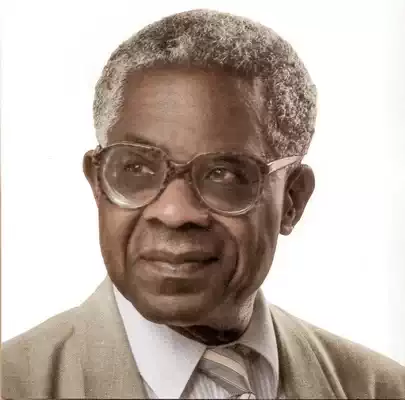
Aimé Césaire
1913–2008
· lived 94 years
 FR
FR
FR
Aimé Césaire was a Martinican poet, writer, and politician, a prominent figure in the literary and political movement of Négritude. His poetic work, marked by expressive force and denunciation of colonialism, deeply explored African and Caribbean identity. He was also an influential political leader, fighting for decolonization and the rights of oppressed peoples.
n. 1913-06-26, Basse-Pointe · m. 2008-04-17, Forte de França
64
Views
Bio
Identification and Basic Context
Aimé Fernand David Césaire, better known as Aimé Césaire, was a Martinican poet, writer, and politician. He was born in Basse-Pointe, Martinique, and died in Paris. He was a French citizen and wrote primarily in French. His work is intrinsically linked to the post-colonial context and the struggle for the affirmation of Black identity.Childhood and Education
Césaire was born into a middle-class family in Basse-Pointe, Martinique. His father was an accountant and his mother a seamstress, who instilled in him a love for literature. He received a secondary education in Fort-de-France and later in Paris, where he attended the Lycée Louis-le-Grand. In the French capital, he met other African and Caribbean intellectuals, such as Léopold Sédar Senghor and Léon Damas, with whom he would found the Négritude movement. This Parisian experience was crucial for his realization of his identity and the situation of colonized peoples.Literary Career
His literary career began with the publication of "Cahier d'un retour au pays natal" in 1939, a long and revolutionary poem that became a manifesto of Négritude. Throughout his life, Césaire published several poetic works, including "Les Armes miraculeuses" (1946), "Soleil cou-coupé" (1948), and "Corps perdus" (1950). In parallel with his poetic activity, he was a deputy for Martinique in the French National Assembly and mayor of Fort-de-France, playing an active role in politics and the anti-colonial struggle.Work, Style, and Literary Characteristics
Césaire's work is characterized by powerful language, rich in imagery and with strong emotional impact. Central themes include the denunciation of colonialism, the exploration of Black identity, longing for his homeland, and revolt against oppression. He frequently used free verse, with intense musicality and sometimes dizzying rhythm. His style is surrealistic in many aspects, with surprising image associations and a deep exploration of the unconscious. "Cahier d'un retour au pays natal" is his most emblematic work, a prose poem that blends lyricism, social denunciation, and self-analysis.Cultural and Historical Context
Aimé Césaire lived in a period of intense cultural and political effervescence, marked by European colonialism in Africa and the Caribbean, World War II, and the rise of national liberation movements. Négritude, a movement he helped found, emerged as a cultural and ideological response to the cultural assimilation imposed by colonialism, seeking to revalue African culture and Black identity. Césaire engaged with other intellectuals and artists of his time, both in Europe, Africa, and the Americas.Personal Life
Césaire's personal life was deeply intertwined with his work and political activism. He married Suzanne Césaire, an intellectual and literary critic who played an important role in disseminating and developing the ideas of Négritude. His political commitment was unwavering throughout his life, dedicating himself to defending the interests of Martinique and fighting for the dignity of African and Caribbean peoples.Recognition and Reception
Aimé Césaire is widely recognized as one of the greatest French-language poets of the 20th century and a crucial figure in post-colonial literature. He received numerous awards and distinctions throughout his career, including the Neustadt International Prize for Literature in 1976. His work is studied in universities worldwide and continues to inspire generations of writers and activists.Influences and Legacy
Césaire was influenced by poets such as Rimbaud and the French surrealists, but he managed to transpose these influences into his own voice, creating a unique and powerful poetry. His legacy lies in the founding of Négritude, his role as a poet of human dignity, and his fight against injustice and oppression. He influenced countless African, Caribbean, and African diaspora writers.Interpretation and Critical Analysis
Césaire's work has been the subject of extensive critical analysis, focusing on his critique of colonialism, his exploration of identity, and his innovative language. Some critics highlight the universality of his message of resistance and affirmation of humanity.Curiosities and Lesser-Known Aspects
Beyond his prominence as a poet and politician, Césaire was also a teacher. His home in Martinique became a place of pilgrimage for admirers of his work. His poetry is known for its density and difficulty of translation, due to the richness of cultural and linguistic references.Death and Memory
Aimé Césaire died in Paris in 2008 at the age of 94. His death was widely reported and mourned, with tributes paid worldwide. His legacy continues to be celebrated, and his work remains a fundamental landmark in literature and the fight for decolonization.Poems
0No poems found
Quotes
3Comments (0)
Log in
to post a comment.
No comments yet. Be the first to comment.