Poems List

L'Idole.. Sonnet Du Trou Du Cul

L'Idole.. Sonnet Du Trou Du Cul

Obscur et froncé comme un oeillet violet
Il respire, humblement tapi parmi la mousse.
Humide encor d'amour qui suit la fuite douce
Des Fesses blanches jusqu'au coeur de son ourlet.


Des filaments pareils à des larmes de lait
Ont pleuré, sous le vent cruel qui les repousse,
À travers de petits caillots de marne rousse
Pour s'aller perdre où la pente les appelait.


Mon Rêve s'aboucha souvent à sa ventouse ;
Mon âme, du coït matériel jalouse,
En fit son larmier fauve et son nid de sanglots.


C'est l'olive pâmée, et la flûte caline ;
C'est le tube où descend la céleste praline :
Chanaan féminin dans les moiteurs enclos !


Albert Mérat.


The Idol.
Sonnet to an Asshole


Dark and wrinkled like a purple pink
It breathes, nestling humbly among the still-damp
Froth of love that follows the gentle slope
Of the white buttocks to its crater's edge.


Filaments like tears of milk
Have wept in the cruel wind which pushes them back,
Across little clots of reddish marl
To lose themselves where the slope called them.


My dream has often kissed its opening;
My soul, jealous of physical coitus,
Has made this its fawn-coloured tear-bottle and its nest of sobs.


It is the rapturous olive and the wheedling flute,
The tube from which the heavenly burnt almond falls:
Feminine Canaan enclosed among moistures.


Albert Mérat.
P.V.-A.R.
712

Le Forgeron (The Blacksmith)

Le Forgeron (The Blacksmith)

Le bras sur un marteau gigantesque, effrayant
D'ivresse et de grandeur, le front large, riant
Comme un clairon d'airain, avec toute sa bouche,
Et prenant ce gros-là dans son regard farouche,
Le Forgeron parlait à Louis Seize, un jour
Que le Peuple était là, se tordant tout autour,
Et sur les lambris d'or traînait sa veste sale.
Or le bon roi, debout sur son ventre, était pâle
Pâle comme un vaincu qu'on prend pour le gibet,
Et, soumis comme un chien, jamais ne regimbait,
Car ce maraud de forge aux énormes épaules
Lui disait de vieux mots et des choses si drôles,
Que cela l'empoignait au front, comme cela !


'Donc, Sire, tu sais bien, nous chantions tra la la
Et nous piquions les boeufs vers les sillons des autres :
Le Chanoine au soleil disait ses patenôtres
Sur des chapelets clairs grenés de pièces d'or.
Le Seigneur, à cheval, passait, sonnant du cor,
Et l'un avec la hart, l'autre avec la cravache,
Nous fouaillaient ; Hébétés comme des yeux de vache,
Nos yeux ne pleuraient pas : nous allions ! nous allions !
Et quand nous avions mis le pays en sillons,
Quand nous avions laissé dans cette terre noire
Un peu de notre chair... nous avions un pourboire :


-Nous venions voir flamber nos taudis dans la nuit ;
Nos enfants y faisaient un gâteau fort bien cuit !...
'Oh ! je ne me plains pas. Je te dis mes bêtises :

-C'est entre nous. J'admets que tu me contredises...
Or, n'est-ce pas joyeux de voir, au mois de juin
Dans les granges entrer des voitures de foin
Enormes ? De sentir l'odeur de ce qui pousse,
Des vergers quand il pleut un peu, de l'herbe rousse ?
De voir les champs de blé, les épis pleins de grain,
De penser que cela prépare bien du pain ?...
-Oui, l'on pourrait, plus fort, au fourneau qui s'allume,
Chanter joyeusement en martelant l'enclume,
Si l'on était certain qu'on pourrait prendre un peu,
Étant homme, à la fin !, de ce que donne Dieu !...
-Mais voilà, c'est toujours la même vieille histoire !
'... Oh ! je sais, maintenant ! Moi, je ne peux plus croire,
Quand j'ai deux bonnes mains, mon front et mon marteau,
Qu'un homme vienne là, dague sous le manteau
Et me dise : Maraud, ensemence ma terre ;
Que l'on arrive encor, quand ce serait la guerre,
Me prendre mon garçon comme cela, chez moi !...


-Moi, je serais un homme, et toi tu serais roi,
Tu me dirais : Je veux ! - Tu vois bien, c'est stupide !...
Tu crois que j'aime à voir ta baraque splendide,
Tes officiers dorés, tes mille chenapans,

Tes palsembleu bâtards tournant comme des paons ?
Ils ont rempli ton nid de l'odeur de nos filles,
Et de petits billets pour nous mettre aux Bastilles,
Et nous dirions : C'est bien : les pauvres à genoux !...
Nous dorerions ton Louvre en donnant nos gros sous,
Et tu te soûlerais, tu ferais belle fête,
Et tes Messieurs riraient, les reins sur notre tête !...


'Non ! Ces saletés-là datent de nos papas !
Oh ! Le Peuple n'est plus une putain ! Trois pas,
Et, tous, nous avons mis ta Bastille en poussière !
Cette bête suait du sang à chaque pierre...
Et c'était dégoûtant, la Bastille debout
Avec ses murs lépreux qui nous rappelaient tout
Et, toujours, nous tenaient enfermés dans leur ombre !


-Citoyen ! citoyen ! c'était le passé sombre
Qui croulait, qui râlait, quand nous prîmes la tour !
Nous avions quelque chose au coeur comme l'amour :
Nous avions embrassé nos fils sur nos poitrines,
Et, comme des chevaux, en soufflant des narines,
Nous marchions, nous chantions, et ça nous battait là,
Nous allions au soleil, front haut, comme cela,
Dans Paris accourant devant nos vestes sales !...
Enfin ! Nous nous sentions hommes ! Nous étions pâles,
Sire ; nous étions soûls de terribles espoirs,
Et quand nous fûmes là, devant les donjons noirs,
Agitant nos clairons et nos feuilles de chêne,
Les piques à la main ; nous n'eûmes pas de haine :
-Nous nous sentions si forts ! nous voulions être doux !
'Et depuis ce jour-là, nous sommes comme fous...
Le flot des ouvriers a monté dans la rue
Et ces maudits s'en vont, foule toujours accrue,
Comme des revenants, aux portes des richards !...
Moi, je cours avec eux assommer les mouchards,
Et je vais dans Paris le marteau sur l'épaule,
Farouche, à chaque coin balayant quelque drôle,
Et, si tu me riais au nez, je te tuerais !...


-Puis, tu dois y compter, tu te feras des frais
Avec tes avocats, qui prennent nos requêtes
Pour se les renvoyer comme sur des raquettes,
Et, tout bas, les malins ! Nous traitant de gros sots !
Pour mitonner des lois, ranger des de petits pots
Pleins de menus décrets, de méchantes droguailles,
S'amuser à couper proprement quelques tailles,
Puis se boucher le nez quand nous passons près d'eux,
- Ces chers avocassiers qui nous trouvent crasseux ! -
Pour débiter là-bas des milliers de sornettes
Et ne rien redouter sinon les baïonnettes,
Nous en avons assez, de tous ces cerveaux plats !
Ils embêtent le peuple !... Ah ! ce sont là les plats
Que tu nous sers, bourgeois, quand nous sommes féroces,

Quand nous cassons déjà les sceptres et les crosses !...'


Puis il le prend au bras, arrache le velours
Des rideaux, et lui montre, en bas, les larges cours
Où fourmille, où fourmille, où se lève la foule,
La foule épouvantable avec des bruits de houle,
Hurlant comme une chienne, hurlant comme une mer,
Avec ses bâtons forts et ses piques de fer,
Ses clameurs, ses grands cris de halles et de bouges,
Tas sombre de haillons taché de bonnets rouges !
L'Homme, par la fenêtre ouverte, montre tout
Au Roi pâle, suant qui chancelle debout,
Malade à regarder cela !...
spacespacespacespacespacespacespacespace'C'est la Crapule,
Sire ! ça bave aux murs, ça roule, ça pullule...


-Puisqu'ils ne mangent pas, Sire, ce sont les gueux !
-Je suis un forgeron : ma femme est avec eux :
Folle ! Elle vient chercher du pain aux Tuileries :
-On ne veut pas de nous dans les boulangeries !...
J'ai trois petits ; -Je suis crapule ! - Je connais
Des vieilles qui s'en vont pleurant sous leurs bonnets,
Parce qu'on leur a pris leur garçon ou leur fille :
-C'est la crapule. - Un homme était à la bastille,
D'autres étaient forçats ; c'étaient des citoyens
Honnêtes ; Libérés, ils sont comme des chiens ;
On les insulte ! Alors, ils ont là quelque chose
Qui leur fait mal, allez ! C'est terrible, et c'est cause
Que, se sentant brisés, que, se sentant damnés,
Ils viennent maintenant hurler sous votre nez !...
-Crapules : - Là-dedans sont des filles, infâmes
Parce que -, sachant bien que c'est faible, les femmes,
Messeigneurs de la cour, que ça veut toujours bien, -
Vous leur avez sali leur âme, comme rien !
Vos belles, aujourd'hui, sont là : - C'est la Crapule...
'Oh ! tous les Malheureux, tout ceux dont le dos brûle
Sous le soleil féroce, et qui vont, et qui vont,
Et dans ce travail-là sentent crever leur front,
Chapeau bas, mes bourgeois ! Oh ! ceux-là sont les hommes !


-Nous sommes Ouvriers ! Sire, Ouvriers ! - nous sommes
Pour les grands temps nouveaux où l'on voudra savoir,
Où l'homme forgera du matin jusqu'au soir,
Où, lentement vainqueur, il chassera les choses
Poursuivant les grands buts, cherchant les grandes causes,
Et montera sur Tout comme sur un cheval !
Oh ! nous sommes contents, nous aurons bien du mal !
-Tout ce qu'on ne sait pas, c'est peut-être terrible.
Nous pendrons nos marteaux, nous passerons au crible
Tout ce que nous savons, puis, Frères, en avant !...
-Nous faisons quelquefois ce grand rêve émouvant
De vivre simplement, ardemment, sans rien dire
De mauvais, travaillant sous l'auguste sourire

D'une femme qu'on aime avec un noble amour !
Et l'on travaillerait fièrement tout le jour,
Ecoutant le devoir comme un clairon qui sonne :
Et l'on se trouverait fort heureux, et personne,
Oh ! personne ! surtout, ne vous ferait plier !...
On aurait un fusil au-dessus du foyer....

'Oh ! mais ! l'air est tout plein d'une odeur de bataille !
Que te disais-je donc ? Je suis de la canaille !'

Translation by A. S. Kline


His hand on a gigantic hammer, terrifying
In size and drunkenness, vast-browed, laughing
Like a bronze trumpet, his whole mouth displayed,
Devouring the fat man, now, with his wild gaze,
The Blacksmith spoke with Louis, with the king,
The People there, all around him, cavorting,
Trailing their dirty coats down gilded panels.
But the dear king, belly upright, was pallid,
Pale as the victim led to the guillotine,
Submissive like a dog, cowed by the scene,
Since that wide-shouldered forge-black soul
Spoke of things past and other things so droll,
He had him by the short hairs, just like that!


‘Now, Sir, you know how we’d sing tra-la-la,
And drive the ox down other people’s furrows:
The Canon spun paternosters in the shadows
On rosaries bright with golden coins adorned,
Some Lord, astride, passed blowing on his horn,
One with the noose, another with whip-blows
Lashed us on. – Dazed like the eyes of cows,
Our eyes no longer wept; on and on we went,
And when we’d ploughed a whole continent,
When we had left behind in that black soil
A little of our own flesh…to reward our toil:
They’d set alight our hovels in the night;
Our little ones made burnt cakes alright.


…Oh, I’m not complaining! All my follies,
They’re between us. I’ll let you contradict.
But, isn’t it fine to see, in the month of June,
The enormous hay-wains entering the barns?
To smell the odour of burgeoning things,
The orchards in fine rain, the oats reddening?
To see wheat, wheat, ears filled with grain,
To think it promises us good bread again?...
Oh! You’d go to the forge, be more cheerful,
Sing and hammer joyfully at the anvil,
If you were sure to gain a little in the end –


Being, in fact, a man – of what God intends!

– But there it is, always the same old story!...
But now I know! I don’t credit it any more,
Owning two strong hands, a head, a hammer,
That a man in a cloak, wearing a dagger
Can say: go and sow my land, there, fellow;
Or that another, if maybe war should follow,
Can take my son like that, from where I’m living!


– Suppose I were a man, and you a king,
You’d say: I will it!... – What stupidity.
You think your splendid barn pleases me,
Your gilded servants, your thousand rogues,
Your fancy bastards, peacocks in a row:
Filling your nest with our daughters’ odour,
Warrants to the Bastille for us, moreover
That we should say: fine: make the poor poorer!
We’ll give you our last sous to gild the Louvre!
While you get drunk and enjoy the feast,
– And they all laugh, riding our backs beneath!
No. Those puerilities were our fathers!
The People is no one’s whore now, three steps further
And then, we razed your Bastille to the ground.
That monster sweated blood from every mound,
Was an abomination, that Bastille standing,
With leprous walls its every story yielding,
And, we forever held fast in its shadow!


– Citizen! That was the past, its sorrow,
That broke, and died, when we stormed the tower!
We had something in our hearts like true ardour.
We had clutched our children to our breast.
And like chargers, snorting at the contest,
We went, proud and strong, beating here inside…
We marched in the sun – like this – heads high
Into Paris! They greeted us in our ragged clothes.
At last! We felt ourselves Men! We were sallow,
Sire, drunk, and pallid with terrifying hopes:
And there, in front of those black prison slopes,
Waving our bugles and our sprigs of oak,
Pikes in our fists; did we feel hatred, no!
– We felt such strength we wanted to be gentle! ...
And since that day, we have proved elementals!
A mass of workers sprang up in the street,
And, cursed, are gone, a swelling crowd replete
With ghostly shades, to haunt the rich man’s gate.
I, I run with them, and set informers straight:
I scour Paris, dark-faced, wild, hammer on shoulder,
Sweeping something droll out of every corner,
And, if you smile at me, then I’ll do for you!


– Well, count on it: all this is going to cost you

And your men in black, culling our requests
To bat them about on their racquets all in jest,
And whisper, the rascals, softly: “Oh, what sots!”
To cook up laws, and stick up little pots,
Filled with cute pink decrees, and sugar pills,
Cutting us down to size, to amuse themselves,
Then they hold their noses when we pass by,
– Our kind representatives who hate the sty! –
Fearful of nothing, nothing, but bayonets….
That’s fine. Enough of snuff and lorgnettes!
We’ve had our fill, here, of those dull heads
And bellies of gods. Ah! That’s the bread
You serve us, bourgeoisie, while we rage here,
While we shatter the sceptre and the crozier!...’


He takes his arm, tears back the velvet curtain
And shows the vast courtyards beneath them,
Where the mob swarms, and seethes, where rise,
Out of the frightful mob those storm-filled cries,
Howling as bitches howl, or like the sea,
With their knotted stakes, their pikes of steel,
With the clamour of their market-halls and slums,
A ragged mass of blood-stained caps, and drums:
The Man, through the open window, shows all
To the pale sweating king, reeling, about to fall,
Sick at the sight of it!
‘Those are the Scum, Sire.
Licking the walls, seething, rising higher:


– But then they’ve not eaten, Sire, these beggars!
I’m a blacksmith: my wife, madwoman, is there!
She thinks she’ll get bread at the Tuileries!
– They’ll have none of us in the bakeries.
I’ve three youngsters. I’m scum, too – I know
Old women weeping under their bonnets so
Because they’ve taken a daughter or a son:
One man was in the Bastille – oh, they’re scum –
Another the galleys: both honest citizens.
Freed, they’re treated like dogs, these men:
Insulted! Then, they have something here
That hurts them, see! It’s terrible, it’s clear
They feel broken, feel themselves damned,
There, screaming beneath you where you stand!
Scum. – Down there girls, infamous, shriek,
Because – well, you knew girls were weak –
Gentlemen of the court – gave all you sought –
You’d spit on their souls, as if they were naught!
Now, your pretty ones are there. They’re scum.
Oh, all the Wretched, whose backs, in the fierce sun
Burn, and yet they still work on and on,
Feeling their heads burst with their exertion,
Hats off, you bourgeoisie! Those are Men.


We are the Workers, Sire! Workers! And then
We’re for the great new age, of knowledge, light,
When Man will forge from morning to night,
Pursuing great effects, chasing great causes,
When he will tame things, slowly victorious,
And like a horse, mount the mighty All!
Oh! Splendour of the forges! And no more
Evil, then! – What’s unknown, its terror maybe
We’ll know! – Hammer in hand, let’s sieve freely
All that we know: then, Brothers, we’ll go on!
Sometimes we dream that dream’s vast emotion
Of the simple ardent life, where you revile
All evil, working beneath the august smile,
Of a woman you love with love’s nobility:
And all day long you labour on proudly,
Hearing the clarion call of duty sounding!
And you feel so happy; and nothing, nothing,
Oh, above all, no-one makes you kneel!
Over the fireplace, there, you’d have a rifle…


Oh! But the air is filled with the scent of battle.
What did I say? I too am one of the rascals!
And there are still sharks and informers.
But we are free! With our moments of terror
When we feel we are great, so great! Just now
I was talking of peaceful work, of how…
Look at that sky! – Too small for us, you see,
If we feared the heat, we’d live on our knees!
Look at that sky! – I’ll return to the crowd,
To the vast fearful mob who cry aloud
And roll your cannon through the cobbles’ sty;


– Oh! We will wash them clean when we die!
– And if, against our cries and our vengeance,
The claws of old gilded kings, all over France,
Urge on their regiments in full battle-dress,
Well then, you lot? Shit to those dogs, no less!’
– He shoulders his hammer once more.
The crowd
Feels soul-drunk close to that man, and now
Through the great courtyard, all those rooms,
Where Paris pants and the voices boom,
A shudder shakes the immense populace.
Then, with his broad hand, its grimy grace
Gilded, while the pot-bellied king sweats,
The Blacksmith set his red cap on that head!
628

Jeanne-Marie's Hands

Jeanne-Marie's Hands

Jeanne-Marie has strong hands; dark hands tanned by the summer,
pale hands like dead hands. Are they the hands of Donna Juana?
Did they get their dusky cream colour
sailing on pools of sensual pleasure?


Have they dipped into moons, in ponds of serenity?
Have they drunk heat from barbarous skies, calm upon enchanting knees?
Have they rolled cigars, or traded in diamonds?
Have they tossed golden flowers at the glowing feet of Madonnas?


It is the black blood of belladonnas that blazes and sleeps in their palms.
Hands which drive the diptera with which
the auroral bluenesses buzz, towards the nectars?
Hands which measure out poisons?


Oh what Dream has stiffened them in pandiculations?
Some extraordinary dream of the Asias, of Khenghavars or Zions?
These hands have neither sold oranges
nor become sunburnt at the feet of the gods:
these hands have never washed the napkins of heavy babies without eyes.


These are not the hands of a tart,
nor of working women with round foreheads burnt
by a sun which is drunk with the smell of tar,
in woods that sink of factories.


These are benders of backbones; hands that never work harm;
more inevitable than machines, stronger than carthorses!
Stirring like furnaces, shaking off all their chills of fear,
their flesh sings Marseillaises, and never Eleisons!


They could grasp your necks, O evil women;
they could pulverize your hands, noblewomen;
your infamous hands full of white and of carmine.
The splendour of these hands of love turns the heads of the lambs!


On their spicy fingers the great sun sets a ruby!
A dark stain of the common people makes then brown
like the nipples of the women of yesterday,
but it is the backs of these Hands which every
proud Rebel desires to kiss! Marvelous,
they have paled in the great sunshine full of love of the cause
on the bronze casing of machine-guns throughout insurgent Paris!


Ah, sometimes, O blessed Hands, at your wrists,
Hands where our never-sobered lips tremble,
cries out a chain of bright links!
And there's a strange and sudden


Start in our beings when,
sometimes, they try, angelic Hands,
to make your sunburn fade away


by making your fingers bleed!
544

Historic Evening

Historic Evening

On an evening, for example, when the naive tourist has retired
from our economic horrors, a master's hand awakens
the meadow's harpsichord;
they are playing cards at the bottom of the pond,
mirror conjuring up favorites and queens;
there are saints, veils, threads of harmony,
and legendary chromatics in the setting sun.
He shudders as the hunts and hordes go by.
Comedy drips on the grass stages.
And the distress of the poor and of the weak
on those stupid planes! Before his slave's vision,
Germany goes scaffolding toward moons;
Tartar deserts light up; ancient revolts ferment
in the center of the Celestial Empire;
over stairways and armchairs of rock, a little world, wan and flat,
Africa and Occidents, will be erected.
Then a ballet of familiar seas and nights,
worthless chemistry and impossible melodies. The same bourgeois magic
wherever the mail-train sets you down.
Even the most elementary physicist feels that it is no longer possible
to submit to this personal atmosphere, fog of physical remorse,
which to acknowledge is already an affliction. No!
The moment of the seething cauldron, of seas removed,
of subterranean conflagrations, of the planet swept away,
and the consequent exterminations, certitudes indicated
with so little malice by the Bible and by the Norns
and for which serious persons should be on the alert
522

Genie

Genie


He is love and the present because he has opened our house
to winter's foam and to the sound of summer,
He who purified all that we drink and tea;
He is the charm of passing places,
the incarnate delight of all things that abide.
He is affection and the future,
the strength and love that we,
standing surrounded by anger and weariness,
See passing in the storm-filled sky and in banners of ecstasy.
He is love, perfect and rediscovered measure,
Reason, marvelous and unforeseen,
Eternity: beloved prime mover of the elements, of destinies.
We all know the terror of his yielding, and of ours:
Oh delight of our well-being, brilliance of our faculties,
selfish affection and passion for him, who loves us forever...
And we remember him, and he goes on his way...
And if Adoration departs, then it sounds, his promise sounds:
'Away with these ages and superstitions,
These couplings, these bodies of old!
All our age has submerged.' He will not go away,
will not come down again from some heave.
He will not fulfill the redemption of women's fury
nor the gaiety of men nor the rest of this sin:
For he is and he is loved, and so it is already done.
Oh, his breathing, the turn of his head when he runs:
Terrible speed of perfection in action and form!
Fecundity of spirit and vastness of the universe! His body!
Release so long desired, The splintering of grace before a new violence!
Oh, the sight, the sight of him!
All ancient genuflections, all sorrows are lifted as he passes.
The light of his day! All moving and sonorous
suffering dissolves in more intense music.
In his step there are vaster migrations than the old invasions were.
Oh, He and we! a pride more benevolent than charities lost.
Oh, world! and the shining song of new sorrows.
He has known us all and has loved us.
Let us discover how, this winter night, to hail him from cape to cape,
from the unquiet pole to the château,
from crowded cities to the empty coast,
from glance to glance, with our strength and our feelings exhausted,
To see him, and to send him once again away...
And beneath the tides and over high deserts of snow
To follow his image, his breathing, his body, the light of his day.
709

Friends

Friends


Come, the Wines are off to the seaside,
and the waves by the million!
Look at wild Bitter rolling from the mountain tops!
Let us reach, like good pilgrims, green-pillared Absinthe…


Myself: No more of these landscapes.
What is drunkenness, friends?
I had soon - rather, even - rot in the pond,
beneath the horrible scum, near the floating driftwood.
465

First Evening (Première Soirée)

First Evening (Première Soirée)

Her clothes were almost off;
Outside, a curious tree
Beat a branch at the window
To see what it could see.


Perched on my enormous easy chair,
Half nude, she clasped her hands.
Her feet trembled on the floor,
As soft as they could be.


I watched as a ray of pale light,
Trapped in the tree outside,
Danced from her mouth
To her breast, like a fly on a flower.


I kissed her delicate ankles.
She had a soft, brusque laugh
That broke into shining crystals -
A pretty little laugh.


Her feet ducked under her chemise;
'Will you please stop it!…'
But I laughed at her cries -
I knew she really liked it.


Her eye trembled beneath my lips;
They closed at my touch.
Her head went back; she cried:
'Oh, really! That's too much!


'My dear, I'm warning you…'
I stopped her protest with a kiss
And she laughed, low -
A laugh that wanted more than this…


Her clothes were almost off;
Outside, a curious tree
Beat a branch at the window
To see what it could see.


Original French


Première Soirée


'- Elle était fort déshabillée
Et de grands arbres indiscrets
Aux vitres jetaient leur feuillée
Malinement, tout près, tout près.


Assise sur ma grande chaise,


Mi-nue, elle joignait les mains.
Sur le plancher frissonnaient d'aise
Ses petits pieds si fins, si fins

-Je regardai, couleur de cire
Un petit rayon buissonnier
Papillonner dans son sourire
Et sur son sein, - mouche ou rosier
-Je baisai ses fines chevilles.
Elle eut un doux rire brutal
Qui s'égrenait en claires trilles,
Un joli rire de cristal
Les petits pieds sous la chemise
Se sauvèrent : 'Veux-tu en finir !'

-La première audace permise,
Le rire feignait de punir !
-Pauvrets palpitants sous ma lèvre,
Je baisai doucement ses yeux :
-Elle jeta sa tête mièvre
En arrière : 'Oh ! c'est encor mieux !...
'Monsieur, j'ai deux mots à te dire...'

-Je lui jetai le reste au sein
Dans un baiser, qui la fit rire
D'un bon rire qui voulait bien.....
-Elle était fort déshabillée
Et de grands arbres indiscrets
Aux vitres jetaient leur feuillée
Malinement, tout près, tout près
652

Fairy

Fairy


For Helen, in the virgin shadows and the
impassive radiance in astral silence,
ornamental saps conspired.

Summer's ardour was confided
to silent birds and due indolence
to a priceless mourning boat
through gulfs of dead loves
and fallen perfumes.

-After the moment of the woods women's song
to the rumble of the torrent in the ruin of the wood,
of the tinkle of the cowbells to the echo of the vales,
and the cries of the steppes.

-For Helen's childhood, furs and shadows trembled,
and the breast of the poor and the legends of heaven.
And her eyes and her dance superior
even to the precious radiance,
to cold influences, to the pleasure of the unique
setting and the unique hour.
1,152

Feasts Of Hunger

Feasts Of Hunger

My hunger, Anne, Anne, flee on your donkey.

If I have any taste, it s for hardly anything
but earth and stones.
Dinn! Dinn! Dinn! Dinn!


Let us eat air, rock, coal, iron.
Turn, my hungers.
Feed, hungers, in the meadow of sounds!
Suck the gaudy poison of the convolvuli;
Eat, the stones a poor man breaks,
the old masonry of churches, boulders,
children of floods, loaves lying in the grey valleys!


Hungers, it is bits of black air; the azure trumpeter;
it is my stomach that makes me suffer.
It is unhappiness. Leaves have appeared on earth!
I go looking for the sleepy flesh of fruit.
At the heart of the furrow I pick
Venus' looking-glass and the violet.


My hunger, Anne, Anne, flee on your donkey.
638

Evening Prayer

Evening Prayer

I spend my life sitting - like an angel
in the hands of a barber - a deeply fluted beer mug
in my fist, belly and neck curved,
a Gambier pipe in my teeth, under the air
swelling with impalpable veils of smoke.


Like the warm excrements in an old dovecote,
a thousand dreams burn softly inside me,
and at times my sad heart is like sap-wood bled
on by the dark yellow gold of its sweats.


Then, when I have carefully swallowed my dreams,
I turn, having drunk thirty or forty tankards,
and gather myself together to relieve bitter need:
As sweetly as the Saviour of Hyssops
and of Cedar I piss towards dark skies,
very high and very far;
and receive the approval of the great heliotropes.
633

Comments (0)

Log in to post a comment.

NoComments

Identification and basic context

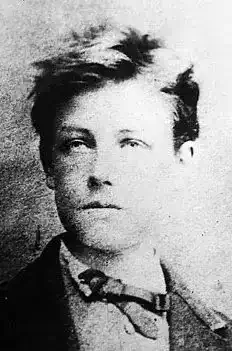
Arthur Rimbaud was a French poet, widely regarded as a major figure of Symbolism and a precursor to Surrealism. He was born in Charleville, France, and died in Marseille. His nationality was French, and he wrote exclusively in French. His work emerged during a period of significant social and political upheaval in France, following the Franco-Prussian War and the Paris Commune.

Childhood and education

Rimbaud had a turbulent childhood. His father, an army captain, abandoned the family when Arthur was young, leaving him and his siblings to be raised by their devout and strict mother. He received a classical education at the Collège de Charleville, where he excelled academically and discovered a passion for literature, particularly the works of Victor Hugo and Alfred de Vigny. He was a precocious and rebellious student, often clashing with his teachers.

Literary trajectory

Rimbaud began writing poetry at a very young age, showing remarkable talent and a radical departure from established poetic norms. He ran away from home multiple times, seeking literary circles in Paris and Brussels. His most intense period of writing occurred between the ages of 15 and 20. During this short but explosive period, he produced his most celebrated works, including *A Season in Hell* and *Illuminations*. He collaborated with Paul Verlaine, which led to both creative inspiration and significant personal conflict. By the age of 20, Rimbaud had largely ceased writing poetry, embarking on a life of travel and various unconventional occupations.

Works, style, and literary characteristics

Rimbaud's major works include *A Season in Hell* (1873), a prose poem detailing his spiritual and artistic crisis, and *Illuminations* (published posthumously, c. 1886), a collection of prose poems and verse characterized by surreal imagery and innovative language. His poetry often explores themes of rebellion against bourgeois society, the pursuit of the unknown, altered states of consciousness, and the concept of the seer (le voyant) who can access hidden realities. His style is revolutionary: he experimented with free verse, prose poems, and a visionary, often hallucinatory, imagery. He employed a rich, often jarring, vocabulary and syntax, pushing the boundaries of poetic expression. His tone can be ecstatic, despairing, prophetic, or intensely personal.

Cultural and historical context

Rimbaud's work is deeply intertwined with the Symbolist movement, which sought to express subjective experiences and emotions through suggestive symbols and imagery, moving away from the direct representation of reality favored by Realism. He was a contemporary and acquaintance of other major Symbolists like Verlaine and Mallarmé. His life and work challenged the conventions of late 19th-century French society, embodying a spirit of bohemianism and artistic revolt.

Personal life

Rimbaud's personal life was marked by intense relationships, most notably his passionate and destructive affair with fellow poet Paul Verlaine. This relationship involved significant conflict, including Verlaine shooting Rimbaud. After abandoning poetry, Rimbaud traveled extensively, working as a merchant, explorer, and gun-runner in Africa and the Middle East. His experiences in these regions profoundly shaped his later life, though he rarely wrote about them.

Recognition and reception

While Rimbaud achieved some notoriety during his lifetime, especially for his association with Verlaine and his scandalous behavior, his true literary significance was only fully recognized posthumously. *Illuminations* and *A Season in Hell* were published after he had stopped writing, and their profound influence on subsequent generations of poets and artists only grew over time.

Influences and legacy

Rimbaud was influenced by poets like Baudelaire and the Parnassian movement, but he rapidly surpassed them with his radical innovations. His legacy is immense. He is considered a foundational figure for Surrealism, and his ideas about the poet as a seer and the liberation of language have inspired countless writers, artists, and musicians. His concept of deliberately deranging the senses ("dérèglement de tous les sens") to achieve the unknown has been particularly influential.

Interpretation and critical analysis

Interpretations of Rimbaud's work often focus on his exploration of the self, his critique of societal norms, and his attempts to transcend ordinary reality through language and experience. His life story, the legend of the poet-wanderer, often intersects with interpretations of his demanding and elusive poetry. Debates continue regarding the extent to which his later life as an adventurer represented a rejection or a fulfillment of his early poetic visions.

Curiosities and lesser-known aspects

Rimbaud's abrupt abandonment of poetry at such a young age is one of the most compelling mysteries of his life. His later career as a merchant and explorer in Africa is a stark contrast to his earlier life as a poet, leading to much speculation about his motivations and experiences. He was known for his fierce independence and disdain for literary conventions.

Death and memory

Arthur Rimbaud died of cancer in Marseille. His death at a relatively young age only added to his mythic status. His works are now considered cornerstones of modern literature, studied and celebrated worldwide, and his image as the archetypal rebellious poet continues to captivate the imagination.