
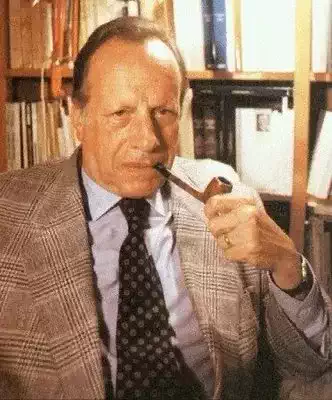
David Mourão-Ferreira
1927–1996
· lived 69 years
 PT
PT
PT
David Mourão-Ferreira was a prominent Portuguese poet, writer, and literary critic. His poetic work, marked by profound lyrical sensitivity and refined formal rigor, explored themes such as love, time, and the ephemerality of existence, often with a pure language and unparalleled musicality. In addition to his vast literary production, David Mourão-Ferreira was actively involved in criticism and cultural promotion, leaving a significant legacy in the Portuguese literary landscape.
n. 1927-02-24, Lisboa · m. 1996-06-16, Lisboa
93
Views
Bio
Identification and basic context
David Mourão-Ferreira (pseudonym of David de Mouro e Ferreira) was a Portuguese poet, short story writer, playwright, literary critic, and essayist. He was born and died in Lisbon. He was the son of David Ferreira and Maria da Assunção Mourão. He was married to Maria Teresa de Noronha de Menezes. His work is part of the context of 20th-century Portuguese literature, marked by various aesthetic currents and the country's social and political transformations.Childhood and education
He completed his secondary studies at Liceu Gil Vicente, in Lisbon. He attended the Faculty of Law at the University of Lisbon, where he graduated in 1949. From an early age, he showed an interest in literature, influenced by readings ranging from Portuguese poetry classics to European avant-garde movements. His intellectual training was robust, combining the study of law with a growing passion for arts and letters.Literary career
He began his literary activity early, publishing his first poems in academic and literary magazines. His work evolved over decades, maintaining thematic and stylistic coherence, albeit with different emphases. He published poetry, prose, and drama, as well as an extensive body of criticism. He collaborated in several renowned publications, such as "Revista de Portugal" and "O Tempo e o Modo".Work, style, and literary characteristics
His best-known poetic works include "Os Amantes Sem Dinheiro" (1950), "A Secreta L Biên" (1958), "Obra Poética" (1981), and "A Poesia Essencial de David Mourão-Ferreira" (1999). The central themes are love (often with the dimension of desire and absence), time and its passage, memory, the ephemerality of life, and the search for meaning. In terms of form, he demonstrated great technical mastery, often resorting to the sonnet and traditional poetic forms, but also exploring free verse. His style is characterized by purity, musicality, imagistic density, and a lyrical tone, sometimes melancholic, but always balanced and contemplative. His language is careful, erudite yet accessible, with a precise and elegant vocabulary.Work, style, and literary characteristics
Cultural and historical context David Mourão-Ferreira lived and wrote during a period of intense change in Portugal, including the Estado Novo dictatorship and the transition to democracy. Although he did not adopt an openly confrontational stance, his work reflects a sensitivity attentive to human and existential concerns. He was close to important intellectual figures of his time and actively participated in cultural debates. He was part of the "generation of 50" or "generation of Orpheu redivivo," which sought to renew Portuguese poetry while maintaining a dialogue with tradition.Work, style, and literary characteristics
Personal life In addition to his literary career, David Mourão-Ferreira held public and diplomatic positions. He was Director-General for Cultural Relations at the Ministry of Foreign Affairs and a member of the Board of Directors of the Calouste Gulbenkian Foundation. His personal life was marked by marriage and dedication to his family, elements that, subtly, are sometimes reflected in his work.Work, style, and literary characteristics
Recognition and reception David Mourão-Ferreira received widespread recognition during his lifetime, both in Portugal and abroad. He received several literary awards, including the International Association of Literary Critics Award (1980) and the Grand Prize for Poetry from the Portuguese Writers' Association (1991). His work is studied in universities, and his poetry is frequently anthologized and translated.Work, style, and literary characteristics
Influences and legacy He was influenced by poets such as Fernando Pessoa, Luís de Camões, and by Symbolist authors. His legacy lies in his formal elegance, lyrical depth, and ability to address universal themes with a distinct and refined voice. He influenced later generations of poets with his technical mastery and his restrained, yet intense, approach to human emotions. His work continues to be a benchmark in contemporary Portuguese-language poetry.Work, style, and literary characteristics
Interpretation and critical analysis Mourão-Ferreira's work is often analyzed from the perspective of its lyrical restraint, its ability to explore the complexity of love and time, and its relationship with the Portuguese poetic tradition. Critics highlight the formal sophistication and existential depth emanating from his verses, often avoiding excessive rhetoric in favor of a more restrained and meditative expressiveness.Work, style, and literary characteristics
Curiosities and lesser-known aspects David Mourão-Ferreira was known for his discretion and elegance. Besides poetry, he also had an interest in visual arts. His house in Lisbon was a meeting place for many artists and intellectuals. His ability to reconcile an intense literary activity with a diplomatic and administrative career is noteworthy.Work, style, and literary characteristics
Death and memory He passed away in Lisbon, leaving behind a vast and acclaimed body of work. After his death, works and studies about his life and work continued to be published, consolidating his position as one of the great Portuguese poets of the 20th century.Poems
0No poems found
Videos
50
Comments (0)
Log in
to post a comment.
No comments yet. Be the first to comment.