Poems List

Sonnets 06: No Rose That In A Garden Ever Grew

Sonnets 06: No Rose That In A Garden Ever Grew

No rose that in a garden ever grew,
In Homer's or in Omar's or in mine,
Though buried under centuries of fine
Dead dust of roses, shut from sun and dew
Forever, and forever lost from view,
But must again in fragrance rich as wine
The grey aisles of the air incarnadine
When the old summers surge into a new.
Thus when I swear, "I love with all my heart,"
'Tis with the heart of Lilith that I swear,
'Tis with the love of Lesbia and Lucrece;
And thus as well my love must lose some part
Of what it is, had Helen been less fair,
Or perished young, or stayed at home in Greece.
288

Sonnets 04: Only Until This Cigarette Is Ended

Sonnets 04: Only Until This Cigarette Is Ended

Only until this cigarette is ended,
A little moment at the end of all,
While on the floor the quiet ashes fall,
And in the firelight to a lance extended,
Bizarrely with the jazzing music blended,
The broken shadow dances on the wall,
I will permit my memory to recall
The vision of you, by all my dreams attended.
And then adieu,—farewell!—the dream is done.
Yours is a face of which I can forget
The color and the features, every one,
The words not ever, and the smiles not yet;
But in your day this moment is the sun
Upon a hill, after the sun has set.
247

Sonnets 02: Into The Golden Vessel Of Great Song

Sonnets 02: Into The Golden Vessel Of Great Song

Into the golden vessel of great song
Let us pour all our passion; breast to breast
Let other lovers lie, in love and rest;
Not we,—articulate, so, but with the tongue
Of all the world: the churning blood, the long
Shuddering quiet, the desperate hot palms pressed
Sharply together upon the escaping guest,
The common soul, unguarded, and grown strong.
Longing alone is singer to the lute;
Let still on nettles in the open sigh
The minstrel, that in slumber is as mute
As any man, and love be far and high,
That else forsakes the topmost branch, a fruit
Found on the ground by every passer-by.
222

Sonnet V: If I should learn

Sonnet V: If I should learn

If I should learn, in some quite casual way,
That you were gone, not to return again--
Read from the back-page of a paper, say,
Held by a neighbor in a subway train,
How at the corner of this avenue
And such a street (so are the papers filled)
A hurrying man--who happened to be you-At
noon to-day had happened to be killed,
I should not cry aloud--I could not cry
Aloud, or wring my hands in such a place--
I should but watch the station lights rush by

With a more careful interest on my face,
Or raise my eyes and read with greater care
Where to store furs and how to treat the hair.
300

Sonnets (1923)

Sonnets (1923)

VIII8.
Oh, oh, you will be sorry for that word!
.
Give back my book and take my kiss instead.
.
Was it my enemy or my friend I heard,
.
"What a big book for such a little head!"
.
Come, I will show you now my newest hat,
.
And you may watch me purse my mouth and prink!
.
Oh, I shall love you still, and all of that.
.
I never again shall tell you what I think.
.
I shall be sweet and crafty, soft and sly;
.

You will not catch me reading any more:
.

I shall be called a wife to pattern by;
.

And some day when you knock and push the door,
.

Some sane day, not too bright and not too stormy,
.

I shall be gone, and you may whistle for me. IX9.
Here is a wound that never will heal, I know,
.
Being wrought not of a dearness and a death,
.
But of a love turned ashes and the breath
.
Gone out of beauty; never again will grow
.
The grass on that scarred acre, though I sow
.
Young seed there yearly and the sky bequeath
.
Its friendly weathers down, far underneath
.
Shall be such bitterness of an old woe.
.
That April should be shattered by a gust,
.


That August should be levelled by a rain,
.

I can endure, and that the lifted dust
.

Of man should settle to the earth again;
.

But that a dream can die, will be a thrust
.

Between my ribs forever of hot pain. XVIII18.
I, being born a woman and distressed
.
By all the needs and notions of my kind,
.
Am urged by your propinquity to find
.
Your person fair, and feel a certain zest
.
To bear your body's weight upon my breast:
.
So subtly is the fume of life designed,
.
To clarify the pulse and cloud the mind,
.
And leave me once again undone, possessed.
.
Think not for this, however, the poor treason
.

Of my stout blood against my staggering brain,
.

I shall remember you with love, or season
.

My scorn with pity, -- let me make it plain:
.

I find this frenzy insufficient reason
.

For conversation when we meet again. XIX19.
What lips my lips have kissed, and where, and why,
.
I have forgotten, and what arms have lain
.
Under my head till morning; but the rain
.
Is full of ghosts to-night, that tap and sigh


.

Upon the glass and listen for reply,

.

And in my heart there stirs a quiet pain

.

For unremembered lads that not again

.

Will turn to me at midnight with a cry.

.

Thus in the winter stands the lonely tree,

.
Nor knows what birds have vanished one by one,

.
Yet knows its boughs more silent than before:

.
I cannot say what loves have come and gone,

.
I only know that summer sang in me

.
A little while, that in me sings no more.
358

Sonnet III: Mindful of you the sodden earth

Sonnet III: Mindful of you the sodden earth

Mindful of you the sodden earth in spring,
And all the flowers that in the springtime grow,
And dusty roads, and thistles, and the slow

Rising of the round moon, all throats that sing

The summer through, and each departing wing,
And all the nests that the bared branches show,
And all winds that in any weather blow,

And all the storms that the four seasons bring.
You go no more on your exultant feet
Up paths that only mist and morning knew,
Or watch the wind, or listen to the beat
Of a bird's wings too high in air to view,--
But you were something more than young and sweet
And fair,--and the long year remembers you.
276

Sonnet I: Thou art not lovelier than lilacs

Sonnet I: Thou art not lovelier than lilacs

Thou art not lovelier than lilacs,--no,
Nor honeysuckle; thou art not more fair
Than small white single poppies,--I can bear

Thy beauty; though I bend before thee, though

From left to right, not knowing where to go,
I turn my troubled eyes, nor here nor there
Find any refuge from thee, yet I swear

So has it been with mist,--with moonlight so.
Like him who day by day unto his draught

Of delicate poison adds him one drop more
Till he may drink unharmed the death of ten,
Even so, inured to beauty, who have quaffed

Each hour more deeply than the hour before,
I drink--and live--what has destroyed some men.
288

Sonnet 03: Mindful Of You The Sodden Earth In Spring

Sonnet 03: Mindful Of You The Sodden Earth In Spring

Mindful of you the sodden earth in spring,
And all the flowers that in the springtime grow,
And dusty roads, and thistles, and the slow

Rising of the round moon, all throats that sing

The summer through, and each departing wing,
And all the nests that the bared branches show,
And all winds that in any weather blow,

And all the storms that the four seasons bring.

You go no more on your exultant feet
Up paths that only mist and morning knew,
Or watch the wind, or listen to the beat
Of a bird's wings too high in air to view,—
But you were something more than young and sweet
And fair,—and the long year remembers you.
287

Sonnet 05: If I Should Learn, In Some Quite Casual Way

Sonnet 05: If I Should Learn, In Some Quite Casual Way

If I should learn, in some quite casual way,
That you were gone, not to return again—
Read from the back-page of a paper, say,
Held by a neighbor in a subway train,
How at the corner of this avenue
And such a street (so are the papers filled)
A hurrying man—who happened to be you—
At noon to-day had happened to be killed,
I should not cry aloud—I could not cry
Aloud, or wring my hands in such a place—

I should but watch the station lights rush by
With a more careful interest on my face,
Or raise my eyes and read with greater care


Where to store furs and how to treat the hair.
233

Song Of A Second April

Song Of A Second April

April this year, not otherwise
Than April of a year ago,
Is full of whispers, full of sighs,
Of dazzling mud and dingy snow;
Hepaticas that pleased you so
Are here again, and butterflies.


There rings a hammering all day,
And shingles lie about the doors;
In orchards near and far away
The grey wood-pecker taps and bores;
The men are merry at their chores,
And children earnest at their play.


The larger streams run still and deep,
Noisy and swift the small brooks run
Among the mullein stalks the sheep
Go up the hillside in the sun,
Pensively,—only you are gone,
You that alone I cared to keep.
337

Comments (0)

Log in to post a comment.

NoComments

Identification and basic context

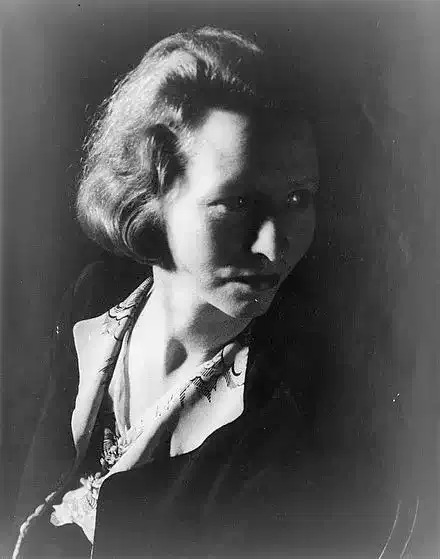
Edna St. Vincent Millay was an American poet and playwright. She was born in Rockland, Maine, United States. She primarily wrote in English. Millay became one of the most popular and influential poets of the early 20th century, often associated with the Harlem Renaissance and the Lost Generation.

Childhood and education

Millay's childhood was marked by her mother's encouragement of her artistic talents. She attended Barnard School for Girls and later Vassar College, where she began to gain recognition for her poetry. Her time at Vassar was formative, exposing her to literary circles and fostering her independent spirit.

Literary trajectory

Millay's career took off with the publication of her long narrative poem "Renascence" in 1917. She quickly became a literary sensation, known for her passionate lyrics and her defiance of convention. She published numerous collections of poetry, including "A Few Figs from Thistles" (1920), "Second April" (1921), and "The Harp-Weaver and Other Poems" (1923), for which she won the Pulitzer Prize for Poetry. She also wrote several plays.

Works, style, and literary characteristics

Major works include "Renascence" (1917), "A Few Figs from Thistles" (1920), "Second April" (1921), "The Harp-Weaver and Other Poems" (1923), and "Fatal Interview" (1931). Her poetry often explored themes of love, desire, independence, mortality, social injustice, and the passage of time. Millay was a master of traditional forms, particularly the sonnet, which she used to express intense personal emotion and sharp social commentary. Her style is characterized by its musicality, wit, emotional directness, and clarity of language. She was known for her bold, confessional voice and her unapologetic exploration of female sexuality and autonomy.

Cultural and historical context

Millay's work emerged during a period of significant social and cultural change in the United States, including the Jazz Age, the women's suffrage movement, and the Harlem Renaissance. She was a prominent figure in Greenwich Village bohemian circles and became an icon of female independence and artistic freedom.

Personal life

Millay was known for her passionate love affairs and her unconventional lifestyle. Her relationships, including her marriage to Eugen Jan Boissevain, were often sources of inspiration and sometimes turmoil. She struggled with addiction and health issues later in life.

Recognition and reception

Millay achieved immense popularity during her lifetime, becoming one of the best-selling poets in America. She won the Pulitzer Prize for Poetry in 1923. While her popularity waned somewhat in the mid-20th century, her work has seen a significant resurgence in critical appreciation in recent decades.

Influences and legacy

Millay was influenced by classical poets and the English Romantic tradition. She, in turn, influenced many later poets, particularly women writers who found inspiration in her independence and her unflinching exploration of female experience. Her work continues to be read and admired for its emotional power and its enduring relevance.

Interpretation and critical analysis

Millay's poetry is often analyzed for its feminist themes, its complex treatment of love and desire, and its engagement with social and political issues. Critics have explored her use of form to convey modern sensibility and her position within the literary landscape of her time.

Curiosities and lesser-known aspects

Millay was a charismatic performer of her own poetry and was known for her striking beauty and independent spirit, which captivated many.

Death and memory

Millay died tragically in 1950 at her home, Steepletop, in Austerlitz, New York, likely from a fall down the stairs. Her home has been preserved as a museum and literary center, ensuring her memory and work continue to be celebrated.