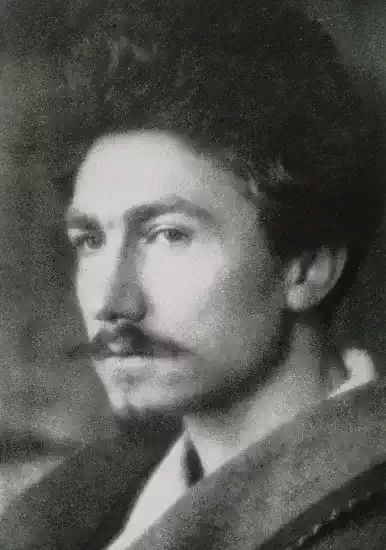
Identification and basic context
Ezra Weston Loomis Pound was an American expatriate poet, critic, musician, and translator. He is widely considered one of the most influential figures of literary modernism. Pound was instrumental in the development of two significant movements: Imagism and Vorticism. His work is marked by a profound engagement with history, economics, art, and diverse cultural traditions, often employing a complex, allusive style. He wrote primarily in English, but his work is characterized by its multilingualism and extensive use of foreign language quotations. He spent most of his adult life as an expatriate, living in Italy, France, and England.
Childhood and education
Pound was born in Hailey, Idaho, but his family soon moved to Philadelphia, where he spent his formative years. His father worked as a registrar at the Philadelphia Mint. Pound displayed an early interest in languages and literature. He attended Hamilton College and the University of Pennsylvania, where he studied Romance languages and literature. His early education instilled in him a deep appreciation for classical literature and languages, which would profoundly shape his poetic sensibilities. He was also exposed to various cultural and philosophical ideas that fueled his intellectual curiosity.
Literary trajectory
Pound's literary career began with the publication of his first collection of poems, "A Lume Spento," in Venice in 1908. He quickly became a central figure in the burgeoning modernist literary scene, first in London and later in Paris. He was a key proponent of the Imagist movement, advocating for clarity, precision, and economy of language. He later founded Vorticism, a more aggressive and dynamic movement. Pound was a tireless promoter of other artists, notably T.S. Eliot, James Joyce, and Ernest Hemingway, providing critical support, introductions, and financial assistance. His most ambitious and sprawling work is "The Cantos," an epic poem in progress that occupied him for much of his life.
Works, style, and literary characteristics
Pound's major works include "Personae" (1909), "Ripostes" (1912), "Hugh Selwyn Mauberley" (1920), and the monumental "The Cantos" (published in stages from the 1920s until his death). His style evolved over time, but consistently featured a demand for precision in language, a rejection of vague sentimentality, and an interest in juxtaposing diverse historical and cultural elements. Themes in his work often include the decline of civilization, the nature of beauty, the corrupting influence of usury, and the search for order. He experimented with form, incorporating elements of free verse, classical meters, and polyphonic structures. His poetic voice could be lyrical, scholarly, prophetic, or polemical. Pound's language was rich with allusions to mythology, history, and literature from various cultures, often weaving together multiple languages and dialects.
Cultural and historical context
Pound lived through periods of immense global upheaval, including World War I and World War II. His political views became increasingly controversial, particularly his espousal of fascism and his antisemitic radio broadcasts during World War II, for which he was charged with treason. He was deeply involved with literary circles in London and Paris, where he interacted with many of the leading figures of modernism. His generation of writers grappled with the fragmentation of modern society and sought new forms to express contemporary experience. Pound's engagement with economics, particularly his interest in Social Credit theory, significantly influenced his later work and political outlook.
Personal life
Pound's personal life was marked by complex relationships. He had a long-term relationship with the painter Dorothy Shakespear, whom he married, and also maintained a significant relationship with the violinist Olga Rudge, with whom he had a daughter. His expatriate lifestyle led to periods of financial instability, which he navigated through his promotional activities for other artists and his own writing. His intellectual and political obsessions often dominated his personal interactions, sometimes straining relationships.
Recognition and reception
Pound's initial reception was that of a revolutionary poet and a champion of modernist literature. However, his wartime broadcasts and fascist sympathies led to widespread condemnation and legal repercussions, including his arrest and indictment for treason. He spent years in an psychiatric hospital in Washington D.C. While his literary influence remained undeniable, his public image was severely tarnished. Posthumously, there has been a renewed critical interest in separating his literary achievements from his political views, though this remains a complex and contentious issue.
Influences and legacy
Pound was influenced by classical poets such as Homer and Ovid, as well as by medieval troubadours and Chinese poetry (especially the work of Confucius). His legacy is immense; he was a catalyst for many of the most important writers of the 20th century, including T.S. Eliot, whose "The Waste Land" he significantly edited. He is credited with introducing key ideas of Imagism and Vorticism and shaping the course of modernist poetry. His experimental approach to form, language, and subject matter has had a lasting impact on subsequent generations of poets. His work continues to be studied, translated, and debated worldwide.
Interpretation and critical analysis
Critical analysis of Pound's work often grapples with the tension between his innovative poetic technique and his deeply problematic political and social views. "The Cantos," in particular, has been subject to extensive scholarly interpretation, with critics exploring its epic scope, its engagement with historical figures, and its fragmentation. Debates often center on whether his artistic merit can be separated from his ideological commitments, and how to approach his antisemitism and fascist sympathies within an analysis of his poetry.
Curiosities and lesser-known aspects
Pound was known for his eccentric personality and his fervent pronouncements. He was a prolific correspondent and actively engaged in promoting his contemporaries through letters and introductions. His interest in economics was not merely theoretical; he believed that usury was a primary cause of societal ills and actively campaigned for economic reforms. His habit of collecting and translating diverse literary traditions reflects his lifelong project of weaving a new epic for the modern age.
Death and memory
Pound died in Venice in 1972. His death marked the end of a tumultuous but profoundly influential literary life. His memory remains complex, celebrated for his revolutionary contributions to poetry and modernism, yet shadowed by his wartime political activities. His works continue to be read and studied, ensuring his place as a pivotal, albeit controversial, figure in 20th-century literature.