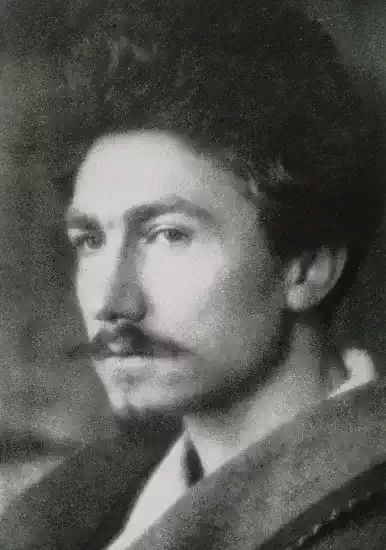
Ezra Pound

Ezra Pound

1885–1972 · lived 87 years US US

Ezra Pound was a highly influential American poet and critic, and a major figure in the modernist movement. He was a key proponent of Imagism and Vorticism, championing a return to classical forms and precise imagery in poetry. Pound's extensive work, most notably "The Cantos," is characterized by its complex allusions, multilingualism, and engagement with history, economics, and art. His influence extended to many other writers, including T.S. Eliot, Ernest Hemingway, and James Joyce, whom he actively supported and promoted.

n. 1885-10-30, Hailey · m. 1972-11-01, Veneza

59,486 Views

Dum Capitolium Scandet

Dum Capitolium Scandet

How many will come after me
singing as well as I sing, none better;
Telling the heart of their truth
as I have taught them to tell it;
Fruit of my seed,
O my unnameable children.
Know then that I loved you from afore-time,
Clear speakers, naked in the sun, untrammelled.
Read full poem
Bio

Identification and basic context

Ezra Weston Loomis Pound was an American expatriate poet, critic, musician, and translator. He is widely considered one of the most influential figures of literary modernism. Pound was instrumental in the development of two significant movements: Imagism and Vorticism. His work is marked by a profound engagement with history, economics, art, and diverse cultural traditions, often employing a complex, allusive style. He wrote primarily in English, but his work is characterized by its multilingualism and extensive use of foreign language quotations. He spent most of his adult life as an expatriate, living in Italy, France, and England.

Childhood and education

Pound was born in Hailey, Idaho, but his family soon moved to Philadelphia, where he spent his formative years. His father worked as a registrar at the Philadelphia Mint. Pound displayed an early interest in languages and literature. He attended Hamilton College and the University of Pennsylvania, where he studied Romance languages and literature. His early education instilled in him a deep appreciation for classical literature and languages, which would profoundly shape his poetic sensibilities. He was also exposed to various cultural and philosophical ideas that fueled his intellectual curiosity.

Literary trajectory

Pound's literary career began with the publication of his first collection of poems, "A Lume Spento," in Venice in 1908. He quickly became a central figure in the burgeoning modernist literary scene, first in London and later in Paris. He was a key proponent of the Imagist movement, advocating for clarity, precision, and economy of language. He later founded Vorticism, a more aggressive and dynamic movement. Pound was a tireless promoter of other artists, notably T.S. Eliot, James Joyce, and Ernest Hemingway, providing critical support, introductions, and financial assistance. His most ambitious and sprawling work is "The Cantos," an epic poem in progress that occupied him for much of his life.

Works, style, and literary characteristics

Pound's major works include "Personae" (1909), "Ripostes" (1912), "Hugh Selwyn Mauberley" (1920), and the monumental "The Cantos" (published in stages from the 1920s until his death). His style evolved over time, but consistently featured a demand for precision in language, a rejection of vague sentimentality, and an interest in juxtaposing diverse historical and cultural elements. Themes in his work often include the decline of civilization, the nature of beauty, the corrupting influence of usury, and the search for order. He experimented with form, incorporating elements of free verse, classical meters, and polyphonic structures. His poetic voice could be lyrical, scholarly, prophetic, or polemical. Pound's language was rich with allusions to mythology, history, and literature from various cultures, often weaving together multiple languages and dialects.

Cultural and historical context

Pound lived through periods of immense global upheaval, including World War I and World War II. His political views became increasingly controversial, particularly his espousal of fascism and his antisemitic radio broadcasts during World War II, for which he was charged with treason. He was deeply involved with literary circles in London and Paris, where he interacted with many of the leading figures of modernism. His generation of writers grappled with the fragmentation of modern society and sought new forms to express contemporary experience. Pound's engagement with economics, particularly his interest in Social Credit theory, significantly influenced his later work and political outlook.

Personal life

Pound's personal life was marked by complex relationships. He had a long-term relationship with the painter Dorothy Shakespear, whom he married, and also maintained a significant relationship with the violinist Olga Rudge, with whom he had a daughter. His expatriate lifestyle led to periods of financial instability, which he navigated through his promotional activities for other artists and his own writing. His intellectual and political obsessions often dominated his personal interactions, sometimes straining relationships.

Recognition and reception

Pound's initial reception was that of a revolutionary poet and a champion of modernist literature. However, his wartime broadcasts and fascist sympathies led to widespread condemnation and legal repercussions, including his arrest and indictment for treason. He spent years in an psychiatric hospital in Washington D.C. While his literary influence remained undeniable, his public image was severely tarnished. Posthumously, there has been a renewed critical interest in separating his literary achievements from his political views, though this remains a complex and contentious issue.

Influences and legacy

Pound was influenced by classical poets such as Homer and Ovid, as well as by medieval troubadours and Chinese poetry (especially the work of Confucius). His legacy is immense; he was a catalyst for many of the most important writers of the 20th century, including T.S. Eliot, whose "The Waste Land" he significantly edited. He is credited with introducing key ideas of Imagism and Vorticism and shaping the course of modernist poetry. His experimental approach to form, language, and subject matter has had a lasting impact on subsequent generations of poets. His work continues to be studied, translated, and debated worldwide.

Interpretation and critical analysis

Critical analysis of Pound's work often grapples with the tension between his innovative poetic technique and his deeply problematic political and social views. "The Cantos," in particular, has been subject to extensive scholarly interpretation, with critics exploring its epic scope, its engagement with historical figures, and its fragmentation. Debates often center on whether his artistic merit can be separated from his ideological commitments, and how to approach his antisemitism and fascist sympathies within an analysis of his poetry.

Curiosities and lesser-known aspects

Pound was known for his eccentric personality and his fervent pronouncements. He was a prolific correspondent and actively engaged in promoting his contemporaries through letters and introductions. His interest in economics was not merely theoretical; he believed that usury was a primary cause of societal ills and actively campaigned for economic reforms. His habit of collecting and translating diverse literary traditions reflects his lifelong project of weaving a new epic for the modern age.

Death and memory

Pound died in Venice in 1972. His death marked the end of a tumultuous but profoundly influential literary life. His memory remains complex, celebrated for his revolutionary contributions to poetry and modernism, yet shadowed by his wartime political activities. His works continue to be read and studied, ensuring his place as a pivotal, albeit controversial, figure in 20th-century literature.

Poems

125

Tenzone

Tenzone


Will people accept them?


(i.e. these songs).
As a timorous wench from a centaur
(or a centurion),
Already they flee, howling in terror.
Will they be touched with the verisimilitudes?
Their virgin stupidity is untemptable.
I beg you, my friendly critics,
Do not set about to procure me an audience.


I mate with my free kind upon the crags;
the hidden recesses
Have heard the echo ofmy heels,
in the cool light,
in the darkness.
551

Surgit Fama

Surgit Fama

There is a truce among the gods,
Kore is seen in the North
Skirting the blue-gray sea
In gilded and russet mantle.
The corn has again it's mother and she, Leuconoe,
That failed never women,
Fails not the earth now.


The tricksome Hermes is here;
He moves behind me
Eager to catch my words,
Eager to spread them with rumour;
To set upon them his change
Crafty and subtle;
To alter them to his purpose;
But do thou speak true, even to the letter:


‘Once more in Delos, once more is the altar a-quiver.
Once more is the chant heard.
Once more are the never abandoned gardens
Full of gossip and old tales.’
475

Statement of Being

Statement of Being

I am a grave poetic hen
That lays poetic eggs
And to enhance my temperament
A little quiet begs.


We make the yolk philosophy,
True beauty the albumen.
And then gum on a shell of form
To make the screed sound human.
323

Speech For Psyche In The Golden Book Of Apuleius

Speech For Psyche In The Golden Book Of Apuleius

All night, and as the wind lieth among
The cypress trees, he lay,
Nor held me save as air that brusheth by one
Close, and as the petals of flowers in falling
Waver and seem not drawn to earth, so he
Seemed over me to hover light as leaves
And closer me than air,
And music flowing through me seemed to open
Mine eyes upon new colours.
O winds, what wind can match the weight of him!
416

Song Of The Six Hundred M.P.'S

Song Of The Six Hundred M.P.'S

‘We are 'ere met together
in this momentous hower,
Ter lick th' bankers' dirty boots
an' keep the Bank in power.’


We are 'ere met together
ter grind the same old axes
And keep the people in its place
a'payin' us the taxes.


We are six hundred beefy men
(but mostly gas and suet)
An’ every year we meet to let
some other feller do it.'


I see their 'igh 'ats on the seats
an' them sprawling on the benches
And thinks about a Rowton 'ouse
and a lot of small street stenches.


'O Britain, muvver of parliaments,
'ave you seen yer larst sweet litter?
Could yeh swap th' brains of orl this lot
fer 'arft a pint o' bitter?'


‘I couldn't,' she sez, ‘an' I aint tried,
They're me own,' she sez to me,
‘As footlin' a lot as was ever spawned
to defend democracy.'
454

Society

Society


The family position was waning,
And on this account the little Aurelia,
Who had laughed on eighteen summers,
Now bears the palsied contact of Phidippus.
518

Song in the Manner of Housman

Song in the Manner of Housman

O woe, woe,
People are born and die,
We also shall be dead pretty soon
Therefore let us act as if we were
dead already.


The bird sits on the hawthorn tree
But he dies also, presently.
Some lads get hung, and some get shot.
Woeful is this human lot.
Woe! woe, etcetera . . . .


London is a woeful place,
Shropshire is much pleasanter.
Then let us smile a little space
Upon fond nature's morbid grace.
Oh, Woe, woe, woe, etcetera . . .
445

Sestina: Altaforte

Sestina: Altaforte

Loquitur: En Bertrans de Born.
Dante Alighieri put this man in hell for that he was a
stirrer-up of strife.
Eccovi!
Judge ye!
Have I dug him up again?
The scene in at his castle, Altaforte. "Papiols" is his jongleur.
"The Leopard," the device of Richard (Cúur de Lion).


I


Damn it all! all this our South stinks peace.
You whoreson dog, Papiols, come! Let's to music!
I have no life save when the swords clash.
But ah! when I see the standards gold, vair, purple, opposing
And the broad fields beneath them turn crimson,
Then howl I my heart nigh mad with rejoicing.


II


In hot summer have I great rejoicing
When the tempests kill the earth's foul peace,
And the lightnings from black heav'n flash crimson,
And the fierce thunders roar me their music
And the winds shriek through the clouds mad, opposing,
And through all the riven skies God's swords clash.


III


Hell grant soon we hear again the swords clash!
And the shrill neighs of destriers in battle rejoicing,
Spiked breast to spiked breast opposing!
Better one hour's stour than a year's peace
With fat boards, bawds, wine and frail music!
Bah! there's no wine like the blood's crimson!


IV


And I love to see the sun rise blood-crimson.
And I watch his spears through the dark clash
And it fills all my heart with rejoicing
And pries wide my mouth with fast music
When I see him so scorn and defy peace,
His lone might 'gainst all darkness opposing.


V


The man who fears war and squats opposing
My words for stour, hath no blood of crimson
But is fit only to rot in womanish peace
Far from where worth's won and the swords clash
For the death of such sluts I go rejoicing;


Yea, I fill all the air with my music.


VI


Papiols, Papiols, to the music!
There's no sound like to swords swords opposing,
No cry like the battle's rejoicing
When our elbows and swords drip the crimson
And our charges 'gainst "The Leopard's" rush clash.
May God damn for ever all who cry "Peace!"


VII


And let the music of the swords make them crimson!
Hell grant soon we hear again the swords clash!
Hell blot black for always the thought "Peace!"
498

Silet

Silet


When I behold how black, immortal ink
Drips from my deathless pen - ah, well-away!
Why should we stop at all for what I think?
There is enough in what I chance to say.


It is enough that we once came together;
What is the use of setting it to rime?
When it is autumn do we get spring weather,
Or gather may of harsh northwindish time?


It is enough that we once came together;
What if the wind have turned against the rain?
It is enough that we once came together;
Time has seen this, and will not turn again;


And who are we, who know that last intent,
To plague to-morrow with a testament!
487

Salvationists

Salvationists


I
Come, my songs, let us speak of perfection
We shall get ourselves rather disliked.


II
Ah yes, my songs, let us resurrect
The very excellent term Rusticus.
Let us apply it in all its opprobrium
To those to whom it applies.
And you may decline to make them immortal,
For we shall consider them and their state
In delicate
Opulent silence.


III
Come, my songs,
Let us take arms against this sea of stupidities-
Beginning with Mumpodorus;
And against this sea of vulgarities
Beginning with Nimmim;
And against this sea of imbeciles
All the Bulmenian literati.
448

Quotes

40

Videos

50

Comments (0)

Share
Log in to post a comment.

No comments yet. Be the first to comment.