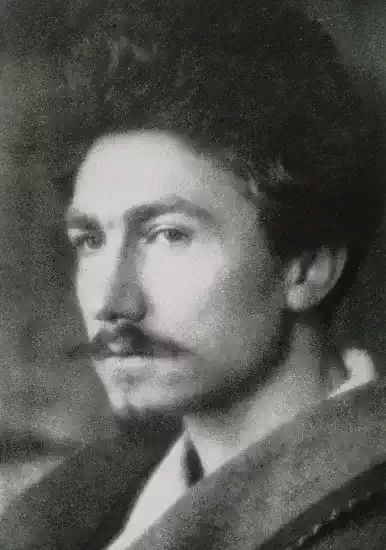
Poems List

The Three Poets

The Three Poets

Candidia has taken a new lover
And three poets are gone into mourning.
The first has written a long elegy to 'Chloris',
To 'Chloris chaste and cold,' his 'only Chloris'.
The second has written a sonnet
upon the mutability of woman,
And the third writes an epigram to Candidia.
364

The Tree

The Tree

I stood still and was a tree amid the wood,
Knowing the truth of things unseen before;
Of Daphne and the laurel bow
And that god-feasting couple old
that grew elm-oak amid the wold.
'Twas not until the gods had been
Kindly entreated, and been brought within
Unto the hearth of their heart's home
That they might do this wonder thing;
Nathless I have been a tree amid the wood
And many a new thing understood
That was rank folly to my head before.
520

The Tea Shop

The Tea Shop

The girl in the tea shop
Is not so beautiful as she was,
The August has worn against her.
She does not get up the stairs so eagerly;
Yes, she also will turn middle-aged,
And the glow of youth that she spread about us
As she brought us our muffins
Will be spread about us no longer.
She also will turn middle-aged.
381

The Study In Aesthetics

The Study In Aesthetics

The very small children in patched clothing,
Being smitten with an unusual wisdom,
Stopped in their play as she passed them
And cried up from their cobbles:


Guarda! Ahi, guarda! Ch’ è be’ a!


But three years after this
I heard the young Dante, whose last name I do not
know--
For there are, in Sirmione, twenty-eight young Dantes
and thirty-four Catulli;
And there had been a great catch of sardines,
And his elders
Were packing them in the great wooden boxes
For the market in Brescia, and he
Leapt about, snatching at the bright fish
And getting in both of their ways;
And in vain they commanded him to stafermo!
And when they would not let him arrange
The fish in the boxes
He stroked those which were already arranged,
Murmuring for his own satisfaction
This identical phrase:


Ch’ è be’ a


And at this I was mildly abashed.
460

The Social Order

The Social Order

I
This government official
Whose wife is several years his senior,
Has such a caressing air
When he shakes hands with young ladies.


II
(Pompes Funèbres)


This old lady,
Who was fcso old that she was an atheist',
Is now surrounded
By six candles and a crucifix,
While the second wife of a nephew
Makes hay with the things in her house.
Her two cats
Go before her into Avernus;
A sort of chloroformed suttee,
And it is to be hoped that their spirits will walk
With their tails up,
And with a plaintive, gentle mewing,
For it is certain that she has left on this earth
No sound
Save a squabble of female connections,
448

The Seafarer

The Seafarer

(From the early Anglo-Saxon text)


May I for my own self song's truth reckon,
Journey's jargon, how I in harsh days
Hardship endured oft.
Bitter breast-cares have I abided,
Known on my keel many a care's hold,
And dire sea-surge, and there I oft spent
Narrow nightwatch nigh the ship's head
While she tossed close to cliffs. Coldly afflicted,
My feet were by frost benumbed.
Chill its chains are; chafing sighs
Hew my heart round and hunger begot
Mere-weary mood. Lest man know not
That he on dry land loveliest liveth,
List how I, care-wretched, on ice-cold sea,
Weathered the winter, wretched outcast
Deprived of my kinsmen;
Hung with hard ice-flakes, where hail-scur flew,
There I heard naught save the harsh sea
And ice-cold wave, at whiles the swan cries,
Did for my games the gannet's clamour,
Sea-fowls, loudness was for me laughter,
The mews' singing all my mead-drink.
Storms, on the stone-cliffs beaten, fell on the stern
In icy feathers; full oft the eagle screamed
With spray on his pinion.
Not any protector
May make merry man faring needy.
This he little believes, who aye in winsome life
Abides 'mid burghers some heavy business,
Wealthy and wine-flushed, how I weary oft
Must bide above brine.
Neareth nightshade, snoweth from north,
Frost froze the land, hail fell on earth then
Corn of the coldest. Nathless there knocketh now
The heart's thought that I on high streams
The salt-wavy tumult traverse alone.
Moaneth alway my mind's lust
That I fare forth, that I afar hence
Seek out a foreign fastness.
For this there's no mood-lofty man over earth's midst,
Not though he be given his good, but will have in his youth greed;
Nor his deed to the daring, nor his king to the faithful
But shall have his sorrow for sea-fare
Whatever his lord will.
He hath not heart for harping, nor in ring-having
Nor winsomeness to wife, nor world's delight
Nor any whit else save the wave's slash,
Yet longing comes upon him to fare forth on the water.
Bosque taketh blossom, cometh beauty of berries,
Fields to fairness, land fares brisker,


All this admonisheth man eager of mood,
The heart turns to travel so that he then thinks
On flood-ways to be far departing.
Cuckoo calleth with gloomy crying,
He singeth summerward, bodeth sorrow,
The bitter heart's blood. Burgher knows not --
He the prosperous man -- what some perform
Where wandering them widest draweth.
So that but now my heart burst from my breast-lock,
My mood 'mid the mere-flood,
Over the whale's acre, would wander wide.
On earth's shelter cometh oft to me,
Eager and ready, the crying lone-flyer,
Whets for the whale-path the heart irresistibly,
O'er tracks of ocean; seeing that anyhow
My lord deems to me this dead life
On loan and on land, I believe not
That any earth-weal eternal standeth
Save there be somewhat calamitous
That, ere a man's tide go, turn it to twain.
Disease or oldness or sword-hate
Beats out the breath from doom-gripped body.
And for this, every earl whatever, for those speaking after --
Laud of the living, boasteth some last word,
That he will work ere he pass onward,
Frame on the fair earth 'gainst foes his malice,
Daring ado, ...
So that all men shall honour him after
And his laud beyond them remain 'mid the English,
Aye, for ever, a lasting life's-blast,
Delight mid the doughty.
Days little durable,
And all arrogance of earthen riches,
There come now no kings nor Cæsars
Nor gold-giving lords like those gone.
Howe'er in mirth most magnified,
Whoe'er lived in life most lordliest,
Drear all this excellence, delights undurable!
Waneth the watch, but the world holdeth.
Tomb hideth trouble. The blade is layed low.
Earthly glory ageth and seareth.
No man at all going the earth's gait,
But age fares against him, his face paleth,
Grey-haired he groaneth, knows gone companions,
Lordly men are to earth o'ergiven,
Nor may he then the flesh-cover, whose life ceaseth,
Nor eat the sweet nor feel the sorry,
Nor stir hand nor think in mid heart,
And though he strew the grave with gold,
His born brothers, their buried bodies
Be an unlikely treasure hoard.
652

The River Song

The River Song

This boat is of shato-wood, and its gunwales are cut
magnolia,
Musicians with jewelled flutes and with pipes of gold
Fill full the sides in rows, and our wine
Is rich for a thousand cups.
We carry singing girls, drift with the drifting water,
Yet Sennin needs
A yellow stork for a charger, and all our seamen
Would follow the white gulls or ride them.
Kutsu's prose song
Hangs with the sun and moon.


King So's terraced palace
is now but barren hill,
But I draw pen on this barge
Causing the five peaks to tremble,
And I have joy in these words
like the joy of blue islands.
(If glory could last forever
Then the waters of Han would flow northward.)


And I have moped in the Emperor's garden, awaiting an
order-to-write !
I looked at the dragon-pond, with its willow-coloured
water
Just reflecting the sky's tinge,
And heard the five-score nightingales aimlessly singing.


The eastern wind brings the green colour into the island
grasses at Yei-shu,
The purple house and the crimson are full of Spring
softness.
South of the pond the willow-tips are half-blue and
bluer,
Their cords tangle in mist, against the brocade-like
palace.
Vine-strings a hundred feet long hang down from
carved railings,
And high over the willows, the fine birds sing to each
other, and listen,
Crying—‘Kwan, Kuan,' for the early wind, and the feel
of it.
The wind bundles itself into a bluish cloud and wanders
off.
Over a thousand gates, over a thousand doors are the
sounds of spring singing,
And the Emperor is at Ko.
Five clouds hang aloft, bright on the purple sky,
The imperial guards come forth from the golden house
with their armour a-gleaming.
The Emperor in his jewelled car goes out to inspect his
flowers,


He goes out to Hori, to look at the wing-flapping storks,
He returns by way of Sei rock, to hear the new
nightingales,
For the gardens at Jo-run are full of new nightingales,
Their sound is mixed in this flute,
Their voice is in the twelve pipes here.
600

The Rest

The Rest

O helpless few in my country, remnant enslaved!


Artists broken against her,
A-stray, lost in the villages,
Mistrusted, spoken-against,


Lovers of beauty, starved,
Thwarted with systems,
Helpless against the control;


You who can not wear yourselves out
By persisting to successes,
You who can only speak,
Who can not steel yourselves into reiteration;


You of the finer sense,
Broken against false knowledge,
You who can know at first hand,
Hated, shut in, mistrusted:


Take thought:
I have weathered the storm,
I have beaten out my exile.
412

The Picture

The Picture

The eyes of this dead lady speak to me,
For here was love, was not to be drowned out.
And here desire, not to be kissed away.
The eyes of this dead lady speak to me.
412

The New Cake Of Soap

The New Cake Of Soap

Lo, how it gleams and glistens in the sun
Like the cheek of a Chesterton.
527

Comments (0)

Log in to post a comment.

NoComments

Identification and basic context

Ezra Weston Loomis Pound was an American expatriate poet, critic, musician, and translator. He is widely considered one of the most influential figures of literary modernism. Pound was instrumental in the development of two significant movements: Imagism and Vorticism. His work is marked by a profound engagement with history, economics, art, and diverse cultural traditions, often employing a complex, allusive style. He wrote primarily in English, but his work is characterized by its multilingualism and extensive use of foreign language quotations. He spent most of his adult life as an expatriate, living in Italy, France, and England.

Childhood and education

Pound was born in Hailey, Idaho, but his family soon moved to Philadelphia, where he spent his formative years. His father worked as a registrar at the Philadelphia Mint. Pound displayed an early interest in languages and literature. He attended Hamilton College and the University of Pennsylvania, where he studied Romance languages and literature. His early education instilled in him a deep appreciation for classical literature and languages, which would profoundly shape his poetic sensibilities. He was also exposed to various cultural and philosophical ideas that fueled his intellectual curiosity.

Literary trajectory

Pound's literary career began with the publication of his first collection of poems, "A Lume Spento," in Venice in 1908. He quickly became a central figure in the burgeoning modernist literary scene, first in London and later in Paris. He was a key proponent of the Imagist movement, advocating for clarity, precision, and economy of language. He later founded Vorticism, a more aggressive and dynamic movement. Pound was a tireless promoter of other artists, notably T.S. Eliot, James Joyce, and Ernest Hemingway, providing critical support, introductions, and financial assistance. His most ambitious and sprawling work is "The Cantos," an epic poem in progress that occupied him for much of his life.

Works, style, and literary characteristics

Pound's major works include "Personae" (1909), "Ripostes" (1912), "Hugh Selwyn Mauberley" (1920), and the monumental "The Cantos" (published in stages from the 1920s until his death). His style evolved over time, but consistently featured a demand for precision in language, a rejection of vague sentimentality, and an interest in juxtaposing diverse historical and cultural elements. Themes in his work often include the decline of civilization, the nature of beauty, the corrupting influence of usury, and the search for order. He experimented with form, incorporating elements of free verse, classical meters, and polyphonic structures. His poetic voice could be lyrical, scholarly, prophetic, or polemical. Pound's language was rich with allusions to mythology, history, and literature from various cultures, often weaving together multiple languages and dialects.

Cultural and historical context

Pound lived through periods of immense global upheaval, including World War I and World War II. His political views became increasingly controversial, particularly his espousal of fascism and his antisemitic radio broadcasts during World War II, for which he was charged with treason. He was deeply involved with literary circles in London and Paris, where he interacted with many of the leading figures of modernism. His generation of writers grappled with the fragmentation of modern society and sought new forms to express contemporary experience. Pound's engagement with economics, particularly his interest in Social Credit theory, significantly influenced his later work and political outlook.

Personal life

Pound's personal life was marked by complex relationships. He had a long-term relationship with the painter Dorothy Shakespear, whom he married, and also maintained a significant relationship with the violinist Olga Rudge, with whom he had a daughter. His expatriate lifestyle led to periods of financial instability, which he navigated through his promotional activities for other artists and his own writing. His intellectual and political obsessions often dominated his personal interactions, sometimes straining relationships.

Recognition and reception

Pound's initial reception was that of a revolutionary poet and a champion of modernist literature. However, his wartime broadcasts and fascist sympathies led to widespread condemnation and legal repercussions, including his arrest and indictment for treason. He spent years in an psychiatric hospital in Washington D.C. While his literary influence remained undeniable, his public image was severely tarnished. Posthumously, there has been a renewed critical interest in separating his literary achievements from his political views, though this remains a complex and contentious issue.

Influences and legacy

Pound was influenced by classical poets such as Homer and Ovid, as well as by medieval troubadours and Chinese poetry (especially the work of Confucius). His legacy is immense; he was a catalyst for many of the most important writers of the 20th century, including T.S. Eliot, whose "The Waste Land" he significantly edited. He is credited with introducing key ideas of Imagism and Vorticism and shaping the course of modernist poetry. His experimental approach to form, language, and subject matter has had a lasting impact on subsequent generations of poets. His work continues to be studied, translated, and debated worldwide.

Interpretation and critical analysis

Critical analysis of Pound's work often grapples with the tension between his innovative poetic technique and his deeply problematic political and social views. "The Cantos," in particular, has been subject to extensive scholarly interpretation, with critics exploring its epic scope, its engagement with historical figures, and its fragmentation. Debates often center on whether his artistic merit can be separated from his ideological commitments, and how to approach his antisemitism and fascist sympathies within an analysis of his poetry.

Curiosities and lesser-known aspects

Pound was known for his eccentric personality and his fervent pronouncements. He was a prolific correspondent and actively engaged in promoting his contemporaries through letters and introductions. His interest in economics was not merely theoretical; he believed that usury was a primary cause of societal ills and actively campaigned for economic reforms. His habit of collecting and translating diverse literary traditions reflects his lifelong project of weaving a new epic for the modern age.

Death and memory

Pound died in Venice in 1972. His death marked the end of a tumultuous but profoundly influential literary life. His memory remains complex, celebrated for his revolutionary contributions to poetry and modernism, yet shadowed by his wartime political activities. His works continue to be read and studied, ensuring his place as a pivotal, albeit controversial, figure in 20th-century literature.