Poems List

The Foolish Fir-Tree

The Foolish Fir-Tree

A tale that the poet Rückert told
To German children, in days of old;
Disguised in a random, rollicking rhyme
Like a merry mummer of ancient time,
And sent, in its English dress, to please
The little folk of the Christmas trees.


A little fir grew in the midst of the wood
Contented and happy, as young trees should.
His body was straight and his boughs were clean;
And summer and winter the bountiful sheen
Of his needles bedecked him, from top to root,
In a beautiful, all-the-year, evergreen suit.


But a trouble came into his heart one day,
When he saw that the other trees were gay
In the wonderful raiment that summer weaves
Of manifold shapes and kinds of leaves:
He looked at his needles so stiff and small,
And thought that his dress was the poorest of all.
Then jealousy clouded the little tree's mind,
And he said to himself, "It was not very kind
"To give such an ugly old dress to a tree!
"If the fays of the forest would only ask me,
"I'd tell them how I should like to be dressed,—
"In a garment of gold, to bedazzle the rest!"
So he fell asleep, but his dreams were bad.
When he woke in the morning, his heart was glad;
For every leaf that his boughs could hold
Was made of the brightest beaten gold.
I tell you, children, the tree was proud;
He was something above the common crowd;
And he tinkled his leaves, as if he would say
To a pedlar who happened to pass that way,
"Just look at me! don't you think I am fine?
"And wouldn't you like such a dress as mine?"
"Oh, yes!" said the man, "and I really guess
I must fill my pack with your beautiful dress."
So he picked the golden leaves with care,
And left the little tree shivering there.


"Oh, why did I wish for golden leaves?"
The fir-tree said, "I forgot that thieves
"Would be sure to rob me in passing by.
"If the fairies would give me another try,
"I'd wish for something that cost much less,
"And be satisfied with glass for my dress!"
Then he fell asleep; and, just as before,
The fairies granted his wish once more.
When the night was gone, and the sun rose clear,
The tree was a crystal chandelier;
And it seemed, as he stood in the morning light,


That his branches were covered with jewels bright.
"Aha!" said the tree. "This is something great!"
And he held himself up, very proud and straight;
But a rude young wind through the forest dashed,
In a reckless temper, and quickly smashed
The delicate leaves. With a clashing sound
They broke into pieces and fell on the ground,
Like a silvery, shimmering shower of hail,
And the tree stood naked and bare to the gale.


Then his heart was sad; and he cried, "Alas
"For my beautiful leaves of shining glass!
"Perhaps I have made another mistake
"In choosing a dress so easy to break.
"If the fairies only would hear me again
"I'd ask them for something both pretty and plain:
"It wouldn't cost much to grant my request,—
"In leaves of green lettuce I'd like to be dressed!"
By this time the fairies were laughing, I know;
But they gave him his wish in a second; and so
With leaves of green lettuce, all tender and sweet,
The tree was arrayed, from his head to his feet.
"I knew it!" he cried, "I was sure I could find
"The sort of a suit that would be to my mind.
"There's none of the trees has a prettier dress,
"And none as attractive as I am, I guess."
But a goat, who was taking an afternoon walk,
By chance overheard the fir-tree's talk.
So he came up close for a nearer view;—
"My salad!" he bleated, "I think so too!
"You're the most attractive kind of a tree,
"And I want your leaves for my five-o'clock tea."
So he ate them all without saying grace,
And walked away with a grin on his face;
While the little tree stood in the twilight dim,
With never a leaf on a single limb.


Then he sighed and groaned; but his voice was weak—
He was so ashamed that he could not speak.
He knew at last that he had been a fool,
To think of breaking the forest rule,
And choosing a dress himself to please,
Because he envied the other trees.
But it couldn't be helped, it was now too late,
He must make up his mind to a leafless fate!
So he let himself sink in a slumber deep,
But he moaned and he tossed in his troubled sleep,
Till the morning touched him with joyful beam,
And he woke to find it was all a dream.
For there in his evergreen dress he stood,
A pointed fir in the midst of the wood!
His branches were sweet with the balsam smell,


His needles were green when the white snow fell.
And always contented and happy was he,—
The very best kind of a Christmas tree.
305

The Ancestral Dwelling

The Ancestral Dwelling

Dear to my heart are the ancestral dwellings of America,
Dearer than if they were haunted by ghosts of royal splendour;
These are the homes that were built by the brave beginners of a nation,
They are simple enough to be great, and full of a friendly dignity.


I love the old white farmhouses nestled in New England valleys,
Ample and long and low, with elm-trees feathering over them:
Borders of box in the yard, and lilacs, and old-fashioned Howers,
A fan-light above the door, and little square panes in the windows,
The wood-shed piled with maple and birch and hickory ready for winter,
The gambrel-roof with its garret crowded with household relics, --
All the tokens of prudent thrift and the spirit of self-reliance.


I love the look of the shingled houses that front the ocean;
Their backs are bowed, and their lichened sides are weather-beaten;
Soft in their colour as grey pearls, they are full of patience and courage.
They seem to grow out of the rocks, there is something indomitable about them:
Facing the briny wind in a lonely land they stand undaunted,
While the thin blue line of smoke from the square-built chimney rises,
Telling of shelter for man, with room for a hearth and a cradle.


I love the stately southern mansions with their tall white columns,
They look through avenues of trees, over fields where the cotton is growing;
I can see the flutter of white frocks along their shady porches,
Music and laughter float from the windows, the yards are full of hounds and horses.
They have all ridden away, yet the houses have not forgotten,
They are proud of their name and place, and their doors are always open,
For the thing they remember best is the pride of their ancient hospitality.


In the towns I love the discreet and tranquil Quaker dwellings,
With their demure brick faces and immaculate white-stone doorsteps;
And the gabled houses of the Dutch, with their high stoops and iron railings,
(I can see their little brass knobs shining in the morning sunlight);
And the solid houses of the descendants of the Puritans,
Fronting the street with their narrow doors and dormer-windows;
And the triple-galleried, many-pillared mansions of Charleston,
Standing sideways in their gardens full of roses and magnolias.


Yes, they are all dear to my heart, and in my eyes they are beautiful;
For under their roofs were nourished the thoughts that have made the nation;
The glory and strength of America came from her ancestral dwellings.
296

The Black Birds

The Black Birds

I

Once, only once, I saw it clear, --
That Eden every human heart has dreamed
A hundred times, but always far away!
Ah, well do I remember how it seemed,
Through the still atmosphere
Of that enchanted day,
To lie wide open to my weary feet:
A little land of love and joy and rest,
With meadows of soft green,
Rosy with cyclamen, and sweet
With delicate breath of violets unseen, --
And, tranquil 'mid the bloom
As if it waited for a coming guest,
A little house of peace and joy and love
Was nested like a snow-white dove


From the rough mountain where I stood,
Homesick for happiness,
Only a narrow valley and a darkling wood
To cross, and then the long distress
Of solitude would be forever past, --
I should be home at last.
But not too soon! oh, let me linger here
And feed my eyes, hungry with sorrow,
On all this loveliness, so near,
And mine to-morrow!


Then, from the wood, across the silvery blue,
A dark bird flew,
Silent, with sable wings.
Close in his wake another came, --
Fragments of midnight floating through
The sunset flame, --
Another and another, weaving rings
Of blackness on the primrose sky, --
Another, and another, look, a score,
A hundred, yes, a thousand rising heavily
From that accursed, dumb, and ancient wood, --
They boiled into the lucid air
Like smoke from some deep caldron of despair!
And more, and more, and ever more,
The numberless, ill-omened brood,
Flapping their ragged plumes,
Possessed the landscape and the evening light
With menaces and glooms.
Oh, dark, dark, dark they hovered o'er the place
Where once I saw the little house so white
Amid the flowers, covering every trace
Of beauty from my troubled sight, --
And suddenly it was night!


II


At break of day I crossed the wooded vale;
And while the morning made
A trembling light among the tree-tops pale,
I saw the sable birds on every limb,
Clinging together closely in the shade,
And croaking placidly their surly hymn.
But, oh, the little land of peace and love
That those night-loving wings had poised above, --
Where was it gone?
Lost, lost forevermore!
Only a cottage, dull and gray,
In the cold light of dawn,
With iron bars across the door:
Only a garden where the withering heads
Of flowers, presaging decay,
Hung over barren beds:
Only a desolate field that lay
Untilled beneath the desolate day, --
Where Eden seemed to bloom I found but these!
So, wondering, I passed along my way,
With anger in my heart, too deep for words,
Against that grove of evil-sheltering trees,
And the black magic of the croaking birds.
317

Spring in the South

Spring in the South

Now in the oak the sap of life is welling,
Tho' to the bough the rusty leafage clings;
Now on the elm the misty buds are swelling,
See how the pine-wood grows alive with wings;
Blue-jays fluttering, yodeling and crying,
Meadow-larks sailing low above the faded grass,
Red-birds whistling clear, silent robins flying,--
Who has waked the birds up? What has come to pass?


Last year's cotton-plants, desolately bowing,
Tremble in the March-wind, ragged and forlorn;
Red are the hill-sides of the early ploughing,
Gray are the lowlands, waiting for the corn.
Earth seems asleep still, but she's only feigning;
Deep in her bosom thrills a sweet unrest.
Look where the jasmine lavishly is raining
Jove's golden shower into Danae's breast!


Now on the plum the snowy bloom is sifted,
Now on the peach the glory of the rose,
Over the hills a tender haze is drifted,
Full to the brim the yellow river flows.
Dark cypress boughs with vivid jewels glisten,
Greener than emeralds shining in the sun.
Who has wrought the magic? Listen, sweetheart, listen!
The mocking-bird is singing Spring has begun.


Hark, in his song no tremor of misgiving!
All of his heart he pours into his lay,-"
Love, love, love, and pure delight of living:
Winter is forgotten: here's a happy day!"
Fair in your face I read the flowery presage,
Snowy on your brow and rosy on your mouth:
Sweet in your voice I hear the season's message,--
Love, love, love, and Spring in the South!
299

Stars and the Soul

Stars and the Soul

To Charles A. Young, Astronomer

"Two things," the wise man said, "fill me with awe:
The starry heavens and the moral law."
Nay, add another wonder to thy roll, --
The living marvel of the human soul!


Born in the dust and cradled in the dark,
It feels the fire of an immortal spark,
And learns to read, with patient, searching eyes,
The splendid secret of the unconscious skies.


For God thought Light before He spoke the word;
The darkness understood not, though it heard:
But man looks up to where the planets swim,
And thinks God's thoughts of glory after Him.


What knows the star that guides the sailor's way,
Or lights the lover's bower with liquid ray,
Of toil and passion, danger and distress,
Brave hope, true love, and utter faithfulness?


But human hearts that suffer good and ill,
And hold to virtue with a loyal will,
Adorn the law that rules our mortal strife
With star-surpassing victories of life.


So take our thanks, dear reader of the skies,
Devout astronomer, most humbly wise,
For lessons brighter than the stars can give,
And inward light that helps us all to live.


The world has brought the laurel-leaves to crown
The star-discoverer's name with high renown;
Accept the flower of love we lay with these
For influence sweeter than the Pleiades!
283

Robert Browning

Robert Browning

How blind the toil that burrows like the mole,
In winding graveyard pathways underground,
For Browning's lineage! What if men have found
Poor footmen or rich merchants on the roll
Of his forbears? Did they beget his soul?
Nay, for he came of ancestry renowned
Through all the world, -- the poets laurel-crowned
With wreaths from which the autumn takes no toll.


The blazons on his coat-of-arms are these:
The flaming sign of Shelley's heart on fire,
The golden globe of Shakespeare's human stage,
The staff and scrip of Chaucer's pilgrimage,
The rose of Dante's deep, divine desire,
The tragic mask of wise Euripides.
322

Shelley

Shelley


Knight-errant of the Never-ending Quest,
And Minstrel of the Unfulfilled Desire;
For ever tuning thy frail earthly lyre
To some unearthly music, and possessed
With painful passionate longing to invest
The golden dream of Love's immortal fire
In mortal robes of beautiful attire,
And fold perfection to thy throbbing breast!


What wonder, Shelley, if the restless wave
Should claim thee and the leaping flame consume
Thy drifted form on Viareggio's beach?
Fate to thy body gave a fitting grave,
And bade thy soul ride on with fiery plume,
Thy wild song ring in ocean's yearning speech!
220

Peace

Peace


I

IN EXCELSIS

Two dwellings, Peace, are thine.
One is the mountain-height,
Uplifted in the loneliness of light
Beyond the realm of shadows,--fine,
And far, and clear,--where advent of the night
Means only glorious nearness of the stars,
And dawn, unhindered, breaks above the bars
That long the lower world in twilight keep.
Thou sleepest not, and hast no need of sleep,
For all thy cares and fears have dropped away;
The night's fatigue, the fever-fret of day,
Are far below thee; and earth's weary wars,
In vain expense of passion, pass
Before thy sight like visions in a glass,
Or like the wrinkles of the storm that creep
Across the sea and leave no trace
Of trouble on that immemorial face,--
So brief appear the conflicts, and so slight
The wounds men give, the things for which they fight.


Here hangs a fortress on the distant steep,--
A lichen clinging to the rock:
There sails a fleet upon the deep,--
A wandering flock
Of snow-winged gulls: and yonder, in the plain,
A marble palace shines,--a grain
Of mica glittering in the rain.
Beneath thy feet the clouds are rolled
By voiceless winds: and far between
The rolling clouds new shores and peaks are seen,
In shimmering robes of green and gold,
And faint aerial hue
That silent fades into the silent blue.
Thou, from thy mountain-hold,
All day, in tranquil wisdom, looking down
On distant scenes of human toil and strife,
All night, with eyes aware of loftier life,
Uplooking to the sky, where stars are sown,
Dost watch the everlasting fields grow white
Unto the harvest of the sons of light,
And welcome to thy dwelling-place sublime
The few strong souls that dare to climb
The slippery crags and find thee on the height.


II


DE PROFUNDIS


But in the depth thou hast another home,
For hearts less daring, or more frail.
Thou dwellest also in the shadowy vale;
And pilgrim-souls that roam
With weary feet o'er hill and dale,
Bearing the burden and the heat
Of toilful days,
Turn from the dusty ways
To find thee in thy green and still retreat.
Here is no vision wide outspread
Before the lonely and exalted seat
Of all-embracing knowledge. Here, instead,
A little garden, and a sheltered nook,
With outlooks brief and sweet
Across the meadows, and along the brook,--
A little stream that little knows
Of the great sea towards which it gladly flows,--
A little field that bears a little wheat
To make a portion of earth's daily bread.
The vast cloud-armies overhead
Are marshalled, and the wild wind blows
Its trumpet, but thou canst not tell
Whence the storm comes nor where it goes.


Nor dost thou greatly care, since all is well;
Thy daily task is done,
And though a lowly one,
Thou gavest it of thy best,
And art content to rest
In patience till its slow reward is won.
Not far thou lookest, but thy sight is clear;
Not much thou knowest, but thy faith is dear;
For life is love, and love is always near.
Here friendship lights the fire, and every heart,
Sure of itself and sure of all the rest,
Dares to be true, and gladly takes its part
In open converse, bringing forth its best:
Here is Sweet music, melting every chain
Of lassitude and pain:
And here, at last, is sleep, the gift of gifts,
The tender nurse, who lifts
The soul grown weary of the waking world,
And lays it, with its thoughts all furled,
Its fears forgotten, and its passions still,
On the deep bosom of the Eternal Will.
360

Reliance

Reliance


Not to the swift, the race:
Not to the strong, the fight:
Not to the righteous, perfect grace:
Not to the wise, the light.


But often faltering feet
Come surest to the goal;
And they who walk in darkness meet
The sunrise of the soul.


A thousand times by night
The Syrian hosts have died;
A thousand times the vanquished right
Hath risen, glorified.


The truth the wise men sought
Was spoken by a child;
The alabaster box was brought
In trembling hands defiled.


Not from my torch, the gleam,
But from the stars above:
Not from my heart, life's crystal stream,
But from the depths of Love.
498

Pan Learns Music

Pan Learns Music

Limber-limbed, lazy god, stretched on the rock,
Where is sweet Echo, and where is your flock?
What are you making here? "Listen," said Pan, -"
Out of a river-reed music for man!"
326

Comments (0)

Log in to post a comment.

NoComments

Identification and basic context

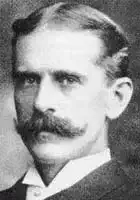
Full name: Henry Van Dyke Jr. Pseudonyms or heteronyms: Not widely known for using pseudonyms or heteronyms. Date and place of birth (and death, if applicable): Born November 10, 1852, in Germantown, Philadelphia, Pennsylvania, USA. Died April 14, 1933, in Princeton, New Jersey, USA. Family background, social class, and cultural context of origin: Son of a clergyman, Henry J. Van Dyke, and Henrietta Ashmead. He came from a family with a strong religious and intellectual tradition. His upbringing was within a comfortable middle-class environment that valued education and religious service. Nationality and language(s) of writing: American; English. Historical context in which they lived: Van Dyke lived through a period of significant change in the United States, including the Reconstruction era after the Civil War, the Gilded Age, the Progressive Era, and the beginnings of World War I. This was a time of industrial growth, social reform movements, and evolving American identity.

Childhood and education

Family background and social environment: His father was a prominent Presbyterian minister, which deeply influenced his early life and worldview, instilling in him a strong moral and religious foundation. His family environment was conducive to intellectual pursuits. Formal education and self-education: He attended the Franklin School in Philadelphia and then the Princeton Preparatory School. He graduated from Princeton University in 1873 and from Princeton Theological Seminary in 1877. He also pursued studies at Johns Hopkins University. Early influences (readings, culture, religion, politics): His religious upbringing was a primary influence. He was exposed to classical literature and the Bible from a young age. His education at Princeton, a hub of intellectual and religious thought, further shaped his perspectives. His engagement with nature also played a significant role in his creative output. Literary, philosophical, or artistic movements absorbed: While not strictly aligned with a single movement, his work shows an appreciation for nature and a moralistic tone reminiscent of 19th-century literary traditions. He was also influenced by the Transcendentalist movement's emphasis on nature and spirituality, and by Victorian literature. Significant events in youth: His decision to pursue a career in the ministry, following in his father's footsteps, was a significant early commitment. His academic achievements at Princeton laid the groundwork for his future career.

Literary trajectory

Beginning of writing (when and how it started): Van Dyke began writing poetry and essays from his early years, often inspired by his observations of nature and his religious faith. His early publications appeared in student journals and religious publications. Development over time (phases, changes in style): His writing evolved from early devotional poetry and sermons to include more narrative short stories and essays. Later in his career, his work often reflected his travels and his experiences in public service. Chronological evolution of the work: His career spanned several decades, with notable publications throughout the late 19th and early 20th centuries. His poems and stories often focused on themes of virtue, courage, and the restorative power of nature. Contributions to magazines, newspapers, and anthologies: He was a frequent contributor to prominent magazines of his time, such as Scribner's Magazine, Harper's Monthly, and The Atlantic Monthly. His works were widely anthologized. Activity as a critic, translator, or editor: He served as the editor of the religious magazine The Presbyterian and The Princeton Review. He also wrote literary criticism and essays on various subjects.

Works, style, and literary characteristics

Major works with dates and context of production: "The Story of the Other Wise Man" (1896), a Christmas story that became immensely popular; "Little Rivers" (1889), a collection of essays on fishing and nature; "Fisherman's Luck" (1899), another collection of essays. Dominant themes — love, death, time, nature, identity, homeland, spirituality, etc.: Nature (especially its restorative and spiritual aspects), faith and spirituality, the pursuit of happiness and virtue, the importance of courage and integrity, outdoor life (fishing, camping), patriotism. Form and structure — use of the sonnet, free verse, fixed forms, metrical experimentation: He wrote poetry in various forms, including lyrical poems and ballads, often with regular meter and rhyme schemes. His prose style was clear, eloquent, and often descriptive. Poetic devices (metaphor, rhythm, musicality): He employed vivid imagery, particularly in his descriptions of nature. His prose often had a lyrical quality, with attention to rhythm and musicality. Tone and poetic voice — lyrical, satirical, elegiac, epic, ironic, confessional: His poetic voice was generally earnest, contemplative, and inspirational. It could be lyrical when describing nature or spiritual reflections, and narrative in his stories. Poetic voice (personal, universal, fragmented, etc.): Often personal in its reflection of his own experiences and beliefs, but also aimed for universal appeal through themes of human virtue and spiritual quest. Language and style — vocabulary, imagery density, preferred rhetorical devices: His language was refined and eloquent, employing a rich vocabulary. His imagery was often drawn from nature and biblical allusions. He used metaphors, similes, and personification effectively. Formal or thematic innovations introduced into literature: While not a radical innovator, he excelled at popularizing certain themes and styles, particularly the blend of nature writing with moral and spiritual reflection, and in crafting memorable short allegorical tales. Relationship with tradition and modernity: He bridged the gap between 19th-century literary traditions (Victorianism, Romanticism) and the changing sensibilities of the early 20th century, often presenting traditional values in accessible ways. Associated literary movements (e.g., symbolism, modernism): He is generally associated with the late Romantic and Victorian literary traditions, with echoes of Transcendentalism. He was a contemporary of many early Modernist writers but did not fully embrace the movement's experimentalism. Lesser-known or unpublished works: He published numerous sermons, essays, and poems throughout his life. His academic writings and speeches also form a significant part of his oeuvre.

Cultural and historical context

Relationship with historical events (wars, revolutions, regimes): As a public figure, he served as a patriotic speaker during World War I, delivering speeches that aimed to boost morale and explain American involvement. His "Song-Cycle of the War" reflects this engagement. Relationship with other writers or literary circles: He was part of the intellectual and literary circles of his time, particularly associated with Princeton University. He corresponded with and knew many prominent writers and thinkers. Generation or movement to which they belong (e.g., Romanticism, Modernism, Surrealism): He is often seen as a writer of the late Victorian and early Edwardian eras, a successor to the American Romantic tradition, though he was active well into the Modernist period. Political or philosophical stance: He held generally conservative views on social matters but was a proponent of conservation and national parks. His philosophy was deeply rooted in Christian ethics and a belief in the goodness of humanity and the beauty of God's creation. Influence of society and culture on the work: The rapidly industrializing and changing American society of his time influenced his themes of finding solace and enduring values in nature and faith. His role as a clergyman and educator also shaped his moralistic tone. Dialogues and tensions with contemporaries: He engaged with the evolving intellectual landscape, offering a more traditional, faith-based perspective compared to some of the more secular or experimental writers emerging at the time. Critical reception during life vs. posthumous recognition: During his life, he was a highly popular and respected author, speaker, and public figure. His works were widely read and admired. Posthumously, while still recognized for his contributions, his popularity waned compared to more avant-garde writers, though his nature essays and "The Other Wise Man" remain enduring.

Personal life

Significant emotional and family relationships and how they shaped the work: His marriage to Laura Hibbard in 1879 and their children likely provided personal grounding. His father's influence as a minister was fundamental to his values and literary themes. Friendships and literary rivalries: He maintained friendships with many literary and academic figures of his time. No significant literary rivalries are widely documented. Personal experiences and crises, illnesses, or conflicts: He suffered from periods of illness, which may have influenced his contemplative writings on nature and recovery. Parallel professions (if they did not live solely from poetry): He had a multifaceted career as a Presbyterian minister, professor, diplomat, and public servant, in addition to being a writer. He was appointed Minister to the Netherlands and Luxembourg (1913-1916). Religious, spiritual, or philosophical beliefs: Deeply religious, a devout Presbyterian, he integrated his Christian faith into his writings, often exploring themes of redemption, divine providence, and the spiritual significance of the natural world. Political positions and civic engagement: He was an active citizen, serving as a U.S. diplomat and delivering patriotic addresses. He was also involved in conservation efforts and advocated for the establishment of national parks. He was a chaplain for the U.S. Senate.

Recognition and reception

Place in national and international literature: He was a significant figure in American literature during his lifetime, particularly for his short fiction and nature essays. His international recognition came through translations and his diplomatic service. Awards, distinctions, and institutional recognition: He received honorary degrees from several universities. His appointment as Minister to the Netherlands and Luxembourg was a high diplomatic honor. He was also awarded the French Legion of Honor. Critical reception at the time and over time: During his lifetime, he was widely celebrated for his accessible style, moral uplift, and evocative descriptions of nature. Critics often praised his eloquence and his ability to blend literary artistry with ethical messages. Posthumously, while appreciated for these qualities, his work is sometimes seen as belonging to an earlier literary era. Popularity vs. academic recognition: He enjoyed immense popularity among the general reading public. Academically, he is studied as an important figure in American nature writing and in the context of late 19th/early 20th-century American literature, though perhaps less so than more experimental writers.

Influences and legacy

Authors who influenced them: Ralph Waldo Emerson (especially his essays on nature), Henry David Thoreau, and biblical texts were significant influences. He also admired poets like Wordsworth. Poets and movements they influenced: His clear prose and nature-focused themes may have influenced later nature writers and essayists. His moralistic storytelling left a mark on popular literature. Impact on national and world literature and on later generations of poets: He contributed to the tradition of American nature writing and popularized a blend of sermon, essay, and narrative. His "The Other Wise Man" became a Christmas classic, influencing generations of readers. Inclusion in the literary canon: He is generally included in the broader canon of American literature, particularly within the genre of nature writing and early 20th-century prose. He is a staple in collections of American short fiction. Translations and international dissemination: His works, especially "The Other Wise Man," were translated into many languages, achieving international popularity. Adaptations (music, theater, film): "The Other Wise Man" has been adapted into films and stage plays. Academic studies dedicated to the work: While perhaps not as extensively studied as some contemporaries, his work is the subject of academic inquiry concerning American literature, nature writing, and the Gilded Age/Progressive Era literary scene.

Interpretation and critical analysis

Possible readings of the work: His work can be read as an affirmation of traditional Christian values, a celebration of the restorative power of nature, and an exploration of the individual's moral journey. His stories often offer allegorical meanings. Philosophical and existential themes: Themes of purpose, meaning, the search for the divine in nature, and the importance of living a virtuous life are central. He offers a comforting, faith-based perspective on existence. Controversies or critical debates: While generally well-regarded, some later critics might view his overt moralizing or traditionalism as dated or overly sentimental. However, he is widely appreciated for his craftsmanship and sincere message.

Curiosities and lesser-known aspects

Lesser-known aspects of personality: Despite his public roles, he was known to be a passionate angler, finding deep personal solace and inspiration in fishing. This pursuit was not just a hobby but a way of life that informed his writing. Contradictions between life and work: There are few perceived contradictions; his life and work were remarkably consistent in their articulation of his faith, love for nature, and belief in virtuous living. Significant or anecdotal episodes that illuminate the author’s profile: His eloquent speeches during WWI, which rallied national spirit, showcase his role as a public intellectual and patriot. His deep connection to the outdoors, often recounted in his essays, reveals a more personal, introspective side. Objects, places, or rituals associated with poetic creation: He was strongly associated with the natural world, particularly rivers, forests, and fishing spots, which served as his muse and writing retreats. He often wrote in a simple, reflective manner, inspired by his surroundings. Writing habits: He was a disciplined writer, balancing his public duties with his creative output. His essays often stemmed from personal reflections during his time spent in nature. Curious episodes: His story "The First Christmas Tree" (1897) is also a beloved Christmas classic, rivaling "The Other Wise Man" in its enduring appeal. Manuscripts, diaries, or correspondence: His extensive correspondence and manuscripts are preserved in various university archives, offering insights into his literary process and personal life.

Death and memory

Circumstances of death: Died of a heart attack at his home in Princeton, New Jersey. Posthumous publications: His collected works have been published in various editions. Selections of his writings continue to be published in anthologies and collections of American literature.