Poems List

Tales Of A Wayside Inn : Part 2. The Student's Second Tale; The Baron of St.

Tales Of A Wayside Inn : Part 2. The Student's Second Tale; The Baron of St.
Castine

Baron Castine of St. Castine
Has left his château in the Pyrenees,
And sailed across the western seas.
When he went away from his fair demesne
The birds were building, the woods were green;
And now the winds of winter blow
Round the turrets of the old château,
The birds are silent and unseen,
The leaves lie dead in the ravine,
And the Pyrenees are white with snow.


His father, lonely, old, and gray,
Sits by the fireside day by day,
Thinking ever one thought of care;
Through the southern windows, narrow and tall,
The sun shines into the ancient hall,
And makes a glory round his hair.
The house-dog, stretched beneath his chair,
Groans in his sleep as if in pain,
Then wakes, and yawns, and sleeps again,
So silent is it everywhere,--
So silent you can hear the mouse
Run and rummage along the beams
Behind the wainscot of the wall;
And the old man rouses from his dreams,
And wanders restless through the house,
As if he heard strange voices call.


His footsteps echo along the floor
Of a distant passage, and pause awhile;
He is standing by an open door
Looking long, with a sad, sweet smile,
Into the room of his absent son.
There is the bed on which he lay,
There are the pictures bright and gay,
Horses and hounds and sun-lit seas;
There are his powder-flask and gun,
And his hunting-knives in shape of a fan;
The chair by the window where he sat,
With the clouded tiger-skin for a mat,
Looking out on the Pyrenees,
Looking out on Mount Marboré
And the Seven Valleys of Lavedan.
Ah me! he turns away and sighs;
There is a mist before his eyes.


At night whatever the weather be,
Wind or rain or starry heaven,
Just as the clock is striking seven,
Those who look from the windows see
The village Curate, with lantern and maid,
Come through the gateway from the park


And cross the courtyard damp and dark,--
A ring of light in a ring of shade.


And now at the old man's side he stands,
His voice is cheery, his heart expands,
He gossips pleasantly, by the blaze
Of the fire of fagots, about old days,
And Cardinal Mazarin and the Fronde,
And the Cardinal's nieces fair and fond,
And what they did, and what they said,
When they heard his Eminence was dead.


And after a pause the old man says,
His mind still coming back again
To the one sad thought that haunts his brain,
'Are there any tidings from over sea?
Ah, why has that wild boy gone from me?'
And the Curate answers, looking down,
Harmless and docile as a lamb,
'Young blood! young blood! It must so be!'
And draws from the pocket of his gown
A handkerchief like an oriflamb,
And wipes his spectacles, and they play
Their little game of lansquenet
In silence for an hour or so,
Till the clock at nine strikes loud and clear
From the village lying asleep below,
And across the courtyard, into the dark
Of the winding pathway in the park,
Curate and lantern disappear,
And darkness reigns in the old château .
The ship has come back from over sea,
She has been signalled from below,
And into the harbor of Bordeaux
She sails with her gallant company.
But among them is nowhere seen
The brave young Baron of St. Castine;
He hath tarried behind, I ween,
In the beautiful land of Acadie!


And the father paces to and fro
Through the chambers of the old château ,
Waiting, waiting to hear the hum
Of wheels on the road that runs below,
Of servants hurrying here and there,
The voice in the courtyard, the step on the stair,
Waiting for some one who doth not come!
But letters there are, which the old man reads
To the Curate, when he comes at night
Word by word, as an acolyte
Repeats his prayers and tells his beads;
Letters full of the rolling sea,


Full of a young man's joy to be
Abroad in the world, alone and free;
Full of adventures and wonderful scenes
Of hunting the deer through forests vast
In the royal grant of Pierre du Gast;
Of nights in the tents of the Tarratines;
Of Madocawando the Indian chief,
And his daughters, glorious as queens,
And beautiful beyond belief;
And so soft the tones of their native tongue,
The words are not spoken, they are sung!


And the Curate listens, and smiling says:
'Ah yes, dear friend! in our young days
We should have liked to hunt the deer
All day amid those forest scenes,
And to sleep in the tents of the Tarratines;
But now it is better sitting here
Within four walls, and without the fear
Of losing our hearts to Indian queens;
For man is fire and woman is tow,
And the Somebody comes and begins to blow.'
Then a gleam of distrust and vague surmise
Shines in the father's gentle eyes,
As fire-light on a window-pane
Glimmers and vanishes again;
But naught he answers; he only sighs,
And for a moment bows his head;
Then, as their custom is, they play
Their little game of lansquenet,
And another day is with the dead.


Another day, and many a day
And many a week and month depart,
When a fatal letter wings its way
Across the sea, like a bird of prey,
And strikes and tears the old man's heart.
Lo! the young Baron of St. Castine,
Swift as the wind is, and as wild,
Has married a dusky Tarratine,
Has married Madocawando's child!


The letter drops from the father's hand;
Though the sinews of his heart are wrung,
He utters no cry, he breathes no prayer,
No malediction falls from his tongue;
But his stately figure, erect and grand,
Bends and sinks like a column of sand
In the whirlwind of his great despair.
Dying, yes, dying! His latest breath
Of parley at the door of death
Is a blessing on his wayward son.


Lower and lower on his breast
Sinks his gray head; he is at rest;
No longer he waits for any one.


For many a year the old château
Lies tenantless and desolate;
Rank grasses in the courtyard grow,
About its gables caws the crow;
Only the porter at the gate
Is left to guard it, and to wait
The coming of the rightful heir;
No other life or sound is there;
No more the Curate comes at night,
No more is seen the unsteady light,
Threading the alleys of the park;
The windows of the hall are dark,
The chambers dreary, cold, and bare!


At length, at last, when the winter is past,
And birds are building, and woods are green,
With flying skirts is the Curate seen
Speeding along the woodland way,
Humming gayly, 'No day is so long
But it comes at last to vesper-song.'
He stops at the porter's lodge to say
That at last the Baron of St. Castine
Is coming home with his Indian queen,
Is coming without a week's delay;
And all the house must be swept and clean,
And all things set in good array!
And the solemn porter shakes his head;
And the answer he makes is: 'Lackaday!
We will see, as the blind man said!'


Alert since first the day began,
The cock upon the village church
Looks northward from his airy perch,
As if beyond the ken of man
To see the ships come sailing on,
And pass the isle of Oléron,
And pass the Tower of Cordouan.


In the church below is cold in clay
The heart that would have leaped for joy?
O tender heart of truth and trust!?
To see the coming of that day;
In the church below the lips are dust;
Dust are the hands, and dust the feet,
That would have been so swift to meet
The coming of that wayward boy.


At night the front of the old château


Is a blaze of light above and below;
There's a sound of wheels and hoofs in the street,
A cracking of whips, and scamper of feet,
Bells are ringing, and horns are blown,
And the Baron hath come again to his own.
The Curate is waiting in the hall,
Most eager and alive of all
To welcome the Baron and Baroness;
But his mind is full of vague distress,
For he hath read in Jesuit books
Of those children of the wilderness,
And now, good, simple man! he looks
To see a painted savage stride
Into the room, with shoulders bare,
And eagle feathers in her hair,
And around her a robe of panther's hide.


Instead, he beholds with secret shame
A form of beauty undefined,
A loveliness with out a name,
Not of degree, but more of kind;
Nor bold nor shy, nor short nor tall,
But a new mingling of them all.
Yes, beautiful beyond belief,
Transfigured and transfused, he sees
The lady of the Pyrenees,
The daughter of the Indian chief.
Beneath the shadow of her hair
The gold-bronze color of the skin
Seems lighted by a fire within,
As when a burst of sunlight shines
Beneath a sombre grove of pines,--
A dusky splendor in the air.
The two small hands, that now are pressed
In his, seem made to be caressed,
They lie so warm and soft and still,
Like birds half hidden in a nest,
Trustful, and innocent of ill.
And ah! he cannot believe his ears
When her melodious voice he hears
Speaking his native Gascon tongue;
The words she utters seem to be
Part of some poem of Goudouli,
They are not spoken, they are sung!
And the Baron smiles, and says, 'You see,
I told you but the simple truth;
Ah, you may trust the eyes of youth!'


Down in the village day by day
The people gossip in their way,
And stared to see the Baroness pass
On Sunday morning to early Mass;


And when she kneeleth down to pray,
They wonder, and whisper together, and say,
'Surely this is no heathen lass!'
And in course of time they learn to bless
The Baron and the Baroness.


And in course of time the Curate learns
A secret so dreadful, that by turns
He is ice and fire, he freezes and burns.
The Baron at confession hath said,
That though this woman be his wife,
He hath wed her as the Indians wed,
He hath bought her for a gun and a knife!
And the Curate replies: 'O profligate,
O Prodigal Son! return once more
To the open arms and the open door
Of the Church, or ever it be too late.
Thank God, thy father did not live
To see what he could not forgive;
On thee, so reckless and perverse,
He left his blessing, not his curse.
But the nearer the dawn the darker the night,
And by going wrong all things come right;
Things have been mended that were worse,
And the worse, the nearer they are to mend.
For the sake of the living and the dead,
Thou shalt be wed as Christians wed,
And all things come to a happy end.'


O sun, that followest the night,
In yon blue sky, serene and pure,
And pourest thine impartial light
Alike on mountain and on moor,
Pause for a moment in thy course,
And bless the bridegroom and the bride!


O Gave, that from thy hidden source
In yon mysterious mountain-side
Pursuest thy wandering way alone,
And leaping down its steps of stone,
Along the meadow-lands demure
Stealest away to the Adour,
Pause for a moment in thy course
To bless the bridegroom and the bride!


The choir is singing the matin song,
The doors of the church are opened wide,
The people crowd, and press, and throng
To see the bridegroom and the bride.
They enter and pass along the nave;
They stand upon the father's grave;
The bells are ringing soft and slow;


The living above and the dead below
Give their blessing on one and twain;
The warm wind blows from the hills of Spain,
The birds are building, the leaves are green,
And Baron Castine of St. Castine
Hath come at last to his own again.
348

Tales Of A Wayside Inn : Part 2. The Sicilian's Tale; The Bell of Atri

Tales Of A Wayside Inn : Part 2. The Sicilian's Tale; The Bell of Atri

At Atri in Abruzzo, a small town
Of ancient Roman date, but scant renown,
One of those little places that have run
Half up the hill, beneath a blazing sun,
And then sat down to rest, as if to say,
'I climb no farther upward, come what may,'--
The Re Giovanni, now unknown to fame,
So many monarchs since have borne the name,
Had a great bell hung in the market-place,
Beneath a roof, projecting some small space,
By way of shelter from the sun and rain.
Then rode he through the streets with all his train,
And, with the blast of trumpets loud and long,
Made proclamation, that whenever wrong
Was done to any man, he should but ring
The great bell in the square, and he, the King,
Would cause the Syndic to decide thereon.
Such was the proclamation of King John.


How swift the happy days in Atri sped,
What wrongs were righted, need not here be said.
Suffice it that, as all things must decay,
The hempen rope at length was worn away,
Unravelled at the end, and, strand by strand,
Loosened and wasted in the ringer's hand,
Till one, who noted this in passing by,
Mended the rope with braids of briony,
So that the leaves and tendrils of the vine
Hung like a votive garland at a shrine.


By chance it happened that in Atri dwelt
A knight, with spur on heel and sword in belt,
Who loved to hunt the wild-boar in the woods,
Who loved his falcons with their crimson hoods,
Who loved his hounds and horses, and all sports
And prodigalities of camps and courts;--
Loved, or had loved them; for at last, grown old,
His only passion was the love of gold.


He sold his horses, sold his hawks and hounds,
Rented his vineyards and his garden-grounds,
Kept but one steed, his favorite steed of all,
To starve and shiver in a naked stall,
And day by day sat brooding in his chair,
Devising plans how best to hoard and spare.


At length he said: 'What is the use or need
To keep at my own cost this lazy steed,
Eating his head off in my stables here,
When rents are low and provender is dear?
Let him go feed upon the public ways;
I want him only for the holidays.'


So the old steed was turned into the heat
Of the long, lonely, silent, shadeless street;
And wandered in suburban lanes forlorn,
Barked at by dogs, and torn by brier and thorn.


One afternoon, as in that sultry clime
It is the custom in the summer time,
With bolted doors and window-shutters closed,
The inhabitants of Atri slept or dozed;
When suddenly upon their senses fell
The loud alarm of the accusing bell!
The Syndic started from his deep repose,
Turned on his couch, and listened, and then rose
And donned his robes, and with reluctant pace
Went panting forth into the market-place,
Where the great bell upon its cross-beams swung,
Reiterating with persistent tongue,
In half-articulate jargon, the old song:
'Some one hath done a wrong, hath done a wrong!'


But ere he reached the belfry's light arcade
He saw, or thought he saw, beneath its shade,
No shape of human form of woman born,
But a poor steed dejected and forlorn,
Who with uplifted head and eager eye
Was tugging at the vines of briony.
'Domeneddio!' cried the Syndic straight,
'This is the Knight of Atri's steed of state!
He calls for justice, being sore distressed,
And pleads his cause as loudly as the best.'


Meanwhile from street and lane a noisy crowd
Had rolled together like a summer cloud,
And told the story of the wretched beast
In five-and-twenty different ways at least,
With much gesticulation and appeal
To heathen gods, in their excessive zeal.
The Knight was called and questioned; in reply
Did not confess the fact, did not deny;
Treated the matter as a pleasant jest,
And set at naught the Syndic and the rest,
Maintaining, in an angry undertone,
That he should do what pleased him with his own.


And thereupon the Syndic gravely read
The proclamation of the King; then said:
'Pride goeth forth on horseback grand and gay,
But cometh back on foot, and begs its way;
Fame is the fragrance of heroic deeds,
Of flowers of chivalry and not of weeds!
These are familiar proverbs; but I fear
They never yet have reached your knightly ear.


What fair renown, what honor, what repute
Can come to you from starving this poor brute?
He who serves well and speaks not, merits more
Than they who clamor loudest at the door.
Therefore the law decrees that as this steed
Served you in youth, henceforth you shall take heed
To comfort his old age, and to provide
Shelter in stall, and food and field beside.'


The Knight withdrew abashed; the people all
Led home the steed in triumph to his stall.
The King heard and approved, and laughed in glee,
And cried aloud: 'Right well it pleaseth me!
Church-bells at best but ring us to the door;
But go not in to mass; my bell doth more:
It cometh into court and pleads the cause
Of creatures dumb and unknown to the laws;
And this shall make, in every Christian clime,
The Bell of Atri famous for all time.'
247

Tales Of A Wayside Inn : Part 2. The Musician's Tale; The Ballad of Carmilhan -

Tales Of A Wayside Inn : Part 2. The Musician's Tale; The Ballad of Carmilhan -

II.
The jolly skipper paused awhile,
And then again began;
'There is a Spectre Ship,' quoth he,
'A ship of the Dead that sails the sea,
And is called the Carmilhan.


'A ghostly ship, with a ghostly crew,
In tempests she appears;
And before the gale, or against the gale,
She sails without a rag of sail,
Without a helmsman steers.


'She haunts the Atlantic north and south,
But mostly the mid-sea,
Where three great rocks rise bleak and bare
Like furnace-chimneys in the air,
And are called the Chimneys Three.


'And ill betide the luckless ship
That meets the Carmilhan;
Over her decks the seas will leap,
She must go down into the deep,
And perish mouse and man.'


The captain of the Valdemar
Laughed loud with merry heart.
'I should like to see this ship,' said he;
'I should like to find these Chimneys Three,
That are marked down in the chart.


'I have sailed right over the spot,' he said
'With a good stiff breeze behind,
When the sea was blue, and the sky was clear,--
You can follow my course by these pinholes here,--
And never a rock could find.'


And then he swore a dreadful oath,
He swore by the Kingdoms Three,
That, should he meet the Carmilhan,
He would run her down, although he ran
Right into Eternity!


All this, while passing to and fro,
The cabin-boy had heard;
He lingered at the door to hear,
And drank in all with greedy ear,
And pondered every word.


He was a simple country lad,
But of a roving mind.
'Oh, it must be like heaven,' thought he,
'Those far-off foreign lands to see,


And fortune seek and find!'


But in the fo'castle, when he heard
The mariners blaspheme,
He thought of home, he thought of God,
And his mother under the churchyard sod,
And wished it were a dream.


One friend on board that ship had he;
T was the Klaboterman,
Who saw the Bible in his chest,
And made a sign upon his breast,
All evil things to ban.
339

Tales Of A Wayside Inn : Part 2. The Musician's Tale; The Ballad of Carmilhan -

Tales Of A Wayside Inn : Part 2. The Musician's Tale; The Ballad of Carmilhan -

IV.
And now along the horizon's edge
Mountains of cloud uprose,
Black as with forests underneath,
Above their sharp and jagged teeth
Were white as drifted snows.


Unseen behind them sank the sun,
But flushed each snowy peak
A little while with rosy light
That faded slowly from the sight
As blushes from the cheek.


Black grew the sky,--all black, all black;
The clouds were everywhere;
There was a feeling of suspense
In nature, a mysterious sense
Of terror in the air.


And all on board the Valdemar
Was still as still could be;
Save when the dismal ship-bell tolled,
As ever and anon she rolled,
And lurched into the sea.


The captain up and down the deck
Went striding to and fro;
Now watched the compass at the wheel,
Now lifted up his hand to feel
Which way the wind might blow.


And now he looked up at the sails,
And now upon the deep;
In every fibre of his frame
He felt the storm before it came,
He had no thought of sleep.


Eight bells! and suddenly abaft,
With a great rush of rain,
Making the ocean white with spume,
In darkness like the day of doom,
On came the hurricane.


The lightning flashed from cloud to cloud,
And rent the sky in two;
A jagged flame, a single jet
Of white fire, like a bayonet_
That pierced the eyeballs through.


Then all around was dark again,
And blacker than before;
But in that single flash of light
He had beheld a fearful sight,


And thought of the oath he swore.


For right ahead lay the Ship of the Dead,
The ghostly Carmilhan!
Her masts were stripped, her yards were bare,
And on her bowsprit, poised in air,
Sat the Klaboterman.


Her crew of ghosts was all on deck
Or clambering up the shrouds;
The boatswain's whistle, the captain's hail,
Were like the piping of the gale,
And thunder in the clouds.


And close behind the Carmilhan
There rose up from the sea,
As from a foundered ship of stone,
Three bare and splintered masts alone:
They were the Chimneys Three.


And onward dashed the Valdemar
And leaped into the dark;
A denser mist, a colder blast,
A little shudder, and she had passed
Right through the Phantom Bark.


She cleft in twain the shadowy hulk,
But cleft it unaware;
As when, careering to her nest,
The sea-gull severs with her breast
The unresisting air.


Again the lightning flashed; again
They saw the Carmilhan,
Whole as before in hull and spar;
But now on board of the Valdemar
Stood the Klaboterman.


And they all knew their doom was sealed;
They knew that death was near;
Some prayed who never prayed before,
And some they wept, and some they swore,
And some were mute with fear.


Then suddenly there came a shock,
And louder than wind or sea
A cry burst from the crew on deck,
As she dashed and crashed, a hopeless wreck,
Upon the Chimneys Three.


The storm and night were passed, the light
To streak the east began;


The cabin-boy, picked up at sea,
Survived the wreck, and only he,
To tell of the Carmilhan.
288

Tales Of A Wayside Inn : Part 2. Interlude V.

Tales Of A Wayside Inn : Part 2. Interlude V.

Well pleased the audience heard the tale.
The Theologian said: 'Indeed,
To praise you there is little need;
One almost hears the farmers flail
Thresh out your wheat, nor does there fail
A certain freshness, as you said,
And sweetness as of home-made bread.
But not less sweet and not less fresh
Are many legends that I know,
Writ by the monks of long-ago,
Who loved to mortify the flesh,
So that the soul might purer grow,
And rise to a diviner state;
And one of these--perhaps of all
Most beautiful--I now recall,
And with permission will narrate;
Hoping thereby to make amends
For that grim tragedy of mine,
As strong and black as Spanish wine,
I told last night, and wish almost
It had remained untold, my friends;
For Torquemada's awful ghost
Came to me in the dreams I dreamed,
And in the darkness glared and gleamed
Like a great lighthouse on the coast.'


The Student laughing said: 'Far more
Like to some dismal fire of bale
Flaring portentous on a hill;
Or torches lighted on a shore
By wreckers in a midnight gale.
No matter; be it as you will,
Only go forward with your tale.'
264

Tales Of A Wayside Inn : Part 2. Prelude

Tales Of A Wayside Inn : Part 2. Prelude

A cold, uninterrupted rain,
That washed each southern window-pane,
And made a river of the road;
A sea of mist that overflowed
The house, the barns, the gilded vane,
And drowned the upland and the plain,
Through which the oak-trees, broad and high,
Like phantom ships went drifting by;
And, hidden behind a watery screen,
The sun unseen, or only seen
As a faint pallor in the sky;--
Thus cold and colorless and gray,
The morn of that autumnal day,
As if reluctant to begin,
Dawned on the silent Sudbury Inn,
And all the guests that in it lay.


Full late they slept. They did not hear
The challenge of Sir Chanticleer,
Who on the empty threshing-floor,
Disdainful of the rain outside,
Was strutting with a martial stride,
As if upon his thigh he wore
The famous broadsword of the Squire,
And said, 'Behold me, and admire!'


Only the Poet seemed to hear,
In drowse or dream, more near and near
Across the border-land of sleep,
The blowing of a blithesome horn,
That laughed the dismal day to scorn;
A splash of hoofs and rush of wheels
Through sand and mire like stranding keels,
As from the road with sudden sweep
The Mail drove up the little steep,
And stopped beside the tavern door;
A moment stopped, and then again
With crack of whip and bark of dog
Plunged forward through the sea of fog,
And all was silent as before,--
All silent save the dripping rain.


Then one by one the guests came down,
And greeted with a smile the Squire,
Who sat before the parlor fire,
Reading the paper fresh from town.
First the Sicilian, like a bird,
Before his form appeared, was heard
Whistling and singing down the stair;
Then came the Student, with a look
As placid as a meadow-brook;
The Theologian, still perplexed


With thoughts of this world and the next;
The Poet then, as one who seems
Walking in visions and in dreams;
Then the Musician, like a fair
Hyperion from whose golden hair
The radiance of the morning streams;
And last the aromatic Jew
Of Alicant, who, as he threw
The door wide open, on the air
Breathed round about him a perfume
Of damask roses in full bloom,
Making a garden of the room.


The breakfast ended, each pursued
The promptings of his various mood;
Beside the fire in silence smoked
The taciturn, impassive Jew,
Lost in a pleasant revery;
While, by his gravity provoked,
His portrait the Sicilian drew,
And wrote beneath it 'Edrehi,
At the Red Horse in Sudbury.'


By far the busiest of them all,
The Theologian in the hall
Was feeding robins in a cage,--
Two corpulent and lazy birds,
Vagrants and pilferers at best,
If one might trust the hostler's words,
Chief instrument of their arrest;
Two poets of the Golden Age,
Heirs of a boundless heritage
Of fields and orchards, east and west,
And sunshine of long summer days,
Though outlawed now and dispossessed!--
Such was the Theologian's phrase.


Meanwhile the Student held discourse
With the Musician, on the source
Of all the legendary lore
Among the nations, scattered wide
Like silt and seaweed by the force
And fluctuation of the tide;
The tale repeated o'er and o'er,
With change of place and change of name,
Disguised, transformed, and yet the same
We've heard a hundred times before.


The Poet at the window mused,
And saw, as in a dream confused,
The countenance of the Sun, discrowned,
And haggard with a pale despair,


And saw the cloud-rack trail and drift
Before it, and the trees uplift
Their leafless branches, and the air
Filled with the arrows of the rain,
And heard amid the mist below,
Like voices of distress and pain,
That haunt the thoughts of men insane,
The fateful cawings of the crow.


Then down the road, with mud besprent,
And drenched with rain from head to hoof,
The rain-drops dripping from his mane
And tail as from a pent-house roof,
A jaded horse, his head down bent,
Passed slowly, limping as he went.


The young Sicilian--who had grown
Impatient longer to abide
A prisoner, greatly mortified
To see completely overthrown
His plans for angling in the brook,
And, leaning o'er the bridge of stone,
To watch the speckled trout glide by,
And float through the inverted sky,
Still round and round the baited hook--
Now paced the room with rapid stride,
And, pausing at the Poet's side,
Looked forth, and saw the wretched steed,
And said: 'Alas for human greed,
That with cold hand and stony eye
Thus turns an old friend out to die,
Or beg his food from gate to gate!
This brings a tale into my mind,
Which, if you are not disinclined
To listen, I will now relate.'


All gave assent; all wished to hear,
Not without many a jest and jeer,
The story of a spavined steed;
And even the Student with the rest
Put in his pleasant little jest
Out of Malherbe, that Pegasus
Is but a horse that with all speed
Bears poets to the hospital;
While the Sicilian, self-possessed,
After a moment's interval
Began his simple story thus.
289

Tales Of A Wayside Inn : Part 2. Interlude III.

Tales Of A Wayside Inn : Part 2. Interlude III.

'What was the end? I am ashamed
Not to remember Reynard's fate;
I have not read the book of late;
Was he not hanged?' the Poet said.
The Student gravely shook his head,
And answered: 'You exaggerate.
There was a tournament proclaimed,
And Reynard fought with Isegrim
The Wolf, and having vanquished him,
Rose to high honor in the State,
And Keeper of the Seals was named!'
At this the gay Sicilian laughed:
'Fight fire with fire, and craft with craft;
Successful cunning seems to be
The moral of your tale,' said he.
'Mine had a better, and the Jew's
Had none at all, that I could see;
His aim was only to amuse.'


Meanwhile from out its ebon case
His violin the Minstrel drew,
And having tuned its strings anew,
Now held it close in his embrace,
And poising in his outstretched hand
The bow, like a magician's wand,
He paused, and said, with beaming face:
'Last night my story was too long;
To-day I give you but a song,
An old tradition of the North;
But first, to put you in the mood,
I will a little while prelude,
And from this instrument draw forth
Something by way of overture.'


He played; at first the tones were pure
And tender as a summer night,
The full moon climbing to her height,
The sob and ripple of the seas,
The flapping of an idle sail;
And then by sudden and sharp degrees
The multiplied, wild harmonies
Freshened and burst into a gale;
A tempest howling through the dark,
A crash as of some shipwrecked bark.
A loud and melancholy wail.


Such was the prelude to the tale
Told by the Minstrel; and at times
He paused amid its varying rhymes,
And at each pause again broke in
The music of his violin,
With tones of sweetness or of fear,


Movements of trouble or of calm,
Creating their own atmosphere;
As sitting in a church we hear
Between the verses of the psalm
The organ playing soft and clear,
Or thundering on the startled ear.
322

Tales Of A Wayside Inn : Part 2. Interlude I.

Tales Of A Wayside Inn : Part 2. Interlude I.

'Yes, well your story pleads the cause
Of those dumb mouths that have no speech,
Only a cry from each to each
In its own kind, with its own laws;
Something that is beyond the reach
Of human power to learn or teach,--
An inarticulate moan of pain,
Like the immeasurable main
Breaking upon an unknown beach.'
Thus spake the Poet with a sigh;
Then added, with impassioned cry,
As one who feels the words he speaks,
The color flushing in his cheeks,
The fervor burning in his eye:
'Among the noblest in the land,
Though he may count himself the least,
That man I honor and revere
Who without favor, without fear,
In the great city dares to stand
The friend of every friendless beast,
And tames with his unflinching hand
The brutes that wear our form and face,
The were-wolves of the human race!'
Then paused, and waited with a frown,
Like some old champion of romance,
Who, having thrown his gauntlet down,
Expectant leans upon his lance;
But neither Knight nor Squire is found
To raise the gauntlet from the ground,
And try with him the battle's chance.
'Wake from your dreams, O Edrehi!
Or dreaming speak to us, and make
A feint of being half awake,
And tell us what your dreams may be.
Out of the hazy atmosphere
Of cloud-land deign to reappear
Among us in this Wayside Inn;
Tell us what visions and what scenes
Illuminate the dark ravines
In which you grope your way. Begin!'
Thus the Sicilian spake. The Jew
Made no reply, but only smiled,
As men unto a wayward child,
Not knowing what to answer, do.
As from a cavern's mouth, o'ergrown
With moss and intertangled vines,
A streamlet leaps into the light
And murmurs over root and stone
In a melodious undertone;
Or as amid the noonday night
Of sombre and wind-haunted pines,
There runs a sound as of the sea;


So from his bearded lips there came
A melody without a name,
A song, a tale, a history,
Or whatsoever it may be,
Writ and recorded in these lines.
291

Tales Of A Wayside Inn : Part 1. The Theologian's Tale; Torquemada

Tales Of A Wayside Inn : Part 1. The Theologian's Tale; Torquemada

In the heroic days when Ferdinand
And Isabella ruled the Spanish land,
And Torquemada, with his subtle brain,
Ruled them, as Grand Inquisitor of Spain,
In a great castle near Valladolid,
Moated and high and by fair woodlands hid,
There dwelt, as from the chronicles we learn,
An old Hidalgo proud and taciturn,
Whose name has perished, with his towers of stone,
And all his actions save this one alone;
This one, so terrible, perhaps 't were best
If it, too, were forgotten with the rest;
Unless, perchance, our eyes can see therein
The martyrdom triumphant o'er the sin;
A double picture, with its gloom and glow,
The splendor overhead, the death below.


This sombre man counted each day as lost
On which his feet no sacred threshold crossed;
And when he chanced the passing Host to meet,
He knelt and prayed devoutly in the street;
Oft he confessed; and with each mutinous thought,
As with wild beasts at Ephesus, he fought.
In deep contrition scourged himself in Lent,
Walked in processions, with his head down bent,
At plays of Corpus Christi oft was seen,
And on Palm Sunday bore his bough of green.
His sole diversion was to hunt the boar
Through tangled thickets of the forest hoar,
Or with his jingling mules to hurry down
To some grand bull-fight in the neighboring town,
Or in the crowd with lighted taper stand,
When Jews were burned, or banished from the land.
Then stirred within him a tumultuous joy;
The demon whose delight is to destroy
Shook him, and shouted with a trumpet tone,
Kill! kill! and let the Lord find out his own!'


And now, in that old castle in the wood,
His daughters, in the dawn of womanhood,
Returning from their convent school, had made
Resplendent with their bloom the forest shade,
Reminding him of their dead mother's face,
When first she came into that gloomy place,--
A memory in his heart as dim and sweet
As moonlight in a solitary street,
Where the same rays, that lift the sea, are thrown
Lovely but powerless upon walls of stone.
These two fair daughters of a mother dead
Were all the dream had left him as it fled.
A joy at first, and then a growing care,
As if a voice within him cried, 'Beware!?


A vague presentiment of impending doom,
Like ghostly footsteps in a vacant room,
Haunted him day and night; a formless fear
That death to some one of his house was near,
With dark surmises of a hidden crime,
Made life itself a death before its time.
Jealous, suspicious, with no sense of shame,
A spy upon his daughters he became;
With velvet slippers, noiseless on the floors,
He glided softly through half-open doors;
Now in the room, and now upon the stair,
He stood beside them ere they were aware;
He listened in the passage when they talked,
He watched them from the casement when they walked,
He saw the gypsy haunt the river's side,
He saw the monk among the cork-trees glide;
And, tortured by the mystery and the doubt
Of some dark secret, past his finding out,
Baffled he paused; then reassured again
Pursued the flying phantom of his brain.
He watched them even when they knelt in church;
And then, descending lower in his search,
Questioned the servants, and with eager eyes
Listened incredulous to their replies;
The gypsy? none had seen her in the wood!
The monk? a mendicant in search of food!


At length the awful revelation came,
Crushing at once his pride of birth and name;
The hopes his yearning bosom forward cast,
And the ancestral glories of the past,
All fell together, crumbling in disgrace,
A turret rent from battlement to base.
His daughters talking in the dead of night
In their own chamber, and without a light,
Listening, as he was wont, he overheard,
And learned the dreadful secret, word by word;
And hurrying from his castle, with a cry
He raised his hands to the unpitying sky,
Repeating one dread word, till bush and tree
Caught it, and shuddering answered, 'Heresy!'


Wrapped in his cloak, his hat drawn o'er his face,
Now hurrying forward, now with lingering pace,
He walked all night the alleys of his park,
With one unseen companion in the dark,
The demon who within him lay in wait,
And by his presence turned his love to hate,
Forever muttering in an undertone,
'Kill! kill! and let the Lord find out his own!'


Upon the morrow, after early Mass,


While yet the dew was glistening on the grass,
And all the woods were musical with birds,
The old Hidalgo, uttering fearful words,
Walked homeward with the Priest, and in his room
Summoned his trembling daughters to their doom.
When questioned, with brief answers they replied,
Nor when accused evaded or denied;
Expostulations, passionate appeals,
All that the human heart most fears or feels,
In vain the Priest with earnest voice essayed;
In vain the father threatened, wept, and prayed;
Until at last he said, with haughty mien,
'The Holy Office, then, must intervene!'


And now the Grand Inquisitor of Spain,
With all the fifty horsemen of his train,
His awful name resounding, like the blast
Of funeral trumpets, as he onward passed,
Came to Valladolid, and there began
To harry the rich Jews with fire and ban.
To him the Hidalgo went, and at the gate
Demanded audience on affairs of state,
And in a secret chamber stood before
A venerable graybeard of fourscore,
Dressed in the hood and habit of a friar;
Out of his eyes flashed a consuming fire,
And in his hand the mystic horn he held,
Which poison and all noxious charms dispelled.
He heard in silence the Hidalgo's tale,
Then answered in a voice that made him quail:
'Son of the Church! when Abraham of old
To sacrifice his only son was told,
He did not pause to parley nor protest,
But hastened to obey the Lord's behest.
In him it was accounted righteousness;
The Holy Church expects of thee no less!'


A sacred frenzy seized the father's brain,
And Mercy from that hour implored in vain.
Ah! who will e'er believe the words I say?
His daughters he accused, and the same day
They both were cast into the dungeon's gloom,
That dismal antechamber of the tomb,
Arraigned, condemned, and sentenced to the flame,
The secret torture and the public shame.


Then to the Grand Inquisitor once more
The Hidalgo went, more eager than before,
And said: 'When Abraham offered up his son,
He clave the wood wherewith it might be done.
By his example taught, let me too bring
Wood from the forest for my offering!'


And the deep voice, without a pause, replied:
'Son of the Church! by faith now justified,
Complete thy sacrifice, even as thou wilt;
The Church absolves thy conscience from all guilt!'


Then this most wretched father went his way
Into the woods, that round his castle lay,
Where once his daughters in their childhood played
With their young mother in the sun and shade.
Now all the leaves had fallen; the branches bare
Made a perpetual moaning in the air,
And screaming from their eyries overhead
The ravens sailed athwart the sky of lead.
With his own hands he lopped the boughs and bound
Fagots, that crackled with foreboding sound,
And on his mules, caparisoned and gay
With bells and tassels, sent them on their way.


Then with his mind on one dark purpose bent,
Again to the Inquisitor he went,
And said: 'Behold, the fagots I have brought,
And now, lest my atonement be as naught,
Grant me one more request, one last desire,--
With my own hand to light the funeral fire!'
And Torquemada answered from his seat,
'Son of the Church! Thine offering is complete;
Her servants through all ages shall not cease
To magnify thy deed. Depart in peace!'


Upon the market-place, builded of stone
The scaffold rose, whereon Death claimed his own.
At the four corners, in stern attitude,
Four statues of the Hebrew Prophets stood,
Gazing with calm indifference in their eyes
Upon this place of human sacrifice,
Round which was gathering fast the eager crowd,
With clamor of voices dissonant and loud,
And every roof and window was alive
With restless gazers, swarming like a hive.


The church-bells tolled, the chant of monks drew near,
Loud trumpets stammered forth their notes of fear,
A line of torches smoked along the street,
There was a stir, a rush, a tramp of feet,
And, with its banners floating in the air,
Slowly the long procession crossed the square,
And, to the statues of the Prophets bound,
The victims stood, with fagots piled around.
Then all the air a blast of trumpets shook,
And louder sang the monks with bell and book,
And the Hidalgo, lofty, stern, and proud,
Lifted his torch, and, bursting through the crowd,


Lighted in haste the fagots, and then fled,
Lest those imploring eyes should strike him dead!


O pitiless skies! why did your clouds retain
For peasants' fields their floods of hoarded rain?
O pitiless earth! why open no abyss
To bury in its chasm a crime like this?


That night a mingled column of fire and smoke
From the dark thickets of the forest broke,
And, glaring o'er the landscape leagues away,
Made all the fields and hamlets bright as day.
Wrapped in a sheet of flame the castle blazed,
And as the villagers in terror gazed,
They saw the figure of that cruel knight
Lean from a window in the turret's height,
His ghastly face illumined with the glare,
His hands upraised above his head in prayer,
Till the floor sank beneath him, and he fell
Down the black hollow of that burning well.


Three centuries and more above his bones
Have piled the oblivious years like funeral stones;
His name has perished with him, and no trace
Remains on earth of his afflicted race;
But Torquemada's name, with clouds o'ercast,
Looms in the distant landscape of the Past,
Like a burnt tower upon a blackened heath,
Lit by the fires of burning woods beneath!
283

Tales Of A Wayside Inn : Part 1. The Student's Tale; The Falcon of Ser

Tales Of A Wayside Inn : Part 1. The Student's Tale; The Falcon of Ser
Federigo

One summer morning, when the sun was hot,
Weary with labor in his garden-plot,
On a rude bench beneath his cottage eaves,
Ser Federigo sat among the leaves
Of a huge vine, that, with its arms outspread,
Hung its delicious clusters overhead.
Below him, through the lovely valley flowed
The river Arno, like a winding road,
And from its banks were lifted high in air
The spires and roofs of Florence called the Fair;
To him a marble tomb, that rose above
His wasted fortunes and his buried love.
For there, in banquet and in tournament,
His wealth had lavished been, his substance spent,
To woo and lose, since ill his wooing sped,
Monna Giovanna, who his rival wed,
Yet ever in his fancy reigned supreme,
The ideal woman of a young man's dream.


Then he withdrew, in poverty and pain,
To this small farm, the last of his domain,
His only comfort and his only care
To prune his vines, and plant the fig and pear;
His only forester and only guest
His falcon, faithful to him, when the rest,
Whose willing hands had found so light of yore
The brazen knocker of his palace door,
Had now no strength to lift the wooden latch,
That entrance gave beneath a roof of thatch.
Companion of his solitary ways,
Purveyor of his feasts on holidays,
On him this melancholy man bestowed
The love with which his nature overflowed.


And so the empty-handed years went round,
Vacant, though voiceful with prophetic sound,
And so, that summer morn, he sat and mused
With folded, patient hands, as he was used,
And dreamily before his half-closed sight
Floated the vision of his lost delight.
Beside him, motionless, the drowsy bird
Dreamed of the chase, and in his slumber heard
The sudden, scythe-like sweep of wings, that dare
The headlong plunge through eddying gulfs of air,
Then, starting broad awake upon his perch,
Tinkled his bells, like mass-bells in a church,
And, looking at his master, seemed to say,
'Ser Federigo, shall we hunt to-day?'


Ser Federigo thought not of the chase;
The tender vision of her lovely face,
I will not say he seems to see, he sees


In the leaf-shadows of the trellises,
Herself, yet not herself; a lovely child
With flowing tresses, and eyes wide and wild,
Coming undaunted up the garden walk,
And looking not at him, but at the hawk.
'Beautiful falcon!' said he, 'would that I
Might hold thee on my wrist, or see thee fly!'
The voice was hers, and made strange echoes start
Through all the haunted chambers of his heart,
As an aeolian harp through gusty doors
Of some old ruin its wild music pours.


'Who is thy mother, my fair boy?' he said,
His hand laid softly on that shining head.
'Monna Giovanna. Will you let me stay
A little while, and with your falcon play?
We live there, just beyond your garden wall,
In the great house behind the poplars tall.'


So he spake on; and Federigo heard
As from afar each softly uttered word,
And drifted onward through the golden gleams
And shadows of the misty sea of dreams,
As mariners becalmed through vapors drift,
And feel the sea beneath them sink and lift,
And hear far off the mournful breakers roar,
And voices calling faintly from the shore!
Then, waking from his pleasant reveries
He took the little boy upon his knees,
And told him stories of his gallant bird,
Till in their friendship he became a third.


Monna Giovanna, widowed in her prime,
Had come with friends to pass the summer time
In her grand villa, half-way up the hill,
O'erlooking Florence, but retired and still;
With iron gates, that opened through long lines
Of sacred ilex and centennial pines,
And terraced gardens, and broad steps of stone,
And sylvan deities, with moss o'ergrown,
And fountains palpitating in the heat,
And all Val d'Arno stretched beneath its feet.
Here in seclusion, as a widow may,
The lovely lady whiled the hours away,
Pacing in sable robes the statued hall,
Herself the stateliest statue among all,
And seeing more and more, with secret joy,
Her husband risen and living in her boy,
Till the lost sense of life returned again,
Not as delight, but as relief from pain.
Meanwhile the boy, rejoicing in his strength,
Stormed down the terraces from length to length;


The screaming peacock chased in hot pursuit,
And climbed the garden trellises for fruit.
But his chief pastime was to watch the flight
Of a gerfalcon, soaring into sight,
Beyond the trees that fringed the garden wall,
Then downward stooping at some distant call;
And as he gazed full often wondered he
Who might the master of the falcon be,
Until that happy morning, when he found
Master and falcon in the cottage ground.


And now a shadow and a terror fell
On the great house, as if a passing-bell
Tolled from the tower, and filled each spacious room
With secret awe, and preternatural gloom;
The petted boy grew ill, and day by day
Pined with mysterious malady away.
The mother's heart would not be comforted;
Her darling seemed to her already dead,
And often, sitting by the sufferer's side,
'What can I do to comfort thee?' she cried.
At first the silent lips made no reply,
But moved at length by her importunate cry,
'Give me,' he answered, with imploring tone,
'Ser Federigo's falcon for my own!'


No answer could the astonished mother make;
How could she ask, e'en for her darling's sake,
Such favor at a luckless lover's hand,
Well knowing that to ask was to command?
Well knowing, what all falconers confessed,
In all the land that falcon was the best,
The master's pride and passion and delight,
And the sole pursuivant of this poor knight.
But yet, for her child's sake, she could no less
Than give assent to soothe his restlessness,
So promised, and then promising to keep
Her promise sacred, saw him fall asleep.


The morrow was a bright September morn;
The earth was beautiful as if new-born;
There was that nameless splendor everywhere,
That wild exhilaration in the air,
Which makes the passers in the city street
Congratulate each other as they meet.
Two lovely ladies, clothed in cloak and hood,
Passed through the garden gate into the wood,
Under the lustrous leaves, and through the sheen
Of dewy sunshine showering down between.
The one, close-hooded, had the attractive grace
Which sorrow sometimes lends a woman's face;
Her dark eyes moistened with the mists that roll


From the gulf-stream of passion in the soul;
The other with her hood thrown back, her hair
Making a golden glory in the air,
Her cheeks suffused with an auroral blush,
Her young heart singing louder than the thrush.
So walked, that morn, through mingled light and shade,
Each by the other's presence lovelier made,
Monna Giovanna and her bosom friend,
Intent upon their errand and its end.


They found Ser Federigo at his toil,
Like banished Adam, delving in the soil;
And when he looked and these fair women spied,
The garden suddenly was glorified;
His long-lost Eden was restored again,
And the strange river winding through the plain
No longer was the Arno to his eyes,
But the Euphrates watering Paradise!


Monna Giovanna raised her stately head,
And with fair words of salutation said:
'Ser Federigo, we come here as friends,
Hoping in this to make some poor amends
For past unkindness. I who ne'er before
Would even cross the threshold of your door,
I who in happier days such pride maintained,
Refused your banquets, and your gifts disdained,
This morning come, a self-invited guest,
To put your generous nature to the test,
And breakfast with you under your own vine.'
To which he answered: 'Poor desert of mine,
Not your unkindness call it, for if aught
Is good in me of feeling or of thought,
From you it comes, and this last grace outweighs
All sorrows, all regrets of other days.'


And after further compliment and talk,
Among the asters in the garden walk
He left his guests; and to his cottage turned,
And as he entered for a moment yearned
For the lost splendors of the days of old,
The ruby glass, the silver and the gold,
And felt how piercing is the sting of pride,
By want embittered and intensified.
He looked about him for some means or way
To keep this unexpected holiday;
Searched every cupboard, and then searched again,
Summoned the maid, who came, but came in vain;
'The Signor did not hunt to-day,' she said,
'There's nothing in the house but wine and bread.'
Then suddenly the drowsy falcon shook
His little bells, with that sagacious look,


Which said, as plain as language to the ear,
'If anything is wanting, I am here!'
Yes, everything is wanting, gallant bird!
The master seized thee without further word.
Like thine own lure, he whirled thee round; ah me!
The pomp and flutter of brave falconry,
The bells, the jesses, the bright scarlet hood,
The flight and the pursuit o'er field and wood,
All these forevermore are ended now;
No longer victor, but the victim thou!


Then on the board a snow-white cloth he spread,
Laid on its wooden dish the loaf of bread,
Brought purple grapes with autumn sunshine hot,
The fragrant peach, the juicy bergamot;
Then in the midst a flask of wine he placed,
And with autumnal flowers the banquet graced.
Ser Federigo, would not these suffice
Without thy falcon stuffed with cloves and spice?


When all was ready, and the courtly dame
With her companion to the cottage came,
Upon Ser Federigo's brain there fell
The wild enchantment of a magic spell!
The room they entered, mean and low and small,
Was changed into a sumptuous banquet-hall,
With fanfares by aerial trumpets blown;
The rustic chair she sat on was a throne;
He ate celestial food, and a divine
Flavor was given to his country wine,
And the poor falcon, fragrant with his spice,
A peacock was, or bird of paradise!


When the repast was ended, they arose
And passed again into the garden-close.
Then said the lady, 'Far too well I know,
Remembering still the days of long ago,
Though you betray it not with what surprise
You see me here in this familiar wise.
You have no children, and you cannot guess
What anguish, what unspeakable distress
A mother feels, whose child is lying ill,
Nor how her heart anticipates his will.
And yet for this, you see me lay aside
All womanly reserve and check of pride,
And ask the thing most precious in your sight,
Your falcon, your sole comfort and delight,
Which if you find it in your heart to give,
My poor, unhappy boy perchance may live.'


Ser Federigo listens, and replies,
With tears of love and pity in his eyes:


'Alas, dear lady! there can be no task
So sweet to me, as giving when you ask.
One little hour ago, if I had known
This wish of yours, it would have been my own.
But thinking in what manner I could best
Do honor to the presence of my guest,
I deemed that nothing worthier could be
Than what most dear and precious was to me,
And so my gallant falcon breathed his last
To furnish forth this morning our repast.'


In mute contrition, mingled with dismay,
The gentle lady turned her eyes away,
Grieving that he such sacrifice should make,
And kill his falcon for a woman's sake,
Yet feeling in her heart a woman's pride,
That nothing she could ask for was denied;
Then took her leave, and passed out at the gate
With footstep slow and soul disconsolate.


Three days went by, and lo! a passing-bell
Tolled from the little chapel in the dell;
Ten strokes Ser Federigo heard, and said,
Breathing a prayer, 'Alas! her child is dead!'
Three months went by; and lo! a merrier chime
Rang from the chapel bells at Christmas-time;
The cottage was deserted, and no more
Ser Federigo sat beside its door,
But now, with servitors to do his will,
In the grand villa, half-way up the hill,
Sat at the Christmas feast, and at his side
Monna Giovanna, his beloved bride,
Never so beautiful, so kind, so fair,
Enthroned once more in the old rustic chair,
High-perched upon the back of which there stood
The image of a falcon carved in wood,
And underneath the inscription, with date,
'All things come round to him who will but wait.'
267

Comments (0)

Log in to post a comment.

NoComments

Identification and basic context

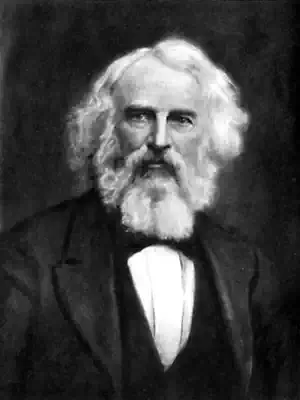
Henry Wadsworth Longfellow was an American poet and educator. He was born in Portland, Maine, and his family had deep roots in New England. He wrote in English.

Childhood and education

Longfellow's early life was shaped by a comfortable family background and a strong emphasis on education. He entered Bowdoin College at the age of 14, where he developed a passion for literature and languages. He was a gifted student, excelling in his studies and beginning to publish his early verses during this time. His education provided him with a broad knowledge of classical literature and European traditions.

Literary trajectory

Longfellow's literary career began with the publication of early poems in magazines. After extensive travel and study in Europe, he returned to the United States and embarked on a prolific writing career. His fame grew steadily with collections like 'Voices of the Night' and 'The Song of Hiawatha.' He also became a respected professor, teaching at Bowdoin and later at Harvard University, where he influenced generations of students. His later works continued to explore historical and legendary themes.

Works, style, and literary characteristics

Longfellow's major works include 'Voices of the Night' (1839), 'Ballads and Other Poems' (1841), 'The Spanish Student' (1843), 'Evangeline' (1847), 'The Song of Hiawatha' (1855), and 'The Courtship of Miles Standish' (1858). His poetry is characterized by its narrative quality, lyrical beauty, and often moralistic or sentimental tone. He frequently employed traditional forms, such as the ballad and the sonnet, but also experimented with longer narrative poems. Themes explored include love, loss, domestic life, heroism, American history and legend, and the passage of time. His language is generally clear, accessible, and rich in imagery, aiming for emotional resonance with a broad audience.

Cultural and historical context

Longfellow lived and wrote during a period of significant national growth and change in the United States, a time often referred to as the American Renaissance. He was part of the so-called 'Fireside Poets,' a group of American writers whose work was popular and widely read in American homes. His poetry often reflected and shaped American identity, drawing on national myths and historical events. He was aware of European literary trends but sought to create a distinctly American literary voice.

Personal life

Longfellow experienced significant personal tragedies, including the deaths of both his wives. These losses deeply affected him and are often reflected in the elegiac and melancholic strains found in some of his poetry. He maintained friendships with many prominent literary figures of his day and was a respected academic.

Recognition and reception

Longfellow was immensely popular during his lifetime, both in the United States and internationally, particularly in Britain. His poems were widely recited, set to music, and studied in schools. While lauded for his accessibility and emotional appeal by the general public, some later critics found his work overly sentimental or conventional. However, his place as a foundational figure in American poetry remains secure.

Influences and legacy

Longfellow was influenced by European Romantic poets, particularly German and English writers. He, in turn, influenced many subsequent American poets and helped to establish a tradition of narrative and lyrical poetry in the United States. His works were instrumental in shaping a sense of national identity and cultural heritage.

Interpretation and critical analysis

Critical interpretations of Longfellow's work often focus on his role in popularizing poetry, his engagement with American history and myth, and the balance between his accessible style and the deeper emotional currents in his verse. Debates sometimes arise regarding the perceived sentimentality versus genuine pathos in his work.

Curiosities and lesser-known aspects

Longfellow was a gifted linguist and professor, fluent in several languages. He was also known for his considerable literary fame, which sometimes presented challenges, as he struggled to find quiet moments for composition amidst public demands. His home in Cambridge, Massachusetts, a former headquarters of George Washington, became a literary landmark.

Death and memory

Longfellow died in Cambridge, Massachusetts. His death was widely mourned, and he was remembered as one of America's greatest poets. His works continue to be read and studied, maintaining his status as a significant figure in American literary history.