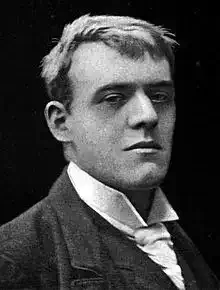
Lord Lundy
Lord Lundy
Who was too Freely Moved to Tears, and thereby ruined his Political Career
Lord Lundy from his earliest years
Was far too freely moved to Tears.
For instance if his Mother said,
"Lundy! It's time to go to Bed!"
He bellowed like a Little Turk.
Or if his father Lord Dunquerque
Said "Hi!" in a Commanding Tone,
"Hi, Lundy! Leave the Cat alone!"
Lord Lundy, letting go its tail,
Would raise so terrible a wail
As moved His Grandpapa the Duke
To utter the severe rebuke:
"When I, Sir! was a little Boy,
An Animal was not a Toy!"
His father's Elder Sister, who
Was married to a Parvenoo,
Confided to Her Husband, Drat!
The Miserable, Peevish Brat!
Why don't they drown the Little Beast?"
Suggestions which, to say the least,
Are not what we expect to hear
From Daughters of an English Peer.
His Grandmamma, His Mother's Mother,
Who had some dignity or other,
The Garter, or no matter what,
I can't remember all the Lot!
Said "Oh! That I were Brisk and Spry
To give him that for which to cry!"
(An empty wish, alas! For she
Was Blind and nearly ninety-three).
The Dear Old Butler thought-but there!
I really neither know nor care
For what the Dear Old Butler thought!
In my opinion, Butlers ought
To know their place, and not to play
The Old Retainer night and day.
I'm getting tired and so are you,
Let's cut the poem into two!
Second Part
It happened to Lord Lundy then,
As happens to so many men:
Towards the age of twenty-six,
They shoved him into politics;
In which profession he commanded
The Income that his rank demanded
In turn as Secretary for
India, the Colonies, and War.
But very soon his friends began
To doubt is he were quite the man:
Thus if a member rose to say
(As members do from day to day),
"Arising out of that reply . . .!"
Lord Lundy would begin to cry.
A Hint at harmless little jobs
Would shake him with convulsive sobs.
While as for Revelations, these
Would simply bring him to his knees,
And leave him whimpering like a child.
It drove his colleagues raving wild!
They let him sink from Post to Post,
From fifteen hundred at the most
To eight, and barely six--and then
To be Curator of Big Ben!. . .
And finally there came a Threat
To oust him from the Cabinet!
The Duke -- his aged grand-sire -- bore
The shame till he could bear no more.
He rallied his declining powers,
Summoned the youth to Brackley Towers,
And bitterly addressed him thus-"
Sir! you have disappointed us!
We had intended you to be
The next Prime Minister but three:
The stocks were sold; the Press was squared:
The Middle Class was quite prepared.
But as it is! . . . My language fails!
Go out and govern New South Wales!"
The Aged Patriot groaned and died:
And gracious! how Lord Lundy cried!
Matilda Who told Lies, and was Burned to Death
Matilda Who told Lies, and was Burned to Death
Matilda told such Dreadful Lies,
It made one Gasp and Stretch one's Eyes;
Her Aunt, who, from her Earliest Youth,
Had kept a Strict Regard for Truth,
Attempted to Believe Matilda:
The effort very nearly killed her,
And would have done so, had not She
Discovered this Infirmity.
For once, towards the Close of Day,
Matilda, growing tired of play,
And finding she was left alone,
Went tiptoe to the Telephone
And summoned the Immediate Aid
Of London's Noble Fire-Brigade.
Within an hour the Gallant Band
Were pouring in on every hand,
From Putney, Hackney Downs, and Bow.
With Courage high and Hearts a-glow,
They galloped, roaring through the Town,
'Matilda's House is Burning Down!'
Inspired by British Cheers and Loud
Proceeding from the Frenzied Crowd,
They ran their ladders through a score
Of windows on the Ball Room Floor;
And took Peculiar Pains to Souse
The Pictures up and down the House,
Until Matilda's Aunt succeeded
In showing them they were not needed;
And even then she had to pay
To get the Men to go away,
It happened that a few Weeks later
Her Aunt was off to the Theatre
To see that Interesting Play
The Second Mrs. Tanqueray.
She had refused to take her Niece
To hear this Entertaining Piece:
A Deprivation Just and Wise
To Punish her for Telling Lies.
That Night a Fire did break out--
You should have heard Matilda Shout!
You should have heard her Scream and Bawl,
And throw the window up and call
To People passing in the Street-(
The rapidly increasing Heat
Encouraging her to obtain
Their confidnce) -- but all in vain!
For every time she shouted 'Fire!'
They only answered 'Little Liar!'
And therefore when her Aunt returned,
Matilda, and the House, were Burned.
Lines to a Don
Lines to a Don
Remote and ineffectual Don
That dared attack my Chesterton,
With that poor weapon, half-impelled,
Unlearnt, unsteady, hardly held,
Unworthy for a tilt with men--
Your quavering and corroded pen;
Don poor at Bed and worse at Table,
Don pinched, Don starved, Don miserable;
Don stuttering, Don with roving eyes,
Don nervous, Don of crudities;
Don clerical, Don ordinary,
Don self-absorbed and solitary;
Don here-and-there, Don epileptic;
Don puffed and empty, Don dyspeptic;
Don middle-class, Don sycophantic,
Don dull, Don brutish, Don pedantic;
Don hypocritical, Don bad,
Don furtive, Don three-quarters mad;
Don (since a man must make and end),
Don that shall never be my friend.
Don different from those regal Dons!
With hearts of gold and lungs of bronze,
Who shout and bang and roar and bawl
The Absolute across the hall,
Or sail in amply bellying gown
Enormous through the Sacred Town,
Bearing from College to their homes
Deep cargoes of gigantic tomes;
Dons admirable! Dons of Might!
Uprising on my inward sight
Compact of ancient tales, and port
And sleep--and learning of a sort.
Dons English, worthy of the land;
Dons rooted; Dons that understand.
Good Dons perpetual that remain
A landmark, walling in the plain--
The horizon of my memories--
Like large and comfortable trees.
Don very much apart from these,
Thou scapegoat Don, thou Don devoted,
Don to thine own damnation quoted,
Perplexed to find thy trivial name
Reared in my verse to lasting shame.
Don dreadful, rasping Don and wearing,
Repulsive Don--Don past all bearing.
Don of the cold and doubtful breath,
Don despicable, Don of death;
Don nasty, skimpy, silent, level;
Don evil, Don that serves the devil.
Don ugly--that makes fifty lines.
There is a Canon which confines
A Rhymed Octosyllabic Curse
If written in Iambic Verse
To fifty lines. I never cut;
I far prefer to end it--but
Believe me I shall soon return.
My fires are banked, but still they burn
To write some more about the Don
That dared attack my Chesterton.
Heroic Poem in Praise of Wine
Heroic Poem in Praise of Wine
To exalt, enthrone, establish and defend,
To welcome home mankind's mysterious friend
Wine, true begetter of all arts that be;
Wine, privilege of the completely free;
Wine the recorder; wine the sagely strong;
Wine, bright avenger of sly-dealing wrong,
Awake, Ausonian Muse, and sing the vineyard song!
Sing how the Charioteer from Asia came,
And on his front the little dancing flame
Which marked the God-head. Sing the Panther-team,
The gilded Thrysus twirling, and the gleam
Of cymbals through the darkness. Sing the drums.
He comes; the young renewer of Hellas comes!
The Seas await him. Those Aegean Seas
Roll from the dawning, ponderous, ill at ease,
In lifts of lead, whose cresting hardly breaks
To ghostly foam, when suddenly there awakes
A mountain glory inland. All the skies
Are luminous; and amid the sea bird cries
The mariner hears a morning breeze arise.
Then goes the Pageant forward. The sea-way
Silvers the feet of that august array
Trailing above the waters, through the airs;
And as they pass a wind before them bears
The quickening word, the influence magical.
The Islands have received it, marble-tall;
The long shores of the mainland. Something fills
The warm Euboean combes, the sacred hills
Of Aulis and of Argos. Still they move
Touching the City walls, the Temple grove,
Till, far upon the horizon-glint, a gleam
Of light, of trembling light, revealed they seem
Turned to a cloud, but to a cloud that shines,
And everywhere as they pass, the Vines! The Vines!
The Vines, the conquering Vines! And the Vine
breaths
Her savour through the upland, empty heaths
Of treeless wastes; the Vines have come to where
The dark Pelasgian steep defends the lair
Of the wolf's hiding; to the empty fields
By Aufidus, the dry campaign that yields
No harvest for the husbandman, but now
Shall bear a nobler foison than the plough;
To where, festooned along the tall elm trees,
Tendrils are mirrored in Tyrrhenian seas;
To where the South awaits them; even to where
Stark, African informed of burning air,
Upturned to Heaven the broad Hipponian plain
Extends luxurious and invites the main.
Guelma's a mother: barren Thaspsa breeds;
And northward in the valleys, next the meads
That sleep by misty river banks, the Vines
Have struck to spread below the solemn pines.
The Vines are on the roof-trees. All the Shrines
And Homes of men are consecrate with Vines.
And now the task of that triumphant day
Has reached to victory. In the reddening ray
With all his train, from hard Iberian lands
Fulfilled, apparent, that Creator stands
Halted on Atlas. Far Beneath him, far,
The strength of Ocean darkening and the star
Beyond all shores. There is a silence made.
It glorifies: and the gigantic shade
Of Hercules adores him from the West.
Dead Lucre: burnt Ambition: Wine is best.
But what are these that from the outer murk
Of dense mephitic vapours creeping lurk
To breathe foul airs from that corrupted well
Which oozes slime along the floor of Hell?
These are the stricken palsied brood of sin
In whose vile veins, poor, poisonous and thin,
Decoctions of embittered hatreds crawl:
These are the Water-Drinkers, cursed all!
On what gin-sodden Hags, what flaccid sires
Bred these White Slugs from what exhaust desires?
In what close prison's horror were their wiles
Watched by what tyrant power with evil smiles;
Or in what caverns, blocked from grace and air
Received they, then, the mandates of despair?
What! Must our race, our tragic race, that roam
All exiled from our first, and final, home:
That in one moment of temptation lost
Our heritage, and now wander, hunger-tost
Beyond the Gates (still speaking with our eyes
For ever of remembered Paradise),
Must we with every gift accepted, still,
With every joy, receive attendant ill?
Must some lewd evil follow all our good
And muttering dog our brief beatitude?
A primal doom, inexorable, wise,
Permitted, ordered, even these to rise.
Even in the shadow of so bright a Lord
Must swarm and propagate the filthy horde
Debased, accursed I say, abhorrent and abhorred.
Accursed and curse-bestowing. For whosoe'er
Shall suffer their contagion, everywhere
Falls from the estate of man and finds his end
To the mere beverage of the beast condemned.
For such as these in vain the Rhine has rolled
Imperial centuries by hills of gold;
For such as these the flashing Rhone shall rage
In vain its lightning through the Hermitage
Or level-browed divine Touraine receive
The tribute of her vintages at eve.
For such as these Burgundian heats in vain
Swell the rich slope or load the empurpled plain.
Bootless for such as these the mighty task
Of bottling God the Father in a flask
And leading all Creation down distilled
To one small ardent sphere immensely filled.
With memories empty, with experience null,
With vapid eye-balls meaningless and dull
They pass unblest through the unfruitful light;
And when we open the bronze doors of Night,
When we in high carousal, we reclined,
Spur up to Heaven the still ascending mind,
Pass with the all inspiring, to and fro,
The torch of genius and the Muse's glow,
They, lifeless, stare at vacancy alone
Or plan mean traffic, or repeat their moan.
We, when repose demands us, welcomed are
In young white arms, like our great Exemplar
Who, wearied with creation, takes his rest
And sinks to sleep on Ariadne's breast.
They through the darkness into darkness press
Despised, abandoned and companionless.
And when the course of either's sleep has run
We leap to life like heralds of the sun;
We from the couch in roseate mornings gay
Salute as equals the exultant day
While they, the unworthy, unrewarded, they
The dank despisers of the Vine, arise
To watch grey dawns and mourn indifferent skies.
Forget them! Form the Dionysian ring
And pulse the ground, and Io, Io, sing.
Father Lenaean, to whom our strength belongs,
Our loves, our wars, our laughter and our songs,
Remember our inheritance, who praise
Your glory in these last unhappy days
When beauty sickens and a muddied robe
Of baseness fouls the universal globe.
Though all the Gods indignant and their train
Abandon ruined man, do thou remain!
By thee the vesture of our life was made,
The Embattled Gate, the lordly Colonnade,
The woven fabric's gracious hues, the sound
Of trumpets, and the quivering fountain-round,
And, indestructible, the Arch, and, high,
The Shaft of Stone that stands against the sky,
And, last, the guardian-genius of them, Rhyme,
Come from beyond the world to conquer time:
All these are thine, Lenaean.
By thee do seers the inward light discern;
By thee the statue lives, the Gods return;
By thee the thunder and the falling foam
Of loud Acquoria's torrent call to Rome;
Alba rejoices in a thousand springs,
Gensano laughs, and Orvieto sings...
But, Ah! With Orvieto, with that name
Of dark, Eturian, subterranean flame
The years dissolve. I am standing in that hour
Of majesty Septembral, and the power
Which swells the clusters when the nights are still
With autumn stars on Orvieto hill.
Had these been mine, Ausonian Muse, to know
The large contented oxen heaving slow;
To count my sheaves at harvest; so to spend
Perfected days in peace until the end;
With every evening's dust of gold to hear
The bells upon the pasture height, the clear
Full horn of herdsmen gathering in the kine
To ancient byres in hamlets Appenine,
And crown abundant age with generous ease:
Had these, Ausonian Muse, had these, had these.....
But since I would not, since I could not stay,
Let me remember even in this my day
How, when the ephemeral vision's lure is past
All, all, must face their Passion at the last
Was there not one that did to Heaven complain
How, driving through the midnight and the rain,
He struck, the Atlantic seethe and surge before,
Wrecked in the North along a lonely shore
To make the lights of home and hear his name no
more.
Was there not one that from a desperate field
Rode with no guerdon but a rifted shield;
A name disherited; a broken sword;
Wounds unrenowned; battle beneath no Lord;
Strong blows, but on the void, and toil without
reward.
When from the waste of such long labour done
I too must leave the grape-ennobling sun
And like the vineyard worker take my way
Down the long shadows of declining day,
Bend on the sombre plain my clouded sight
And leave the mountain to the advancing night,
Come to the term of all that was mine own
With nothingness before me, and alone;
Then to what hope of answer shall I turn?
Comrade-Commander whom I dared not earn,
What said You then to trembling friends and
few?
"A moment, and I drink it with you new:
But in my Father's Kingdom." So, my Friend,
Let not Your cup desert me in the end.
But when the hour of mine adventure's near
Just and benignant, let my youth appear
Bearing a Chalice, open, golden, wide,
With benediction graven on its side.
So touch my dying lip: so bridge that deep:
So pledge my waking from the gift of sleep,
And, sacramental, raise me the Divine:
Strong brother in God and last companion, Wine.