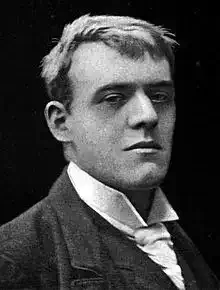
Identification and basic context
Hilaire Belloc was a writer, historian, poet, and political activist. He was born on July 27, 1870, and died on August 22, 1953. Born in La Celle-Saint-Cloud, France, to an English mother and a French father, he held dual nationality but spent most of his life in England. He was a prominent figure in English letters, known for his prolific output and strong opinions. He was a devout Roman Catholic throughout his life.
Childhood and education
Belloc's early life was shaped by his French upbringing and his mother's influence. After his father's death, his mother moved the family to England. He was educated at the Oratory School in Birmingham, run by Cardinal Newman, and later studied history at Balliol College, Oxford. His time at Oxford was significant for his intellectual development and his growing engagement with Catholic thought and tradition. He also served in the French army for a period.
Literary trajectory
Belloc began his writing career in the 1890s, quickly establishing himself as a versatile and opinionated author. He gained early fame for his humorous travelogues and poems. Throughout his career, he produced a vast number of books, including historical analyses, biographies, political tracts, essays, novels, and collections of verse. He was a frequent contributor to periodicals and engaged in public debates. His literary trajectory was marked by a consistent adherence to his Catholic faith and political convictions.
Works, style, and literary characteristics
Belloc's major works span numerous genres. Among his most famous poems are "The Bad Child's Book of Beasts" (1896) and "Cautionary Tales for Children" (1896), known for their dark humor and memorable rhymes. His historical works include "The History of England" and biographies of figures like Joan of Arc and Napoleon. His dominant themes often revolved around Catholic faith, history, social justice (particularly his advocacy for distributism), and critiques of liberalism and socialism. His style is characterized by clarity, wit, vigorous argumentation, and a direct, often polemical, tone. His poetic style in his humorous works is marked by simple rhyme schemes and memorable, often ironic, narratives. He was associated with a conservative literary and intellectual milieu.
Cultural and historical context
Belloc lived through a period of significant social and political change in Britain and Europe, including the rise of industrialism, two world wars, and shifts in political ideologies. As a Catholic, he was part of a religious minority in predominantly Protestant England and often felt compelled to defend his faith. He was a contemporary of G.K. Chesterton, with whom he shared many intellectual and religious views, and together they championed distributism. Belloc was a staunch critic of modern secular trends and political movements he deemed dangerous.
Personal life
Belloc's personal life was deeply influenced by his strong Catholic faith and his family. He married Elodie Hogan, an American, and they had five children. His personal experiences and deeply held convictions fueled his writing and public pronouncements. He was known for his robust personality and his willingness to engage in public controversies.
Recognition and reception
Belloc achieved considerable fame during his lifetime as a popular writer and public figure. His humorous poems and essays were widely read and enjoyed. His historical works were also influential, though sometimes criticized for their strong biases. He was recognized for his literary output and his engagement with public affairs, though his controversial views also drew criticism.
Influences and legacy
Belloc drew influence from classical literature, English literary tradition, and his Catholic faith. He, in turn, influenced writers like G.K. Chesterton and promoted ideas like distributism. His legacy lies in his enduring humorous poetry, his substantial historical scholarship, and his persistent defense of Catholic social teaching and traditional values. His works continue to be read for their wit, historical insight, and clear articulation of his worldview.
Interpretation and critical analysis
Belloc's work is often interpreted through the lens of his Catholic faith and his conservative political stance. Critics have examined his historical methodologies, his economic theories (distributism), and the complex blend of humor and seriousness in his writing. His polemical style and strong opinions have sometimes led to controversy.
Curiosities and lesser-known aspects
Belloc was known for his legendary memory and his ability to write on a vast array of subjects. He famously claimed to know the geography of England better than anyone else. He also had a deep knowledge of military history.
Death and memory
Hilaire Belloc died at the age of 83. His death was noted in literary and public circles. While some of his more polemical works have faded in prominence, his humorous verse and certain historical studies continue to be appreciated and studied.