
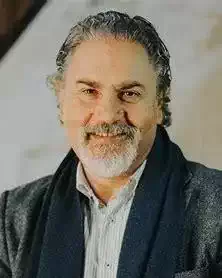
Horácio Costa
b. 1954
 BR
BR
BR
Horácio Costa is a Portuguese poet and essayist, known for his poetry that blends erudition and sensitivity, exploring themes such as memory, time, language, and the human condition itself. His work, marked by rigorous formal construction and rich vocabulary, dialogues with literary tradition while engaging with contemporary concerns. Costa is also recognized for his essayistic activity, where he deepens reflections on literature, art, and culture.
n. 1954, São Paulo · m. , São Paulo
10
Views
Bio
Identification and basic context
Full name: Horácio Costa. Nationality: Portuguese. Language of writing: Portuguese.Childhood and education
Information not available.Literary career
Beginning of writing: His literary activity manifests in both poetry and essay. Evolution over time: His poetic work is characterized by stylistic and thematic continuity, marked by erudition and reflection on language and memory. Activity as a critic, translator, or editor: Recognized for his essayistic and critical activity.Work, style, and literary characteristics
Main works with dates and production context: His poetry, which includes titles such as "O Vento Suave" (The Gentle Wind) and "A Trama do Tempo" (The Fabric of Time), is marked by a deep reflection on memory, language, and the existential condition. Dominant themes: Memory, time, language, identity, the art of poetry. Form and structure: Rigor in formal construction, exploration of classical poetic forms, and metrical experimentation. Poetic devices: Use of complex metaphors, literary and philosophical allusions, subtle musicality. Tone and poetic voice: Erudite, reflective, sometimes melancholic, but always with a sense of depth. Poetic voice: Universalizing, seeking to grasp the great questions of human existence through language. Language and style: Erudite and precise vocabulary, imagistic density, intertextual allusions. Formal or thematic innovations introduced in literature: His poetry belongs to a line of continuity of Portuguese cultured poetry, but with a contemporary approach to the themes of memory and language. Relationship with tradition and modernity: Constant dialogue with Portuguese and universal literary tradition, but with a modern sensibility. Associated literary movements: Can be associated with a line of cultured and reflective poetry. Lesser-known or unpublished works: Information not available.Cultural and historical context
His work reflects a dialogue with Portuguese and European literary tradition, fitting into a context of reflection on modernity and the human condition in the 20th and 21st centuries.Personal life
Information not available.Recognition and reception
Recognized for his contribution to poetry and essay writing in Portugal.Influences and legacy
Authors who influenced him: His work shows a strong connection to authors of Portuguese poetic tradition and to thinkers in philosophy and literary criticism. Poets and movements he influenced: His work continues to be studied and appreciated, influencing later generations through its reflective depth and formal rigor.Interpretation and critical analysis
Possible readings of the work: His poetry invites multiple readings, focused on the exploration of memory, the passage of time, and the capacity of language to grasp reality. Philosophical and existential themes: Addresses fundamental questions about existence, finitude, and the meaning of life.Curiosities and lesser-known aspects
Information not available.Death and memory
Information not available.Poems
0No poems found
Videos
50
Comments (0)
Log in
to post a comment.
No comments yet. Be the first to comment.