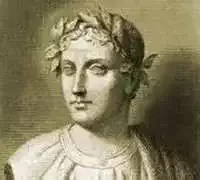
BkIII:II Dulce Et Decorum Est
BkIII:II Dulce Et Decorum Est
Let the boy toughened by military service
learn how to make bitterest hardship his friend,
and as a horseman, with fearful lance,
go to vex the insolent Parthians,
spending his life in the open, in the heart
of dangerous action. And seeing him, from
the enemy’s walls, let the warring
tyrant’s wife, and her grown-up daughter, sigh:
‘Ah, don’t let the inexperienced lover
provoke the lion that’s dangerous to touch,
whom a desire for blood sends raging
so swiftly through the core of destruction.’
It’s sweet and fitting to die for one’s country.
Yet death chases after the soldier who runs,
and it won’t spare the cowardly back
or the limbs, of peace-loving young men.
Virtue, that’s ignorant of sordid defeat,
shines out with its honour unstained, and never
takes up the axes or puts them down
at the request of a changeable mob.
Virtue, that opens the heavens for those who
did not deserve to die, takes a road denied
to others, and scorns the vulgar crowd
and the bloodied earth, on ascending wings.
And there’s a true reward for loyal silence:
I forbid the man who divulged those secret
rites of Ceres, to exist beneath
the same roof as I, or untie with me
the fragile boat: often careless Jupiter
included the innocent with the guilty,
but lame-footed Punishment rarely
forgets the wicked man, despite his start.
BkIII:IV Temper Power With Wisdom
BkIII:IV Temper Power With Wisdom
O royal Calliope, come from heaven,
and play a lengthy melody on the flute,
or, if you prefer, use your clear voice,
or pluck at the strings of Apollo’s lute.
Do you hear her, or does some lovely fancy
toy with me? I hear, and seem to wander, now,
through the sacred groves, where delightful
waters steal, where delightful breezes stray.
In my childhood, once, on pathless Vultur’s slopes,
beyond the bounds of nurturing Apulia,
exhausted with my play and weariness,
the fabled doves covered me with new leaves,
which was a wonder to everyone who holds
Acherontia’s high nest, and Bantia’s
woodland pastures, and the rich meadows
of low-lying Forentum, since I slept
safe from the bears and from the dark vipers,
the sacred laurel and the gathered myrtle
spread above me, a courageous child,
though it was thanks to the power of the gods.
Yours Muses, yours, I climb the high Sabine Hills,
or I’m carried off to my cool Praeneste,
to the slopes of Tibur, if I please,
or the cloudless loveliness of Baiae.
A friend of your sacred fountains and your
choirs, the rout of the army at Philippi
failed to kill me, and that accursed
tree, and Palinurus’ Sicilian Sea.
Whenever you are with me, as a sailor
I’ll attempt the raging Bosphorus, or be
a traveller in the burning sands
of the Syrian shore: as a stranger
I’ll see the fierce inhospitable Britons,
the Spaniards that love drinking horses’ blood,
I’ll see the quiver-bearing Thracians,
and, unharmed, visit the Scythian stream.
It’s you then who refresh our noble Caesar,
in your Pierian caves, when he’s settled
his weary troops in all the cities,
and he’s ready to complete his labours.
You give calm advice, and you delight in that
giving, kindly ones. We know how the evil
Titans, how their savage supporters
were struck down by the lightning from above,
by him who rules the silent earth, the stormy
sea, the cities, and the kingdoms of darkness,
alone, in imperial justice,
commanding the gods and the mortal crowd.
Great terror was visited on Jupiter
by all those bold warriors bristling with hands,
and by the brothers who tried to set
Pelion on shadowy Olympus.
But what power could Giant Typhoeus have,
or mighty Mimas, or that Porphyrion
with his menacing stance, Rhoetus,
or Enceladus, audacious hurler
of uprooted trees, against the bronze breastplate,
Minerva’s aegis? On one side stood eager
Vulcan, on the other maternal
Juno, and Apollo of Patera
and Delos, who is never without the bow
on his shoulder, who bathes his flowing hair
in Castalia’s pure dew, who holds
the forests, and thickets of Lycia.
Power without wisdom falls by its own weight:
The gods themselves advance temperate power:
and likewise hate force that, with its whole
consciousness, is intent on wickedness.
Let hundred-handed Gyas be the witness
to my statement: Orion too, well-known as
chaste Dian’s attacker, and tamed
by the arrows of the virgin goddess.
Earth, heaped above her monstrous children, laments
and grieves for her offspring, hurled down to murky
Orcus by the lightning bolt: The swift
fires have not yet eaten Aetna, set there,
nor the vultures ceased tearing at the liver
of intemperate Tityus, those guardians placed
over his sin: and three hundred chains
hold the amorous Pirithous fast.
BkII:XX Poetic Immortality
BkII:XX Poetic Immortality
A poet of dual form, I won’t be carried
through the flowing air on weak or mundane wings,
nor will I linger down here on earth,
for any length of time: beyond envy,
I’ll leave the cities behind. It’s not I, born
of poor parents, it’s not I, who hear your voice,
beloved Maecenas, I who’ll die,
or be encircled by Stygian waters.
Even now the rough skin is settling around
my ankles, and now above them I’ve become
a snow-white swan, and soft feathers are
emerging over my arms and shoulders.
Soon, a melodious bird, and more famous
than Icarus, Daedalus’ son, I’ll visit
Bosphorus’ loud shores, Gaetulian
Syrtes, and the Hyperborean plains.
Colchis will know me, so will the Scythians,
who pretend to show no fear of Italian
troops, and the Geloni: Spain will learn
from me, the expert, and those who drink Rhone.
No dirges at my insubstantial funeral,
no elegies, and no unseemly grieving:
suppress all the clamour, not for me
the superfluous honour of a tomb.
BkII:XVII We’ll Go Together
BkII:XVII We’ll Go Together
Why do you stifle me with your complaining?
It’s neither the gods’ idea nor mine to die
before you, Maecenas, you’re the great
glory, and pillar of my existence.
Ah, if some premature blow snatches away
half of my spirit, why should the rest remain,
no longer as loved, nor surviving
entire? That day shall lead us to ruin
together. I’m not making some treacherous
promise: whenever you lead the way, let’s go,
let’s go, prepared as friends to set out,
you and I, to try the final journey.
No Chimaera’s fiery breath will ever tear
me from you, or if he should rise against me
hundred handed Gyas: that’s the will
of all-powerful Justice and the Fates.
Whether Libra or fearful Scorpio shone
more powerfully on me at my natal hour,
or Capricorn, which is the ruler
of the waters that flow round Italy,
our stars were mutually aspected in their
marvellous way. Jupiter’s protection shone,
brighter for you than baleful Saturn,
and rescued you, and held back the rapid
wings of Fate, that day when the people crowding
the theatre, three times broke into wild applause:
I’d have received the trunk of a tree
on my head, if Faunus, the guardian
of Mercurial poets, hadn’t warded off
the blow with his hand. So remember to make
due offering: you build a votive shrine:
I’ll come and sacrifice a humble lamb.
BkII:XV Excess
BkII:XV Excess
Not long now and our princely buildings will leave
few acres under the plough, ornamental
waters appearing everywhere, spread
wider than the Lucrine Lake is, plane trees,
without vines, will drive out the elms: and violet
beds, and myrtles, and all the wealth of perfumes
will scatter their scent through olive groves
that gave their crops for a former owner.
Then thick laurel branches will shut out the sun’s
raging. It wasn’t the case under Romulus,
or long-haired Cato, it wasn’t the rule,
that our ancient predecessors ordained.
Private property was modest in their day,
the common lands vast: no private citizen
had a portico, measuring tens
of feet, laid out facing the shady north,
nor did the laws allow ordinary turf
to be scorned for altars, ordering cities
and the gods’ temples, to be adorned,
at public expense, with rarest marbles.
BkII:XIV Eheu Fugaces
BkII:XIV Eheu Fugaces
Oh how the years fly, Postumus, Postumus,
they’re slipping away, virtue brings no respite
from the wrinkles that furrow our brow,
impending old age, Death the invincible:
not even, my friend, if with three hundred bulls
every day, you appease pitiless Pluto,
jailor of three-bodied Geryon,
who imprisons Tityos by the sad
stream, that every one of us must sail over,
whoever we are that enjoy earth’s riches,
whether we’re wealthy, or whether we are
the most destitute of humble farmers.
In vain we’ll escape from bloodiest warfare,
from the breakers’ roar in the Adriatic,
in vain, on the autumn seas, we’ll fear
the southerly that shatters our bodies:
We’re destined to gaze at Cocytus, winding,
dark languid river: the infamous daughters
of Danaus: and at Sisyphus,
son of Aeolus, condemned to long toil.
We’re destined to leave earth, home, our loving wife,
nor will a single tree, that you planted here,
follow you, it’s briefly-known master,
except for the much-detested cypress.
A worthier heir will drink your Caecuban,
that cellar a hundred keys are protecting,
and stain the street with a vintage wine,
finer than those at the Pontiff’s table.
BkII:XII Terentia’s Singing
BkII:XII Terentia’s Singing
You’d not wish the theme of Numantia’s fierce wars
matched to the lyre’s soft tones, nor cruel Hannibal,
nor the Sicilian Sea turned to dark crimson
by the Carthaginians’ blood,
nor the savage Lapiths, and drunken Hylaeus
filled with excess wine, nor Hercules with his hand
taming the sons of earth, at the danger of which
ancient Saturn’s glittering house
was shaken: you’d be better yourself, Maecenas,
at writing prose histories of Caesar’s battles,
and telling us about all those menacing kings,
now led by the neck through the streets.
The Muse wishes me to speak of the sweet singing
of your lady Terentia, and speak of her bright
flashing eyes, and speak of that heart of hers, that is
so faithful in mutual love:
she to whom it’s not unbecoming to adopt
the lead among the dancers, or compete in wit,
or, that holy day that honours Diana, give
her arm in play to shining girls.
Would you exchange now, one hair of Terentia’s
for what rich Achaemenes owned, Mygdonian
wealth of fertile Phrygia, or
the Arabians’ well-stocked homes,
while she bends her neck for those passionate kisses,
or in gentle cruelty refuses to yield them,
more than he who asks likes having them taken: then
at times surprises by taking?
BkII:X The Golden Mean
BkII:X The Golden Mean
You’ll live more virtuously, my Murena,
by not setting out to sea, while you’re in dread
of the storm, or hugging fatal shores
too closely, either.
Whoever takes delight in the golden mean,
safely avoids the squalor of a shabby house,
and, soberly, avoids the regal palace
that incites envy.
The tall pine’s more often shaken by the wind,
and it’s a high tower that falls with a louder
crash, while the mountainous summits are places
where lightning strikes.
The heart that is well prepared for any fate
hopes in adversity, fears prosperity.
Though Jupiter brings us all the unlovely
winters: he also
takes them away again. If there’s trouble now
it won’t always be so: sometimes Apollo
rouses the sleeping Muse with his lyre, when he’s
not flexing his bow.
Appear brave and resolute in difficult
times: and yet be wise and take in all your sails
when they’re swollen by too powerful
a following wind.
BkII:VII A Friend Home From the Wars
BkII:VII A Friend Home From the Wars
O Pompey, often led, with me, by Brutus,
the head of our army, into great danger,
who’s sent you back, as a citizen,
to your country’s gods and Italy’s sky,
Pompey, the very dearest of my comrades,
with whom I’ve often drawn out the lingering
day in wine, my hair wreathed, and glistening
with perfumed balsam, of Syrian nard?
I was there at Philippi, with you, in that
headlong flight, sadly leaving my shield behind,
when shattered Virtue, and what threatened
from an ignoble purpose, fell to earth.
While in my fear Mercury dragged me, swiftly,
through the hostile ranks in a thickening cloud:
the wave was drawing you back to war,
carried once more by the troubled waters.
So grant Jupiter the feast he’s owed, and stretch
your limbs, wearied by long campaigning, under
my laurel boughs, and don’t spare the jars
that were destined to be opened by you.
Fill the smooth cups with Massic oblivion,
pour out the perfume from generous dishes,
Who’ll hurry to weave the wreathes for us
of dew-wet parsley or pliant myrtle?
Who’ll throw high Venus at dice and so become
the master of drink? I’ll rage as insanely
as any Thracian: It’s sweet to me
to revel when a friend is home again.
BkII:V Be Patient
BkII:V Be Patient
She’s not ready to bear a yoke on her bowed
neck yet, she’s not yet equal to the duty
of coupling, or bearing the heavy
weight of a charging bull in the mating act.
The thoughts of your heifer are on green pastures,
on easing her burning heat in the river,
and sporting with the eager calves
in the depths of moist willow plantations.
Forget this passion of yours for the unripe
grape: autumn, the season of many-colours,
will soon be dyeing bluish clusters
a darker purple, on the vine, for you.
Soon she’ll pursue you, since fierce time rushes on
and will add to her the years it takes from you,
soon Lalage herself will be eager
to search you out as a husband, Lalage,
beloved as shy Pholoë was not, nor your
Chloris, with shoulders gleaming white, like a clear
moon shining over a midnight sea,
nor Cnidian Gyges, that lovely boy,
whom you could inser in a choir of girls,
and the wisest of strangers would fail to tell
the difference, with him hidden behind
his flowing hair, and ambiguous looks.