Poems List

A Prospective Visit

A Prospective Visit

While _any_ day was notable and dear
That gave the children Noey, history here
Records his advent emphasized indeed
With sharp italics, as he came to feed
The stock one special morning, fair and bright,
When Johnty and Bud met him, with delight
Unusual even as their extra dress--
Garbed as for holiday, with much excess
Of proud self-consciousness and vain conceit
In their new finery.--Far up the street
They called to Noey, as he came, that they,
As promised, both were going back that day
To _his_ house with him!

And by time that each
Had one of Noey's hands--ceasing their speech
And coyly anxious, in their new attire,
To wake the comment of their mute desire,--
Noey seemed rendered voiceless. Quite a while
They watched him furtively.--He seemed to smile
As though he would conceal it; and they saw
Him look away, and his lips purse and draw
In curious, twitching spasms, as though he might
Be whispering,--while in his eye the white
Predominated strangely.--Then the spell
Gave way, and his pent speech burst audible:
'They wuz two stylish little boys,
and they wuz mighty bold ones,
Had two new pairs o' britches made
out o' their daddy's old ones!'
And at the inspirational outbreak,
Both joker and his victims seemed to take
An equal share of laughter,--and all through
Their morning visit kept recurring to
The funny words and jingle of the rhyme
That just kept getting funnier all the time.
260

A Noted Traveler

A Noted Traveler

Even in such a scene of senseless play
The children were surprised one summer-day
By a strange man who called across the fence,
Inquiring for their father's residence;
And, being answered that this was the place,
Opened the gate, and with a radiant face,
Came in and sat down with them in the shade
And waited--till the absent father made
His noon appearance, with a warmth and zest
That told he had no ordinary guest
In this man whose low-spoken name he knew
At once, demurring as the stranger drew
A stuffy notebook out and turned and set
A big fat finger on a page and let
The writing thereon testify instead
Of further speech. And as the father read
All silently, the curious children took
Exacting inventory both of book
And man:--He wore a long-napped white fur-hat
Pulled firmly on his head, and under that
Rather long silvery hair, or iron-gray--
For he was not an old man,--anyway,
Not beyond sixty. And he wore a pair
Of square-framed spectacles--or rather there
Were two more than a pair,--the extra two
Flared at the corners, at the eyes' side-view,
In as redundant vision as the eyes
Of grasshoppers or bees or dragonflies.
Later the children heard the father say
He was 'A Noted Traveler,' and would stay
Some days with them--In which time host and guest
Discussed, alone, in deepest interest,
Some vague, mysterious matter that defied
The wistful children, loitering outside
The spare-room door. There Bud acquired a quite
New list of big words--such as 'Disunite,'
And 'Shibboleth,' and 'Aristocracy,'
And 'Juggernaut,' and 'Squatter Sovereignty,'
And 'Anti-slavery,' 'Emancipate,'
'Irrepressible conflict,' and 'The Great
Battle of Armageddon'--obviously
A pamphlet brought from Washington, D. C.,
And spread among such friends as might occur
Of like views with 'The Noted Traveler.'
295

A Parent Reprimanded

A Parent Reprimanded

Sometimes I think 'at Parents does
Things ist about as bad as _us_--


Wite 'fore our vurry eyes, at that!
Fer one time Pa he scold' my Ma
'Cause he can't find his hat;
An' she ist _cried_, she did! An' I
Says, 'Ef you scold my Ma
Ever again an' make her cry,
Wy, you sha'n't _be_ my Pa!'
An' nen he laugh' an' find his hat
Ist wite where Ma she said it's at!
266

A Monument For The Soldiers

A Monument For The Soldiers

A monument for the Soldiers!
And what will ye build it of?
Can ye build it of marble, or brass, or bronze,
Outlasting the Soldiers' love?
Can ye glorify it with legends
As grand as their blood hath writ
From the inmost shrine of this land of thine
To the outermost verge of it?


And the answer came: We would build it
Out of our hopes made sure,
And out of our purest prayers and tears,
And out of our faith secure:
We would build it out of the great white truths
Their death hath sanctified,
And the sculptured forms of the men in arms,
And their faces ere they died.


And what heroic figures
Can the sculptor carve in stone?
Can the marble breast be made to bleed,
And the marble lips to moan?
Can the marble brow be fevered?
And the marble eyes be graved
To look their last, as the flag floats past,
On the country they have saved?


And the answer came: The figures
Shall all be fair and brave,
And, as befitting, as pure and white
As the stars above their grave!
The marble lips, and breast and brow
Whereon the laurel lies,
Bequeath us right to guard the flight
Of the old flag in the skies!


A monument for the Soldiers!
Built of a people's love,
And blazoned and decked and panoplied
With the hearts ye build it oft
And see that ye build it stately,
In pillar and niche and gate,
And high in pose as the souls of those
It would commemorate!
254

A New Year's Time At Willards's

A New Year's Time At Willards's

1
The Hired Man Talks

There's old man Willards; an' his wife;
An' Marg'et-- S'repty's sister--; an'
There's me-- an' I'm the hired man;
An' Tomps McClure, you better yer life!

Well now, old Willards hain't so bad,
Considerin' the chance he's had.
Of course, he's rich, an' sleeps an' eats
Whenever he's a mind to: Takes
An' leans back in the Amen-seats
An' thanks the Lord fer all he makes--.
That's purty much all folks has got
Ag'inst the old man, like as not!
But there's his woman-- jes the turn
Of them-air two wild girls o' hern-Marg'et
an' S'repty-- allus in
Fer any cuttin'-up concern--
Church festibals, and foolishin'
Round Christmas-trees, an' New Year's sprees--
Set up to watch the Old Year go
An' New Year come-- sich things as these;
An' turkey-dinners, don't you know!
S'repty's younger, an' more gay,
An' purtier, an' finer dressed
Than Marg'et is-- but, lawzy-day!
She hain't the independentest!
'Take care!' old Willards used to say,
'Take care--! Let Marg'et have her way,
An' S'repty, you go off an' play
On your melodeum--!' But, best
Of all, comes Tomps! An' I'll be bound,
Ef he hain't jes the beatin'est
Young chap in all the country round!
Ef you knowed Tomps you'd like him, shore!
They hain't no man on top o' ground
Walks into my affections more--!
An' all the Settlement'll say
That Tomps was liked jes thataway
By ever'body, till he tuk
A shine to S'repty Willards--. Then
You'd ort'o see the old man buck
An' h'ist hisse'f, an' paw the dirt,
An' hint that 'common workin'-men
That didn't want their feelin's hurt
'Ud better hunt fer 'comp'ny' where
The folks was pore an' didn't care--!'
The pine-blank facts is--, the old man,
Last Christmas was a year ago,
Found out some presents Tomps had got


Fer S'repty, an' hit made him hot--
Set down an' tuk his pen in hand
An' writ to Tomps an' told him so
On legal cap, in white an' black,
An' give him jes to understand
'No Christmas-gifts o' 'lily-white'
An' bear's-ile could fix matters right,'
An' wropped 'em up an' sent 'em back!
Well, S'repty cried an' snuffled round
Consid'able. But Marg'et she
Toed out another sock, an' wound
Her knittin' up, an' drawed the tea,
An' then set on the supper-things,
An' went up in the loft an' dressed--
An' through it all you'd never guessed
What she was up to! An' she brings
Her best hat with her an her shawl,
An' gloves, an' redicule, an' all,
An' injirubbers, an' comes down
An' tells 'em she's a-goin' to town
To he'p the Christmas goin's-on
Her Church got up. An' go she does--
The best hosswoman ever was!
'An' what'll We do while you're gone?'
The old man says, a-tryin' to be
Agreeable. 'Oh! You?' says she--,
'You kin jaw S'repty, like you did,
An' slander Tomps!' An' off she rid!


Now, this is all I'm goin' to tell
Of this-here story-- that is, I
Have done my very level best
As fur as this, an' here I 'dwell,'
As auctioneers says, winkin' sly:
Hit's old man Willards tells the rest.


2
The Old Man Talks


Adzackly jes one year ago,
This New Year's day, Tomps comes to me--
In my own house, an' whilse the folks
Was gittin' dinner--, an' he pokes
His nose right in, an' says, says he:
'I got yer note-- an' read it slow!
You don't like me, ner I don't you,'
He says--, 'we're even there, you know!
But you've said, furder that no gal
Of yourn kin marry me, er shall,
An' I'd best shet off comin', too!'
An' then he says--, 'Well, them's Your views--;
But havin' talked with S'repty, we


Have both agreed to disagree
With your peculiar notions-- some;
An', that s the reason, I refuse
To quit a-comin' here, but come--
Not fer to threat, ner raise no skeer
An' spile yer turkey-dinner here--,
But jes fer S'repty's sake, to sheer
Yer New Year's. Shall I take a cheer?'


Well, blame-don! Ef I ever see
Sich impidence! I couldn't say
Not nary word! But Mother she
Sot out a cheer fer Tomps, an' they
Shuk hands an' turnt their back on me.
Then I riz-- mad as mad could be--!
But Marg'et says--, 'Now, Pap! You set
Right where you're settin'--! Don't you fret!
An' Tomps-- you warm yer feet!' says she,
'An throw yer mitts an' comfert on
The bed there! Where is S'repty gone!
The cabbage is a-scortchin'! Ma,
Stop cryin' there an' stir the slaw!'
Well--! What was Mother cryin' fer--?
I half riz up-- but Marg'et's chin
Hit squared-- an' I set down ag'in--
I allus was afeard o' her,
I was, by jucks! So there I set,
Betwixt a sinkin'-chill an' sweat,
An' scuffled with my wrath, an' shet
My teeth to mighty tight, you bet!
An' yit, fer all that I could do,
I eeched to jes git up an' whet
The carvin'-knife a rasp er two
On Tomps's ribs-- an' so would you--!
Fer he had riz an' faced around,
An' stood there, smilin', as they brung
The turkey in, all stuffed an' browned--
Too sweet fer nose, er tooth, er tongue!
With sniffs o' sage, an' p'r'aps a dash
Of old burnt brandy, steamin'-hot
Mixed kindo' in with apple-mash
An' mince-meat, an' the Lord knows what!
Nobody was a-talkin' then,
To 'filiate any awk'ardness--
No noise o' any kind but jes
The rattle o' the dishes when
They'd fetch 'em in an' set 'em down,
An' fix an' change 'em round an' round,
Like women does-- till Mother says--,
'Vittels is ready; Abner, call
Down S'repty-- she's up-stairs, I guess--.'
And Marg'et she says, 'Ef you bawl


Like that, she'll not come down at all!
Besides, we needn't wait till she
Gits down! Here Temps, set down by me,
An' Pap: say grace...!' Well, there I was--!
What could I do! I drapped my head
Behind my fists an' groaned; an' said--:
'Indulgent Parent! In Thy cause
We bow the head an' bend the knee
An' break the bread, an' pour the wine,
Feelin'--' (The stair-door suddently
Went bang! An' S'repty flounced by me--)
'Feelin',' I says, 'this feast is Thine--
This New Year's feast--' an' rap-rap-rap!
Went Marg'ets case-knife on her plate--
An' next, I heerd a sasser drap--,
Then I looked up, an' strange to state,
There S'repty set in Tomps lap--
An' huggin' him, as shore as fate!
An' Mother kissin' him k-slap!
An' Marg'et-- she chips in to drap
The ruther peert remark to me--:
'That 'grace' o' yourn,' she says, 'won't 'gee'--
This hain't no 'New Year's feast,'' says she--,
'This is a' Infair-Dinner, Pap!'


An' so it was--! Be'n married fer
Purt' nigh a week--! 'Twas Marg'et planned
The whole thing fer 'em, through an' through.
I'm rickonciled; an' understand,
I take things jes as they occur--,
Ef Marg'et liked Tomps, Tomps 'ud do--!
But I-says-I, a-holt his hand--,
'I'm glad you didn't marry Her-'
Cause Marg'et's my guardeen-- yes-sir--!
An' S'repty's good enough fer you!'
280

A Man Of Many Parts

A Man Of Many Parts

It was a man of many parts,
Who in his coffer mind
Had stored the Classics and the Arts
And Sciences combined;
The purest gems of poesy
Came flashing from his pen--
The wholesome truths of History
He gave his fellow men.


He knew the stars from 'Dog' to Mars;
And he could tell you, too,
Their distances--as though the cars
Had often checked him through--
And time 'twould take to reach the sun,
Or by the 'Milky Way,'
Drop in upon the moon, or run
The homeward trip, or stay.


With Logic at his fingers' ends,
Theology in mind,
He often entertained his friends
Until they died resigned;
And with inquiring mind intent
Upon Alchemic arts
A dynamite experiment-.
. . . . . .
A man of many parts!
286

A Liz Town Humorist

A Liz Town Humorist

Settin' round the stove, last night,
Down at Wess's store, was me
And Mart Strimples, Tunk, and White,
And Doc Bills, and two er three
Fellers o' the Mudsock tribe
No use tryin' to describe!
And says Doc, he says, says he--,
'Talkin' 'bout good things to eat,
Ripe mushmillon's hard to beat!'


I chawed on. And Mart he 'lowed
Wortermillon beat the mush--.
'Red,' he says, 'and juicy-- Hush--!
I'll jes' leave it to the crowd!'
Then a Mudsock chap, says he--,
'Punkin's good enough fer me--
Punkin pies, I mean,' he says--,
Them beats millons--! What say, Wess?


I chawed on. And Wess says--, 'Well,
You jes' fetch that wife of mine
All yer wortermillon-rine--,
And she'll bile it down a spell--
In with sorghum, I suppose,
And what else, Lord only knows--!
But I'm here to tell all hands
Them p'serves meets my demands!'


I chawed on. And White he says--,
'Well, I'll jes' stand, in with Wess-I'm
no hog!' And Tunk says--, 'I
Guess I'll pastur' out on pie
With the Mudsock boys!' says he;
'Now what's yourn?' he says to me:
I chawed on-- fer-- quite a spell
Then I speaks up, slow and dry--,
Jes' tobacker!' I-says-I--.
And you'd ort o' heerd 'em yell!
279

A Letter To A Friend

A Letter To A Friend

The past is like a story
I have listened to in dreams
That vanished in the glory
Of the Morning's early gleams;
And--at my shadow glancing--
I feel a loss of strength,
As the Day of Life advancing
Leaves it shorn of half its length.


But it's all in vain to worry
At the rapid race of Time--
And he flies in such a flurry
When I trip him with a rhyme,
I'll bother him no longer
Than to thank you for the thought
That 'my fame is growing stronger
As you really think it ought.'


And though I fall below it,
I might know as much of mirth
To live and die a poet
Of unacknowledged worth;
For Fame is but a vagrant--
Though a loyal one and brave,
And his laurels ne'er so fragrant
As when scattered o'er the grave.
242

A Home-Made Fairy Tale

A Home-Made Fairy Tale

Bud, come here to your uncle a spell,
And I'll tell you something you mustn't tell--
For it's a secret and shore-'nuf true,
And maybe I oughtn't to tell it to you--!
But out in the garden, under the shade
Of the apple-trees, where we romped and played
Till the moon was up, and you thought I'd gone
Fast asleep--, That was all put on!
For I was a-watchin' something queer
Goin' on there in the grass, my dear--!
'Way down deep in it, there I see
A little dude-Fairy who winked at me,
And snapped his fingers, and laughed as low
And fine as the whine of a mus-kee-to!
I kept still-- watchin' him closer-- and
I noticed a little guitar in his hand,
Which he leant 'ginst a little dead bee-- and laid
His cigarette down on a clean grass-blade,
And then climbed up on the shell of a snail--
Carefully dusting his swallowtail--
And pulling up, by a waxed web-thread,
This little guitar, you remember. I said!
And there he trinkled and trilled a tune--,
'My Love, so Fair, Tans in the Moon!'
Till presently, out of the clover-top
He seemed to be singing to, came k'pop!
The purtiest, daintiest Fairy face
In all this world, or any place!
Then the little ser'nader waved his hand,
As much as to say, 'We'll excuse you!' and
I heard, as I squinted my eyelids to,
A kiss like the drip of a drop of dew!
345

A Good Man

A Good Man

I

A good man never dies--
In worthy deed and prayer
And helpful hands, and honest eyes,
If smiles or tears be there:
Who lives for you and me--
Lives for the world he tries
To help--he lives eternally.
A good man never dies.


II


Who lives to bravely take
His share of toil and stress,
And, for his weaker fellows' sake,
Makes every burden less,--
He may, at last, seem worn--
Lie fallen--hands and eyes
Folded--yet, though we mourn and mourn,
A good man never dies.
289

Comments (0)

Log in to post a comment.

NoComments

Identification and basic context

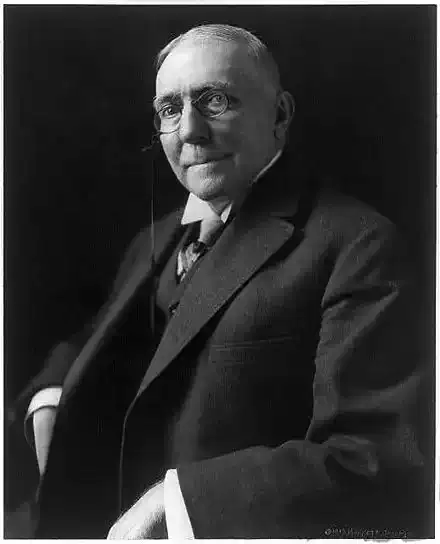
James Whitcomb Riley was an American poet, author, and lecturer. He is celebrated as "The Hoosier Poet" for his distinctive dialect verse that vividly depicted rural life in Indiana and the American Midwest. His writings often evoked a sense of nostalgia for childhood, simplicity, and the everyday lives of common people. Riley's national fame and accessibility made him one of the most popular literary figures of his era.

Childhood and education

Riley was born and raised in Greenfield, Indiana. His father was a lawyer who encouraged his son's literary inclinations. Riley's formal education was limited; he attended public school but left before graduating. He was largely self-taught, developing a love for literature, poetry, and popular entertainment. His childhood experiences in rural Indiana, filled with local folklore, storytelling, and the rhythms of small-town life, profoundly shaped his later literary output.

Literary trajectory

Riley began his career in journalism, working for various newspapers in Indiana. He also experimented with writing songs and poems, often publishing them under pseudonyms. His breakthrough came with the serialization of "The Old Swimmin' Hole" in 1883, a poem written in Hoosier dialect that resonated with readers. This success led to the publication of his first collection, "The Old Swimmin' Hole and Other Poems" (1883), which established his reputation. He went on to publish numerous collections of poetry and prose, becoming a nationally recognized literary figure.

Works, style, and literary characteristics

Riley's most famous works include "The Raggedy Man," "Little Orphant Annie," "When the Frost Is on the Punkin," and "A Country Boy." His dominant themes revolve around rural life, childhood innocence, nostalgia for the past, friendship, and the simple virtues of ordinary people. His style is characterized by its use of Hoosier dialect, colloquial language, and a warm, humorous, and often sentimental tone. He employed simple rhyme schemes and rhythmic patterns, making his poetry accessible and memorable. His poetic voice is typically that of a genial observer, sharing fond memories and gentle observations about his subjects.

Cultural and historical context

Riley's work emerged during a period of significant change in America, as the nation transitioned from an agrarian society to an industrial one. His poems tapped into a widespread sentimentality and nostalgia for the perceived simpler times of rural life, which were rapidly disappearing. He was part of a broader literary trend that celebrated regionalism and local color in American literature. His popularity reflected a national desire to connect with its agrarian roots and the everyday experiences of its citizens.

Personal life

Riley never married and lived a relatively private life, though he was a popular public figure. He suffered from ill health for much of his adult life, including a stroke that affected his mobility, but he continued to write and lecture. His deep affection for children and his memories of his own childhood were central to his creative inspiration. He maintained close ties to his family and friends in Indiana throughout his career.

Recognition and reception

James Whitcomb Riley achieved immense popularity during his lifetime. He was celebrated across the United States, hailed as a national treasure. His readings were often standing-room-only events, and his books sold exceptionally well. He received numerous honors and accolades, solidifying his status as one of America's most beloved poets. His accessible style and relatable themes ensured a broad appeal that transcended literary circles.

Influences and legacy

Riley was influenced by earlier American poets who celebrated rural life and folklore, as well as by popular song forms. His legacy lies in his enduring portrayal of Hoosier life and his contribution to American regionalist literature. He helped popularize the use of vernacular dialect in poetry, making it more relatable to a wider audience. While his work is sometimes seen as overly sentimental by modern critics, its charm and historical value continue to be recognized, and he remains a significant figure in the history of American poetry.

Interpretation and critical analysis

Critics often analyze Riley's work for its nostalgic portrayal of rural America and its use of dialect. Some view his sentimentality as a way to explore universal themes of childhood and memory, while others find it to be a retreat from the complexities of modern life. His celebration of "simple folk" can be interpreted as both an affirmation of democratic ideals and a romanticized, perhaps overly idealized, depiction of rural existence.

Curiosities and lesser-known aspects

Riley was known for his affable personality and his engaging public readings. He was an avid collector of books and manuscripts. Despite his fame, he often expressed a desire for more serious literary recognition, though his talent for popular verse was undeniable. He was also known for his interest in spiritualism.

Death and memory

James Whitcomb Riley died in Indianapolis in 1916. His death was mourned by a nation that had embraced him as a beloved literary son. His home in Greenfield is preserved as a museum, and he is remembered as "The Hoosier Poet" whose words captured the heart and spirit of Indiana.