
Poems List

A Full Harvest

A Full Harvest

Seems like a feller'd ort 'o jes' to-day
Git down and roll and waller, don't you know,
In that-air stubble, and flop up and crow,
Seein' sich craps! I'll undertake to say
There're no wheat's ever turned out thataway
Afore this season!--Folks is keerless tho',
And too fergitful--'caze we'd ort 'o show
More thankfulness!--Jes' looky hyonder, hey?--
And watch that little reaper wadin' thue
That last old yaller hunk o' harvest-ground--
Jes' natchur'ly a-slicin' it in-two
Like honey-comb, and gaumin' it around
The field--like it had nothin' else to do
On'y jes' waste it all on me and you!
316

A Feel In The Chris'mas-Air

A Feel In The Chris'mas-Air

They's a kind o' _feel_ in the air, to me.
When the Chris'mas-times sets in.
That's about as much of a mystery
As ever I've run ag'in!--
Fer instunce, now, whilse I gain in weight
And gineral health, I swear
They's a _goneness_ somers I can't quite state--
A kind o' _feel_ in the air.

They's a feel in the Chris'mas-air goes right
To the spot where a man _lives_ at!--
It gives a feller a' appetite--
They ain't no doubt about _that_!--
And yit they's _somepin_'--I don't know what--
That follers me, here and there,
And ha'nts and worries and spares me not--
A kind o' feel in the air!

They's a _feel_, as I say, in the air that's jest
As blame-don sad as sweet!--
In the same ra-sho as I feel the best
And am spryest on my feet,
They's allus a kind o' sort of a' _ache_
That I can't lo-cate no-where;--
But it comes with _Chris'mas_, and no mistake!--
A kind o' feel in the air.

Is it the racket the childern raise?-W'y,
_no_!--God bless 'em!--_no_!--
Is it the eyes and the cheeks ablaze--
Like my _own_ wuz, long ago?--
Is it the bleat o' the whistle and beat
O' the little toy-drum and blare
O' the horn?--_No! no!_--it is jest the sweet--
The sad-sweet feel in the air.
278

A Dream Of Long Ago

A Dream Of Long Ago

Lying listless in the mosses
Underneath a tree that tosses
Flakes of sunshine, and embosses
Its green shadow with the snow-Drowsy-
eyed, I sink in slumber
Born of fancies without number--
Tangled fancies that encumber
Me with dreams of long ago.


Ripples of the river singing;
And the water-lilies swinging
Bells of Parian, and ringing
Peals of perfume faint and fine,
While old forms and fairy faces
Leap from out their hiding-places
In the past, with glad embraces
Fraught with kisses sweet as wine.


Willows dip their slender fingers
O'er the little fisher's stringers,
While he baits his hook and lingers
Till the shadows gather dim;
And afar off comes a calling
Like the sounds of water falling,
With the lazy echoes drawling
Messages of haste to him.


Little naked feet that tinkle
Through the stubble-fields, and twinkle
Down the winding road, and sprinkle
Little mists of dusty rain,
While in pasture-lands the cattle
Cease their grazing with a rattle
Of the bells whose clappers tattle
To their masters down the lane.


Trees that hold their tempting treasures
O'er the orchard's hedge embrasures,
Furnish their forbidden pleasures
As in Eden lands of old;
And the coming of the master
Indicates a like disaster
To the frightened heart that faster
Beats pulsations manifold.


Puckered lips whose pipings tingle
In staccato notes that mingle
Musically with the jingle-
Haunted winds that lightly fan
Mellow twilights, crimson-tinted
By the sun, and picture-printed
Like a book that sweetly hinted


Of the Nights Arabian.

Porticoes with columns plaited
And entwined with vines and freighted
With a bloom all radiated
With the light of moon and star;
Where some tender voice is winging
In sad flights of song, and singing
To the dancing fingers flinging
Dripping from the sweet guitar.

Would my dreams were never taken
From me: that with faith unshaken
I might sleep and never waken
On a weary world of woe!
Links of love would never sever
As I dreamed them, never, never!
I would glide along forever
Through the dreams of long ago.
258

A Diverted Tragedy

A Diverted Tragedy

Gracie wuz allus a _careless_ tot;
But Gracie dearly loved her doll,
An' played wiv it on the winder-sill
'Way up-stairs, when she ought to _not_,
An' her muvver _telled_ her so an' all;
But she won't _mind_ what _she_ say--till,
First thing she know, her dolly fall
Clean spang out o' the winder plumb
Into the street! An' here Grace come
Down-stairs, two at a time, ist wild
An' a-screamin', 'Oh, my child! my child!'


Jule wuz a-bringin' their basket o' clo'es
Ist then into their hall down there,--
An' she ist stop' when Gracie bawl,
An' Jule she say 'She ist declare
She's ist in time!' An' what you s'pose?
She sets her basket down in the hall,
An' wite on top o' the snowy clo'es
Wuz Gracie's dolly a-layin' there
An' ist ain't bu'st ner hurt a-tall!


Nen Gracie smiled--ist _sobbed_ an' smiled--
An' cried, 'My child! my precious child!'
338

A Dream

A Dream

I dreamed I was a spider;
A big, fat, hungry spider;
A lusty, rusty spider
With a dozen palsied limbs;
With a dozen limbs that dangled
Where three wretched flies were tangled
And their buzzing wings were strangled
In the middle of their hymns.


And I mocked them like a demon--
A demoniacal demon
Who delights to be a demon
For the sake of sin alone;
And with fondly false embraces
Did I weave my mystic laces
Round their horror-stricken faces
Till I muffled every groan.


And I smiled to see them weeping,
For to see an insect weeping,
Sadly, sorrowfully weeping,
Fattens every spider's mirth;
And to note a fly's heart quaking,
And with anguish ever aching
Till you see it slowly breaking
Is the sweetest thing on earth.


I experienced a pleasure,
Such a highly-flavored pleasure,
Such intoxicating pleasure,
That I drank of it like wine;
And my mortal soul engages
That no spider on the pages
Of the history of ages
Felt a rapture more divine.


I careened around and capered--
Madly, mystically capered--
For three days and nights I capered
Round my web in wild delight;
Till with fierce ambition burning,
And an inward thirst and yearning
I hastened my returning
With a fiendish appetite.


And I found my victims dying,
'Ha!' they whispered, 'we are dying!'
Faintly whispered, 'we are dying,
And our earthly course is run.'
And the scene was so impressing
That I breathed a special blessing,
As I killed them with caressing


And devoured them one by one.
279

A Discouraging Model

A Discouraging Model

Just the airiest, fairiest slip of a thing,
With a Gainsborough hat, like a butterfly's wing,
Tilted up at one side with the jauntiest air,
And a knot of red roses sown in under there
Where the shadows are lost in her hair.


Then a cameo face, carven in on a ground
Of that shadowy hair where the roses are wound;
And the gleam of a smile, O as fair and as faint
And as sweet as the master of old used to paint
Round the lips of their favorite saint!


And that lace at her throat-- and fluttering hands
Snowing there, with a grace that no art understands,
The flakes of their touches-- first fluttering at
The bow-- then the roses-- the hair and then that
Little tilt of the Gainsborough hat.


Ah, what artist on earth with a model like this,
Holding not on his palette the tint of a kiss,
Nor a pigment to hint of the hue of her hair
Nor the gold of her smile-- O what artist could dare
To expect a result half so fair?
261

A Cup Of Tea

A Cup Of Tea

I have sipped, with drooping lashes,
Dreamy draughts of Verzenay;
I have flourished brandy-smashes
In the wildest sort of way;
I have joked with 'Tom and Jerry'
Till wee hours ayont the twal'--
But I've found my tea the very
Safest tipple of them all!


'Tis a mystical potation
That exceeds in warmth of glow
And divine exhilaration
All the drugs of long ago--
All of old magicians' potions--
Of Medea's filtered spells--
Or of fabled isles and oceans
Where the Lotos-eater dwells!


Though I've reveled o'er late lunches
With _blase_ dramatic stars,
And absorbed their wit and punches
And the fumes of their cigars--
Drank in the latest story,
With a cock-tail either end,--
I have drained a deeper glory
In a cup of tea, my friend.


Green, Black, Moyune, Formosa,
Congou, Amboy, Pingsuey--
No odds the name it knows--ah!
Fill a cup of it for me!
And, as I clink my china
Against your goblet's brim,
My tea in steam shall twine a
Fragrant laurel round its rim.
279

A Christmas Memory

A Christmas Memory

Pa he bringed me here to stay
'Til my Ma she's well.--An' nen
He's go' hitch up, Chris'mus-day,
An' come take me back again
Wher' my Ma's at! Won't I be
Tickled when he comes fer me!


My Ma an' my A'nty they
'Uz each-uvver's sisters. Pa-A'nty
telled me, th' other day,--
He comed here an' married Ma....
A'nty said nen, 'Go run play,
I must work now!' ... An' I saw,
When she turn' her face away,
She 'uz cryin'.--An' nen I
'Tend-like I 'run play'--an' cry.


This-here house o' A'nty's wher'
They 'uz borned--my Ma an' her!--
An' her Ma 'uz my Ma's Ma,
An' her Pa 'uz my Ma's Pa-


Ain't that funny?--An' they're dead:
An' this-here's 'th' ole Homestead.'--
An' my A'nty said, an' cried,
It's mine, too, ef my Ma died-Don't
know what she mean--'cause my
Ma she's nuvver go' to die!


When Pa bringed me here 't 'uz night-'
Way dark night! An' A'nty spread
Me a piece--an' light the light
An' say I must go to bed.--
I cry not to---but Pa said,
'Be good boy now, like you telled
Mommy 'at you're go' to be!'
An', when he 'uz kissin' me
My good night, his cheeks' all wet
An' taste salty.--An' he held
Wite close to me an' rocked some
An' langhed-like--'til A'nty come
Git me while he's rockin' yet.


A'nty he'p me, 'til I be
Purt'-nigh strip-pud--nen hug me
In bofe arms an' lif' me 'way
Up in her high bed--an' pray
Wiv me,--'bout my Ma--an' Pa--
An' ole Santy Claus--an' Sleigh--
An' Reindeers an' little Drum--
Yes, an' Picture-books, 'Tom Thumb,'
An' 'Three Bears,' an' ole 'Fee-Faw'-


Yes, an' 'Tweedle-Dee' an' 'Dum,'
An' 'White Knight' an' 'Squidjicum,'
An' most things you ever saw!--
An' when A'nty kissed me, she
'Uz all cryin' over me!


Don't want Santy Claus--ner things
Any kind he ever brings!-Don't
want A'nty!--Don't want Pa!--
I ist only want my Ma!
328

A Canary At The Farm

A Canary At The Farm

Folks has be'n to town, and Sahry
Fetched 'er home a pet canary--,
And of all the blame', contrary,
Aggervatin' things alive!
I love music-- that I love it
When it's free-- and plenty of it--;
But I kindo' git above it,
At a dollar-eighty-five!


Reason's plain as I'm a-sayin'--,
Jes' the idy, now, o' layin'
Out yer money, and a-payin'
Fer a willer-cage and bird,
When the medder-larks is wingin'
Round you, and the woods is ringin'
With the beautifullest singin'
That a mortal ever heard!


Sahry's sot, tho'--. So I tell her
He's a purty little feller,
With his wings o' creamy-yeller,
And his eyes keen as a cat;
And the twitter o' the critter
'Pears to absolutely glitter!
Guess I'll haf to go and git her
A high-priceter cage 'n that!
335

A Barefoot Boy

A Barefoot Boy

A barefoot boy! I mark him at his play --
For May is here once more, and so is he, --
His dusty trousers, rolled half to the knee,
And his bare ankles grimy, too, as they:
Cross-hatchings of the nettle, in array
Of feverish stripes, hint vividly to me
Of woody pathways winding endlessly
Along the creek, where even yesterday
He plunged his shrinking body -- gasped and shook --
Yet called the water 'warm,' with never lack
Of joy. And so, half enviously I look
Upon this graceless barefoot and his track, --
His toe stubbed -- ay, his big toe-nail knocked back
Like unto the clasp of an old pocketbook.
403

Comments (0)

Log in to post a comment.

NoComments

Identification and basic context

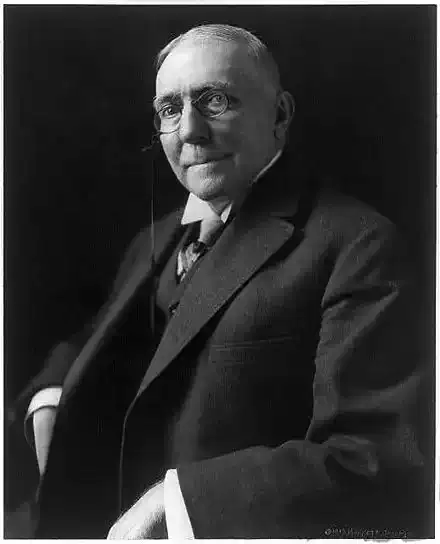
James Whitcomb Riley was an American poet, author, and lecturer. He is celebrated as "The Hoosier Poet" for his distinctive dialect verse that vividly depicted rural life in Indiana and the American Midwest. His writings often evoked a sense of nostalgia for childhood, simplicity, and the everyday lives of common people. Riley's national fame and accessibility made him one of the most popular literary figures of his era.

Childhood and education

Riley was born and raised in Greenfield, Indiana. His father was a lawyer who encouraged his son's literary inclinations. Riley's formal education was limited; he attended public school but left before graduating. He was largely self-taught, developing a love for literature, poetry, and popular entertainment. His childhood experiences in rural Indiana, filled with local folklore, storytelling, and the rhythms of small-town life, profoundly shaped his later literary output.

Literary trajectory

Riley began his career in journalism, working for various newspapers in Indiana. He also experimented with writing songs and poems, often publishing them under pseudonyms. His breakthrough came with the serialization of "The Old Swimmin' Hole" in 1883, a poem written in Hoosier dialect that resonated with readers. This success led to the publication of his first collection, "The Old Swimmin' Hole and Other Poems" (1883), which established his reputation. He went on to publish numerous collections of poetry and prose, becoming a nationally recognized literary figure.

Works, style, and literary characteristics

Riley's most famous works include "The Raggedy Man," "Little Orphant Annie," "When the Frost Is on the Punkin," and "A Country Boy." His dominant themes revolve around rural life, childhood innocence, nostalgia for the past, friendship, and the simple virtues of ordinary people. His style is characterized by its use of Hoosier dialect, colloquial language, and a warm, humorous, and often sentimental tone. He employed simple rhyme schemes and rhythmic patterns, making his poetry accessible and memorable. His poetic voice is typically that of a genial observer, sharing fond memories and gentle observations about his subjects.

Cultural and historical context

Riley's work emerged during a period of significant change in America, as the nation transitioned from an agrarian society to an industrial one. His poems tapped into a widespread sentimentality and nostalgia for the perceived simpler times of rural life, which were rapidly disappearing. He was part of a broader literary trend that celebrated regionalism and local color in American literature. His popularity reflected a national desire to connect with its agrarian roots and the everyday experiences of its citizens.

Personal life

Riley never married and lived a relatively private life, though he was a popular public figure. He suffered from ill health for much of his adult life, including a stroke that affected his mobility, but he continued to write and lecture. His deep affection for children and his memories of his own childhood were central to his creative inspiration. He maintained close ties to his family and friends in Indiana throughout his career.

Recognition and reception

James Whitcomb Riley achieved immense popularity during his lifetime. He was celebrated across the United States, hailed as a national treasure. His readings were often standing-room-only events, and his books sold exceptionally well. He received numerous honors and accolades, solidifying his status as one of America's most beloved poets. His accessible style and relatable themes ensured a broad appeal that transcended literary circles.

Influences and legacy

Riley was influenced by earlier American poets who celebrated rural life and folklore, as well as by popular song forms. His legacy lies in his enduring portrayal of Hoosier life and his contribution to American regionalist literature. He helped popularize the use of vernacular dialect in poetry, making it more relatable to a wider audience. While his work is sometimes seen as overly sentimental by modern critics, its charm and historical value continue to be recognized, and he remains a significant figure in the history of American poetry.

Interpretation and critical analysis

Critics often analyze Riley's work for its nostalgic portrayal of rural America and its use of dialect. Some view his sentimentality as a way to explore universal themes of childhood and memory, while others find it to be a retreat from the complexities of modern life. His celebration of "simple folk" can be interpreted as both an affirmation of democratic ideals and a romanticized, perhaps overly idealized, depiction of rural existence.

Curiosities and lesser-known aspects

Riley was known for his affable personality and his engaging public readings. He was an avid collector of books and manuscripts. Despite his fame, he often expressed a desire for more serious literary recognition, though his talent for popular verse was undeniable. He was also known for his interest in spiritualism.

Death and memory

James Whitcomb Riley died in Indianapolis in 1916. His death was mourned by a nation that had embraced him as a beloved literary son. His home in Greenfield is preserved as a museum, and he is remembered as "The Hoosier Poet" whose words captured the heart and spirit of Indiana.