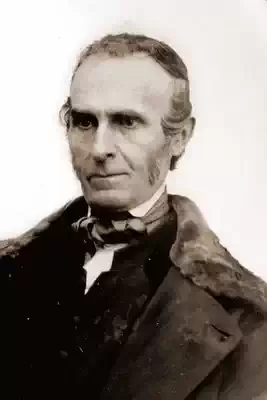
Ezekiel
Ezekiel
They hear Thee not, O God! nor see;
Beneath Thy rod they mock at Thee;
The princes of our ancient line
Lie drunken with Assyrian wine;
The priests around Thy altar speak
The false words which their hearers seek;
And hymns which Chaldea's wanton maids
Have sung in Dura's idol-shades
Are with the Levites' chant ascending,
With Zion's holiest anthems blending!
On Israel's bleeding bosom set,
The heathen heel is crushing yet;
The towers upon our holy hill
Echo Chaldean footsteps still.
Our wasted shrines,--who weeps for them?
Who mourneth for Jerusalem?
Who turneth from his gains away?
Whose knee with mine is bowed to pray?
Who, leaving feast and purpling cup,
Takes Zion's lamentation up?
A sad and thoughtful youth, I went
With Israel's early banishment;
And where the sullen Chebar crept,
The ritual of my fathers kept.
The water for the trench I drew,
The firstling of the flock I slew,
And, standing at the altar's side,
I shared the Levites' lingering pride,
That still, amidst her mocking foes,
The smoke of Zion's offering rose.
In sudden whirlwind, cloud and flame,
The Spirit of the Highest came!
Before mine eyes a vision passed,
A glory terrible and vast;
With dreadful eyes of living things,
And sounding sweep of angel wings,
With circling light and sapphire throne,
And flame-like form of One thereon,
And voice of that dread Likeness sent
Down from the crystal firmament!
The burden of a prophet's power
Fell on me in that fearful hour;
From off unutterable woes
The curtain of the future rose;
I saw far down the coming time
The fiery chastisement of crime;
With noise of mingling hosts, and jar
Of falling towers and shouts of war,
I saw the nations rise and fall,
Like fire-gleams on my tent's white wall.
In dream and trance, I--saw the slain
Of Egypt heaped like harvest grain.
I saw the walls of sea-born Tyre
Swept over by the spoiler's fire;
And heard the low, expiring moan
Of Edom on his rocky throne;
And, woe is me! the wild lament
From Zion's desolation sent;
And felt within my heart each blow
Which laid her holy places low.
In bonds and sorrow, day by day,
Before the pictured tile I lay;
And there, as in a mirror, saw
The coming of Assyria's war;
Her swarthy lines of spearmen pass
Like locusts through Bethhoron's grass;
I saw them draw their stormy hem
Of battle round Jerusalem;
And, listening, heard the Hebrew wail!
Blend with the victor-trump of Baal!
Who trembled at my warning word?
Who owned the prophet of the Lord?
How mocked the rude, how scoffed the vile,
How stung the Levites' scornful smile,
As o'er my spirit, dark and slow,
The shadow crept of Israel's woe
As if the angel's mournful roll
Had left its record on my soul,
And traced in lines of darkness there
The picture of its great despair!
Yet ever at the hour I feel
My lips in prophecy unseal.
Prince, priest, and Levite gather near,
And Salem's daughters haste to hear,
On Chebar's waste and alien shore,
The harp of Judah swept once more.
They listen, as in Babel's throng
The Chaldeans to the dancer's song,
Or wild sabbeka's nightly play,-As
careless and as vain as they.
. . . . .
And thus, O Prophet-bard of old,
Hast thou thy tale of sorrow told
The same which earth's unwelcome seers
Have felt in all succeeding years.
Sport of the changeful multitude,
Nor calmly heard nor understood,
Their song has seemed a trick of art,
Their warnings but, the actor's part.
With bonds, and scorn, and evil will,
The world requites its prophets still.
So was it when the Holy One
The garments of the flesh put on
Men followed where the Highest led
For common gifts of daily bread,
And gross of ear, of vision dim,
Owned not the Godlike power of Him.
Vain as a dreamer's words to them
His wail above Jerusalem,
And meaningless the watch He kept
Through which His weak disciples slept.
Yet shrink not thou, whoe'er thou art,
For God's great purpose set apart,
Before whose far-discerning eyes,
The Future as the Present lies!
Beyond a narrow-bounded age
Stretches thy prophet-heritage,
Through Heaven's vast spaces angel-trod,
And through the eternal years of God
Thy audience, worlds!--all things to be
The witness of the Truth in thee!
Elliott
Elliott
Hands off! thou tithe-fat plunderer! play
No trick of priestcraft here!
Back, puny lordling! darest thou lay
A hand on Elliott's bier?
Alive, your rank and pomp, as dust,
Beneath his feet he trod.
He knew the locust swarm that cursed
The harvest-fields of God.
On these pale lips, the smothered thought
Which England's millions feel,
A fierce and fearful splendor caught,
As from his forge the steel.
Strong-armed as Thor, a shower of fire
His smitten anvil flung;
God's curse, Earth's wrong, dumb Hunger's ire,
He gave them all a tongue!
Then let the poor man's horny hands
Bear up the mighty dead,
And labor's swart and stalwart bands
Behind as mourners tread.
Leave cant and craft their baptized bounds,
Leave rank its minster floor;
Give England's green and daisied grounds
The poet of the poor!
Lay down upon his Sheaf's green verge
That brave old heart of oak,
With fitting dirge from sounding forge,
And pall of furnace smoke!
Where whirls the stone its dizzy rounds,
And axe and sledge are swung,
And, timing to their stormy sounds,
His stormy lays are sung.
There let the peasant's step be heard,
The grinder chant his rhyme,
Nor patron's praise nor dainty word
Befits the man or time.
No soft lament nor dreamer's sigh
For him whose words were bread;
The Runic rhyme and spell whereby
The foodless poor were fed!
Pile up the tombs of rank and pride,
O England, as thou wilt!
With pomp to nameless worth denied,
Emblazon titled guilt!
No part or lot in these we claim;
But, o'er the sounding wave,
A common right to Elliott's name,
A freehold in his grave!
Expostulation
Expostulation
OUR fellow-countrymen in chains!
Slaves, in a land of light and law!
Slaves, crouching on the very plains
Where rolled the storm of Freedom's war!
A groan from Eutaw's haunted wood,
A. wail where Camden's martyrs fell,
By every shrine of patriot blood,
From Moultrie's wall and Jasper's well!
By storied hill and hallowed grot,
By mossy wood and marshy glen,
Whence rang of old the rifle-shot,
And hurrying shout of Marion's men!
The groan of breaking hearts is there,
The falling lash, the fetter's clank!
Slaves, slaves are breathing in that air
Which old De Kalb and Sumter drank!
What, ho! our countrymen in chains!
The whip on woman's shrinking flesh!
Our soil yet reddening with the stains
Caught from her scourging, warm and fresh!
What! mothers from their children riven!
What! God's own image bought and sold!
Americans to market driven,
And bartered as the brute for gold!
Speak! shall their agony of prayer
Come thrilling to our hearts in vain?
To us whose fathers scorned to bear
The paltry menace of a chain;
To us, whose boast is loud and long
Of holy Liberty and Light;
Say, shall these writhing slaves of Wrong
Plead vainly for their plundered Right?
What! shall we send, with lavish breath,
Our sympathies across the wave,
Where Manhood, on the field of death,
Strikes for his freedom or a grave?
Shall prayers go up, and hymns be sung
For Greece, the Moslem fetter spurning,
And millions hail with pen and tongue
Our light on all her altars burning?
Shall Belgium feel, and gallant France,
By Vendome's pile and Schoenbrun's wall,
And Poland, gasping on her lance,
The impulse of our cheering call?
And shall the slave, beneath our eye,
Clank o'er our fields his hateful chain?
And toss his fettered arms on high,
And groan for Freedom's gift, in vain?
Oh, say, shall Prussia's banner be
A refuge for the stricken slave?
And shall the Russian serf go free
By Baikal's lake and Neva's wave?
And shall the wintry-bosomed Dane
Relax the iron hand of pride,
And bid his bondmen cast the chain
From fettered soul and limb aside?
Shall every flap of England's flag
Proclaim that all around are free,
From farthest Ind to each blue crag
That beetles o'er the Western Sea?
And shall we scoff at Europe's kings,
When Freedom's fire is dim with us,
And round our country's altar clings
The damning shade of Slavery's curse?
Go, let us ask of Constantine
To loose his grasp on Poland's throat;
And beg the lord of Mahmoud's line
To spare the struggling Suliote;
Will not the scorching answer come
From turbaned Turk, and scornful Russ
'Go, loose your fettered slaves at home,
Then turn, and ask the like of us!'
Just God! and shall we calmly rest,
The Christian's scorn, the heathen's mirth,
Content to live the lingering jest
And by-word of a mocking Earth?
Shall our own glorious land retain
That curse which Europe scorns to bear?
Shall our own brethren drag the chain
Which not even Russia's menials wear?
Up, then, in Freedom's manly part,
From graybeard eld to fiery youth,
And on the nation's naked heart
Scatter the living coals of Truth!
Up! while ye slumber, deeper yet
The shadow of our fame is growing!
Up! while ye pause, our sun may set
In blood, around our altars flowing!
Oh! rouse ye, ere the storm comes forth,
The gathered wrath of God and man,
Like that which wasted Egypt's earth,
When hail and fire above it ran.
Hear ye no warnings in the air?
Feel ye no earthquake underneath?
Up, up! why will ye slumber where
The sleeper only wakes in death?
Rise now for Freedom! not in strife
Like that your sterner fathers saw,
The awful waste of human life,
The glory and the guilt of war:'
But break the chain, the yoke remove,
And smite to earth Oppression's rod,
With those mild arms of Truth and Love,
Made mighty through the living God!
Down let the shrine of Moloch sink,
And leave no traces where it stood;
Nor longer let its idol drink
His daily cup of human blood;
But rear another altar there,
To Truth and Love and Mercy given,
And Freedom's gift, and Freedom's prayer,
Shall call an answer down from Heaven!
Dedication - Songs of Labor
Dedication - Songs of Labor
I WOULD the gift I offer here
Might graces from thy favor take,
And, seen through Friendship's atmosphere,
On softened lines and coloring, wear
The unaccustomed light of beauty, for thy sake.
Few leaves of Fancy's spring remain:
But what I have I give to thee,
The o'er-sunned bloom of summer's plain,
And paler flowers, the latter rain
Calls from the westering slope of life's autumnal lea.
Above the fallen groves of green,
Where youth's enchanted forest stood,
Dry root and mossëd trunk between,
A sober after-growth is seen,
As springs the pine where falls the gay-leafed maple wood!
Yet birds will sing, and breezes play
Their leaf-harps in the sombre tree;
And through the bleak and wintry day
It keeps its steady green alway, —
So, even my after-thoughts may have a charm for thee.
Art's perfect forms no moral need,
And beauty is its own excuse;
But for the dull and flowerless weed
Some healing virtue still must plead,
And the rough ore must find its honors in its use.
So haply these, my simple lays
Of homely toil, may serve to show
The orchard bloom and tasselled maize
That skirt and gladden duty's ways,
The unsung beauty hid life's common things below.
Haply from them the toiler, bent
Above his forge or plough, may gain,
A manlier spirit of content,
And feel that life is wisest spent
Where the strong working hand makes strong the working brain.
The doom which to the guilty pair
Without the walls of Eden came,
Transforming sinless ease to care
And rugged toil, no more shall bear
The burden of old crime, or mark of primal shame.
A blessing now, a curse no more;
Since He, whose name we breathe with awe,
The coarse mechanic vesture wore,
A poor man toiling with the poor,
In labor, as in prayer, fulfilling the same law.
Divine Compassion
Divine Compassion
Long since, a dream of heaven I had,
And still the vision haunts me oft;
I see the saints in white robes clad,
The martyrs with their palms aloft;
But hearing still, in middle song,
The ceaseless dissonance of wrong;
And shrinking, with hid faces, from the strain
Of sad, beseeching eyes, full of remorse and pain.
The glad song falters to a wail,
The harping sinks to low lament;
Before the still unlifted veil
I see the crowned foreheads bent,
Making more sweet the heavenly air,
With breathings of unselfish prayer;
And a Voice saith: 'O Pity which is pain,
O Love that weeps, fill up my sufferings which remain!
'Shall souls redeemed by me refuse
To share my sorrow in their turn?
Or, sin-forgiven, my gift abuse
Of peace with selfish unconcern?
Has saintly ease no pitying care?
Has faith no work, and love no prayer?
While sin remains, and souls in darkness dwell,
Can heaven itself be heaven, and look unmoved on hell?'
Then through the Gates of Pain, I dream,
A wind of heaven blows coolly in;
Fainter the awful discords seem,
The smoke of torment grows more thin,
Tears quench the burning soil, and thence
Spring sweet, pale flowers of penitence
And through the dreary realm of man's despair,
Star-crowned an angel walks, and to! God's hope is there!
Is it a dream? Is heaven so high
That pity cannot breathe its air?
Its happy eyes forever dry,
Its holy lips without a prayer!
My God! my God! if thither led
By Thy free grace unmerited,
No crown nor palm be mine, but let me keep
A heart that still can feel, and eyes that still can weep.
Conduct
Conduct
From the Mahabharata.
Heed how thou livest. Do no act by day
Which from the night shall drive thy peace away.
In months of sun so live that months of rain
Shall still be happy. Evermore restrain
Evil and cherish good, so shall there be
Another and a happier life for thee.
Daniel Neall
Daniel Neall
I.
FRIENDof the Slave, and yet the friend of all;
Lover of peace, yet ever foremost when
The need of battling Freedom called for men
To plant the banner on the outer wall;
Gentle and kindly, ever at distress
Melted to more than woman's tenderness,
Yet firm and steadfast, at his duty's post
Fronting the violence of a maddened host,
Like some-gray rock from which the waves are tossed!
Knowing his deeds of love, men questioned not
The faith of one whose walk and word were right;
Who tranquilly in Life's great task-field wrought,
And, side by side with evil, scarcely caught
A stain upon his pilgrim garb of white:
Prompt to redress another's wrong, his own
Leaving to Time and Truth and Penitence alone.
II.
Such was our friend. Formed on the good old plan,
A true and brave and downright honest man!
He blew no trumpet in the market-place,
Nor in the church with hypocritic face
Supplied with cant the lack of Christian grace;
Loathing pretence, he did with cheerful will
What others talked of while their hands were still;
And, while 'Lord, Lord!' the pious tyrants cried,
Who, in the poor, their Master crucified,
His daily prayer, far better understood.
In acts than words, was simply doing good.
So calm, so constant was his rectitude,
That by his loss alone we know its worth,
And feel how true a man has walked with us on earth.
Chicago
Chicago
Men said at vespers: 'All is well!'
In one wild night the city fell;
Fell shrines of prayer and marts of gain
Before the fiery hurricane.
On threescore spires had sunset shone,
Where ghastly sunrise looked on none.
Men clasped each other's hands, and said
'The City of the West is dead!'
Brave hearts who fought, in slow retreat,
The fiends of fire from street to street,
Turned, powerless, to the blinding glare,
The dumb defiance of despair.
A sudden impulse thrilled each wire
That signalled round that sea of fire;
Swift words of cheer, warm heart-throbs came;
In tears of pity died the flame!
From East, from West, from South and North,
The messages of hope shot forth,
And, underneath the severing wave,
The world, full-handed, reached to save.
Fair seemed the old; but fairer still
The new, the dreary void shall fill
With dearer homes than those o'erthrown,
For love shall lay each corner-stone.
Rise, stricken city! from thee throw
The ashen sackcloth of thy woe;
And build, as to Amphion's strain,
To songs of cheer thy walls again!
How shrivelled in thy hot distress
The primal sin of selfishness!
How instant rose, to take thy part,
The angel in the human heart!
Ah! not in vain the flames that tossed
Above thy dreadful holocaust;
The Christ again has preached through thee
The Gospel of Humanity!
Then lift once more thy towers on high,
And fret with spires the western sky,
To tell that God is yet with us,
And love is still miraculous!
Clerical Oppressors
Clerical Oppressors
JUST God! and these are they
Who minister at thine altar, God of Right!
Men who their hands with prayer and blessing lay
On Israel's Ark of light!
What! preach, and kidnap men?
Give thanks, and rob thy own afflicted poor?
Talk of thy glorious liberty, and then
Bolt hard the captive's door?
What! servants of thy own
Merciful Son, who came to seek and save
The homeless and the outcast, fettering down
The tasked and plundered slave!
Pilate and Herod, friends!
Chief priests and rulers, as of old, combine!
Just God and holy! is that church, which lends
Strength to the spoiler, thine?
Paid hypocrites, who turn
Judgment aside, and rob the Holy Book
Of those high words of truth which search and burn
In warning and rebuke;
Feed fat, ye locusts, feed!
And, in your tasselled pulpits, thank the Lord
That, from the toiling bondman's utter need,
Ye pile your own full board.
How long, O Lord! how long
Shall such a priesthood barter truth away,
And in Thy name, for robbery and wrong
At Thy own altars pray?
Is not Thy hand stretched forth
Visibly in the heavens, to awe and smite?
Shall not the living God of all the earth,
And heaven above, do right?
Woe, then, to all who grind
Their brethren of a common Father down!
To all who plunder from the immortal mind
Its bright and glorious crown!
Woe to the priesthood! woe
To those whose hire is with the price of blood;
Perverting, darkening, changing, as they go,
The searching truths of God!
Their glory and their might.
Shall perish; and their very names shall be
Vile before all the people, in the light
Of a world's liberty.
Oh, speed the moment on
When Wrong shall cease, and Liberty and Love
And Truth and Right throughout the earth be known
As in their home above.
Cassandra Southwick
Cassandra Southwick
To the God of all sure mercies let my blessing rise today,
From the scoffer and the cruel He hath plucked the spoil away;
Yes, he who cooled the furnace around the faithful three,
And tamed the Chaldean lions, hath set His handmaid free!
Last night I saw the sunset melt though my prison bars,
Last night across my damp earth-floor fell the pale gleam of stars;
In the coldness and the darkness all through the long night-time,
My grated casement whitened with autumn's early rime.
Alone, in that dark sorrow, hour after hour crept by;
Star after star looked palely in and sank adown the sky;
No sound amid night's stillness, save that which seemed to be
The dull and heavy beating of the pulses of the sea;
All night I sat unsleeping, for I knew that on the morrow
The ruler said the cruel priest would mock me in my sorrow,
Dragged to their place of market, and bargained for and sold,
Like a lamb before the shambles, like a heifer from the fold!
Oh, the weakness of the flesh was there¯the shrinking and the shame;
And the low voice of the Tempter like whispers to me came,
'Why sit'st thou thus forlornly,' the wicked murmur said,
'Damp walls thy bower beauty, cold earth thy maiden bed?
'Where be the smiling faces, and voices soft and sweet,
Seen in thy father's dwelling, hoard in the pleasant street?
Where be the youths whose glances, the summer Sabbath through,
Turned tenderly and timidly unto thy father's pew?
'Why sit'st thou here, Cassandra? Bethink thee with what mirth
Thy happy schoolmates gather around the warm, dark hearth;
How the crimson shadows tremble on foreheads white and fair,
On eyes of merry girlhood, half hid in golden hair.
'Not for thee the hearth-fire brightens, not for thee kind words are spoken,
Not for thee the nuts of Wenham woods by laughing boys are broken;
No first-fruits of the orchard within thy lap are laid,
For thee no flowers of autumn the youthful hunters braid.
'O weak, deluded maiden!¯by crazy fancies led,
With wild and raving railers an evil path to tread;
To leave a wholesome worship, and teaching pure and sound,
And mate with maniac women, loose-haired and sackcloth-bound,
'And scoffers of the priesthood, who mock at things divine,
Who rail against thy pulpit, and holy bread and wine;
Bore from their cart-tail scourgings, and from the pillory lame,
Rejoicing in their wretchedness, and glorying in their shame.
'And what a fate awaits thee!¯a sadly toiling slave,
Dragging the slowly lengthening chain of bondage to the grave!
Think of thy woman's nature, subdued in hopeless thrall,
The easy prey of any, the scoff and scorn of all!'
Oh, ever as the Tempter spoke, and feecle Nature's fears
Wrung drop by drop the scalding flow of unavailing tears,
I wrestled down the evil thoughts, and strove in silent prayer
To feel, O Helper of the weak! that Thou indeed wert there!
I thought of Paul and Silas, within Philippi's call,
And how from Peter's sleeping limbs the prison shackles fell,
Till I seemed to hear the trailing of an Angel's robe of white,
And to feel a blessed presence invisible to sight.
Bless the Lord for all his mercies!¯for the peace and love I felt,
Like the dew of Hermon's holy hill, upon my spirit melt;
When 'Get behind me, Satan! ' was the language of my heart,
And I felt the Evil Tempter with all his doubts depart.
Slow broke the gray cold morning; again the sunshine fell,
Flocked with the shade of bar and grate within my lonely cell;
The hoar-frost melted on the wall, and upward from the street
Came careless laugh and idle word, and tread of passing feet.
At length the heavy bolts fell back, my door was open cast,
And slowly at the sheriff's side, up the long street I passed;
I heard the murmur round me, and felt, but dared not see,
How, from every door and window, the people gazed on me.
And doubt and fear fell on me, shame burned upon my cheek,
Swam earth and sky around me, my trembling limbs grew weak;
'Oh Lord, support thy handmaid, and from her soul cast out
The fear of men, which brings a snare, the weakness and the doubt.
Then the dreary shadows scattered, like a cloud in morning's breeze,
And a low deep voice within me seemed whispering words like these:
'Though thy earth be as the iron, and thy heaven a brazen wall,
Trust still His loving-kindness whose power is over all.'
We paused at length, where at my feet the sunlit waters broke
On glaring roach of shining beach, and shingly wall of rock;
The merchant-ships lay idle there, in hard clear lines on high,
Treeing with rope and slender spar their network on the sky.
And there were ancient citizens, cloak-wrapped and grave and cold,
And grim and stout sea-captains with faces bronzed and old,
And on his horse, with Rawson, his cruel clerk at hand,
Sat dark and haughty Endicott, the ruler of the land.
And poisoning with his evil words the ruler's ready ear,
The priest leaned over his saddle, with laugh and scoff and jeer;
It stirred my soul, and from my lips the soul of silence broke,
As if through woman's weakness a warning spirit spoke.
I cried 'The Lord rebuke thee, thou smiter of the meek,
Thou robber of the righteous, thou trampler of the weak!
Go light the cold, dark hearth-stones,¯go turn the prison lock
Of the poor hearts though hast hunted, thou wolf amid the flock!'
Dark lowered the brows of Endicott, and with a deeper red
O'er Rawson's wine-empurpled cheek the flash of anger spread;
'Good people, ' quoth the white-lipped priest, 'heed not her words so wild,
Her Master speaks within her¯ the Devil owns his child!'
But gray heads shook, and young brows knit, the while the sheriff read
That law the wicked rulers against the poor have made,
Who to their house of Rimmon and idol priesthood bring
No bonded knee of worship, nor gainful offering.
Then to the stout sea-captains the sheriff, turning, said¯
'Wish of ye, worthy seamen, will take this Quaker maid?
On the Isle of fair Barbados, or on Virginia's shore
You may hold her at a higher price than Indian girl or Moor!'
Grim and silent stood the captains; and when again he cried,
'Speak out my worthy seamen!' no voice, no sign replied;
But I felt a hard hand press my own, and kind words met my ear,¯
'God bless thee, and preserve thee, my gentle girl and dear!'
A weight seemed lifted from my heart, a pitying friend was nigh,
I felt it in his hard, rough hand, and saw it in his eye;
And when again the sheriff spoke, that voice, so kind to me,
Growled back its stormy answer like the roaring of the sea.
'Pile my ship with bars of silver, pack with coins of Spanish gold
From keel-piece up to deck-plank, the roomage of her hold,
By the living God that made me! I would sooner in your bay
Sink ship and crew and cargo, than bear this child away!'
'Well answered, worthy captain, shame on their cruel laws!'
Ran through the crowd in murmurs loud the people's just applause.
'Like the herdsmen of Tekoa, In Israel of old,
Shall we see the poor and righteous again for silver sold ?'
I looked on haughty Endicott; with weapon half-way drawn,
Swept around the throng his lion glare of bitter hate and scorn;
Fiercely he drew his bridle-rain, and turned in silence back,
And sneering priest and baffled clerk rode murmuring in his track.
Hard after them the sheriff looked, in bitterness of soul,
Thrice smote his staff upon the ground, and crushed his parchment-roll.
'Good friends,' he said, 'since both have fled, the ruler and the priest
Judge ye, if from their further work I be not well released.'
Loud was the cheer which, full and clear, swept round the silent bay,
As, with kind words and kinder looks, he bade me go my way;
For he who turns the courses of the streamlet of the glen,
And the river of great waters, had turned the hearts of men.
Oh, at that hour the very earth seemed changed beneath my eye,
A holier wonder round no rose the blue walls of the sky,
A lovelier light on rock and hill and stream and woodland lay,
And softer lapsed on sunnier sands the waters of the bay.
Thanksgiving to the Lord of life! To him all praises be,
Who from the hands of evil men hath set his handmaid free;
All praise to Him before whose power the mighty are afraid,
Who take the crafty in the snare which for the poor is laid!
Sing, O my soul, rejoicingly, on evening's twilight calm
Uplift the loud thanksgiving, pour forth the grateful psalm;
Let all dear hearts with me rejoice, as did the saints of old,
When of the Lord's good angel the rescued Peter told.
And weep and howl, ye evil priests and mighty men of wrong,
The lord shall smite the proud, and lay His hand upon the strong.
Woe to the wicked rulers in his avenging hour!
Woe to the wolves who seek the flocks to raven and devour!
But let the humble ones arise, the poor in heart be glad,
And let the mourning ones again with robes of praise be clad,
For he who cooled the furnace, and smoothed the stormy wave,
And tamed the Chaldean lions, is mighty still to save!