

Authors List
Browse our collection of authors
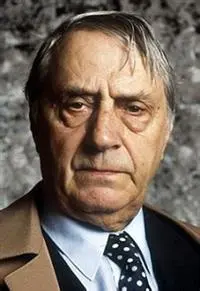
Vergílio Ferreira

1916-01-28 – 1996-03-01
Vergílio António Ferreira was a highly influential Portuguese writer, poet, novelist, playwright, essayist, and literary critic. He is regarded as one of the most significant figures in 20th-century Portuguese literature, known for his intellectual depth and exploration of existential themes. His work often grapples with questions of identity, freedom, and the human condition.

Veikko Koskenniemi

1885-07-08 – 1962-08-04
Veikko Emil Koskenniemi was a Finnish poet, considered one of the most important representatives of the national romantic movement in Finland. His poetry is characterized by strong lyricism, themes related to Finnish nature, love, and homeland, with a style that evokes epic tradition and popular ballads.

Vázquez Montalbán

1939-06-14 – 2003-10-18
Manuel Vázquez Montalbán was a Spanish writer, journalist, and critic, famous for creating the detective Pepe Carvalho. His work spanned various genres, including detective novels, social chronicles, and poetry, always with a critical eye on contemporary Spanish society and its political and cultural intricacies.

Vassyl Symonenko

1935-01-08 – 1963-12-13
Vassyl Symonenko was a Ukrainian poet, journalist, and activist considered one of the most important figures of the Ukrainian 'Shistdesiatnyky' (Sixtiers) generation. He stood out for his lyrical and patriotic poetry, which expressed a strong desire for freedom and self-determination for Ukraine during a period of strong Soviet repression. His work, often written in secret or published posthumously, became a symbol of resistance and Ukrainian national identity. Symonenko died young due to health complications.

Ugo Ojetti

1871-07-15 – 1946-01-01
Ugo Ojetti was an Italian writer, journalist, and art critic, born in Rome in 1871. He was an influential figure in the Italian cultural scene of the early 20th century, known for his prolific activity as a journalist and for his writings on art and literature. He founded and directed important publications, contributing to the dissemination of culture and criticism in Italy.
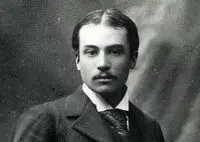
Valéry Larbaud

1881-08-29 – 1957-02-02
Valéry Larbaud was a French writer, poet, and translator, known for his lyrical and reflective prose. His work explores themes such as the search for identity, travel, and the very nature of writing, often with an autobiographical and introspective tone. Larbaud cultivated a scholarly and refined style, demonstrating great command of language and literary form, which earned him a distinguished place in 20th-century French literature.
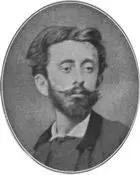
Tristan Corbière
1845-07-18 – 1875-03-01
Tristan Corbière was a French poet, born in 1845 and died in 1875. He is known for his work "Les Amours Jaunes", published posthumously. His poetry is characterized by an innovative and often dark style, exploring themes such as loneliness, death, and the human condition.
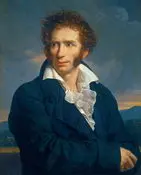
Ugo Foscolo
1778-02-06 – 1827-09-10
Ugo Foscolo was an Italian neoclassical poet, writer, and revolutionary, born on the island of Zante (then under Venetian rule) in 1778. His most famous work is "Le ultime lettere di Jacopo Ortis" (The Last Letters of Jacopo Ortis), an epistolary novel that expresses romantic and nationalist sentiments. Foscolo is also known for his sonnets and for his political activity and exile.
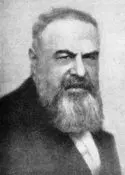
Tristan Bernard
1866-09-07 – 1947-12-07
Tristan Bernard was a renowned French playwright, novelist, and journalist. He is best known for his light and witty comedies, which often satirized Parisian society of his time. Bernard was a popular figure in the intellectual and artistic life of Paris in the late 19th and early 20th centuries.
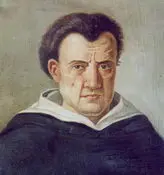
Tommaso Campanella
1568-09-04 – 1639-05-21
Tommaso Campanella was an Italian Dominican friar, philosopher, theologian, and poet. A prolific and controversial thinker, he is known for his work 'The City of the Sun,' a political utopia describing an ideal society based on reason and community. Campanella spent much of his life in prison due to his ideas, considered heretical and subversive.
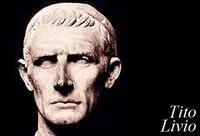
Tito Lívio
59ac – 17
Titus Livius (59 BC – 17 AD) was a Roman historian, author of a monumental work on the history of Rome, "Ab Urbe Condita Libri" (Books from the Founding of the City). His work is a crucial primary source for the study of Ancient Rome, covering from the mythical founding of the city to his own time, and profoundly influenced Western historiography.
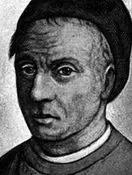
Tomás de Kempis

1380 – 1471-07-25
Thomas à Kempis was a German Augustinian monk and mystic, venerated as a blessed by the Catholic Church. He is widely recognized as the author of 'The Imitation of Christ', one of the most influential works in Christian devotional literature. His life was dedicated to prayer, meditation, and the pursuit of union with God.
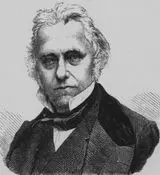
Thomas Macaulay

1800-10-25 – 1859-12-28
Thomas Babington Macaulay (1800-1859) was a British historian, politician, and essayist, best known for his monumental work "The History of England from the Accession of James II". His writing is celebrated for its vivid, narrative style, which brought history to life for a broad audience, and for its influence on British liberalism.

Textos Taoístas

The Taoist Texts encompass a vast collection of writings fundamental to Taoism, a philosophical and religious tradition originating in China. They emphasize harmony with the Tao (the Way), simplicity, spontaneity, and the principle of non-action (Wu Wei). These texts guide practitioners to live in balance with nature and the universe.

Textos Bíblicos

The Biblical Texts constitute a collection of sacred writings fundamental to the Jewish and Christian religions. With diverse authorship and a compilation process spanning centuries, these texts narrate the story of the relationship between God and humanity, presenting laws, prophecies, poetry, wisdom, and narratives of faith. The Bible has exerted a profound and lasting influence on the culture, art, philosophy, and morality of countless civilizations throughout history.

Teresa de Ávila
1515-03-28 – 1582-10-15
Teresa of Ávila, born Teresa Sánchez de Cepeda y Ahumada, was a Spanish Carmelite nun, mystic, and writer, considered one of the most important figures of the Counter-Reformation. She dedicated her life to the reform of the Carmelite Order, founding numerous convents throughout Spain. Her spiritual works, such as "The Book of Life" and "The Interior Castle," are landmarks of mystical literature, describing her experiences of prayer and union with God with remarkable clarity and depth. Her writing is characterized by authenticity, direct language, and profound religious experience. Teresa of Ávila is venerated as a saint by the Catholic Church and is a Doctor of the Church, a title awarded to theologians and mystics whose writings are considered of great importance to Christian doctrine and spirituality.
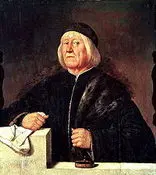
Teofilo Folengo
1491-11-08 – 1544-12-09
Teofilo Folengo was an Italian Benedictine monk and poet, known primarily for his satirical work in macaronic Latin, a mixture of Latin with Italian vernacular elements. His writing is characterized by humor, parody, and biting social criticism, disguised under a jocular language.
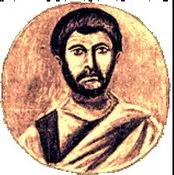
Terêncio
185ac – 159ac
Terence was a Roman playwright of Punic origin, born in Carthage. He is celebrated for his comedies, which stand out for the complexity of their characters, the sophistication of their language, and a more human and reflective tone compared to his predecessor, Plautus. His plays, such as "Andria" and "The Eunuch," continue to be studied and performed for their literary and social relevance.

Stefan Zweig

1881-11-28 – 1942-02-23
Stefan Zweig was an Austrian writer, playwright, journalist, and activist. His work, written in German, is known for its lyricism, psychological depth, and exploration of themes such as love, identity, and destiny. He became one of the most translated and popular authors of his time.
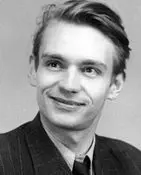
Stig Dagerman

1923-10-05 – 1954-11-04
Stig Dagerman was a Swedish writer, journalist, and playwright, considered one of the most important Swedish authors of the 20th century. His work is marked by a deep exploration of the human condition, addressing themes such as guilt, anxiety, freedom, and the search for meaning in a post-war world. He stood out for his lyrical prose and emotional intensity, which frequently portrayed characters in situations of existential crisis.
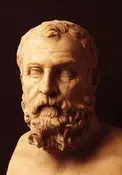
Sólon

630ac – 560ac
Solon (c. 630 – c. 560 BC) was an Athenian poet, legislator, and philosopher, considered one of the Seven Sages of Greece. He lived in a time of great social and economic instability in Athens, marked by the growing debt of peasants and the concentration of power in the hands of the aristocracy. His reforms aimed to alleviate the crisis and establish a more just basis for Athenian society, promoting what would be the embryo of democracy.
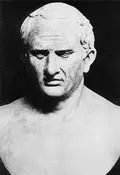
Simónides de Ceos
556ac – 468ac
Simonides of Ceos (c. 556 BC – 468 BC) was a Greek lyric poet, born on the island of Ceos. He is famous for his odes, elegies, and epigrams, particularly his mourning and victory poems. He is credited with the invention of mnemonic music and the expansion of the Greek alphabet.
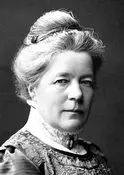
Selma Lagerlöf
1858-11-20 – 1940-03-16
Selma Ottilia Lovisa Lagerlöf was a Swedish writer and the first woman to receive the Nobel Prize in Literature. Her work is known for its deep connection to Swedish folklore, fairy tales, and legends, featuring narratives rich in detail and with strong emotional appeal. Lagerlöf explored themes such as faith, love, sacrifice, and the search for identity, often setting her stories in rural Swedish landscapes.
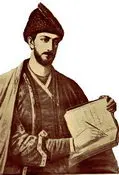
Shota Rustaveli

1172 – 1216-01-01
Shota Rustaveli (c. 1160 - c. 1220) was a Georgian poet of the 12th century, best known as the author of the Georgian national epic 'The Knight in the Panther's Skin'. His work is considered a pinnacle of medieval Georgian literature and a masterpiece of world poetry.