

Authors List
Browse our collection of authors
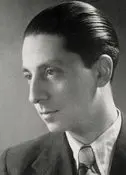
Sandro Penna

1906-06-12 – 1977-01-21
Sandro Penna was an Italian poet, known for his lyrical and intimate poetry, which frequently explores themes such as youth, beauty, desire, and melancholy. His work, marked by clear and musical language, and by an apparent formal simplicity, reveals a profound sensibility and a unique vision of the world. Penna maintained a discreet stance throughout his life, dedicating himself entirely to his art.
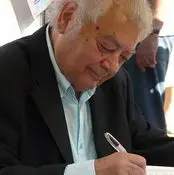
Sándor Csoóri

1930-02-03 – 2016-09-12
Sándor Csoóri was a Hungarian poet and essayist, widely recognized as one of Hungary's most important literary voices in the 20th century. His poetic work is often marked by a deep reflection on national identity, history, and the human condition, with a style that combines lyricism and a strong sense of realism. Besides his poetic output, Csoóri was also a prolific essayist and an influential public intellectual. His writing addressed complex social and political issues, frequently reflecting on the Hungarian experience and its relationship with Central Europe. He was a prominent figure in Hungary's cultural and political life, especially during the country's transition decades.
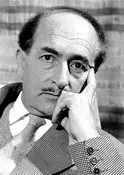
Salvatore Quasimodo
1901-08-20 – 1968-06-14
Salvatore Quasimodo was an Italian poet and translator, awarded the Nobel Prize in Literature in 1959. His work is characterized by lyrical and introspective language, exploring themes such as memory, nature, and the human condition in times of war and post-war. Quasimodo is seen as one of the exponents of Italian hermetic poetry.

Samuel Butler

1612-02-03 – 1680-09-25
Samuel Butler was a 19th-century English writer and critic, known for his satirical work "Erewhon" and his controversial ideas on evolution and religion. He challenged the social and intellectual conventions of his time, advocating for a more personal and philosophical view of science.
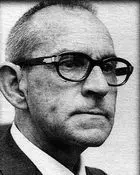
Salvador Espriu i Castelló

1913-07-10 – 1985-02-22
Salvador Espriu i Castelló was a Spanish poet, playwright, and novelist. He is considered one of the main representatives of 20th-century Catalan poetry. His work is marked by a deep existential pessimism, but also by a strong social and political critique. Espriu addressed themes such as death, time, identity, and the human condition, often using allegory and symbolism.
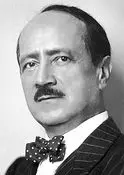
Saint-John Perse

1887-05-31 – 1975-09-20
Alexis Leger, better known by the pseudonym Saint-John Perse, was a French poet, diplomat, and essayist. Born in Pointe-à-Pitre, Guadeloupe, on May 31, 1887, his poetic work is characterized by its epic scope, rich vocabulary, and universal themes. Perse served as a diplomat for many years, holding important positions in the League of Nations and the French Ministry of Foreign Affairs.
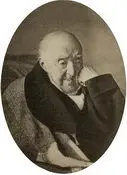
S. Rogers
1763-07-30 – 1855-12-18
Not enough information was found to compile a biography for S. Rogers with the data provided.
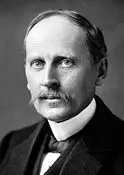
Romain Rolland
1895-05-21 – 1944-12-30
Romain Rolland was a prominent French novelist, playwright, and musicologist, who was awarded the Nobel Prize in Literature in 1915. Born in Clamecy, France, in 1866, he is famous for his work "Jean-Christophe", a cycle of ten novels that narrates the life of a German composer. His work is marked by a profound humanism, pacifism, and an interest in music and spirituality.
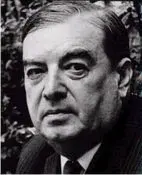
Roger Caillois
1913-03-03 – 1978-12-21
Roger Caillois was a French-Argentine writer, essayist, and sociologist. Born in Reims, France, in 1913, he moved to Argentina in 1914 and lived there until 1945, when he returned to France. His work covers a wide range of themes, including the sociology of sport, games, religion, and poetry. He is known for his theories on games and society, as well as his influence on surrealism.

Roger Martin du Gard

Robert Brasillach
1909-03-31 – 1945-02-06
Robert Brasillach was a French writer, journalist, and film critic, born in Perpignan on March 31, 1909. Associated with the far-right movement, Brasillach was a controversial figure in the 20th-century French intellectual scene. Known for his elegant prose and his talent as a literary and film critic, he collaborated with various publications, including "L'Action Française" and "Je suis partout." During World War II, Brasillach adopted collaborationist and antisemitic positions, which would lead to his conviction and execution after the liberation of France. He died in 1945.

Ricardo León
1877-10-15 – 1943-12-06
Ricardo León was a Spanish writer, primarily known for his novel "Casta "", a work that portrays Spanish society in the early 20th century with a realistic and detailed style. His writing is characterized by the exploration of themes such as family, tradition, and social conflicts, reflecting a deep understanding of human psychology and the cultural nuances of his time.

René Daumal
1908-03-16 – 1944-05-21
René Daumal was a French writer and poet, a singular figure linked to surrealism and mysticism. His work, although relatively scarce, is profoundly marked by spiritual seeking and literary experimentation. Daumal explored the limits of language and consciousness, leaving an intriguing legacy for contemporary literature and thought.
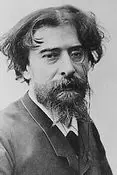
Rémy de Gourmont
1858-04-04 – 1915-09-27
Rémy de Gourmont was an influential French literary critic, poet, and essayist associated with Symbolism and Parnassianism. Known for his erudition and for a sharp, often ironic writing style, Gourmont addressed a wide range of topics, from philosophy and aesthetics to social criticism and sexuality. His works explored the complexity of the human mind and the pursuit of beauty and truth.
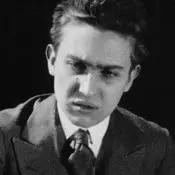
Raymond Radiguet
1903-06-18 – 1923-12-12
Raymond Radiguet was a notable French writer, known for his work "The Devil in the Flesh" (Le Diable au corps). His writing is often associated with French modernism, exploring themes of youth, love, and the transition to adulthood with lyrical and melancholic sensitivity. Despite his short life, Radiguet left a significant mark on the literature of his time.
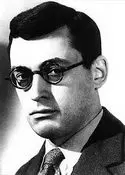
Raymond Queneau
1903-02-21 – 1976-10-25
Raymond Queneau was a French writer, poet, and playwright, a founding member of the literary group Oulipo. His work is characterized by linguistic experimentation, humor, wordplay, and the exploration of everyday life with an ironic and innovative perspective.

Raul Gustavo Aguirre

1927-01-02 – 1983-01-18
Raul Gustavo Aguirre was an Argentine poet, an important figure of surrealism and the poetic renewal movement in Argentina. His work is marked by the exploration of the unconscious, dreamlike images and an innovative language, reflecting the anxieties of his generation.
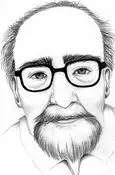
Ramón Sender
1901-02-03 – 1982-01-16
Ramón Sender Barahona was a Spanish writer and journalist, known for his works that frequently portrayed rural life and the social issues of Aragon. His writing was marked by a realistic style and a deep knowledge of the folklore and traditions of his homeland.
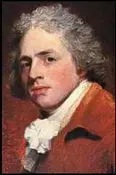
Richard Brinsley Sheridan

1751-10-30 – 1816-07-07
Richard Brinsley Sheridan was an Irish playwright, politician, and theatre owner, known for his witty and satirical comedies that critiqued the customs of Georgian society. His most famous plays, such as "The Rivals" and "The School for Scandal", continue to be staged and appreciated for their intelligence, sharp dialogue, and memorable characters.
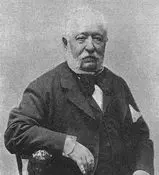
Ramón de Campoamor y Campoosorio
1817-09-24 – 1901-02-11
Ramón de Campoamor y Campoosorio was an influential Spanish poet and playwright of the 19th century, associated with the late Romanticism and pre-Realism period. Born in Navia, Asturias, he is known for his poetry that explores themes such as love, death, and the human condition, often with a philosophical and ironic tone.
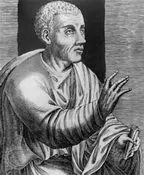
Quintiliano
0035-01-01 – 0096-01-01
Marco Fabio Quintiliano was a renowned Roman orator and pedagogue, considered one of the most important theorists of education and rhetoric in antiquity. His work "Institutio Oratoria" is a comprehensive treatise on the formation of the ideal orator, from childhood to maturity, profoundly influencing Western educational thought.
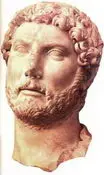
Públio Siro

0100-01-01 – 0100-01-01
Publilius Syrus was a Latin writer, famous for his sentences (sententiae), which were moral maxims and concise aphorisms. His works, although fragmentary today, had a great influence on later literature, especially in the Middle Ages, serving as a model of conciseness and practical wisdom.
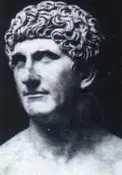
Plutarco

1947-01-15 – -120
Plutarch was a Greek historian, biographer, and essayist, best known for his Parallel Lives, a series of biographies comparing prominent Greek and Roman men. He also wrote the Moralia, a collection of essays on a variety of topics. His writings offer valuable insights into the ancient world, providing glimpses into the politics, society, and culture of the time.
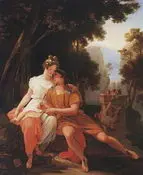
Propércio
0047-01-01 – -14ac
Tiberius Claudius Propertius, known simply as Propertius, was a Latin poet of the Augustan Age. He is considered one of the four great Latin elegiac poets, alongside Ovid, Tibullus, and Catullus. His work is known for its emotional intensity and for exploring themes of love, passion, and suffering. Propertius is especially famous for dedicating his poems to his beloved, Lidia, in whom he idealizes the feminine figure and their complex love relationships.