

Authors List
Browse our collection of authors

André Baião

1566-01-01 – 1639-01-01
André Baião is a contemporary Portuguese poet whose work stands out for its exploration of the human condition, memory, and the passage of time, often with an introspective and melancholic tone. His poetry is characterized by careful language, musicality, and the ability to evoke sensory images that resonate with individual and collective experience. Baião is a name to follow in the current Portuguese poetry scene.

Gonçalo Anes Bandarra
1500-01-01 – 1556-01-01
Gonçalo Anes Bandarra was a 16th-century Portuguese shepherd and prophet, known for his messianic prophecies in verse. His work, written in archaic Portuguese and difficult to interpret, anticipated the return of a Portuguese king who would restore Portugal's glory and establish a universal empire under the Christian faith.
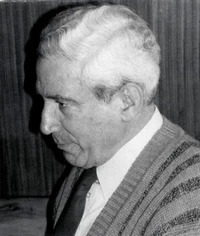
Francisco Luís Amaro
1920-07-07 – 1991-01-16
Francisco Luís Amaro is a Portuguese poet whose work stands out for its lyrical force and exploration of themes such as identity, memory, and the individual's relationship with time and space. His poetry is often marked by dense and imagistic language, reflecting a deep sensitivity to the nuances of human experience and the world around him. Amaro has established himself as a unique voice in contemporary Portuguese-language poetry.

Pedro António Correia Garção
1724-04-29 – 1772-11-10
Pedro António Correia Garção was a Portuguese poet, notable for his contribution to Neoclassical poetry in Portugal. His work is marked by clarity, the pursuit of formal perfection, and themes that evoke classical antiquity, nature, and human feelings in a restrained and elegant manner. Garção is remembered as one of the exponents of Arcadianism in Portugal, valuing reason, harmony, and inspiration from Greco-Latin models. Although his life was relatively short, his poetic legacy left a significant mark on 18th-century Portuguese literature.
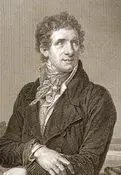
Afonso Lopes de Baião
1210 – 1280-05-03
Afonso Lopes de Baião was a Portuguese medieval troubadour, a prominent figure in Galician-Portuguese poetry. His work, integrated into the medieval songbook, reflects the lyrical conventions of the time, with emphasis on the cantiga de amor and the cantiga de amigo. With a characteristic style, Baião contributed to the richness and diversity of troubadour lyrics, exploring feelings and landscapes in a unique way.

Frei Amador Arrais
1530 – 1600-08-01
Frei Amador Arrais was a prominent figure in the clergy and Portuguese literature of the 17th century, known for his work "Dialogues on the Greatnesses of Brazil". His writing stands out for its exploration of themes related to the Brazilian land, its exuberant nature, and its inhabitants, from a perspective that, although rooted in his religious training, reveals a deep interest and admiration for the New World. His work is an important testimony to a European's view of colonial Brazil. Amador Arrais was a man of faith and letters, whose life unfolded between the religious office and intellectual production. His time in Brazil left an indelible mark on literature, offering a unique perspective on the colony during its period of greatest territorial expansion and exploitation.
Juião Bolseiro
1250-01-01
Juião Bolseiro is a Portuguese poet whose work is characterized by its existential depth and exploration of the human condition, often through language that evokes tradition but with a contemporary outlook. His poetry addresses themes such as memory, the ephemerality of life, the search for meaning, and the individual's relationship with time and space. With an introspective and sometimes melancholic poetic voice, Bolseiro crafts verses that invite reflection on the nature of existence and the complexity of human emotions.
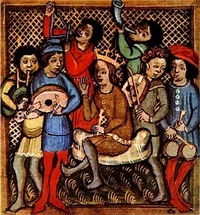
Afonso Mendes de Besteiros
Afonso Mendes de Besteiros was a medieval Galician-Portuguese troubadour, whose compositions are part of the lyrical repertoire of the time. His songs, predominantly of love and friend, reflect the customs and feelings of feudal society, with a language characteristic of Galician-Portuguese poetry. His work, although integrated into a vast body of troubadour production, is appreciated for its expressiveness and its contribution to the understanding of medieval lyricism in the Iberian Peninsula.
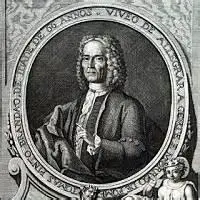
Tomás Pinto Brandão
1664-01-01 – 1743-10-01
Tomás Pinto Brandão was a Portuguese poet of the 20th century, whose work is part of the modernist landscape and, in particular, of interventionist poetry. Known for his direct language and his social and political commitment, Brandão addressed themes such as injustice, oppression, and the fight for freedom in his poems. His poetry is marked by a tone of denunciation and a strong call to action, reflecting a combative spirit and deep empathy for the oppressed. Throughout his career, Pinto Brandão demonstrated a remarkable ability to translate the social concerns of his time into powerful and mobilizing verses. His work stands as a testament to his vision of a more just and equitable world, and remains relevant for its expressive force and its message of hope and resistance.
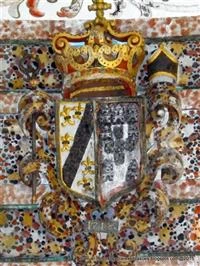
João Mendes de Briteiros
1250 – 1320
João Mendes de Briteiros was a Portuguese poet and military man, known for his work that reflects a deep lyricism and a strong connection to the land and traditions. His poetry addresses universal themes such as love, death, time, and spirituality, often with a language that evokes orality and simplicity, but without losing reflective depth. Throughout his career, he explored various poetic forms, demonstrating remarkable technical mastery and a unique voice in the Portuguese literary landscape, consolidating his legacy as one of the relevant poets of his time.
Fernão Garcia Esgaravunha
1225 – 1280
Fernão Garcia Esgaravunha was a Portuguese medieval poet, a contemporary of Gil Vicente and Sá de Miranda. Although his work is less extensive than that of other authors of the time, it is significant for its satirical and moralizing poetry. He wrote in Galician-Portuguese and is considered one of the precursors of more socially and politically engaged lyricism in the Portuguese-language literature. His compositions often address the customs of the time, criticizing the hypocrisy and vices of society, sometimes with a biting tone, but always with a keen eye on human dynamics.
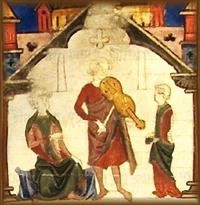
João Soares Coelho
1210 – 1278
João Soares Coelho was a Portuguese poet of the 17th century, author of a work notable for its religiosity and its moralizing aspect. His poetry, inserted in the context of Portuguese Baroque, reflects a deep concern with the transience of life and the search for divine salvation. Although not as widely known as other poets of his time, Coelho left a significant legacy for his lyrical expression and mysticism.
Jogral Lourenço
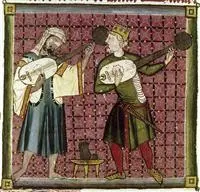
Jogral Lourenço is an enigmatic figure of Portuguese medieval poetry, identified as a troubadour of the 13th century. His poetic work, although scarce, is valued for its contribution to Galician-Portuguese lyric poetry. His verses reflect the sensibility and characteristic themes of troubadour poetry, such as courtly love and saudade, expressed in a musical and formally refined language. His production, inserted within the context of the cantiga de amor, offers a glimpse into the art and culture of the time.
Alfredo Pedro de Meneses Guisado
1891-10-30 – 1975-12-02
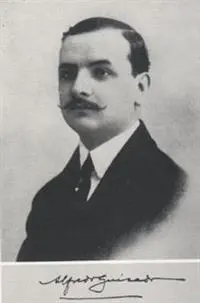
Alfredo Guisado was a Portuguese poet, playwright, and journalist. Connected to the saudosismo movement, his poetic work is marked by a strong lyrical expression, with recurring themes such as love, saudade (longing), and melancholy. He developed a multifaceted career, actively contributing to the cultural and literary life of his time through writing and criticism. His literary production, although not extensive, solidified his presence in the Portuguese poetic landscape of the first half of the 20th century, engaging with the aesthetic sensibilities of his era.
Fernão Rodrigues Lobo Soropita
1560-01-01
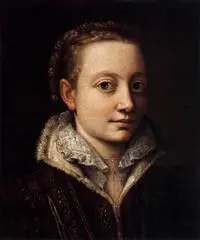
Fernão Rodrigues Lobo Soropita was an intellectual figure of the Portuguese Renaissance, standing out as a humanist, jurist, and poet. His work is marked by erudition, interest in ancient civilizations, and classical scholarship, reflecting the spirit of his time. He was one of the first to dedicate himself to more in-depth studies of the Portuguese language and its history. Soropita left a significant legacy in the field of philology and Renaissance thought in Portugal. His dedication to the study of Lusitanian language and culture, as well as his literary and legal production, contribute to the understanding of the intellectual landscape of the 16th century.
Virgílio Martinho
1928 – 1994-12-04
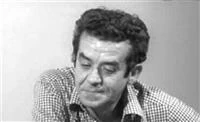
Virgílio Martinho was a Portuguese poet linked to the surrealist movement. His work is marked by formal experimentation, the exploration of the unconscious, and a language loaded with dreamlike and subversive imagery. He questioned social and literary conventions, seeking radical expressive freedom.
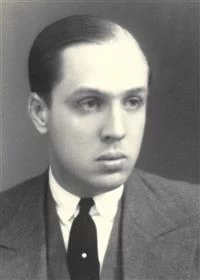
Joaquim Paço d'arcos
1908-06-14 – 1979-06-10
Joaquim Paço d'arcos was a multifaceted creator, exploring poetry, theatre, prose, cinema, and literary criticism. His poetic work, marked by a strong lyrical vein and, at times, by a more social and interventionist dimension, reflects a refined sensitivity to the nuances of human existence and the concerns of his time. Throughout his career, he demonstrated a remarkable capacity for renewal, navigating between different aesthetics and approaches, without ever losing his unique identity.

Maria Gabriela Llansol
1931-11-24 – 2008-03-03
Maria Gabriela Llansol was a writer and translator of great sensitivity, whose work is distinguished by its philosophical depth and exploration of the human condition. Her writing, often marked by a confessional and introspective tone, addresses themes such as memory, identity, solitude, and the search for meaning in a complex world. Llansol stood out for her precise and evocative language, creating unique literary universes that invite reflection on existence and its multiple facets.

Maria Teresa Rita Lopes
1937-09-12 – 2025-06-14
Maria Teresa Rita Lopes was a prominent figure in Portuguese poetry, whose work stands out for its lyrical depth and exploration of universal themes. Her writing is marked by careful language and keen sensitivity, which have made her a recognized voice in the contemporary literary landscape. Her contribution extends beyond poetry, reflecting an attentive gaze on the human condition and its complexity.
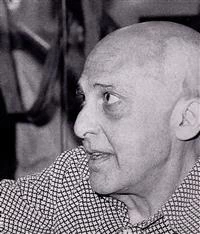
Mário-Henrique Leiria
1923-01-02 – 1980-01-09
Mário-Henrique Leiria was a Portuguese poet, known for his work marked by formal experimentation and the exploration of existential and social themes. His poetry reflects a deep engagement with reality, often expressed through innovative and challenging language. His literary contribution is recognized for its originality and ability to transpose the complexities of human beings and society into verse.
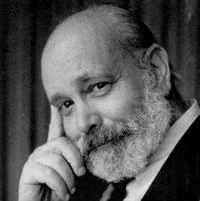
Álvaro Guerra
1936-10-19 – 2002-04-18
Álvaro Guerra was a Portuguese poet and translator, known for his poetic work marked by lyrical and introspective language. His writing often explores themes such as love, memory, and the passage of time, with a sensitivity that associates him with literary currents of his time. He was also an active translator, contributing to the dissemination of foreign authors in Portugal.
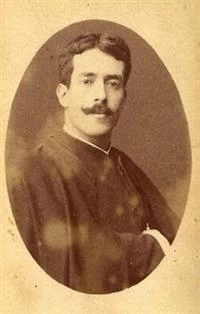
Manuel da Silva Gaio
1860 – 1934
Manuel da Silva Gaio is a poet whose verses explore the rural landscape and Portuguese identity with a deep connection to the land and its traditions. His work is marked by rich language and a lyricism that evokes the beauty of the simple and the strength of roots. Gaio celebrates country life, popular religiosity, and the intrinsic values of the Lusitanian soul, creating poems that resonate with nostalgia and love for the homeland. Poet of choice, Silva Gaio dedicated his life to the exaltation of his land and his people. His poetic work, often linked to folklore and oral traditions, reflects a vision deeply rooted in Portuguese popular culture. Through careful and emotional writing, he managed to capture the essence of a more authentic and bucolic Portugal, leaving a valuable legacy for the country's literature.

Domingos dos Reis Quita
1728-01-06 – 1770-06-13
Domingos dos Reis Quita was an 18th-century Portuguese poet, associated with Arcadianism, a literary movement that sought simplicity, clarity, and inspiration from nature and classical antiquity. His work is marked by a bucolic and pastoral tone, celebrating country life and the ideals of harmony and serenity. A poet of great sensitivity, Quita dedicated himself to exploring the themes of love, nature, and simple life, using elegant and musical language. His poetry reflects the search for an idealized refuge from the hustle and bustle of the world, finding in nature a source of inspiration and solace. He is considered one of the most significant representatives of Arcadian poetry in Portugal.
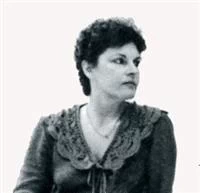
Wanda Ramos

1948 – 1998
Wanda Ramos was a Brazilian poet and short story writer, recognized for her work that is part of Brazilian Modernism. Her poetry, often marked by direct language and themes that address everyday life, the female condition, and social criticism, echoed the concerns of her generation. She was one of the few prominent female voices in the literary scene of the time, contributing a unique and often forceful perspective. Her literary production, although not extensive, left an important mark on Brazilian literature, especially for how she portrayed the nuances of urban life and the complexities of human relationships.