

Authors List
Browse our collection of authors
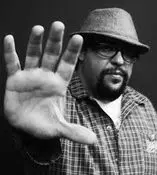
Ferréz

1975-01-01
Ferréz is a Brazilian poet and writer, known as one of the exponents of marginal and peripheral literature. His work portrays social and urban reality, using direct and accessible language that echoes the voices and experiences of marginalized communities. He is also a cultural activist and an important promoter of literature produced in the peripheries.
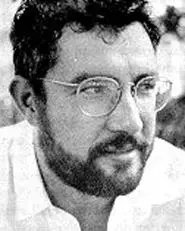
Fernando Paixão

1988-01-07
Fernando Paixão is a Portuguese poet whose work is distinguished by the exploration of themes such as love, the ephemerality of life, saudade (longing/nostalgia), and the search for meaning. His poetry is often marked by a deep lyrical sensibility and an elaborate language that combines formal rigor with intense expressiveness. With a consolidated literary career, Paixão has been establishing himself as a unique voice in contemporary Portuguese-language poetry, engaging with literary tradition while offering an original perspective on human anxieties.

Claudio Willer
1940-12-02 – 2023-01-13
Claudio Willer is a Brazilian poet, translator, and literary critic, whose poetic work stands out for its exploration of themes such as urban modernity, spirituality, philosophy, and the fantastic. His poetry, often marked by a dense and imagistic language, engages with the transformations of the contemporary world and with the existential questions of human beings. As a translator and critic, he has a relevant presence in the Brazilian literary landscape.

Eudoro Augusto
1943-08-16
Eudoro Augusto was a Portuguese poet and journalist whose verses explored themes related to nature, love, and saudade, with a style that bordered on romantic sentimentalism and intimate lyricism. He was active in various periodical publications, where his poems found a receptive audience for the expression of deep feelings and the contemplation of the beauty of the natural world. His work, although less prominent than that of some contemporaries, contributes to the richness of Portuguese poetry of his time.

Carlos Frydman
1924-11-15
Carlos Frydman is a Brazilian poet whose verses explore the complexity of human relationships and the ephemerality of time. His work is marked by a lyrical and introspective language, which invites reflection on existence and the deepest feelings. With a writing that moves between the personal and the universal, Frydman addresses themes such as love, longing, and the search for meaning, using rich metaphors and subtle musicality in his poems. His poetry stands out for its sensitivity and its ability to evoke vivid images in the reader's mind.
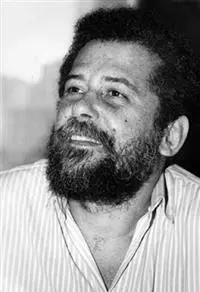
Capinan
1941-02-19
Capinan, pseudonym of José Carlos Capinan, was a Brazilian poet and composer, a prominent figure of Tropicália and the musical and literary movement in Brazil in the 1960s and 1970s. His poetic work, often associated with song lyrics, stands out for its aesthetic boldness, social criticism, and fusion of elements from Brazilian popular culture with artistic avant-garde. He was one of the most important lyricists of MPB, collaborating with several renowned musicians.
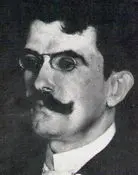
Raul Pompéia
1863-04-12 – 1895-12-25
Raul Pompéia was a Brazilian writer, journalist, and professor, a prominent figure of Realism/Naturalism in Brazil. His most famous work, "O Ateneu", is a scathing and innovative portrait of the school environment, addressing themes such as social hypocrisy, the corruption of morals, and the formation of the individual in an oppressive environment. His writing is marked by a vigorous, ironic style and profound psychological analysis. Besides "O Ateneu", Pompéia produced chronicles, short stories, and poetry, demonstrating versatility. His work as a journalist and social critic was equally important, reflecting his engagement with the debates of his time. The life and work of Raul Pompéia, although marked by a relatively short career, left a significant legacy in Brazilian literature for their originality and trenchant social criticism.
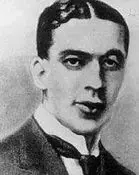
Juó Bananére
1892-04-11 – 1933-08-22
Juó Bananére was a Brazilian poet and columnist, known for his work marked by humor, irreverence, and social criticism disguised in simple verses. His writing frequently explored everyday life, popular characters, and the peculiarities of urban life with accessible language and a keen eye on the human condition. Although his literary production occurred in a specific period, his peculiar style and the originality of his poetic voice distinguish him in Brazilian literature.
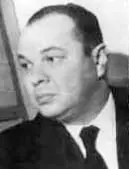
Antônio Maria
1921-03-17 – 1964-10-15
Antônio Maria was a Brazilian poet, composer, and journalist, renowned for his lyrical work and his era-defining songs in Brazilian popular music. His poetry, often transformed into lyrics for samba and other musical genres, reveals a unique sensitivity to themes of love, longing, and everyday life. With a multifaceted career, Antônio Maria left a significant legacy, being remembered for his contributions to both literature and music. His ability to merge poetry with melody created a unique, accessible, and profoundly touching style that resonates to this day.
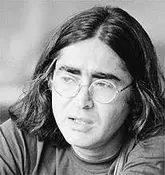
Cacaso
1944-03-13 – 1987-12-27
Cacaso, pseudonym of Antônio de Pádua Danças, was a Brazilian poet and literary critic, a prominent figure in marginal poetry. His work is marked by irony, humor, and irreverence, addressing themes of urban daily life, social relations, and the human condition itself with a colloquial and accessible language. He stood out for his ability to blend the lyrical with the prosaic, the reflective with the fun, creating poetry that directly engaged the reader. His literary output, although concise, left a significant mark on contemporary Brazilian poetry, influencing later generations through its authenticity and the way it demystified poetic language, bringing it closer to life.
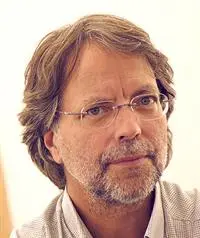
Mia Couto

1955-07-05
Mia Couto is a Mozambican writer, whose works explore the complex reality of post-independence Mozambique, blending the real with the fantastic, myth, and African orality. His poetic prose and engaging narratives address themes such as war, reconciliation, cultural identity, and ancestral wisdom, making him one of the most important authors of contemporary Lusophone literature. Internationally recognized, Mia Couto plays a crucial role in the literary representation of Mozambique.
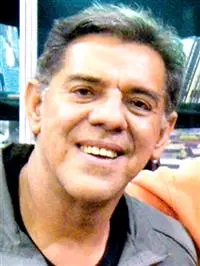
Antônio Barreto
1942-10-30
Antônio Barreto is a name that stands out in Brazilian poetry, recognized for his ability to weave verses that capture the essence of the human condition with sensitivity and depth. His work oscillates between the lyrical and the reflective, exploring universal themes such as love, loss, the passage of time, and the search for meaning. With a language that sometimes wears a certain melancholy, but always permeated by a latent hope, Antônio Barreto constructs a poetic universe rich in images and emotions, consolidating himself as a singular voice in contemporary literature.

Belchior Manuel Curvo Semedo
1766-01-01 – 1838-01-01
Belchior Manuel Curvo Semedo was a Cape Verdean poet, known for his work that explores the depths of the human soul and the intrinsic beauty of life. His poetry is marked by a unique sensitivity, capable of transfiguring the everyday into moments of profound reflection and lyricism. With a rich and evocative language, he weaves verses that resonate with the universal experience, addressing themes such as love, saudade, nature, and the search for meaning. Semedo left a poetic legacy that continues to inspire and touch readers, solidifying his place as one of the prominent figures in Cape Verdean literature.

Diogo de Teive
1514 – 1565-01-01
Diogo de Teive was a Portuguese poet, known for his contribution to 20th-century poetry. His work, though not widely publicized, reflects a refined lyrical sensibility and an exploration of universal themes such as the human condition, the passage of time, and the search for meaning. His poetry can be associated with a more introspective and existential current, characteristic of many poets who sought new forms of expression in the post-modernist period.

André Falcão de Resende
1527-01-01 – 1599-01-01
André Falcão de Resende was a Portuguese poet and diplomat, notable for his foray into more intellectual and introspective poetry. His poetic work, though not extensive, reveals a refined sensibility and a mastery of form, exploring universal themes with careful and imaginative language. He stood out in the literary scene of the second half of the 20th century, participating in cultural and literary circles of the time, and left a legacy of poems that invite reflection.

João de Oliveira Penha
1838-04-29 – 1919-02-03
João de Oliveira Penha was a Portuguese poet known for his lyricism, although his work is difficult to categorize and less widely known. His poetic compositions often explore introspection and melancholy, with a style marked by subtlety and the intrinsic musicality of verse. His contribution to Portuguese poetry, despite being discreet in terms of mainstream recognition, lies in the depth of his reflections on existence and human emotions.
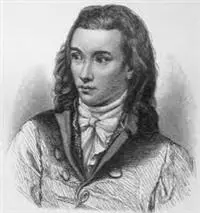
Soares de Passos
1826-11-27 – 1860-02-08
Soares de Passos was a Portuguese poet of the 19th century, a prominent figure of Ultra-Romanticism in Portugal. His work is marked by a deep pessimism, existential discontent, and an attraction to death and the melancholic, characteristics that made him one of the most distinctive representatives of his generation. His poetry, although sometimes considered excessively somber, reveals an intense sensibility and a lyrical skill that place him as a notable poet in Portuguese literature.

Dórdio Leal Guimarães
1938-03-10 – 1997-07-02
Dórdio Leal Guimarães is a Portuguese poet whose work is distinguished by its deep connection to the land, tradition, and landscape of Alentejo. His poetry masterfully evokes the simplicity of rural life, human emotions, and the passage of time, using language that, while rooted in orality and popular culture, achieves a high lyrical sophistication. His writing is marked by a melancholic and contemplative tone, celebrating the intrinsic beauty of simple things and the strength of feelings. The poet captured the soul of Alentejo, becoming one of its most faithful and talented literary spokesmen, with a body of work that resonates with its authenticity and depth.
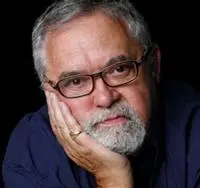
Mário Cláudio
1941-11-06
Mário Cláudio is a contemporary Portuguese writer, known for his engaging prose and his ability to explore the complexity of the human condition, memory, and identity. His works, which often delve into the past and its reverberations in the present, are distinguished by their stylistic richness and psychological depth. With a consolidated literary career, Mário Cláudio is a prominent name in Portuguese literature, whose books invite reflection on universal themes, presented through narratives that captivate the reader with their intelligence and sensitivity.
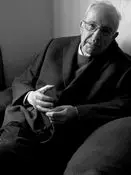
António Borges Coelho
1928-10-07 – 2025-10-17
António Borges Coelho was a Portuguese poet, professor, and politician, known for his engaged poetry and his deep connection with the history and culture of Portugal. His work reflects a strong sense of social and political intervention, marked by accessible language that is nonetheless loaded with meaning. He explored themes such as national identity, the struggle for freedom, and the human condition, often using resources from Portuguese literary tradition. His career as a professor and his political activity influenced his worldview and his writing, making him a relevant figure in the cultural and political landscape of his time.

Sóror Maria do Céu
1658-09-11 – 1753-05-28
Sister Maria do Céu was a 17th-century nun and poet, notable for her religious work and her ability to express faith and devotion through poetry. Her writing is marked by profound spirituality, mystical language, and total surrender to the divine, reflecting the intense religious experience of her time. Her poetry, although rooted in a personal experience of enclosure and devotion, transcends the individual to touch upon universal themes of faith, love for God, and the search for salvation. Sister Maria do Céu is an example of female literary expression in the Portuguese Baroque monastic context, revealing a singular voice in a period dominated by male voices.
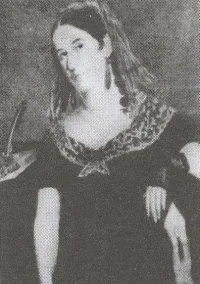
Maria da Felicidade do Couto Browne
1797-01-10 – 1861-11-08
Maria da Felicidade do Couto Browne was a poet and writer whose work, although less publicized, reflects sensitivity and a deep connection with literary expression. Her work, imbued with a particular lyricism, addresses interiority and the observation of the world around her, using careful language to express feelings and reflections. Her contribution, though discreet in the literary landscape, represents a unique voice in Portuguese-language poetry.

Duarte Brito
– 1490
Duarte Brito is a poet whose work explores the depths of the human condition, the fleetingness of time, and the ephemeral beauty of existence. His writing is marked by careful language and a unique sensitivity to capturing the nuances of emotions and inner landscapes. In his poetry, the reader finds reflections on love, longing, memory, and the search for a greater meaning in life, often intertwined with images of nature that serve as a mirror to the states of the soul. His style, while rooted in the lyrical tradition, presents a modernity in how he addresses universal themes.

Guilherme Braga
1845-03-22 – 1874-07-26
Guilherme Braga is a poet whose work is distinguished by its lyrical depth and exploration of universal themes such as love, loss, and the ephemerality of existence. His poetry, often marked by careful language and a unique musicality, invites introspection and contemplation on the human condition. Braga belongs to the tradition of reflective poetry, addressing life's complexities with a sensitivity that resonates with readers seeking meaning and beauty.