Authors List
Browse our collection of authors
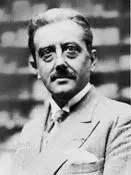
Kingsley Amis
1922-04-16 — 1995-10-22
Sir Kingsley Amis was a prominent English novelist, poet, and critic. He is best known for his novels, particularly 'Lucky Jim,' which satirized British academic life. Amis was a central figure in post-war literature, associated with the 'Angry Young Men' movement, though he himself rejected the label.
Max Nunes
Francisco Miguel de Moura
1933-06-16
Portuguese poet, Francisco Miguel de Moura dedicated himself to the lyrical exploration of the human condition, with special emphasis on the themes of saudade, time, and the ephemerality of life. His work, marked by profound sensitivity and a notable command of language, reflects a constant dialogue with the Portuguese poetic tradition, while introducing a particular musicality and introspection. Moura explored the fragility of emotions and the search for a transcendent meaning in his compositions. His poetry is characterized by an apparent formal simplicity that hides a complexity of feelings and existential reflections, making his work accessible yet rich in layers of meaning.
Sebastião da Rocha Pita
1660-05-03 — 1738-11-02
Sebastião da Rocha Pita was a notable scholar, historian, poet, and chronicler of colonial Brazilian life. His main work, "História da América Portuguesa" (History of Portuguese America), is considered a milestone in Brazilian historiography, offering a detailed and passionate account of the early days of colonization. His writing, though embedded in a Baroque context, reveals a concern for narrative and an admiration for the land that welcomed him, positioning him as a unique figure in the cultural landscape of his time.
Douglas Eden Brotto
Douglas Eden Brotto is a contemporary Portuguese poet and writer, known for his work that moves between introspective lyricism and reflection on society and the human condition. His poetry is characterized by the exploration of universal themes with a direct and, at times, raw language, which seeks to establish a deep connection with the reader. His writing reflects an attentive look at the complexities of modern life, addressing issues of identity, existentialism, and the search for meaning in a constantly changing world. Brotto contributes to contemporary poetry with an authentic voice and a style that appeals to emotion and intelligence.
Francisco de Quevedo
1584-09-14 — 1645-09-08
Francisco de Quevedo y Villegas (1580-1645) was one of the greatest poets and prose writers of Spanish literature during the Golden Age. Known for his satirical, witty, and often dark style, Quevedo mastered a wide range of literary genres, from lyrical and philosophical poetry to satirical and political prose. His work reflects a cynical and realistic view of the society of his time, marked by social criticism and the exploration of themes of death, time, and the human condition. Quevedo is celebrated for his mastery of the Spanish language, his use of neologisms, and his ability to create vivid and impactful imagery.
Inês Romano
Inês Romano is a Portuguese poet and writer whose work stands out for its reflective depth and exploration of existential and social themes. With careful language and acute sensitivity, her poems address the human condition, memory, and the search for meaning in a constantly changing world. Her writing invites introspection and dialogue with literary tradition, while also asserting itself in contemporary times.
Roy Campbell
1901-10-02 — 1957-04-23
Roy Campbell was a South African poet known for his vigorous, imagistic, and often controversial poetry. His work reflects his adventurous life, his involvement in conflicts, and his strong political convictions. He explored themes such as landscape, the sea, war, faith, and cultural identity, with a style that combines intense lyricism with direct and powerful language. Campbell is considered one of the most distinctive poetic voices of 20th-century South Africa.
Fran Lebowitz
Geraldo Falcão
1983-10-06
Geraldo Falcão was an Angolan poet and professor, known for his work that explores the nuances of identity and the human condition in post-colonial contexts. His poetry is marked by a rich and reflective language, addressing themes such as memory, the land, and the search for meaning amidst social and political transformations.
Figueiredo Pimentel
1869-01-01 — 1914-01-01
Figueiredo Pimentel was a Portuguese poet, professor, and literary critic, associated with the Neorealism movement. His poetic work, marked by a strong sense of social intervention and reflection on the human condition, explores themes such as justice, solidarity, and resistance against oppression. He was also an active figure in the dissemination of culture and the formation of new readers.
Rodrigo Carvalho
1987-01-25
Rodrigo Carvalho is a contemporary Portuguese poet, known for his work that explores the urban landscape, memory, and identity in the context of modernity. His poetry is distinguished by its careful language, its ability to evoke atmospheres, and its reflection on the human condition in cities. He has established himself as a relevant voice in current Portuguese poetry, with a body of work that dialogues with tradition while opening up to new sensibilities and forms of expression. His poetry invites the reader to revisit the everyday with a renewed perspective.
João Maimona
1955-10-08
João Maimona is a poet whose work stands out for its expressive force and exploration of social and existential themes. His poetry is a reflection of experiences and sharp observations about reality, using direct and, at times, raw language, but always full of emotion. Maimona frequently addresses identity, the human condition, and the complexities of social relationships, establishing himself as a relevant voice in contemporary poetry.
François De Malherbe
1555-01-01 — 1628-10-16
François de Malherbe was a French poet considered one of the reformers of the French language in poetry. His work marked a transition from the Renaissance style to a more rigorous classicism, valuing clarity, precision, and order. He had a significant influence on later French poetry.
Iracema de Camargo Aranha
Iracema de Camargo Aranha was a Brazilian writer, active mainly in the field of poetry. Her work, although less publicized in major literary circles, is recognized for its sensitivity and for the way it portrays the feminine universe and the nuances of everyday life. Her poetry frequently explores themes such as nature, feelings, and reflections on life. Iracema de Camargo Aranha contributed to the diversity of Brazilian literary production, leaving a record of her particular vision of the world and human emotions.
Caio Valério Catulo
84ac — 54ac
Caio Valério Catulo was a Roman lyric poet known for the intensity and passion of his works. His poetry explores themes such as love, sensuality, friendship, and the ephemerality of life, often with a personal and confessional approach. Catullus is famous for his short but deeply emotional poems, which distinguished him in Latin literature for his originality and frankness, influencing later poets.
Lawrence Durrell
1912-02-27 — 1990-11-07
Lawrence George Durrell (1912-1990) was a British novelist, poet, playwright, and diplomat. Born in British India, he spent much of his adult life in the Mediterranean, and his work often reflects these experiences. He is best known for his novel "The Alexandria Quartet", a tetralogy that explores the complexities of human relationships and cultural identity. Durrell was also a prolific poet and wrote travel books, essays, and memoirs. His style is characterized by rich, sensory prose and the exploration of themes such as love, war, memory, and the search for meaning.
Sérgio Augusto
Flexa Ribeiro
1945-09-12
Flexa Ribeiro was a poet whose works explore the human dimension, the beauty of nature, and the complexity of emotions. His poetry is recognized for its musicality, the vividness of its imagery, and its ability to move between the intimate and the universal. With a style that combines lyricism and attentive observation of the world, Flexa Ribeiro left a mark on contemporary poetry, inviting readers to immerse themselves in universes of sensations and reflections, where words are masterfully used to evoke the beauty and fragility of existence.
Antônio Carlos Secchin
1952-06-10
Antônio Carlos Secchin is a Brazilian poet, essayist, and literary critic. His poetic work is notable for its erudition, formal sophistication, and exploration of universal themes such as love, death, time, and memory, often with a gaze that transitions between the personal and the universal. As an essayist and critic, he stands out for the depth of his analyses on Brazilian and universal literature, especially poetry.
Eduardo Martins
1939-07-26 — 2008-04-13
Eduardo Martins is a Brazilian poet whose work stands out for its lyrical depth and exploration of existential themes and the human condition. His poetry is marked by a dense and imagistic language, capable of evoking sensations and reflections on love, death, time, and the search for meaning. With a style that moves between the confessional and the universal, Martins has built a body of work that resonates with its authenticity and its ability to touch the deepest chords of the reader, consolidating himself as a significant voice in contemporary Portuguese-language literature.
François Mauriac
1885-10-11 — 1970-09-01
François Mauriac was a French novelist, playwright, essayist, and journalist, awarded the Nobel Prize in Literature in 1952. His work is known for portraying life in Gascony, his homeland, exploring themes such as sin, faith, guilt, and redemption. He is often associated with Christian existentialism, and his writing is marked by deep psychological analysis and lyrical, poignant prose.
Jean Cocteau
1889-07-05 — 1963-10-11
Jean Cocteau was a multifaceted French artist, known as a poet, novelist, playwright, designer, and filmmaker. His work, imbued with an unmistakable style, explores themes such as youth, love, art, death, and the supernatural, often with touches of surrealism and symbolism. Cocteau moved between different artistic movements but maintained a unique authorial voice, marked by elegance, imagination, and experimentation. His influence extends across various areas of culture, solidifying him as a central figure of the 20th century.
Inácio Raposo
1874-06-01 — 1957-12-14
Inácio Raposo was a Portuguese priest, writer, and poet, associated with the neorealist movement. His literary work, although not extensive, reflects a strong social commitment and an attentive eye to the realities of the people, especially in the rural context. His poetry is marked by simplicity of language, empathy for the humble, and trenchant social criticism. As a professor and active figure in the community, Inácio Raposo dedicated part of his life to cultural dissemination and education. His poetry is a testament to his faith, his humanism, and his concern for social justice.