Poem of the day

Grass

Carl Sandburg
Pile the bodies high at Austerlitz and Waterloo.
Shovel them under and let me work
-I am the grass; I cover all.

And pile them high at Gettysburg
And pile them high at Ypres and Verdun.
Shovel them under and let me work.
Two years, ten years, and the passengers ask the conductor:

What place is this?
Where are we now?

I am the grass.
Let me work.
Read full poem

Born on this day

8
Ana C. Pozza

Ana C. Pozza is a writer whose poetic work stands out for its sensitivity and depth in addressing the human experience. Her verses explore the dichotomy between the inner and outer world, the fragilities and strengths that shape the individual. Her writing is marked by lyrical language and a unique ability to capture fleeting moments and intense emotions, inviting contemplation and introspection.

Bruno Araújo de Melo

Bruno Araújo de Melo is a poet dedicated to exploring the labyrinths of human existence, giving the word the power of a mirror to the soul. His work oscillates between melancholy and hope, introspection and dialogue with the world, touching on themes such as time, memory, and human relationships with refined sensitivity. Melo's poetry invites contemplation and empathy, weaving verses that seek truth in the lines of life. With a language that is sometimes lyrical, sometimes direct, Bruno Araújo de Melo constructs a poetic universe that resonates with the contemporary experience. His poems explore the nuances of feelings, the ephemerality of moments, and the search for meaning amidst the complexity of being. He is an author who, through art, confronts us with life's deepest questions, inviting us to look within and at others with greater attention and affection.

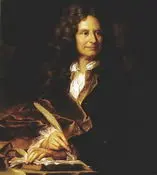
Nicolas Boileau

Nicolas Boileau-Despréaux, known as Boileau, was a French poet and literary critic, widely regarded as the "prince of critics." He played a pivotal role in defining the canons of French classicism, advocating for reason, clarity, and order in art. His work influenced generations of writers and established aesthetic standards that dominated French literature for centuries.

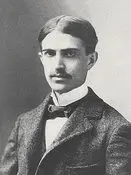
Stephen Crane

Stephen Crane was an American writer of the late 19th century, a pioneer of naturalism and literary journalism. His work is characterized by a raw and realistic portrayal of life, especially in contexts of war and poverty. He is widely recognized for his novel 'The Red Badge of Courage,' which depicts the experience of a young soldier in the American Civil War.

Júlio Maria dos Reis Pereira

Júlio Maria dos Reis Pereira was a Portuguese poet and university professor, whose poetic work developed in parallel with his vast academic and critical activity. He was a figure linked to literary renewal movements, exploring themes such as spirituality, memory and landscape, with a careful language and a reflective tone that distinguished him in the Portuguese poetic landscape of the 20th century.

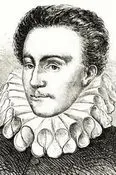
Étienne de La Boétie

Étienne de La Boétie was a French jurist, poet, and political activist, best known for his essay 'Discourse on Voluntary Servitude'. A close friend and collaborator of Michel de Montaigne, La Boétie is admired for his eloquence and his ideas on freedom and tyranny, which continue to influence political thought.

António Domingues

António Domingues was a Portuguese poet whose works explore the depth of the human condition, the mysteries of the universe, and the search for a transcendent meaning. His poetry is characterized by a language rich in imagery and symbolism, which invites reflection on life, love, and the ephemerality of time. Through verses that combine musicality and formal rigor, Domingues left a poetic legacy that continues to resonate for its authenticity and the strength of its emotions.

Domingos Lobo

Domingos Lobo is a Portuguese poet known for his work that explores the complexity of human relationships, the passage of time, and the search for meaning in a constantly changing world. His poetry, marked by careful language and deep sensitivity, addresses universal themes with a distinctly contemporary perspective. His reflections on memory, identity, and the human condition resonate particularly with readers, consolidating his place in current Portuguese poetry.

Died on this day

10
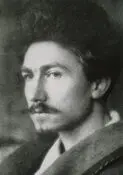
Ezra Pound

Ezra Pound was a highly influential American poet and critic, and a major figure in the modernist movement. He was a key proponent of Imagism and Vorticism, championing a return to classical forms and precise imagery in poetry. Pound's extensive work, most notably "The Cantos," is characterized by its complex allusions, multilingualism, and engagement with history, economics, and art. His influence extended to many other writers, including T.S. Eliot, Ernest Hemingway, and James Joyce, whom he actively supported and promoted.

[Greek]
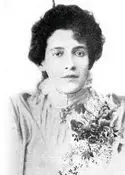
Francisca Júlia

Francisca Júlia da Silva was a Brazilian poet who stood out in the second half of the 19th century, being considered one of the few female voices to achieve recognition in a male-dominated period. Her work, marked by lyricism and romantic themes, contributed to the renewal of Parnassian poetry, introducing a more personal and sentimental tone.

Leal de Souza

Leal de Souza was a poet whose work stands out for its lyrical depth and exploration of themes such as identity, memory, and the individual's relationship with the world. His writing, often introspective, invites reflection on the human condition and its diverse facets. Through careful language and sharp sensibility, he left a relevant contribution to contemporary poetry.

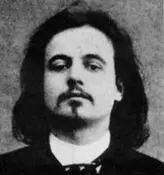
Alfred Jarry

Alfred Jarry was a French writer, playwright, journalist, and poet, best known for his 1896 play "Ubu Roi". He is a central figure of the Symbolist movement and a precursor to Surrealism and the Theatre of the Absurd. His work is characterized by black humor, social satire, and innovative, provocative language. Jarry is also remembered for his eccentric life and for creating the figure of "Père Ubu", a grotesque and tyrannical character who became an icon of modern literature.

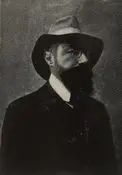
Francis Jammes

Francis Jammes was a French symbolist poet, known for his lyrical and imagistic poetry, often inspired by rural life and nature. He was born on December 2, 1868, in Tournay, France. His work is marked by simple and direct language, evoking sensations and landscapes with great sensitivity. Jammes also explored religious and philosophical themes in his writing, developing a unique style that distinguished him in the literary scene of his time.

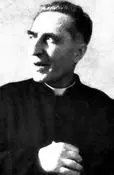
Clemente Rebora

Clemente Rebora was an Italian poet, professor, and soldier, known for his work marked by deep spirituality and engagement in reflections on faith, war, and the human condition. His poetry, often associated with crepuscularism and intense religious sensibility, explores inner struggle and the search for meaning in a changing world. Despite not having a vast literary output, his work left an indelible mark on 20th-century Italian poetry, recognized for its authenticity and existential depth.

António de Sousa de Macedo

António de Sousa de Macedo was a notable Portuguese poet and scholar, a prominent figure in the literary and academic landscape of his time. He dedicated himself to the study and preservation of culture, being recognized for his vast intellectual output and his contribution to Portuguese-language literature. His work reflects a deep sensibility and a refined mastery of poetic language, addressing universal themes with elegance and depth. In addition to his poetic facet, he stood out as a multifaceted intellectual, with interests extending across various fields of knowledge.

Michael Thwaites

Michael Thwaites was an Australian poet, playwright, and writer. He was known for his poetic work that frequently explored themes of nature, mythology, and the human condition, with a lyrical and reflective style. His writing sought to capture the beauty and complexity of the world around him, often with a philosophical perspective. In addition to his poetry, Thwaites also ventured into theater and other literary genres, demonstrating versatility in his artistic expression. He is remembered for his contribution to Australian literature, offering a unique and distinct voice in his compositions.

Alda Merini

Alda Merini was an Italian poet of great lyrical and expressive intensity. Her work is marked by the deep exploration of the human soul, addressing themes such as love, pain, madness, and spirituality with a raw and visceral language. Her poetry often reflects her personal experiences, including periods of psychiatric hospitalization, transforming suffering into art of rare beauty and strength. Known for her ability to move between the sacred and the profane, the everyday and the transcendental, Merini became one of the most important and influential poetic voices in Italy in the 20th century. Her writing is an invitation to reflect on the human condition, the fragility of existence, and the incessant search for meaning.