Poem of the day

Do Not Go Gentle Into That Good Night

Dylan Thomas
Do not go gentle into that good night, 
Old age should burn and rave at close of day; 
Rage, rage against the dying of the light. 

Though wise men at their end know dark is right, 
Because their words had forked no lightning they 
Do not go gentle into that good night. 

Good men, the last wave by, crying how bright 
Their frail deeds might have danced in a green bay, 
Rage, rage against the dying of the light. 

Wild men who caught and sang the sun in flight, 
And learn, too late, they grieved it on its way, 
Do not go gentle into that good night. 

Grave men, near death, who see with blinding sight 
Blind eyes could blaze like meteors and be gay, 
Rage, rage against the dying of the light. 

And you, my father, there on that sad height, 
Curse, bless, me now with your fierce tears, I pray. 
Do not go gentle into that good night. 
Rage, rage against the dying of the light.
Read full poem

Born on this day

13
Jorge de Sena

Jorge de Sena was a poet, translator, essayist, and university professor of great relevance in Portuguese-language literature. His poetic work is marked by erudition, existential reflection, and formal experimentation, addressing themes such as love, death, time, history, and the human condition with an intense and complex language. Distinguished by his critical intelligence and vast culture, Jorge de Sena left a significant legacy, not only in poetry but also in his literary studies and civic engagement, being an unavoidable figure in the intellectual landscape of the 20th century.

Lindolf Bell

Lindolf Bell was a Brazilian poet and short story writer known for his lyrical and introspective poetry, often marked by observations of nature and reflections on the human condition. His work explores themes such as love, solitude, time, and the passage of life, with an accessible yet profound language. Through verses that combine musicality and imagery, Bell earned a place in contemporary Brazilian poetry, leaving a legacy of sensitivity and aesthetic rigor.

Mário Pederneiras

Mário Pederneiras was a Portuguese poet, writer, and journalist, known for his work related to poetry and his activity in various publications. His writing explored universal themes of the human condition, with careful language and a particular sensitivity to melancholy and reflection on time and existence. Throughout his career, Pederneiras contributed to the Portuguese literary landscape through a poetic work that is distinguished by its introspection and its ability to capture the essence of human emotions in evocative verses. His work in journalism also gave him a perspective on the social and cultural reality of his time.

Noel Nascimento

Noel Nascimento is a poet whose verses explore the depths of the human soul, the ephemeral beauty of life, and the indomitable strength of the spirit. His work is an invitation to reflect on existence, love, and the inexorable passage of time, woven with a language that evokes vivid imagery and genuine emotions. A poet of refined sensitivity, Nascimento is dedicated to capturing the essence of feelings, translating them into poems that resonate with the universal human experience. His writing, marked by introspection and the search for deeper meaning, finds an echo in those who seek in poetry a mirror of their own anxieties and desires.

Teixeira de Pascoaes

Joaquim de Araújo Correia de Pascoaes, better known as Teixeira de Pascoaes, was a Portuguese poet and writer, a central figure of the Renascença Portuguesa movement and one of the main representatives of Saudosismo. His poetic work is marked by deep introspection, mysticism, and a strong sense of national identity.

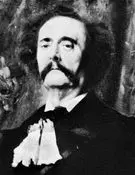
Jules Amédée Barbey d'Aurevilly

Jules Amédée Barbey d'Aurevilly was a French writer and literary critic, known for his grandiloquent style and his works that explore dark themes and the hidden side of society. He was an important figure of late Romanticism and Parnassianism, with a strong inclination towards Catholicism and traditionalism.

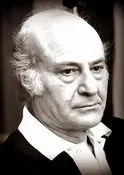
Odysséas Elýtis

Odysséas Elýtis was a Greek poet, awarded the Nobel Prize in Literature in 1979. His work is marked by a strong connection to Greek landscape and culture, exploring themes such as the sea, light, love, and mortality with a lyrical and visually rich language. Elýtis is considered one of the most important modern Greek poets, with poetry that transcends geographical and temporal boundaries.

João Verde

João Verde was a poet of great sensitivity, known for his intimate lyrics and deep exploration of themes such as nature, the passage of time, and the human condition. His work, marked by musical and imagistic language, reflects a deep connection to the rural universe and the landscapes that inspired him, transfiguring them into a universal dimension. His poetry invites reflection on the ephemerality of life and the beauty contained in the simplest elements of existence, leaving a legacy of profound humanity and lyricism.

Maria José Fraqueza

Maria José Fraqueza is a Portuguese poet whose work is characterized by lyrical depth and the exploration of universal themes such as love, absence, and the passage of time. Her writing, marked by careful language and intrinsic musicality, reflects a refined sensitivity to the nuances of human experience. Through poetry that moves between the personal and the universal, Fraqueza invites the reader to reflect on the human condition, its joys and its sorrows.

Ernesto Lara Filho

Ernesto Lara Filho is a Brazilian poet and writer known for his poetic work that frequently explores the human condition, identity, memory, and transcendence, with a dense and reflective language. His poetry is characterized by a strong lyrical and philosophical charge, inviting meditation on the mysteries of existence and the complexities of the soul. His writing, although sometimes challenging due to its depth and experimentation, has been gaining significant space in the panorama of contemporary Brazilian poetry. His work is an invitation to introspection and the discovery of new perspectives on life and the universe.

Alejandro Duque Amusco

Alejandro Duque Amusco is a Spanish writer and poet, known for his work that oscillates between fiction and poetry, exploring the human condition with a critical and sensitive gaze. His writing is marked by an elaborate and reflective language. He also works as a professor and essayist, dedicating himself to the study of literature and culture, contributing to the analysis and dissemination of ideas.

José de Jesús Sampedro

José de Jesús Sampedro is an author whose work falls within the field of literature, with a particular focus on poetry and prose that explore the human condition and society. His writing is marked by careful language and reflection on everyday experiences. With a presence in the literary scene, Sampedro seeks through his words to connect with the reader, sharing visions and feelings that invite contemplation and dialogue on relevant themes of contemporary life.

Died on this day

7
Orides Fontela

Orides Fontela was a Brazilian poet whose work stands out for its lyrical intensity and exploration of universal themes. Her poetry is marked by precise language and profound reflection on existence, time, and the human condition. Despite a relatively concise production, she left an indelible mark on Brazilian literature through her originality and the expressive power of her verses.

Sebastião da Rocha Pita

Sebastião da Rocha Pita was a notable scholar, historian, poet, and chronicler of colonial Brazilian life. His main work, "História da América Portuguesa" (History of Portuguese America), is considered a milestone in Brazilian historiography, offering a detailed and passionate account of the early days of colonization. His writing, though embedded in a Baroque context, reveals a concern for narrative and an admiration for the land that welcomed him, positioning him as a unique figure in the cultural landscape of his time.

Pier Paolo Pasolini

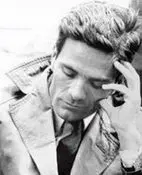
Pier Paolo Pasolini was a multifaceted Italian intellectual, poet, filmmaker, writer, and thinker of the 20th century, known for his provocative and deeply critical work of contemporary society. His artistic and intellectual output spanned various areas, always with a sharp eye on the contradictions of modernity, marginality, religion, and politics. Pasolini stood out for his boldness in questioning established values and his ability to capture the complexity of the human condition.

Anita Patrício

Anita Patrício is a contemporary Portuguese poet, whose work is characterized by a lyrical and introspective voice, exploring the depths of human emotion and the complexities of existence. Her poetry stands out for its musicality, evocative imagery, and ability to address universal themes such as love, loss, memory, and the search for meaning. Through careful language and refined sensitivity, Patrício constructs a poetic universe where reflection on the self and interpersonal relationships intertwine, inviting the reader on a journey of self-knowledge and empathy.

Inés Arredondo

Inés Arredondo was a distinguished Mexican writer whose work is primarily inscribed in the genre of short stories and novellas. Her writing is characterized by a deep exploration of the human psyche, often tinged with gothic, fantastic, and psychological horror elements. Through precise and evocative language, Arredondo addressed themes such as loneliness, madness, social repression, and desire, creating dense and disturbing atmospheres. Her style, often considered ahead of its time, places her as a crucial figure in 20th-century Latin American literature. Her stories, although brief, possess an intensity and depth that invite multiple readings, exploring the darkest corners of existence and the human condition.