Poem of the day

Grass

Carl Sandburg
Pile the bodies high at Austerlitz and Waterloo.
Shovel them under and let me work
-I am the grass; I cover all.

And pile them high at Gettysburg
And pile them high at Ypres and Verdun.
Shovel them under and let me work.
Two years, ten years, and the passengers ask the conductor:

What place is this?
Where are we now?

I am the grass.
Let me work.
Read full poem

Born on this day

9
Ivan Junqueira

Ivan Junqueira was a Brazilian poet, journalist, and translator, known for his poetic work that frequently explores themes such as the metropolis, urban life, the passage of time, and human relationships, with a keen and sometimes melancholic eye. His writing, marked by clarity and imagistic strength, oscillates between lyricism and chronicle, reflecting the experience of the individual in contemporary society. He was also an active figure in journalism and literary translation.

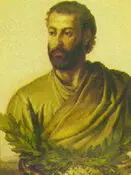
Lucano

Marcus Annaeus Lucanus (39-65 AD), known in Portuguese as Lucano, was a Roman poet of the Golden Age of Latin literature. He is most famous for his unfinished epic, "Pharsalia", which narrates the civil war between Julius Caesar and Pompey. Lucano was the nephew of the Stoic philosopher Seneca the Younger. His work is marked by a rhetorical and dramatic style, and by a frequently dark and critical tone towards war and imperial power. He died young, supposedly forced to commit suicide by order of Emperor Nero.

Eduardo Pedroso Rodrigues

Eduardo Pedroso Rodrigues was a Portuguese poet whose work is characterized by careful language and a keen sensitivity to the complexities of human existence. His poetry reflects on the passage of time, memory, and interpersonal relationships, often with a melancholic tone, but also with moments of intense lyricism. His literary output, although not vast, possesses a notable aesthetic quality and an emotional appeal that resonates with the universal themes of the human experience.

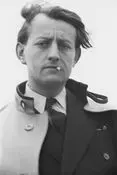
António Dacosta

António Dacosta was a Portuguese poet, essayist, and art critic, a central figure of surrealism in Portugal. His poetic work, marked by dreamlike and subversive imagery, explores the depths of the unconscious, desire, and transgression. He was also an important disseminator of modern and contemporary art.

Pe. Manuel Antunes

Fr. Manuel Antunes was a Portuguese Jesuit, philosopher, and theologian, known for his profound intelligence and vast culture. He dedicated his life to the study and dissemination of thought, being a prominent figure in the Portuguese intellectual landscape of the 20th century. His work encompasses reflections on faith, reason, culture, and society, always with a critical and humanist perspective.

Pedro José Constâncio

Pedro José Constâncio was a multifaceted figure in the Portuguese intellectual scene, standing out as a poet, doctor, and scholar. His poetic work, although sometimes less prominent than his scientific and academic contributions, reveals a particular sensitivity and mastery of language. Constâncio navigated between scientific knowledge and artistic expression, reflecting a curious and eclectic mind.

Died on this day

11
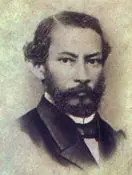
Gonçalves Dias

Antônio Gonçalves Dias was one of the main poets of the first generation of Brazilian Romanticism, known as "Indianism." His work is marked by the exaltation of Brazilian nature and the idealized figure of the indigenous person as a national hero. His poetry, of great lyricism and musicality, celebrated Brazil's identity and landscape, contributing to the formation of a national literary consciousness and the valorization of the country's cultural roots.

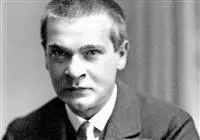
Georg Trakl

Georg Trakl was an Austrian poet, a central figure of German Expressionism. His work is marked by a dark, dreamlike, and melancholic atmosphere, exploring themes such as death, decay, solitude, and disturbing beauty. Trakl's language is dense, musical, and loaded with impactful and, at times, enigmatic imagery.

François-Joachim-Pierre de Bernis

François-Joachim-Pierre de Bernis was a French cardinal, diplomat, and poet. Known for his eloquence and political skill, he had a prominent career in the Church and the French court. His literary work, though less known than his public life, reflects the style and themes of the 18th century.

Thomas Brasch

Thomas Brasch was a German poet, playwright, and filmmaker, known for his provocative work and social critique. His creations frequently addressed themes such as identity, alienation, and repression in East Germany and society in general, reflecting his own experiences and political activism. His writing is marked by emotional intensity and direct, often blunt, language. Brasch left a significant legacy in the German cultural landscape, with his work continuing to be studied and interpreted for its social and artistic relevance.

João Xavier de Matos

João Xavier de Matos was a poet whose works deeply explore the human condition, the ephemerality of time, and the search for meaning amidst existence. His poetry is marked by introspective reflection and restrained lyricism, inviting the reader to delve into existential questions. Matos's work stands out for its careful language and its ability to evoke sensory and emotional images. He moves between the personal and the universal, touching on themes such as love, longing, memory, and transcendence, always with a unique sensitivity that resonates with the complexity of human experience.

Duarte Faria

Duarte Faria is a Portuguese poet known for his lyrical and reflective work. His poems often explore universal themes such as love, the passage of time, and the human condition, using careful and evocative language. With a career marked by sensitivity and depth of thought, Faria has established himself as an important voice in contemporary Portuguese poetry. His work is appreciated for the musicality of its verses and its ability to touch the reader with subtle imagery and emotions.

Manuel de Noronha

Manuel de Noronha was a Portuguese poet whose writings fit into the panorama of 20th-century poetry, with a strong inclination towards lyricism and existential reflection. His work is marked by careful language and the exploration of imagery that evokes deep states of mind and sensations. Although his figure may not be as prominent as that of other contemporaries, his literary career contributed to the diversity and richness of modern Portuguese poetry, standing out for his sensitivity and the aesthetic quality of his compositions.

Alistair Elliot

Alistair Elliot is a Scottish poet and translator. His poetic work, although less known than that of some contemporaries, is appreciated for its intelligence, humor, and reflections on everyday life and the complexities of human relationships. As a translator, he has dedicated himself to making important works of foreign literature accessible to the English-speaking public.

Maia Elsner

Maia Elsner is a writer whose works explore the complexity of human relationships and the inner landscapes of her characters. Her writing is often praised for its sensitivity and the way it captures the nuances of emotions. With a style that transitions between the lyrical and the introspective, Elsner has built a body of work that invites reflection on universal themes such as love, loss, and the search for meaning in life.