Poem of the day

Grass

Carl Sandburg
Pile the bodies high at Austerlitz and Waterloo.
Shovel them under and let me work
-I am the grass; I cover all.

And pile them high at Gettysburg
And pile them high at Ypres and Verdun.
Shovel them under and let me work.
Two years, ten years, and the passengers ask the conductor:

What place is this?
Where are we now?

I am the grass.
Let me work.
Read full poem

Born on this day

8
Luís Anriques

Luís Anriques was a Portuguese poet whose work belongs to the Modernism movement, characterized by an innovative exploration of language and poetic form. His poetry, although sometimes less known compared to other prominent figures of the time, reveals a keen sensibility and a search for new lyrical expressions, often addressing existential themes and the human condition. His work reflects a desire to break with previous literary conventions, experimenting with free verse and exploring inner and outer landscapes with a contemporary vision.

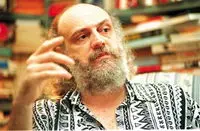
Arnaldo Antunes

Arnaldo Antunes is a Brazilian poet, singer, and songwriter, known for his multifaceted work that spans music, poetry, and visual arts. His career is marked by experimentation and the constant search for new forms of expression. With a language that often explores wordplay, sound, and visuality, Antunes has established himself as one of the most relevant figures in contemporary Brazilian poetry, engaging with different artistic and cultural currents.

Aldir Blanc

Aldir Blanc was a renowned Brazilian composer, instrumentalist, and poet, known for his vast body of work in Brazilian popular music. Alongside his long-time partner, João Bosco, he created iconic songs that marked MPB, addressing social, political, and everyday themes with a unique and sharp poetic language. His work transcends music, revealing a profound observer of the Brazilian soul and a keen critic of reality.

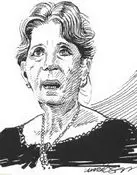
Ada Ciocci

Ada Ciocci was a poet who stood out for her lyrical work, exploring themes such as love, nature, and introspection with sensitivity and depth. Her writing is characterized by careful language and a particular musicality, with a style that echoes the poetic tradition but with a personal and contemporary voice.

Dunshee de Abranches

Dunshee de Abranches was a Portuguese poet, playwright, and journalist, known for his lyrical work and his involvement in literary movements of his time. His writing reflects a romantic sensibility and an interest in social and national issues. Although less prominent than other contemporaries, Dunshee de Abranches left a mark on the 19th-century Portuguese literary scene, with poems that explore themes such as nature, love, and the homeland, often with a melancholic and reflective tone.

José Angel Buesa

José Ángel Buesa was a Spanish poet, known for his passionate and deeply lyrical style, often focused on the themes of love, death, and melancholy. His poetry, with a strong influence of romanticism and symbolism, captivated readers with its expressiveness and its ability to evoke intense emotions. With a vast and diverse production, Buesa explored different facets of human feeling, from the celebration of love to the contemplation of the finitude of life. His work is an invitation to introspection, to the appreciation of ephemeral beauty, and to reflection on the great questions of existence.

Pentti Saarikoski

Pentti Saarikoski was a Finnish poet and writer, a central figure in post-war Finnish poetry. His work is known for its lyrical intensity, its reflections on the human condition, society, and identity, and its formal experimentation. Saarikoski is considered one of Finland's most important poets, whose work continues to resonate for its honesty and depth.

Gustave Thibon

Gustave Thibon was a French philosopher and essayist, known for his reflections on the human condition, spirituality, and the relationship between man and nature. His work is marked by a profound humanism and the search for a synthesis between rational thought and intuition.

Died on this day

7
Clélia Romano

Clélia Romano is a relevant figure in Brazilian literature, with a poetic work that stands out for its expressive force and exploration of social and existential themes. Her writing is marked by direct and, at times, transgressive language, which challenges conventions and addresses the complexities of identity and human relationships. Her poetry reflects a critical view of society and a deep empathy for human experiences.

Horácio Dídimo

Horácio Dídimo is a name associated with contemporary Portuguese-language poetry, with a body of work that explores the depths of the human condition, the ephemerality of time, and the search for meaning in a constantly changing world. His writing is characterized by careful language, a strong imagistic charge, and a sensitivity that oscillates between melancholy and hope. His poetry reflects a dialogue with the anxieties of modernity, addressing universal themes through a personal and introspective perspective. Dídimo is recognized for his ability to create dense lyrical atmospheres and for his originality in exploring recurring themes in poetry, such as love, memory, and the passage of life.

Juan L. Ortiz

Juan L. Ortiz was a prominent Argentine poet, known for his deep connection with the landscape and culture of the Argentine littoral. His work is an invitation to contemplate nature and explore Argentine identity, marked by a unique lyricism and an evocative language that distinguishes him in Spanish-language literature. He is considered one of the great innovators of 20th-century Argentine poetry.

Laura Riding Jackson

Laura Riding Jackson, born Laura Reichenthal, was an American poet, literary critic, and novelist of great originality and complexity. Her work is marked by a profound investigation into language, truth, and the nature of reality, challenging literary and philosophical conventions. As a poet, Riding explored the possibilities of the written word with remarkable intellectual intensity and formal freedom. Her prose and criticism also reflect sharp thinking and a relentless pursuit of authenticity, making her a unique and influential, though often controversial, figure in 20th-century literature.

Henry Lawson

Henry Lawson was an Australian writer and poet, celebrated for his vivid portrayals of Australian bush life, identity, and the struggles of ordinary people. He is considered one of Australia's greatest literary figures, known for his realistic and often melancholic depiction of the Australian landscape and its inhabitants. His work frequently captures the hardship, mateship, and resilience of the Australian spirit.

For there's a swellin' in my heart -- a tightness in my throat --