Poem of the day

Do Not Go Gentle Into That Good Night

Dylan Thomas
Do not go gentle into that good night, 
Old age should burn and rave at close of day; 
Rage, rage against the dying of the light. 

Though wise men at their end know dark is right, 
Because their words had forked no lightning they 
Do not go gentle into that good night. 

Good men, the last wave by, crying how bright 
Their frail deeds might have danced in a green bay, 
Rage, rage against the dying of the light. 

Wild men who caught and sang the sun in flight, 
And learn, too late, they grieved it on its way, 
Do not go gentle into that good night. 

Grave men, near death, who see with blinding sight 
Blind eyes could blaze like meteors and be gay, 
Rage, rage against the dying of the light. 

And you, my father, there on that sad height, 
Curse, bless, me now with your fierce tears, I pray. 
Do not go gentle into that good night. 
Rage, rage against the dying of the light.
Read full poem

Born on this day

9
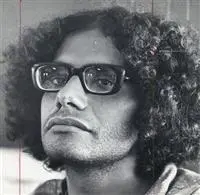
Waly Salomão

Waly Salomão was a Brazilian poet, composer, lyricist, and filmmaker. His work is marked by linguistic experimentation, the fusion of elements of Brazilian popular culture with the avant-garde, and a strong critical and irreverent vein. He moved between poetry, music, cinema, and other arts, leaving a multifaceted legacy.

João Manuel Simões

João Manuel Simões is a contemporary poet whose work is notable for its exploration of language and reflection on existence. His poetic work addresses universal themes through an introspective and, at times, enigmatic perspective, inviting the reader to delve into the depths of the human condition.

Luis Alberto Costa Guedes

Luis Alberto Costa Guedes is a name to consider in the panorama of contemporary poetry. His work, marked by a strong lyrical and reflective charge, explores the depth of human experience, the mysteries of existence, and the individual's relationship with time and memory. With careful language and refined sensitivity, Costa Guedes constructs verses that invite introspection and contemplation, addressing universal themes with an authentic voice and a singular perspective. His poetry, which has been gaining recognition, stands out for its ability to evoke emotions and question the world around us.

António Sérgio

António Sérgio was an influential Portuguese thinker, essayist, and pedagogue, a central figure in the Seara Nova movement. His vast work covers themes such as philosophy, education, politics, and culture, always with a critical and proactive view of Portuguese society. Sérgio distinguished himself by his clarity of thought, his humanism, and his tireless defense of the country's modernization through education and reason. He is considered one of the great intellectuals of the 20th century in Portugal.

Pe. Paulo Durão

Fr. Paulo Durão was a poet and clergyman whose poetic work reflects a deep spirituality, combined with an attentive observation of nature and the human condition. His poetry, marked by elaborate language and sensitivity, expresses a constant search for the transcendent and for beauty. With verses that combine faith and lyricism, he left a significant contribution to religious poetry and literature in general.

Rafael Espejo

Rafael Espejo is a Spanish writer and poet, whose work is distinguished by its reflective depth and exploration of existential and social themes. His writing combines poetic language with a critical approach to reality, seeking to provoke the reader to think about the world they live in. Espejo is recognized for his ability to create rich literary universes and complex characters who face moral and psychological dilemmas. His contribution to contemporary Spanish literature is marked by originality and the strength of his ideas.

Angel González

Ángel González was a Spanish poet, one of the most representative figures of the so-called "Generation of the 50s" or "Post-war Generation." His poetry is characterized by a colloquial, ironic, and often critical tone, which addresses daily life, love, memory, and the human condition from a lucid and disillusioned perspective. With direct and accessible language, González managed to connect with a broad audience, distancing himself from grandiloquent rhetoric. His work is a mirror of the social and sentimental reality of his time, with a deep reflection on identity and the fleetingness of existence.

Died on this day

12
Raul de Carvalho

Raul de Carvalho was a Portuguese poet whose work stood out for its lyrical and reflective depth. His poetry explores universal themes such as love, death, time, and the human condition, with a refined language and strong musicality. Throughout his career, Carvalho consolidated his own style, marked by introspection and a refined sensitivity to the nuances of existence. His contribution to Portuguese poetry lies in his ability to transfigure the everyday into art, touching the reader with his honesty and the beauty of his poetic imagery.

E. E. Cummings

E. E. Cummings was an American poet, painter, essayist, author, and playwright, renowned for his unconventional style that defied traditional grammar, syntax, and punctuation. His poetry often celebrated individualism, nature, and love, expressed through playful experimentation with form and a distinctive visual arrangement of words on the page. Cummings's work is characterized by its lyrical intensity, its embrace of the simple and the sublime, and its critique of conformity and societal norms. He was a prolific artist whose unique voice continues to resonate, making him one of the most beloved and accessible poets of the 20th century.

(a... (a leaf falls on loneliness)
John Ashbery

John Ashbery was one of the most influential American poets of the second half of the 20th century, known for his challenging and innovative poetry. His work explores the nature of language, consciousness, and reality, often through lengthy, stream-of-consciousness poems. Ashbery demonstrated a remarkable ability to blend the colloquial with the sublime, the personal with the impersonal, creating a unique style that defies easy categorization. He was also a respected literary critic and teacher, leaving a lasting legacy on contemporary poetry.

Rosa Leonor Pedro

Rosa Leonor Pedro is a poetic figure distinguished by her refined sensibility and the depth with which she addresses the complexities of the human condition. Her lyrical work, marked by evocative language and strong emotional charge, explores themes such as love, loss, memory, and the passage of time. Pedro's poetry invites the reader to an introspective immersion, where the beauty of words intertwines with the melancholy of existence. Through carefully crafted verses, the author establishes an intimate dialogue with her readers, inviting them to reflect on their own feelings and experiences.

Ulisses Tavares

Ulisses Tavares was a Brazilian poet, journalist, professor, and lawyer, known for his active participation in the cultural and political scene of São Paulo. His poetic work, often marked by lyricism, social criticism, and reflection on daily life, dialogues with Brazilian literary traditions while incorporating accessible language and a strong sense of São Paulo identity. He also worked as a columnist and literary critic.

Mário Fonseca

Mário Fonseca is a poet whose work is characterized by the exploration of social and existential themes, with a strong critical and humanistic sense. His poetry tends to address the complexity of modern life, social injustices, and the search for a sense of belonging, using direct and sometimes ironic language. His work reflects a deep observation of the world and its contradictions.

Vilhelm Ekelund

Vilhelm Ekelund was a Swedish poet and writer. He is considered one of the most significant Swedish poets of the 20th century, known for his lyrical and philosophical poetry. His work often explores themes of nature, eternity, and the search for inner peace.

Maria Madalena Férin

Maria Madalena Férin was a Portuguese writer and poet, whose work is distinguished by its lyrical sensitivity and exploration of themes such as nature, love, and the human condition. Her writing, often marked by strong intuition and expressiveness, contributed to the Portuguese literary landscape, leaving a record of a singular poetic voice.

Visconde de Vila-Moura

The Viscount of Vila-Moura was a poet and a figure in Portuguese literary society, known for his poetic output that reflects the values and style of his era. His work, while rooted in a more traditional context, demonstrates a sensitivity to melancholy, nature, and the themes of love and saudade. His literary legacy is marked by his active participation in cultural circles and his contribution to Portuguese lyrical poetry of the 19th and early 20th centuries.

Maria Isabel Barreno

Maria Isabel Barreno was a Portuguese writer, essayist, and activist, co-author of the book "Novas Cartas Portuguesas" (New Portuguese Letters), a fundamental work of feminism in Portugal. Her writing, often transgressive and politically engaged, addressed themes such as the female condition, oppression, and the search for freedom, using rich and inventive language.