Poem of the day

Grass

Carl Sandburg
Pile the bodies high at Austerlitz and Waterloo.
Shovel them under and let me work
-I am the grass; I cover all.

And pile them high at Gettysburg
And pile them high at Ypres and Verdun.
Shovel them under and let me work.
Two years, ten years, and the passengers ask the conductor:

What place is this?
Where are we now?

I am the grass.
Let me work.
Read full poem

Born on this day

20
José Joaquim Medeiros e Albuquerque

José Joaquim de Medeiros e Albuquerque was a Brazilian poet, short-story writer, playwright, journalist, and politician, known for his active participation in the cultural and literary life of the Empire. His poetic work, though not always the most prominent of his time, reflects the romantic spirit with a particular sensitivity to themes such as love, longing, and nature. As a journalist and politician, he played a relevant role in the society of his time, contributing to public debate and the formation of national identity. His versatility and engagement marked his trajectory, leaving a multifaceted legacy in Brazilian history.

Raul de Carvalho

Raul de Carvalho was a Portuguese poet whose work stood out for its lyrical and reflective depth. His poetry explores universal themes such as love, death, time, and the human condition, with a refined language and strong musicality. Throughout his career, Carvalho consolidated his own style, marked by introspection and a refined sensitivity to the nuances of existence. His contribution to Portuguese poetry lies in his ability to transfigure the everyday into art, touching the reader with his honesty and the beauty of his poetic imagery.

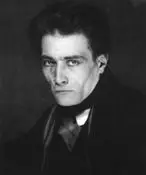
Antonin Artaud

Antonin Artaud was a French playwright, poet, actor, and theater theorist, a central figure of surrealism and the creator of the concept of "Theater of Cruelty." His work is marked by radical experimentation, the pursuit of a language that transcends spoken text, and the exploration of the limits of the mind and body. His life was marked by intense existential crises and mental health problems. Artaud revolutionized theatrical thought with his ideas on staging, the use of space, sound, and gesture, aiming for a visceral impact on the audience. His influence extends beyond the theater, impacting literature, cinema, and visual arts.

José Luís Peixoto

José Luís Peixoto is one of the most prominent contemporary Portuguese writers, known for his lyrical prose and his profound exploration of the human condition, memory, and identity. His work spans poetry, novels, and short stories, distinguished by its stylistic originality and its ability to evoke landscapes and emotions intensely, earning him national and international recognition.

Vicent Andrés Estellés

Vicent Andrés Estellés was a fundamental poet of the Valencian language literature, whose work portrays the identity, history, and daily life of his land with an authentic and deeply rooted voice. Known for his vast production, which ranges from the most intimate lyricism to social and political commentary, Estellés became a symbol of Valencian cultural and linguistic resistance. His poetry, often marked by a colloquial and direct tone, without neglecting depth and expressive force, addresses universal themes such as love, death, time, injustice, and hope, always with a sharp eye on the reality that surrounded him. His figure is indispensable for understanding contemporary Catalan poetry.

Carlos Lima

Carlos Lima was a poet whose work is characterized by a deep exploration of the human condition, addressing themes such as loneliness, love, and the search for meaning in a constantly changing world. His poetry is marked by a lyrical and evocative language, capable of capturing the nuances of emotions and the complexities of interpersonal relationships. Through his verses, Lima weaves reflections that invite introspection and contemplation of existence, consolidating himself as a singular voice in contemporary literature.

Mercedes Blasco

Mercedes Blasco was a notable figure in poetry, whose works explore deep reflections on the human condition. Her writing is characterized by sensitivity and the ability to evoke complex emotions through rich and imagistic language. Her poems often address universal themes such as love, loss, and the search for meaning, resonating with readers for their authenticity and lyrical depth.

Tenreiro Aranha

Tenreiro Aranha was a poet who made a presence in Brazilian literature, associated with literary movements of his time. His work is recognized for its expressive force, for the exploration of social and existential themes, and for a style that combines formal rigor with a vigorous and imagistic language.

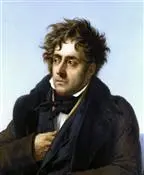
François-René de Chateaubriand

François-René de Chateaubriand was an influential French writer, politician, and diplomat. He is considered one of the founders of Romanticism in French literature, with works that explore themes such as nature, melancholy, exile, and the search for identity. His eventful life, marked by travels and political involvement, inspired much of his writing.

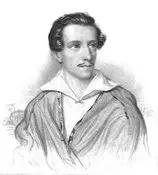
Juliusz Słowacki

Juliusz Słowacki was a Polish poet and playwright, considered one of the Three Bards of Polish literature. His work is characterized by romanticism, mysticism, and a deep exploration of the Polish soul and identity.

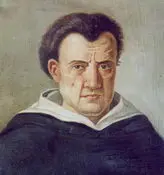
Tommaso Campanella

Tommaso Campanella was an Italian Dominican friar, philosopher, theologian, and poet. A prolific and controversial thinker, he is known for his work 'The City of the Sun,' a political utopia describing an ideal society based on reason and community. Campanella spent much of his life in prison due to his ideas, considered heretical and subversive.

Isabel Meireles

Isabel Meireles is a contemporary Portuguese poet, whose work is distinguished by its lyrical depth and the exploration of universal themes. Her poetry addresses the human condition, the ephemerality of time, and the search for meaning, often through careful language and intrinsic musicality. The author constructs a poetic universe that invites reflection and introspection, consolidating herself as a relevant voice in current Portuguese poetry.

José Manuel Sarmento de Beires

José Manuel Sarmento de Beires was a poet, journalist, and a prominent figure in the surrealist movement in Portugal. His poetic work, full of dreamlike imagery and strong subversive undertones, explored the limits of language and perception, reflecting his commitment to the surrealist ideals of liberating the spirit and imagination. As a journalist, he also dedicated himself to cultural dissemination and criticism, leaving his mark on the literary and artistic scene of his time.

Carlos de Lima Magalhães

Carlos de Lima Magalhães was a Portuguese poet and playwright, whose work developed mainly in the 19th century. Associated with Romanticism and, later, with a transition to Realism, he explored themes such as social criticism, love, and national identity. His writing is marked by careful language and a particular sensitivity to human and social dilemmas. He also had a career linked to politics and journalism.

José Sarmento

José Sarmento, a Portuguese poet, stands out for his introspective lyricism and exploration of universal themes such as love, death, and the passage of time. His work is marked by careful language and profound sensitivity in addressing human emotions. Through verses that evoke vivid imagery and complex feelings, Sarmento constructs a poetic universe that resonates with the reader's existential experience.

Eusebio Erkiaga

Eusebio Erkiaga was a distinguished Basque poet and bertsolari, whose work is framed within the defense and promotion of Basque culture and language. His poetry, written in Basque, is characterized by a deep rootedness in the land, tradition, and values of the Basque people. Erkiaga explored themes such as Basque identity, nature, religiosity, and the daily life of his community, using rich and evocative language. As a bertsolari, he demonstrated great skill in improvisation and oral poetic expression, becoming a relevant figure in the Basque cultural scene. His legacy endures as a testament to his commitment to the language and culture of his land.

Carmen Boullosa

Carmen Boullosa is a contemporary Mexican writer whose work spans novels, poetry, and essays. Recognized for her bold and experimental style, Boullosa challenges narrative conventions and explores themes such as identity, gender, history, and memory, often rewriting myths and historical figures from feminist and innovative perspectives. Her writing is characterized by rich imagery, vibrant language, and a deep reflection on the human condition and the complexities of Mexican and Latin American society. She is a fundamental voice in Spanish-language literature, with a body of work that invites the deconstruction of established narratives and the exploration of new forms of expression.

Died on this day

5
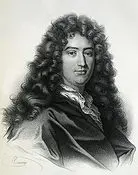
Jean-François Regnard

Jean-François Regnard was a French playwright, known for his comedies. He traveled extensively, which influenced his work.

Walter Kaufmann

Walter Arnold Kaufmann was a German-American philosopher, psychologist, and literary critic. He is best known for his work on Nietzsche, which helped popularize the philosopher in the English-speaking academy. Kaufmann also contributed to existential philosophy and the psychology of religion.

Raimbaut de Vaqueiras

Raimbaut de Vaqueiras was a Provençal troubadour of the Middle Ages, known for his mastery of courtly poetry and his participation in crusades. His work is notable for its metrical complexity and exploration of themes such as courtly love, war, and honor, reflecting the social and military environment of his time. He is considered one of the most important poets of the Galician-Portuguese and Occitan lyric.

José Barbosa

José Barbosa was a Portuguese poet whose works explore the depth of the human condition with careful language and an attentive eye on everyday life. His poetry reflects on universal themes such as love, the passage of time, and the search for meaning, often with a melancholic yet hopeful tone. He addresses nature and feelings introspectively, inviting the reader to reflect on their own existence and the world around them.

Carlos Torres Figueiredo

Carlos Torres Figueiredo was a Portuguese poet, whose work is part of a literary context rich in experimentation and reflection. His poetry is marked by a constant search for new forms of expression, exploring language and the limits of poetry itself. With a poetic voice that moves between the personal and the universal, Carlos Torres Figueiredo addressed themes such as identity, memory, and the human condition, leaving behind a body of poems that invite meditation and dialogue with the reader, in a style that, at times, challenges literary conventions.