Jean-Paul Sartre
Author of the day

Jean-Paul Sartre

Jean-Paul Sartre was a French philosopher, writer, playwright, and literary critic, a central figure of atheistic existentialism. His vast and multifaceted work explores human freedom, individual responsibility, bad faith, and social commitment. Sartre rejected the Nobel Prize in Literature, advocating for a stance of refusal of bourgeois institutions. His thought profoundly influenced 20th-century philosophy, literature, and political debate, marking a generation with his emphasis on autonomy a…

Poem of the day

Grass

Carl Sandburg
Pile the bodies high at Austerlitz and Waterloo.
Shovel them under and let me work
-I am the grass; I cover all.

And pile them high at Gettysburg
And pile them high at Ypres and Verdun.
Shovel them under and let me work.
Two years, ten years, and the passengers ask the conductor:

What place is this?
Where are we now?

I am the grass.
Let me work.
Read full poem

Born on this day

15
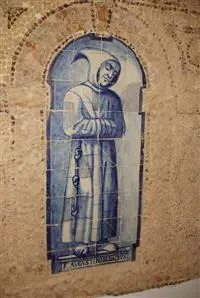
Frei Agostinho da Cruz

Friar Agostinho da Cruz was a 17th-century Portuguese friar and poet, a prominent figure of the literary Baroque. His poetic work, marked by spirituality and mysticism, reflects the profound religiosity of the era and the tension between the earthly and the divine. It is characterized by cultivated language, the exploration of themes such as the love of God, the ephemerality of life, and the search for transcendence, often through traditional poetic forms.

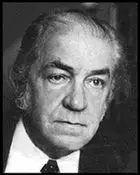
Georges Emmanuel Clancier

Georges Emmanuel Clancier was a French poet, novelist, and essayist, whose work is characterized by a profound reflection on the human condition, nature, memory, and the passage of time. His poetry, often marked by a serene melancholy and great musicality, explores the tensions between being and becoming, the visible and the invisible. Clancier is recognized for his lyrical and philosophical writing, which dialogues with literary tradition and offers a unique vision of existence.

Aurélio Buarque de Holanda Ferreira

Aurélio Buarque de Holanda Ferreira was a prominent Brazilian lexicographer, philologist, professor, and poet. He is best known as the author of "Aurélio", one of the most widely used Portuguese language dictionaries in Brazil. As a poet, his work is marked by erudition, reflection on language, and exploration of themes such as time, memory, and the human condition, with a classic and rigorous style.

Sebastião da Rocha Pita

Sebastião da Rocha Pita was a notable scholar, historian, poet, and chronicler of colonial Brazilian life. His main work, "História da América Portuguesa" (History of Portuguese America), is considered a milestone in Brazilian historiography, offering a detailed and passionate account of the early days of colonization. His writing, though embedded in a Baroque context, reveals a concern for narrative and an admiration for the land that welcomed him, positioning him as a unique figure in the cultural landscape of his time.

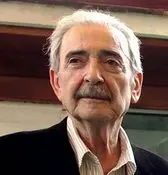
Juan Gelman

Juan Gelman was one of the most important Argentine poets of the 20th and 21st centuries, known for his dense, political, and profoundly human work. His poetry, marked by an incessant search for language and reflection on memory, loss, and justice, traversed different phases, from initial lyricism to a more engaged and philosophical expression. Gelman was also a journalist and translator, and his life was intrinsically linked to the political upheavals in Argentina and Latin America.

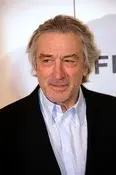
Robert De Niro

Robert De Niro is a renowned American actor, known for his intense and versatile performances in a wide range of films. He is considered one of the greatest actors of his generation, having received numerous awards and nominations throughout his career.

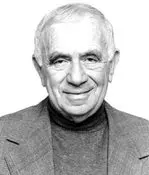
Yehuda Amichai

Yehuda Amichai was one of the most important Hebrew-language poets of the 20th century. His work is marked by a deep reflection on the human condition, exploring themes such as love, death, memory, and religion with a language that is both accessible and rich in symbolism. Amichai fused the sacred and the profane, the personal and the universal, creating poetry that resonates with modern experience and the search for meaning in a constantly changing world.

Samarone Lima de Oliveira

Samarone Lima de Oliveira is a contemporary Brazilian poet, known for his poetry that oscillates between lyricism and social reflection. His work explores themes such as identity, memory, the city, and human relationships, with a language that seeks purity and expressiveness. He stands out for the sensitivity in approaching his themes and for the construction of striking poetic images.

Fernando Lemos

Fernando Lemos was a multifaceted artist, with a body of work that spanned poetry, painting, and photography. His poetry, often linked to surrealism and the exploration of the unconscious, is characterized by a dense, imagistic, and sometimes dreamlike language, reflecting a deep investigation into the human condition, desire, and transgression. His artistic trajectory, marked by his time in Paris and his connection to important avant-garde movements, gave him a unique perspective on art and literature. Lemos stood out for his ability to translate into words the visions and anxieties that emerged from his other artistic practices, creating a singular and provocative poetic work.

Efraín Barquero

Efraín Barquero was a Chilean poet, whose work is characterized by musicality, the exploration of Latin American identity, and profound lyricism. His poetry stands out for its formal beauty and its ability to evoke intense landscapes and feelings, reflecting his connection to the land and the cultural roots of his continent.

Joan Alcover

Joan Alcover i Maspons was a Spanish poet, essayist, and literary critic, a prominent figure of the Majorcan Renaissance and one of the greatest exponents of Catalan Modernism. His poetic work is characterized by lyrical depth, existential reflection, and meticulous aesthetic form, often exploring themes such as love, death, the land, and identity. He was an intellectual committed to Catalan culture and language, defending their vitality and literary projection. His essayistic prose and critical work were also fundamental to the dissemination and study of the literature of his time, consolidating his legacy as one of the great poets of contemporary Catalan literature.

Died on this day

6
Afonso Lopes de Baião

Afonso Lopes de Baião was a Portuguese medieval troubadour, a prominent figure in Galician-Portuguese poetry. His work, integrated into the medieval songbook, reflects the lyrical conventions of the time, with emphasis on the cantiga de amor and the cantiga de amigo. With a characteristic style, Baião contributed to the richness and diversity of troubadour lyrics, exploring feelings and landscapes in a unique way.

Robert De Niro

Robert De Niro is a renowned American actor, known for his intense and versatile performances in a wide range of films. He is considered one of the greatest actors of his generation, having received numerous awards and nominations throughout his career.

Maomé

Muhammad was an Arab religious, political, and military leader who founded Islam. For Muslims, he is the last prophet sent by God to guide humanity. Born in Mecca, Muhammad received divine revelations that formed the basis of the Quran, the holy book of Islam. His initial preaching faced resistance in his hometown, leading him to emigrate to Medina, an event known as the Hijra, which marks the beginning of the Islamic calendar. There, he established a prosperous Muslim community and united the Arab tribes under the new faith.

William Dickey

William Dickey was an American poet and professor. His poetic work is known for its exploration of themes such as life, death, and the human condition, often with an introspective and philosophical tone. He dedicated a large part of his life to teaching, inspiring generations of students to engage with literature and creative writing. His influence extended beyond his own publications, shaping the literary scene through his role as an educator.

Max Jiménez

Max Jiménez was a poet and essayist whose work is characterized by deep introspection and an exploration of the human condition. His poetry, often marked by a melancholic and reflective tone, addresses universal themes such as love, death, the passage of time, and the search for meaning. Throughout his career, he developed a distinctive style, with careful language and suggestive imagery that invited contemplation. His contribution to literature is highlighted by his ability to express the complexities of the soul and existential concerns in a context of cultural effervescence.

Ricardo Garibay

Ricardo Garibay was a prominent Mexican writer, playwright, and screenwriter, whose work is characterized by a sharp observation of Mexico's social and political reality, as well as a deep exploration of the human condition. His writing, marked by a direct and often raw style, addresses themes such as corruption, violence, injustice, and the complexity of interpersonal relationships. As a playwright, Garibay contributed significantly to Mexican theater, creating works that questioned the power structures and morality of his time. His foray into cinema as a screenwriter also left an important mark. Garibay's work is a faithful and often uncomfortable reflection of Mexican society, seen through a critical and committed lens.