Poem of the day

Do Not Go Gentle Into That Good Night

Dylan Thomas
Do not go gentle into that good night, 
Old age should burn and rave at close of day; 
Rage, rage against the dying of the light. 

Though wise men at their end know dark is right, 
Because their words had forked no lightning they 
Do not go gentle into that good night. 

Good men, the last wave by, crying how bright 
Their frail deeds might have danced in a green bay, 
Rage, rage against the dying of the light. 

Wild men who caught and sang the sun in flight, 
And learn, too late, they grieved it on its way, 
Do not go gentle into that good night. 

Grave men, near death, who see with blinding sight 
Blind eyes could blaze like meteors and be gay, 
Rage, rage against the dying of the light. 

And you, my father, there on that sad height, 
Curse, bless, me now with your fierce tears, I pray. 
Do not go gentle into that good night. 
Rage, rage against the dying of the light.
Read full poem

Born on this day

14
Abade de Jazente

The Abbot of Jazente was an 18th-century Portuguese poet whose works reflect the context of Arcadianism in Portugal. His poetry, often satirical and critical, addresses social and moral themes, using irony and allegory to comment on the society of his time. His writing stands out for its clarity, its verse fluidity, and its keen observation, contributing to the renewal of Portuguese poetry with a more critical and engaged tone.

Martins Napoleão

Martins Napoleão was an Angolan poet and writer whose work is part of the context of Portuguese-language literature, with a strong connection to the reality and aspirations of his country. His poetry addresses themes such as African identity, the struggle for freedom, colonial oppression, and hope for a more just future. Through expressive language filled with symbolism, Napoleão contributed to the consolidation of an Angolan literary voice, exploring Angola's cultural roots and social challenges.

Ana Maria Ramiro

Ana Maria Ramiro is a contemporary Portuguese poet whose work is distinguished by its lyrical depth and exploration of existential and social themes. Her poetry addresses, with sensitivity and formal rigor, issues such as identity, memory, the passage of time, and the complexities of human relationships. With a careful and evocative language, Ramiro constructs verses that resonate with their authenticity and their ability to capture the beauty and melancholy of everyday life, inviting reflection on the human condition.

Everaldo Moreira Verás

Everaldo Moreira Verás is a poet whose work is distinguished by its profound reflection on existence, identity, and the human condition, exploring universal themes with a rich and evocative poetic language. His writing, marked by a refined sensibility and an attentive gaze upon the world, invites introspection and the discovery of new perspectives on life. His legacy lies in the ability to, through poetry, touch the reader's innermost chords, promoting a dialogue between the self and the universal.

Rubens Rodrigues Torres Filho

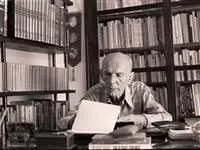
Rubens Rodrigues Torres Filho was a Brazilian poet, born in Rio de Janeiro. His poetic work is notable for its exploration of themes such as the city, memory, and subjectivity, with a language that ranges between the colloquial and the erudite. He is recognized for his contribution to contemporary Brazilian poetry, where he stood out for his originality and the way he addressed everyday life and the complexities of urban life.

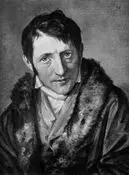
Ludwig Börne

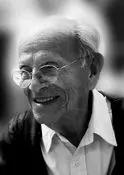
Juda Löb Baruch, known as Ludwig Börne, was a German writer and journalist. One of the most important literary and political critics of his time, he advocated for liberalism and German nationalism. Börne is recognized for his witty and insightful prose, frequently used in his "Letters from Paris". His work sought to promote social and political reforms in Germany.

Erich Fried

Erich Fried was an Austrian poet, writer, and critic, whose work is characterized by social and political depth, combined with a remarkable lyrical sensibility. Exiled to England during the Nazi period, his life experience profoundly marked his writing, giving him a unique perspective on themes such as war, oppression, love, and justice. Fried is recognized for his direct and accessible language, yet loaded with meaning, and for his ability to address complex issues with clarity and empathy. His often engaged poetry invites critical reflection and transformative action.

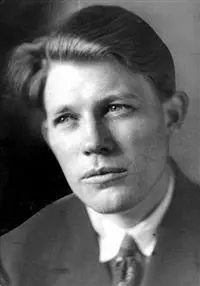
Harry Martinson

Harry Martinson was a Swedish poet, writer, and essayist, awarded the Nobel Prize in Literature in 1974. His work, deeply marked by nature and reflection on the human destiny and the cosmos, is characterized by a language rich in imagery and a profound ecological and existential sensibility. He explored themes such as man's relationship with the environment, the search for meaning in a constantly changing universe, and criticism of industrial and warfare society.

João de Lemos

João de Lemos was a Portuguese poet and playwright, whose work spanned various forms of literary expression. Known for his active participation in the cultural and literary life of his time, Lemos explored diverse themes, from amorous lyricism to reflections on society. His production encompasses poetry and theater, demonstrating a versatile talent and an ability to adapt to different genres.

Campos de Figueiredo

Campos de Figueiredo was a Portuguese poet and intellectual, a prominent figure in the literary and academic landscape of his time. His poetic work is marked by a deep reflection on existence, language, and identity, combined with formal rigor and remarkable erudition. In addition to poetry, he dedicated himself to literary study and criticism, leaving a significant legacy.

Amadeu Baptista

Amadeu Baptista was a Portuguese poet who made his mark on literature through a distinct poetic work. His writing frequently explored the human and existential dimension, with a language that sought depth and expressiveness. Throughout his career, he demonstrated a talent for poetic construction, addressing relevant themes with particular sensitivity, contributing to the richness of contemporary Portuguese poetry.

Almeida Faria

Almeida Faria is a recognized name in the literary scene, with a work that spans various genres, including poetry and prose. His creations are often praised for their lyrical depth and exploration of universal themes such as love, loss, and the human condition. The author stands out for his ability to create vivid imagery and convey emotions pungently. Almeida Faria has a distinctive style that combines the musicality of language with a philosophical reflection on life and existence.

Angel Guimerà

Ángel Guimerà was a Spanish playwright and poet, a central figure in Catalan theater and one of the foremost representatives of Spanish theater at the end of the 19th and beginning of the 20th centuries. Known mainly for his theatrical work, he also cultivated poetry and narrative. His theater is characterized by dramatic force, psychological depth of his characters, and the exploration of universal themes such as passion, love, death, and fate. His work, written mostly in Catalan, had a great impact both in Spain and abroad, being translated into multiple languages and performed on international stages, which earned him recognition as one of the great playwrights of his time.

Died on this day

10
Luis Antônio Pimentel

Luis Antônio Pimentel was a Brazilian poet, whose work is highlighted by its musicality and exploration of themes such as love, nature, and the fleetingness of time. With a language rich in imagery and an engaging rhythm, Pimentel left a poetic legacy that resonates with his sensitivity and lyrical depth.

Moreira Campos

Moreira Campos was a Portuguese poet whose work falls within the poetry of intervention and social reflection. He was characterized by direct language and a strong critical charge, addressing themes such as social injustice, freedom, and the human condition. His poetry, although at times marked by a somber tone, is also a call to conscience and action, reflecting his civic engagement and his concern for the world around him. He always sought an authentic and forceful expression of his feelings and ideas, leaving a legacy of verses that continue to resonate for their relevance and expressive power.

Neimar de Barros

Neimar de Barros is a poet whose work stands out for its lyrical depth and exploration of existential themes and the human condition. His poetry is marked by careful language and strong musicality, inviting reflection on the passage of time, memory, and the ephemerality of life. The author navigates between the personal and the universal, constructing vivid and sensory images that resonate with the reader's experience. His poetic production as a whole reflects a keen sensitivity to the nuances of the soul and the world, with verses that evoke both melancholy and hope. His work is part of a contemporary literary context, dialoguing with the aesthetic and thematic concerns of current poetry, while affirming a distinctive authorial voice and an attentive gaze on the complexity of existence.

Aluízio Medeiros

Aluízio Medeiros was a Brazilian poet whose work stands out for its musicality and exploration of themes related to identity, nature, and the human experience. His poetry, often lyrical and reflective, demonstrates a keen sensitivity to the nuances of language and emotion. His contribution to Brazilian literature, while perhaps not reaching the prominence of other names, enriches the poetic landscape with a distinctive voice and an attentive eye on the world. Medeiros's work invites contemplation and appreciation of the beauty contained in words and images.

Maurice Maeterlinck

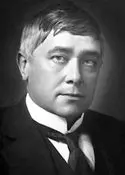
Maurice Maeterlinck was a Belgian poet, playwright, and essayist, a prominent figure of literary symbolism. His work is characterized by an atmosphere of mystery, lyricism, and reflection on the great themes of existence, such as life, death, love, and destiny. Known for his plays, such as 'The Blue Bird', Maeterlinck explored the subconscious and the ineffable, using symbols and allegories to convey his ideas. He was awarded the Nobel Prize in Literature in 1911, in recognition of his vast and influential contribution to world literature.

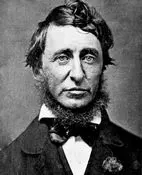
Henry David Thoreau

Henry David Thoreau was a towering figure of American transcendentalism, renowned for his profound connection to nature, his incisive social criticism, and his advocacy for civil disobedience. As an author, philosopher, and naturalist, Thoreau challenged societal norms and championed a life of simplicity, self-reliance, and deliberate living. His seminal work, 'Walden,' remains a cornerstone of American literature, inspiring readers to re-examine their relationship with the natural world and with society.

Read the best books first, or you may not have a c
Francisco Machado de Faria e Maia

Francisco Machado de Faria e Maia was a Portuguese writer and public figure, with a body of work that spanned different literary genres. His intellectual production reflects an involvement with the social and political issues of his time, demonstrating notable versatility. Although not a prominent name in the history of Portuguese literature, his work contributes to the understanding of the cultural and intellectual landscape of the period in which he lived.

Alfredo Bragança

Portuguese poet, Alfredo Bragança is known for his intimate and reflective poetry, which explores the complexities of human existence, time, memory, and the condition of being. His work, marked by careful language and lyrical sensibility, invites contemplation and introspection. Throughout his career, he has been consolidating his own space in contemporary Portuguese poetry, characterized by depth and the constant search for meaning.

Óscar Hahn

Óscar Hahn is a Chilean poet, literary critic, and academic, recognized for his existentialist poetry and his exploration of the human condition, death, love, and identity. His work is characterized by deep philosophical reflection and formal mastery, often tinged with irony and a lucid tone. With a consolidated career, Hahn has been an influential voice in Chilean and Latin American poetry, exploring the tensions between life and death, transcendence and immanence, and the search for meaning in an often chaotic world. His poetry invites deep meditation on existence.