Poem of the day

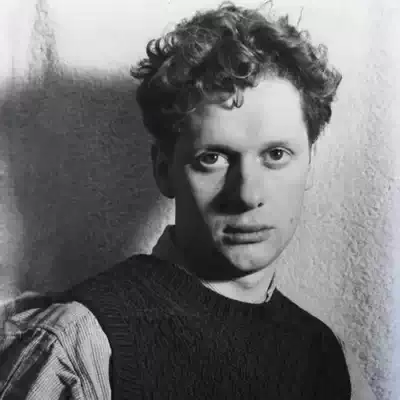
Do Not Go Gentle Into That Good Night

Dylan Thomas
Do not go gentle into that good night, 
Old age should burn and rave at close of day; 
Rage, rage against the dying of the light. 

Though wise men at their end know dark is right, 
Because their words had forked no lightning they 
Do not go gentle into that good night. 

Good men, the last wave by, crying how bright 
Their frail deeds might have danced in a green bay, 
Rage, rage against the dying of the light. 

Wild men who caught and sang the sun in flight, 
And learn, too late, they grieved it on its way, 
Do not go gentle into that good night. 

Grave men, near death, who see with blinding sight 
Blind eyes could blaze like meteors and be gay, 
Rage, rage against the dying of the light. 

And you, my father, there on that sad height, 
Curse, bless, me now with your fierce tears, I pray. 
Do not go gentle into that good night. 
Rage, rage against the dying of the light.
Read full poem

Born on this day

8
Ana Hatherly

Ana Hatherly is a central figure in Portuguese experimental poetry, known for her innovative approach that crosses literature, visual arts, and performance. Her work explores the relationship between word and image, the materiality of text, and language as a construction of meaning, with a strong conceptual character.

Edgar Carneiro

Edgar Carneiro was a Portuguese poet whose work stands out for its complexity and exploration of existential and social themes, often with an interventionist and denunciatory tone. His poetry reflects a deep concern with the human condition and the darker aspects of reality. His writing is marked by vigorous language and an unparalleled ability to construct impactful imagery, positioning him as a key author in contemporary Portuguese poetry, capable of engaging with the anxieties and dilemmas of his time.

Sebastião Xavier Botelho

Sebastião Xavier Botelho was a Portuguese writer whose literary output fit into a period of important transformations in the literature and society of Portugal. His work, although diverse, shows a strong poetic vein, marked by expressive language and the exploration of themes ranging from the social to the introspective. With a path marked by engagement and reflection, Botelho left a testimony of his time and his concerns. His writing is an invitation to look at reality with a critical and sensitive eye, revealing an author attentive to the complexities of the world and the human condition.

Mongane Wally Serote

Mongane Wally Serote is a prominent South African poet, anti-apartheid activist, and diplomat. His work is deeply marked by the experience of apartheid, addressing themes such as oppression, resistance, and the pursuit of freedom. He is known for his lyrical and engaged style, which has earned him national and international recognition. Serote also played a significant role in the cultural politics of post-apartheid South Africa, contributing to the formation of national identity through art and literature. His influence extends beyond poetry, encompassing his work for social justice and human rights.

Alfonso Costafreda

Alfonso Costafreda was a Spanish poet and writer, known for his work that blends literary tradition with a modern sensibility. His poetry explores themes such as nature, love, the passage of time, and the human condition, with a style that values musicality and linguistic precision. Costafreda stood out for his ability to capture the essence of emotions and landscapes in his verses, creating vivid and evocative imagery. His work reflects a deep reflection on life and art, consolidating him as an important voice in the Spanish-language literature of his generation.

Davis McCombs

Davis McCombs is an American poet whose verses explore themes such as landscape, history, and the resonance of the past in the present. His work is known for its attention to language and its ability to evoke places and memories. McCombs frequently intertwines observations of the natural world with reflections on the human condition, using a lyrical and contemplative approach.

José María Pemán

José María Pemán was a Spanish writer, journalist, and playwright known for his poetry and his work as a lecturer. His poetic work, often traditional in style and with a marked nationalist character, earned him great popularity in his time. He was a very active public figure, participating in discussion groups and cultural events, and his figure was closely linked to the events of 20th-century Spain, especially the Civil War and the Franco dictatorship. His literary legacy is a subject of debate, but his impact on the Spanish culture of his time is undeniable.

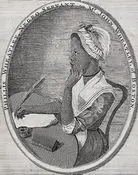
Phillis Wheatley

Phillis Wheatley was an enslaved African woman who became the first African American author of a published book of poetry in the United States. Despite the immense limitations imposed by slavery and societal prejudice, her work demonstrated remarkable literary skill and intellectual depth. Her poems, often neoclassical in style, explored themes of freedom, religion, and the African experience, challenging prevailing racist notions of the time and paving the way for future Black writers.

And veil her charms around.

Died on this day

9
Ernani Sátyro

Ernani Sátyro was a Brazilian poet and intellectual, whose work stood out for its lyrical depth and reflection on identity and the human condition. His poetry is recognized for its musicality, its exploration of language, and its ability to evoke vivid emotions and images. Sátyro contributed to the literary scene with his sensitivity and unique vision of the world. He was also an important figure in the cultural scene, actively participating in debates and initiatives that promoted art and literature. His dedication to poetry and thought established him as a relevant name in Brazilian literature.

Gabriela Cunha Melo Cavalcanti

Gabriela Cunha Melo Cavalcanti is a Brazilian writer whose work has focused on poetry and prose, exploring themes related to identity, memory, ancestry, and the complexities of human relationships. With a writing style that blends lyricism and reflective depth, Cavalcanti has sought to give voice to experiences and perspectives often silenced in traditional literature. Her work invites the discovery of new narratives and the reinterpretation of the past, in constant dialogue with Brazilian culture and its multiple facets.

Geir Campos

Geir Campos was a prominent Brazilian poet, translator, and literary critic, an important figure in the cultural scene of his time. His poetic work is marked by intelligence, irony, and a deep observation of Brazilian reality, often with a critical eye on society. As a translator, he played a fundamental role in introducing important works of foreign literature to the Brazilian public, especially in the field of poetry. His work spanned various aspects of literary activity, consolidating him as a multifaceted intellectual.

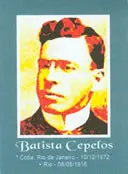
Batista Cepelos

Batista Cepelos was a Portuguese poet, known for his poetry marked by a strong social component and by the exploration of language. His work reflects an attentive look at the surrounding reality, the complexities of the human condition, and aspirations for freedom. With a language sometimes colloquial and sometimes elaborate, Cepelos addressed universal themes such as love, death, loneliness, and the search for meaning, combining lyrical depth with subtle social criticism. His poetry is an invitation to reflect on life and human relationships.

Oliveira San Payo

Portuguese poet, Oliveira San Payo stood out for his poetry which explored themes such as saudade (longing), nature, and the human condition. His work reflects a strong connection to the land and traditions, using a rich and evocative language that earned him a unique place in contemporary Portuguese poetry.

Guadalupe Pita Amor

Guadalupe Pita Amor, known as Pita Amor, was a Mexican poet who stood out for her eccentric personality and bohemian lifestyle. Her poetic work, marked by direct language, often provocative and charged with eroticism, explored themes such as love, desire, rebellion, and social criticism. Despite her self-taught background and unconventional style, she carved out her own place in 20th-century Mexican poetry, remembered for her vitality, independence, and unique lyrical voice.