Poem of the day

Grass

Carl Sandburg
Pile the bodies high at Austerlitz and Waterloo.
Shovel them under and let me work
-I am the grass; I cover all.

And pile them high at Gettysburg
And pile them high at Ypres and Verdun.
Shovel them under and let me work.
Two years, ten years, and the passengers ask the conductor:

What place is this?
Where are we now?

I am the grass.
Let me work.
Read full poem

Born on this day

12
William Dumbar

William Dumbar is a poet whose work is recognized for its thematic depth and formal mastery. His poetry explores the relationship of human beings with the universe, nature, and existence itself, in a language rich in symbolism and evocative imagery. His poetic compositions frequently address the passage of time, the ephemerality of life, the search for transcendence, and the contemplation of the world's beauty. Through careful writing and refined sensibility, Dumbar manages to touch the most intimate chords of the human soul, offering universal reflections on the human condition.

Ascenso Ferreira

Ascenso Ferreira was a Brazilian poet, recognized as one of the greatest exponents of poetry from the Northeast. His work is marked by profound lyricism, linguistic exploration, and a strong connection to the land and culture of the Northeast, portraying the drought, the landscape, and the sertanejo people with rare sensitivity and expressiveness. His poetry stands out for its musicality, rich imagery, and a worldview that oscillates between the regional and the universal, addressing themes such as the fleetingness of time, memory, and the human condition. Ascenso Ferreira left a unique poetic legacy, influencing later generations of writers with his unmistakable style and his deep connection to Brazil's cultural roots.

André Brun

André Brun was a Portuguese poet and essayist, whose work is part of a context of lyrical renewal and reflection on human identity and experience. His poetry, often marked by deep introspection and careful language, explores universal themes such as love, solitude, and the passage of time. His intellectual journey reflects a continuous search for expression and meaning in the Portuguese literary landscape.

Charles Simic

Charles Simic was a Serbian-American poet, essayist, and translator, known for his poetry that often explores the surreal, the absurd, and the dark, often with a touch of black humor. His work is marked by powerful and unexpected images, drawn from both everyday life and his experiences with war and exile. He is celebrated for his ability to transform the mundane into something mysterious and for his unmistakable poetic voice, which manages to be both intimate and universal. Simic was an influential figure in American poetry, known for his clarity and insight.

Jorie Graham

Jorie Graham is a contemporary American poet, known for her philosophical and experimental poetry that investigates themes such as nature, consciousness, time, and the human relationship with the world. Her work is marked by an intense and reflective approach, exploring language as a means to apprehend reality and human experience. Graham is also an important figure in creative writing education.

Ivan Džeparoski

Ivan Džeparoski is a respected professor, translator, and literary critic, known for his vast scholarship and significant contributions to literary studies and translation theory. His academic career is marked by a deep dedication to the study of comparative literature and Slavic literature, with a particular emphasis on the works of classical and contemporary authors. Džeparoski is widely recognized for his ability to analyze complex texts with clarity and depth, offering new perspectives on established works. His work as a translator is also notable, with a portfolio that includes translations of important literary works, demonstrating an exceptional command of languages and stylistic nuances. His influence extends to both academic and literary circles, shaping the understanding and appreciation of diverse literary traditions.

Carlos Bousoño

Carlos Bousoño was a distinguished Spanish poet and literary critic, a central figure in post-war Spanish poetry and one of the foremost experts on the work of Juan Ramón Jiménez. His poetic work, marked by a profound reflection on being, time, and reality, is characterized by its formal rigor, careful language, and constant search for truth and beauty. As a critic, his analysis of contemporary poetry and his erudition established him as an undisputed authority in the Spanish literary sphere.

Died on this day

7
Luís Miguel Nava

Luís Miguel Nava is a contemporary Portuguese poet, known for his work that explores the depths of the human condition, the ephemerality of time, and the complexity of interpersonal relationships. His poetry is distinguished by its musicality, imagistic density, and a language that combines erudition with apparent simplicity, inviting reflection on existence and memory. With a body of work marked by a strong lyrical and existential charge, Nava has been consolidating his place in recent Portuguese poetry. His writing addresses universal themes such as love, loss, loneliness, and the search for meaning, often through an introspective and melancholic tone, but also with moments of rare beauty and hope.

Eurícledes Formiga

Eurícledes Formiga was a Brazilian poet known for his work exploring the human condition, melancholy, and the passage of time. His poetry is marked by careful language, deep lyricism, and a strong capacity for observing the inner and outer world. Formiga left a legacy of reflection on existence and the search for meaning in poetry that resonates with its sincerity and beauty.

Artur da Távola

Artur da Távola was a Portuguese poet, essayist, and translator, known for his deeply reflective work and his active participation in the cultural and political life of his time. His writing is marked by careful language and an often melancholic tone, exploring universal themes such as love, death, time, and the human condition. He also stood out for his work as a professor and his connection to various intellectual movements.

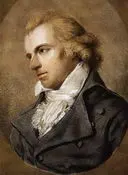
Friedrich Schiller

Johann Christoph Friedrich von Schiller was a German poet, philosopher, physician, and historian, considered one of the most important playwrights in the German language. He is often associated with the Sturm und Drang movement and Weimar Classicism. His most famous works include plays such as "The Robbers", "Don Carlos", "Mary Stuart", and "William Tell", as well as poems like "Ode to Joy". Schiller explored themes of freedom, justice, idealism, and the human condition in his works.

Die Weltgeschichte ist das Weltgericht .
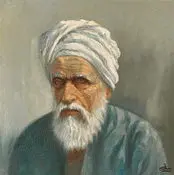
Abul ʿAla Al-Maʿarri

Abul ʿAla Al-Maʿarri was a prominent Arab poet, philosopher, and lexicographer of the Islamic Golden Age. Known for his profound scholarship and skeptical thought, his poetic work explores themes such as mortality, the nature of belief, and the absurdity of human existence. Al-Maʿarri, who lost his sight in childhood, became a respected and influential intellectual figure, although his sometimes controversial philosophical views generated debate.

Baptista Bastos

José Baptista Bastos was a Portuguese poet, known for his lyrical and reflective work, which explores the human condition, the passage of time, and the search for meaning in existence. His poetry is distinguished by its philosophical depth and the musicality of its language. Throughout his career, Baptista Bastos consolidated a unique poetic voice, marked by introspection and the sensitivity with which he approaches universal themes. His work contributes to the Portuguese literary heritage with a unique perspective on life and art.

José Manuel Caballero Bonald

José Manuel Caballero Bonald was a Spanish poet and novelist, a prominent figure of the Generation of '50. His work is characterized by a deep social and existential charge, addressing themes such as injustice, marginalization, historical memory, and the human condition with a powerful and often heartbreaking language. He was a chronicler of the reality of his time, especially of Andalusia, capturing in his writing the harshness of rural life and the aftermath of the war and post-war period. His literary legacy is immense and his recognition encompasses numerous awards and distinctions.