Poem of the day

Do Not Go Gentle Into That Good Night

Dylan Thomas
Do not go gentle into that good night, 
Old age should burn and rave at close of day; 
Rage, rage against the dying of the light. 

Though wise men at their end know dark is right, 
Because their words had forked no lightning they 
Do not go gentle into that good night. 

Good men, the last wave by, crying how bright 
Their frail deeds might have danced in a green bay, 
Rage, rage against the dying of the light. 

Wild men who caught and sang the sun in flight, 
And learn, too late, they grieved it on its way, 
Do not go gentle into that good night. 

Grave men, near death, who see with blinding sight 
Blind eyes could blaze like meteors and be gay, 
Rage, rage against the dying of the light. 

And you, my father, there on that sad height, 
Curse, bless, me now with your fierce tears, I pray. 
Do not go gentle into that good night. 
Rage, rage against the dying of the light.
Read full poem

Born on this day

18
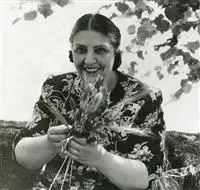
Fernanda de Castro

Fernanda de Castro was a multifaceted figure in Portuguese arts, excelling as a poet, stage director, choreographer, and educator. Her poetic work, marked by experimentation and the exploration of new languages, reflects deep sensitivity and an innovative spirit. Alongside her literary production, she developed significant work in the performing arts, exploring the relationship between word, body, and movement. Her passion for artistic education was evident through her teaching, where she sought to inspire and train new generations of creators. She passed away in Lisbon, leaving a diverse legacy in poetry and the performing arts.

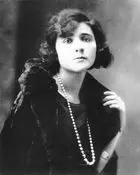
Florbela Espanca

Florbela Espanca was a Portuguese poet whose work, profoundly marked by passion, pain, and amorous suffering, made her one of the most recognized female voices in Portuguese literature. Her intensely lyrical and confessional poetry explores the anxieties of unrequited love, the ephemerality of happiness, and the overwhelming force of feelings, using a language rich in metaphors and strong expressiveness. Despite a short and tormented life, Florbela left a poetic legacy of rare intensity and beauty, which continues to captivate readers with its brutal honesty and its ability to express the most intimate pains and longings of the human soul.

João José Menescal de O. Saldanha

João José Menescal de Oliveira Saldanha, a poet writing in Portuguese, whose work, though not widely disseminated, contributes to the richness of contemporary poetry. His writing, marked by a particular sensitivity and a lyrical exploration, invites reflection on themes intrinsic to the human experience. His literary contribution, although discreet in terms of broad projection, adds a distinctive voice to the poetic landscape.

Vitoriano Palhares

Vitoriano Palhares was a Portuguese poet whose work is predominantly set in the context of the late 19th and early 20th centuries, a period marked by various aesthetic and cultural transitions. His poetry is characterized by lyrical sensibility, exploring recurring themes such as nature, love, saudade, and the transience of life. Although he may not have achieved the prominence of other major figures of his time, Palhares contributed to the Portuguese poetic landscape with verses that reflect genuine introspection and lyricism. His work, sometimes more discreet, is a testament to the diversity of voices that composed the literature of his generation.

Durvalino Filho

Durvalino Filho is a name associated with contemporary poetry, with a body of work that moves between lyricism and reflection on the human condition. His writing is characterized by the exploration of a poetic language that seeks expressiveness and depth in themes such as love, absence, and the passage of time.

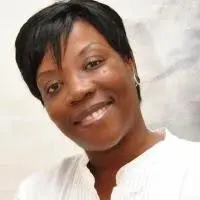
Conceição Lima

Conceição Viana de Lima is a prominent figure in contemporary Lusophone poetry, known for her intense lyricism and exploration of universal themes through a unique language. Her work often addresses love, identity, the human condition, and spirituality, revealing deep sensitivity and a sharp sense of observation. Conceição Lima's poetry is marked by its musicality, rich imagery, and ability to evoke deep emotions in the reader, establishing her as an authentic and significant voice in Portuguese-language literature.

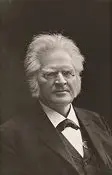
Bjørnstjerne Bjørnson

Bjørnstjerne Bjørnson was a Norwegian poet, novelist, and playwright, considered one of the "Big Four" of Norwegian literature. He was the first Norwegian to win the Nobel Prize in Literature, in 1903. He is widely known for his contribution to the development of the modern Norwegian language and his role in shaping Norwegian national identity. His works often address themes of patriotism, rural life, and social conflicts.

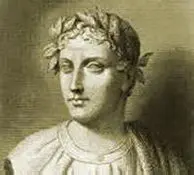
Horácio

Quintus Horatius Flaccus, commonly known as Horace, was a prominent Roman lyric poet during the time of Augustus. He is regarded as one of the greatest Roman lyric poets. His works, including Odes, Epodes, Satires, and Epistles, offer a vivid portrayal of Roman society and human nature. Horace's poetry is characterized by its technical mastery, elegant style, and philosophical depth, often exploring themes of moderation, the passage of time, and the pursuit of a happy life. His influence on Western literature is profound and enduring, shaping poetic traditions for centuries.

The secret of all good writing is sound judgment.
Mendo Bem

Mendo Bem is a contemporary poet whose work is distinguished by the deep exploration of the human condition and its complexities. His poetry addresses themes such as memory, time, nature, and the search for meaning in a constantly changing world. With careful language and marked lyricism, Bem invites the reader to introspective reflection.

Humberto Díaz Casanueva

Humberto Díaz Casanueva was a prominent Chilean poet and essayist, known for his deep reflection on existence, time, and the human condition. His poetic work is marked by lyrical and philosophical language, exploring solitude, memory, and the search for transcendence. Considered one of the most important voices in 20th-century Chilean poetry, Casanueva developed an introspective and contemplative style, which engages with existential and metaphysical currents. His essays also contributed to literary and philosophical criticism in his country.

Jessie Rittenhouse

Jessie Rittenhouse was an American poet and literary critic, known for her lyrical poetry and her contribution to the modernist literary movement. Her poetic work is marked by the exploration of female identity, nature, and inner experiences. As a critic, she offered valuable insights into the poetry of her time, advocating for new voices and forms of expression. Rittenhouse is remembered for her artistic sensitivity and her role in promoting American literature.

Isabel Fraire

Isabel Fraire was a Mexican poet and translator, known for her lyrical and introspective work. Her poetry explores themes such as solitude, the search for meaning, and the complexity of human relationships, with a delicate and profound language.

Delmore Schwartz

Delmore Schwartz was an American poet, short story writer, and literary critic, known for his exploration of existential themes and the influence of modernism in his work. His writing is characterized by intellectual and emotional intensity, addressing the human condition, alienation, and the search for meaning.

Hervey Allen

Hervey Allen was a prominent American novelist and poet, known for his historical fiction works that portrayed life and events in the United States. His writing is characterized by deep research and a vivid style. Allen achieved international fame with his novel "Anthony Adverse", an epic work that established him as one of the great names in American literature of his time.

Died on this day

10
Florbela Espanca

Florbela Espanca was a Portuguese poet whose work, profoundly marked by passion, pain, and amorous suffering, made her one of the most recognized female voices in Portuguese literature. Her intensely lyrical and confessional poetry explores the anxieties of unrequited love, the ephemerality of happiness, and the overwhelming force of feelings, using a language rich in metaphors and strong expressiveness. Despite a short and tormented life, Florbela left a poetic legacy of rare intensity and beauty, which continues to captivate readers with its brutal honesty and its ability to express the most intimate pains and longings of the human soul.

Sidónio Muralha

Sidónio Muralha was a Portuguese poet and writer, whose work is part of the currents of experimental poetry and interventionist poetry. His writing is marked by the search for new forms of expression, by social criticism, and by the exploration of language as a means of transformation and reflection on reality. His poetry, often challenging and innovative, reflects a keen eye on the contemporary world, its conflicts, and its contradictions. Muralha stood out for his ability to transgress the conventional boundaries of poetry, proposing a language that is simultaneously artistic and politically engaged.

Clara

Clara is a figure connected to poetry, whose work stands out for its lyrical delicacy and exploration of themes such as love, nature, and the ephemerality of life. Her writing, often introspective, invites the reader on an emotional and reflective journey. With a language that combines simplicity and depth, Clara has sought to express the nuances of the human experience, using poetic imagery that evokes sensations and feelings. Her poetry reflects a sensitive look at the world and the complexities of human relationships.

Mário de Alencar

Mário de Alencar was a Brazilian writer and poet, whose work is part of the modernist period. He stood out for his engaging prose and for his poetry that explored themes of daily life and national identity, often with an ironic and critical tone. His writing reflects a deep understanding of Brazilian culture and society.

Sonia Mori

Sonia Mori is a Brazilian poet and writer whose work is notable for its lyrical intensity and deep exploration of existential and social themes. Her poetry moves between the personal and the universal, sensitively addressing the complexities of human relationships, the passage of time, and the search for meaning in a constantly changing world. Mori is recognized for an elaborate poetic language that combines clarity and imagistic density, inviting the reader to profound reflection on the human condition. Her literary production contributes to the landscape of contemporary poetry, appearing in various anthologies and publications.

Raimundo Fontenele

Raimundo Fontenele was a Brazilian poet whose work stands out for its originality and lyrical depth. His poems explore universal themes such as love, death, and the human condition, with a rich and imagistic language. He is recognized for his contribution to contemporary poetry, leaving a legacy of verses that continue to resonate with readers for their sensitivity and expressive power.

Arquimedes da Silva Santos

Arquimedes da Silva Santos was a Brazilian poet, recognized for his contribution to Portuguese-language poetry. His work is part of a literary context marked by the exploration of language and reflection on the human condition. Through careful writing, he addressed universal themes, leaving a poetic legacy that echoes the sensibility of his time.

Ernesto Nunes

Ernesto Nunes is a poet whose work is distinguished by its exploration of the depths of the human soul, addressing themes such as existential anguish, the search for meaning, and the complexity of interpersonal relationships. His poetry is characterized by dense and introspective language, which invites the reader on an inner journey. Through a poetic voice marked by reflection and keen sensitivity, Ernesto Nunes manages to capture the nuances of the human experience, leaving a body of work that stands out for its intensity and originality.

Joaquim Ramalho Claro

Joaquim Ramalho Claro was a Portuguese poet known for his lyrical and reflective poetry. His work explores themes such as nature, time, and the human condition, with a refined language and a striking musicality. He stands out for the depth of his reflections on life and death, expressed through a polished and intimate style. His poetic compositions, although sometimes melancholic, convey keen sensitivity and a constant search for meaning.