Poem of the day

Grass

Carl Sandburg
Pile the bodies high at Austerlitz and Waterloo.
Shovel them under and let me work
-I am the grass; I cover all.

And pile them high at Gettysburg
And pile them high at Ypres and Verdun.
Shovel them under and let me work.
Two years, ten years, and the passengers ask the conductor:

What place is this?
Where are we now?

I am the grass.
Let me work.
Read full poem

Born on this day

11
Katherine Stone

Katherine Stone is a prominent figure in contemporary literature, known for her ability to weave engaging narratives that explore the complexity of human relationships and the nuances of the female experience. Her work stands out for its meticulous prose and the psychological depth of its characters, who often face moral and existential dilemmas. With a writing style that shifts between the introspective and the observational, Stone addresses themes such as identity, memory, love, and loss, inviting readers to reflect on their own lives. Her style, marked by keen sensitivity and an attentive eye for detail, lends her stories an authenticity and resonance that captivates a wide audience.

Gustavo de Matos Sequeira

Gustavo de Matos Sequeira was a Portuguese poet, professor, and diplomat. He stood out for his lyrical and social poetry, exploring themes such as love, homeland, and the human condition. His work reflects a deep knowledge of Portuguese literary tradition, while also engaging with the concerns of his time. With a multifaceted career, Sequeira combined literary activity with teaching and diplomacy, which allowed him privileged contact with different cultures and realities. His poetry is marked by careful language and refined sensibility, earning him a prominent place in 20th-century Portuguese literature.

Gioconda Belli

Gioconda Belli is a prominent Nicaraguan poet and novelist, known for her work that addresses themes such as love, sensuality, politics, and female identity. With a powerful and lyrical voice, Belli explores the experience of women in Latin America, challenging social norms and celebrating freedom and resistance. Her writing is often marked by a strong erotic charge and a clear social and political commitment.

Aníbal Machado

Aníbal Machado was a Portuguese writer and journalist, known for his work which stands at the transition between naturalism and modernism. His writing is marked by a careful style, psychological exploration of characters, and the approach of social and existential themes. He actively collaborated in the press, playing an important role in the literary dissemination of his time. His work, although not as extensive as that of other contemporary authors, reveals remarkable literary quality and an attentive eye on Portuguese society and the human condition.

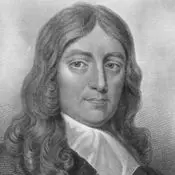
John Milton

John Milton was an English poet, polemicist, and civil servant for the Commonwealth of England under Oliver Cromwell. He is best known for his epic poem "Paradise Lost," one of the greatest works of English literature. Milton's work is characterized by its grand scope, theological depth, and masterful use of blank verse. His life and work were deeply intertwined with the political and religious turmoil of 17th-century England. Despite facing significant personal challenges, including blindness, Milton produced a body of work that continues to be studied and admired for its intellectual rigor and poetic artistry.

This is the month, and this the happy morn, Wherei
Edoardo Sanguineti

Edoardo Sanguineti was an Italian poet, literary critic, and academic, a prominent figure in experimental and neo-avant-garde Italian poetry. His work is marked by a profound interrogation of language, reality, and the human condition, exploring the tensions between the individual and society, the personal and the political. With an innovative and challenging style, Sanguineti left a significant legacy in contemporary poetry.

Marco Lucchesi

Marco Lucchesi is a Brazilian poet, translator, and essayist, recognized for his poetic work that explores the relationship between word and image, memory and time, and the sacred in everyday life. With a dense and imagistic language, Lucchesi has been one of the most important names in contemporary Portuguese-language poetry, receiving several awards and being translated into various languages. He is currently a member of the Brazilian Academy of Letters.

Infante D. Pedro

D. Pedro of Portugal, Infante of Portugal, was a notable figure of the 15th century, known for his curious spirit and his openness to the cultural novelties of Europe. Through his travels and contacts, he introduced knowledge of various cultures and customs to Portugal, exerting a significant influence on the development of the Infante of Portugal. His figure is associated with the Age of Discoveries and Portuguese maritime expansion.

Mafalda Mouzinho de Albuquerque

Mafalda Mouzinho de Albuquerque is a notable figure in the literary landscape, with a body of work distinguished by its depth and exploration of relevant themes. Her writing is characterized by a reflective approach and a refined language, capable of capturing the complexities of the human experience. Albuquerque has been consolidating her space in literature through the quality and originality of her poetic contributions.

António Nunes

António Nunes was a Portuguese poet whose work is characterized by formal experimentation and the exploration of new poetic languages. His poetry challenges conventions, delving into dreamlike universes, reflections on identity, and subtle social critique. He is a unique figure in the Portuguese literary landscape, associated with avant-garde movements and a constant search for the renewal of poetic expression. Marked by an inventive and, at times, hermetic style, António Nunes left a legacy of verses that invite deciphering and contemplation, positioning him as a cult poet, appreciated by those who seek transgression and depth in contemporary poetry.

António Pedro

António Pedro was a multifaceted poet and a central figure in the Portuguese literary avant-garde. His work is characterized by strong linguistic experimentation, exploration of existential themes, and irreverence. He was one of the driving forces behind artistic renewal movements, constantly seeking to break with established conventions. His poetry reflects a restless, innovative spirit, deeply connected to the artistic and cultural transformations of his time.

Died on this day

13
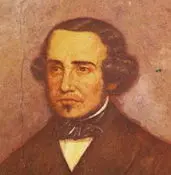
Almeida Garrett

João Baptista da Silva Leitão de Almeida Garrett was a Portuguese writer, poet, playwright, politician, and journalist, one of the central figures of Romanticism in Portugal. His work spans a wide range of genres, from lyric and epic poetry to theater and the novel, being known for his defense of the Portuguese language, for formal innovation, and for his strong civic and political intervention.

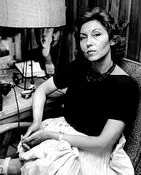
Clarice Lispector

Clarice Lispector was a Brazilian writer, born in Ukraine, known for her introspective and innovative prose. Her work explores the human condition, identity, the mystery of existence, and the epiphanies of everyday life. With a unique style, marked by subjectivity and fragmentation, Clarice delved into the depths of consciousness, revealing the unspeakable and the uninterrupted flow of inner life. Her writing defies easy classification, moving between stream of consciousness, existentialism, and a profound lyrical sensitivity.

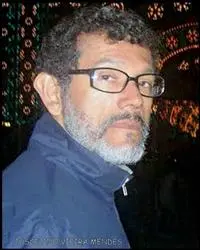
Juscelino Vieira Mendes

Juscelino Vieira Mendes is a contemporary Portuguese poet, known for his deep exploration of the human condition and the complexities of existence. His poetic work is distinguished by introspection, the musicality of verse, and the ability to evoke vivid images and subtle emotions. With writing that moves between the intimate and the universal, Juscelino Vieira Mendes addresses themes such as love, memory, the passage of time, and the search for meaning. His poetry is often marked by careful language and a refined sensitivity to the nuances of feeling, which gives him a prominent place in current Portuguese poetry.

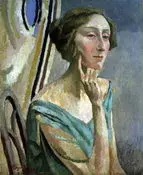
Edith Sitwell

Edith Sitwell was an influential English poet, critic, and playwright, known for her imaginative poetry and eccentric style. Her works often explore themes of beauty, decay, and the human condition, frequently with a distinct musicality and vivid imagery.

João Nepomuceno Kubitschek

João Nepomuceno Kubitschek was a Brazilian poet whose works explore the depth of the human soul and the ephemeral beauty of existence. His poetry is marked by rich and imagistic language, capable of evoking sensations and reflections on universal themes such as love, nature, and the passage of time. Through a lyrical and introspective style, Kubitschek built a literary legacy that continues to resonate with readers who seek in poetry a mirror for their own experiences and emotions.

Carlos Fernandes

Carlos Fernandes was a Portuguese poet whose work falls within the context of 20th-century poetry. His work is marked by a profound reflection on the human condition, the passage of time, and the search for meaning in a constantly changing world. Using careful language and a particular sensitivity to the melancholy and ephemeral beauty of existence, Fernandes built a poetic body of work that, although perhaps less publicized than that of his contemporaries, reveals an authentic voice and a unique perspective on reality.

Leonid Pervomaisky

Leonid Pervomaisky was a Ukrainian writer and journalist. He is known for his prose work, portraying life in Soviet Ukraine and exploring themes of identity and history. His work often reflects the complexities and challenges of the period in which he lived.

Teofilo Folengo

Teofilo Folengo was an Italian Benedictine monk and poet, known primarily for his satirical work in macaronic Latin, a mixture of Latin with Italian vernacular elements. His writing is characterized by humor, parody, and biting social criticism, disguised under a jocular language.

Dalton Trevisan

Dalton Trevisan is a Brazilian writer known for his short story work and his raw, direct writing. His narrative frequently explores urban marginality, human misery, and the complexities of interpersonal relationships, using concise language and a cutting style that earned him the nickname "Vampire of Curitiba." His work is marked by keen observation of everyday life and the ability to reveal the grotesque and tragic in the simplicity of life.

André de Resende

André de Resende was a Portuguese humanist, poet, and physician, a prominent figure of the Renaissance. He stood out for his interest in archaeology and ancient history of Portugal, having been one of the first to systematically study Roman ruins in the country. His poetic work reflects classical and humanist influence, exploring themes such as antiquity, nature, and reflection on time. He was a scholar who sought to reconcile classical knowledge with Portuguese reality, leaving a legacy in the study of the past and in poetry.

Rafael de León

Rafael de León was a prominent Spanish poet and lyricist, known for his deep connection with copla and flamenco. His work, rich in imagery and emotion, explores love, disillusionment, and the essence of the Andalusian soul, often through direct and evocative language. He was a key figure in the renewal of copla, endowing it with greater lyrical and literary depth, and his legacy endures as one of the great poetic chroniclers of Andalusian and Spanish identity.