Poem of the day

Grass

Carl Sandburg
Pile the bodies high at Austerlitz and Waterloo.
Shovel them under and let me work
-I am the grass; I cover all.

And pile them high at Gettysburg
And pile them high at Ypres and Verdun.
Shovel them under and let me work.
Two years, ten years, and the passengers ask the conductor:

What place is this?
Where are we now?

I am the grass.
Let me work.
Read full poem

Born on this day

12
Edmilson

Edmilson is a poet who stands out for his lyrical and reflective approach to human existence, exploring themes such as identity, time, and the search for meaning. His work is marked by a poetic language that, while accessible, carries a depth of feelings and images. With poetry that invites introspection, Edmilson establishes an intimate dialogue with the reader, inviting them to contemplate the complexities of life and the subtleties of emotions. His contribution to contemporary poetry lies in his ability to touch upon existential questions with sensitivity and depth.

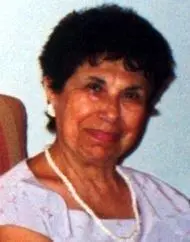
Ilka Brunhilde Laurito

Ilka Brunhilde Laurito is a Brazilian poet and writer, known for her work that navigates between lyricism and reflection on existential and social themes. Her poetry is marked by sensitivity in the approach to feelings, formal delicacy, and a deep connection with nature and the feminine universe. With an evocative and imagistic language, Laurito constructs a poetic universe that invites contemplation and introspection, establishing herself as a unique voice in contemporary poetry.

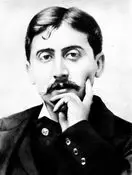
Marcel Proust

Valentin Louis Georges Eugène Marcel Proust was a French novelist, literary critic, and essayist. He is best known for his monumental work "In Search of Lost Time" (À la recherche du temps perdu), a series of seven novels exploring memory, time, art, and society.

And suddenly the memory revealed itself.
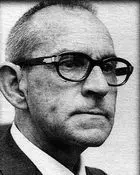
Salvador Espriu i Castelló

Salvador Espriu i Castelló was a Spanish poet, playwright, and novelist. He is considered one of the main representatives of 20th-century Catalan poetry. His work is marked by a deep existential pessimism, but also by a strong social and political critique. Espriu addressed themes such as death, time, identity, and the human condition, often using allegory and symbolism.

Maria Isabel Barreno

Maria Isabel Barreno was a Portuguese writer, essayist, and activist, co-author of the book "Novas Cartas Portuguesas" (New Portuguese Letters), a fundamental work of feminism in Portugal. Her writing, often transgressive and politically engaged, addressed themes such as the female condition, oppression, and the search for freedom, using rich and inventive language.

Jody Gladding

Jody Gladding is an American poet known for her work that focuses on the close observation of the natural world and its connections to human experience. Her poetry often explores the landscape, wildlife, and the cycles of nature, reflecting on humanity's place within these ecosystems. Her work is appreciated for its clarity, imagistic precision, and a sensibility that reveals the beauty and fragility of the world around us. Gladding invites readers to a deeper contemplation of our relationship with the environment and the lessons we can learn from it.

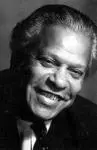
Nicolás Guillén

Nicolás Guillén was a Cuban poet, considered one of the most important figures in 20th-century Latin American literature. His work is characterized by the fusion of Afro-Cuban and Spanish rhythms, exploring themes such as racial identity, social justice, and popular culture. He is known for his innovative use of language, incorporating colloquialisms and elements of everyday speech. Guillén was also a committed political activist, and his poetry often reflects his struggle against racism and oppression.

Xuan Bello

Xuan Bello is a prominent Spanish writer and translator, recognized for his work in Galician and Asturian. His literary output encompasses poetry, narrative, and essay, characterized by a deep reflection on identity, memory, and landscape. Bello is also a significant promoter of the literature and culture of Slavic countries, having translated numerous authors from this region.

Ernestina de Champourcín

Ernestina de Champourcín was a Spanish poet and essayist belonging to the Generation of '27. Her work is characterized by a deep spirituality, lyrical language, and themes focused on love, faith, and transcendence. Despite her talent and early acclaim, her figure has often been overshadowed by that of her male contemporaries, partly due to her exile and the historical circumstances of the Spanish post-war period. Her poetry, while rooted in tradition, also explored the possibilities of free verse and renewed imagery, leaving a poetic legacy of great intimate and reflective value.

Salvador Espriu

Salvador Espriu was a Spanish poet, playwright, and novelist, a central figure in post-war Catalan literature. His work, deeply rooted in the identity and history of Catalonia, is characterized by a reflection on the human condition, collective memory, injustice, and the fragility of existence. Using often symbolic and evocative language, Espriu addressed universal themes from a local perspective, becoming a moral and literary reference.

Died on this day

8
Gonçalves de Magalhães

Gonçalves de Magalhães was a Brazilian poet, writer, and politician, a central figure of Romanticism in Brazil. Recognized as the introducer of the movement in Brazil, his work stood out for its exaltation of nature, the indigenous people, and national sentiment, in addition to themes such as love and religiosity. His lyrical poetry and his role in the founding of the Brazilian Academy of Letters profoundly marked the literary and cultural history of the country.

Augusto Meyer

Augusto Meyer was a prominent Brazilian poet, essayist, and professor, a central figure in the literature of Rio Grande do Sul and of national relevance. His poetic work is marked by reflection on gaucho identity, the land, history, and the human condition, combined with profound lyricism and an elaborate, musical language. Meyer also stood out as an intellectual, literary critic, and translator, contributing significantly to cultural debate and the education of readers.

Maria de Lourdes Hortas

Maria de Lourdes Hortas was a Portuguese poet whose work is distinguished by its lyrical depth and exploration of existential and everyday themes. With careful language and keen sensitivity, her poetry reflects an introspection on the human condition, love, and the passage of time.

Teresa Brandão

Teresa Brandão is a notable figure in contemporary Portuguese-language poetry, known for her lyrical voice and her exploration of intimate and universal themes. Her work stands out for its sensitivity in approaching issues such as time, memory, and the complexities of human relationships. With carefully crafted language and a strong capacity for evocation, Brandão builds poems that resonate with emotional depth and imagistic plasticity, establishing her as a significant poet in current literature.

Francisco Matos Paoli

Francisco Matos Paoli was a Macanese poet and essayist whose work explores identity, memory, and the complexity of the human condition in an insular context. His writing, often marked by deep introspection and rich symbolism, reflects his umbilical connection to the island and his life experience. Matos Paoli is recognized for his contribution to Macanese and Portuguese literature, standing out for his originality and poetic sensibility.

Eurico Gonçalves

Eurico Gonçalves was a Portuguese poet, writer, and visual artist, known for his multifaceted work that explored the relationship between word and image. His poetic production is marked by a strong visual and experimental dimension, frequently integrating elements from other arts. His work reflects a unique path in contemporary Portuguese literature, associated with a constant search for new forms of expression.

Giuseppe Villaroel

Giuseppe Villaroel was an Italian poet and writer, known for his lyrical and introspective work. His poetry explores themes such as the human condition, the passage of time, and the search for meaning, often with a melancholic and reflective tone. He stood out in the literary scene of his time, contributing to 20th-century Italian poetry with an authentic and sensitive voice. In addition to his poetic production, Villaroel also dedicated himself to other forms of writing, although poetry was the genre that consecrated him. His work is appreciated for the musicality of his verses, the depth of his imagery, and his ability to evoke universal emotions, making him a reference for lovers of contemporary Italian poetry.