Johann Wolfgang von Goethe
Author of the day

Johann Wolfgang von Goethe

Johann Wolfgang von Goethe was a prolific German writer, poet, playwright, and statesman whose vast body of work significantly impacted European literature and thought. His writings explored profound themes of nature, humanity, science, and the human condition, often blending romantic idealism with classical restraint. Goethe's influence extended beyond literature; he was also a respected figure in science and politics, embodying the ideal of the well-rounded Renaissance man. His literary creati…

Poem of the day

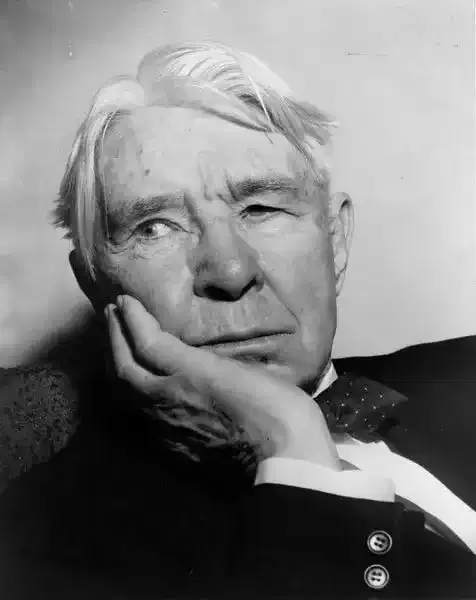
Grass

Carl Sandburg
Pile the bodies high at Austerlitz and Waterloo.
Shovel them under and let me work
-I am the grass; I cover all.

And pile them high at Gettysburg
And pile them high at Ypres and Verdun.
Shovel them under and let me work.
Two years, ten years, and the passengers ask the conductor:

What place is this?
Where are we now?

I am the grass.
Let me work.
Read full poem

Born on this day

8
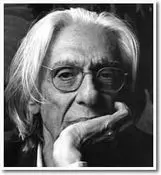
Ferreira Gullar

José Ribamar Ferreira de Araújo da Costa, known as Ferreira Gullar, was one of the most influential Brazilian poets and intellectuals. His work spans various phases, from concrete poetry to more existential and reflective poetry, always marked by a deep engagement with social and human reality. Gullar also stood out as a columnist, art critic, and essayist, leaving a multifaceted legacy in Brazilian culture.

Nicolau Tolentino

Nicolau Tolentino was a Portuguese poet known for his lyrical and satirical work. His writing reflects a keen observation of society and human relationships, often with a touch of irony and melancholy. Although he did not achieve the notoriety of other contemporaries, his contribution to Portuguese poetry of his time is recognized for its originality and its exploration of universal themes with a particular sensitivity.

Fernanda Teixeira

Fernanda Teixeira is a contemporary Portuguese poet and writer, whose work is distinguished by the exploration of subjectivity, memory, and the fragility of human relationships. Her poetry is marked by an intimate, delicate, and sometimes melancholic language, which invites reflection on the female condition and the complexities of existence.

Paulo Lopes da Silva

Paulo Lopes da Silva was a Portuguese poet known for his lyrical and reflective work. His poetry explores universal themes such as love, the ephemerality of life, and the search for meaning. With a style marked by musicality and depth of imagery, Silva left a poetic legacy that continues to resonate with readers and critics.

Prado Kelly

Prado Kelly was a Brazilian poet and intellectual, known for his poetry that explored interiority and the search for meaning. His work is part of a context of reflection on the human condition and transcendence, marked by an elaborate language and an introspective tone. His literary journey demonstrates a constant concern with form and thematic depth, addressing existential questions with sensitivity. Kelly left a legacy of poems that invite contemplation and analysis of the human soul.

José Carlos de Vasconcelos

José Carlos de Vasconcelos was a Portuguese poet, essayist, and translator, known for his lyrical and reflective work. His poetry explores themes such as memory, time, identity, and the human condition, with a careful language and an often melancholic and introspective tone. He contributed significantly to 20th-century Portuguese literature, both through his poetic creation and his intellectual activity.

Died on this day

7
Durvalino Filho

Durvalino Filho is a name associated with contemporary poetry, with a body of work that moves between lyricism and reflection on the human condition. His writing is characterized by the exploration of a poetic language that seeks expressiveness and depth in themes such as love, absence, and the passage of time.

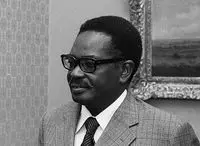
Agostinho Neto

António Agostinho Neto was an Angolan poet, physician, and politician, considered one of the central figures in the struggle for Angola's independence and one of the most important African poets writing in Portuguese. His poetic work is marked by strong lyricism, denunciation of social injustices, and the exaltation of the Angolan land and people, becoming a symbol of national identity and aspiration.

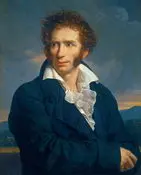
Ugo Foscolo

Ugo Foscolo was an Italian neoclassical poet, writer, and revolutionary, born on the island of Zante (then under Venetian rule) in 1778. His most famous work is "Le ultime lettere di Jacopo Ortis" (The Last Letters of Jacopo Ortis), an epistolary novel that expresses romantic and nationalist sentiments. Foscolo is also known for his sonnets and for his political activity and exile.

António Reis

António Reis was a Portuguese poet, filmmaker, and essayist, a central figure in a deeply reflective and poetic auteur cinema. His work, marked by rigorous investigation into identity, memory, and man's relationship with the land, overflows into poetry, where he explores orality, landscape, and the human condition in a dense and imagistic way. He frequently collaborated with Margarida Cordeiro, his creative partner, in a production that challenged the narrative and aesthetic conventions of cinema and literature.

António da Costa Santos

António da Costa Santos, also known by the pseudonym António Gedeão, was a Portuguese poet and chemical engineer. His poetic work, marked by a strong scientific and philosophical charge, explores the relationship between science, art, and the human condition. He is recognized for the originality of his language and his ability to merge technical rigor with lyrical sensibility.

Pablo de Rokha

Pablo de Rokha, pseudonym of Carlos Díaz Loyola, was a Chilean poet of great projection, recognized for his avant-garde and socially engaged work. His poetry is marked by a powerful and experimental language, exploring themes such as the human condition, social injustice, and the search for an authentic national identity, making him a central figure in Latin American poetry.

Amy Clampitt

Amy Clampitt was an American poet whose work is recognized for its erudition, verbal richness, and a deep appreciation for art, history, and nature. Her poems frequently intertwine the personal with the cultural, exploring themes of identity, memory, and the complexity of the world. Considered one of the most important poetic voices of her generation, Clampitt demonstrated an exceptional command of language, combining scholarly references with a keen observation of everyday life. Her poetry is dense, musical, and often surprising in its associations and imagery.