Jean-Paul Sartre
Author of the day

Jean-Paul Sartre

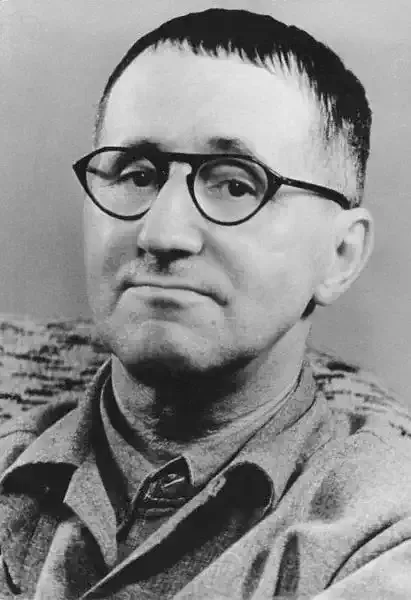
Jean-Paul Sartre was a French philosopher, writer, playwright, and literary critic, a central figure of atheistic existentialism. His vast and multifaceted work explores human freedom, individual responsibility, bad faith, and social commitment. Sartre rejected the Nobel Prize in Literature, advocating for a stance of refusal of bourgeois institutions. His thought profoundly influenced 20th-century philosophy, literature, and political debate, marking a generation with his emphasis on autonomy a…

Poem of the day

Grass

Carl Sandburg
Pile the bodies high at Austerlitz and Waterloo.
Shovel them under and let me work
-I am the grass; I cover all.

And pile them high at Gettysburg
And pile them high at Ypres and Verdun.
Shovel them under and let me work.
Two years, ten years, and the passengers ask the conductor:

What place is this?
Where are we now?

I am the grass.
Let me work.
Read full poem

Born on this day

14
Al Berto

Al Berto was a Portuguese poet whose work stands out for its exploration of sensuality, the body, death, and identity, in a dense and imagistic lyricism. His poetry, marked by rigorous language and a constant search for the exact word, reflects a deep existential restlessness and a profound connection with the Mediterranean. Al Berto is considered one of the most unique and important voices in contemporary Portuguese poetry.

Oswald de Andrade

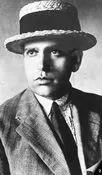
Oswald de Andrade was a Brazilian poet, novelist, and essayist, a central figure of modernism in Brazil. His work is marked by irreverence, linguistic experimentation, and a strong critique of traditional values and foreign influence on Brazilian culture. He was one of the initiators of the Modern Art Week of 1922, an event that introduced European avant-gardes to the country, proposing a genuinely national art, stripped of academicism and focused on Brazilian roots.

Carlos Nejar

Carlos Nejar is a renowned Brazilian poet whose work is distinguished by its lyrical intensity and exploration of universal themes such as love, death, time, and identity. His poetry is marked by a rich and expressive language, which moves between confessional lyricism and philosophical reflection. Throughout his career, Nejar has established himself as an important voice in contemporary Brazilian literature, recognized for the depth of his vision and his formal mastery.

Otacílio Colares

Otacílio Colares was a poet of Brazilian origin, whose works explore the complexity of human emotions and the ephemeral beauty of existence. His poetry is marked by careful language and deep lyrical sensitivity, addressing themes such as love, saudade, and reflection on time. With a writing that captivates with its melody and introspection, Colares left a poetic legacy that invites contemplation and connection with the deepest feelings.

João Augusto Sampaio

João Augusto Sampaio was a poet whose work stood out for its lyrical depth and exploration of existential themes. His poetic compositions are marked by careful language and strong musicality, reflecting a keen sensitivity to the complexities of the human condition. His writing, though sometimes introspective, achieved a universal echo, touching readers through the exploration of life's beauty, melancholy, and mystery. Sampaio left a poetic legacy that continues to be appreciated for its authenticity and its contribution to the richness of Portuguese-language poetry.

José Augusto de Castro

José Augusto de Castro was a Portuguese lawyer and poet, known for his poetic work that reflects a romantic and sometimes melancholic sensibility. Although his main activity was law, poetry occupied an important place in his life, manifesting itself in verses that explored themes such as nature, love, and the transience of life. His literary contribution, although part of a broader context of poetic production of his time, left a mark on Portuguese literature for its expressiveness and lyricism.

Albertina Paraíso

Albertina Paraíso was a Portuguese writer and teacher, known for her literary work that encompassed poetry and prose, with a particular focus on social and feminine themes. She also dedicated herself to education, diligently carrying out her profession as a teacher. Her writing reflects a refined sensitivity to human issues and a capacity for expression that earned her a place in the literary landscape of her time, albeit with less recognition than some contemporaries.

Ludovina Frias de Matos

Ludovina Frias de Matos is a Portuguese writer, known for her literary production that spans diverse genres, including poetry and prose. Her work reveals a particular sensitivity for exploring the human condition, interpersonal relationships, and the experience of daily life. With accessible and sometimes lyrical language, Frias de Matos constructs narratives and poems that touch on universal themes such as love, loss, hope, and memory, establishing a genuine connection with the reader.

Helder de Mendonça Cunha

Helder de Mendonça Cunha was a poet whose work is characterized by a deep sensibility and an attentive eye on the human condition. His poetry, often melancholic and introspective, addresses universal themes such as love, loss, and the ephemerality of life. With a careful language and accentuated lyricism, Mendonça Cunha built a body of work that is distinguished by its authenticity and emotional depth.

Rogério Correia

Rogério Correia is a contemporary Portuguese poet, known for his engaged poetry and civic intervention. His poetic work often addresses social, political, and existential themes, marked by direct language and a strong sense of criticism and denunciation. With a trajectory that combines literary production with activism and the defense of social causes, Rogério Correia asserts himself as a poetic voice that seeks to challenge the reader and reflect on the contradictions of the contemporary world, consolidating a prominent place in Portuguese social and political poetry.

Alain Duault

Alain Duault is a French poet, novelist, and essayist, known for his lyrical work and exploration of themes such as memory, the passage of time, and the ephemeral beauty of existence. His writing is often associated with a refined sensibility and a deep appreciation for art and culture.

Juan Gonzalo Rose

Juan Gonzalo Rose was a Peruvian poet and diplomat, a prominent figure of the Generation of the 50s in Peruvian literature. His poetic work is characterized by deep introspection, refined language, and the exploration of themes such as love, solitude, and the human condition. As a diplomat, he represented Peru in various countries, enriching his life and literary perspective.

Died on this day

9
Josefina Plá

Josefina Plá was a multifaceted figure, excelling as a poet, ceramicist, journalist, and art critic. Born in Spain, she settled in Paraguay, where she developed much of her work and became a fundamental voice in Paraguayan culture. Her poetry, marked by deep sensitivity and intense exploration of themes such as identity, exile, and the female condition, is recognized for its expressive force and formal innovation. Plá contributed significantly to Paraguayan modernism, leaving a lasting legacy as one of the most important writers in Latin America.

Thomas Hardy

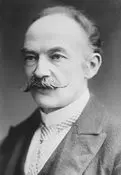
Thomas Hardy was a significant English novelist and poet, associated with the Naturalism literary movement. Though initially trained as an architect, his literary career spanned over four decades, producing novels like "Tess of the d'Urbervilles" and "Far from the Madding Crowd" that critically examined rural life, social constraints, and the harsh realities of fate. Later in life, he turned increasingly to poetry, which explored similar themes of loss, disillusionment, and the passage of time with a distinctive blend of modernism and traditional form.

Between Us Now
Oswaldo Alcântara

Oswaldo Alcântara was a Brazilian poet and professor, known for his contribution to contemporary poetry. His work explored universal themes with an accessible and profound language, marked by reflections on the human condition, time, and the ephemerality of life. He was also a dedicated educator, influencing generations of students.

Orlando Mendes

Orlando Mendes was a Portuguese poet, professor, and translator, a prominent figure in Portuguese poetry of the second half of the 20th century. His work, marked by rigorous formal construction and reflective depth, explores themes such as memory, time, the land, and the human condition, with precise and musical language.

Moacy Cirne

Moacy Cirne was a Brazilian poet, literary critic, and professor, an important figure in experimental and avant-garde poetry in Brazil. His work is marked by irreverence, formal exploration, and social criticism, often using language in an innovative and challenging way. Cirne also dedicated himself to the study of poetry and the dissemination of new literary trends, contributing to the renewal of the Brazilian cultural scene. His legacy lies in creative daring and the constant search for new forms of poetic expression.

Xavier da Cunha

Xavier da Cunha was a Portuguese military officer, historian, and folklorist, with a notable career in the military and a deep dedication to the study of Portuguese traditions and folklore. He stood out for his extensive work in areas such as military history and ethnographic research, gathering a valuable collection on Portuguese customs, legends, and popular manifestations. His intellectual output reveals a profound interest in Portugal's cultural identity, exploring the historical and social roots of its traditions. Through his publications, he contributed significantly to the preservation and dissemination of Portuguese intangible heritage, leaving an important legacy for the study of the country's folklore and social history.

Claude-Michel Cluny

Claude-Michel Cluny was a French writer and translator. His work spans poetry, prose, and essays, exploring themes such as memory, language, and the human condition. He also distinguished himself through his work as a translator, bringing works by authors such as Octavio Paz and Saint-John Perse to French. Cluny was known for his erudition and his dense, evocative writing, which invited reflection.

Pepín Bello

An eccentric and enigmatic figure of Spanish surrealism, José Bello Lasierra, known as Pepín Bello, was a multifaceted artist and intellectual. Although he did not leave an extensive literary work published during his lifetime, his presence was fundamental in the avant-garde circles of Madrid and Paris. His life, marked by bohemianism and friendships with great figures of art and literature, was characterized by a constant search for creative freedom and experimentation.