Juan Ramón Jiménez
Author of the day

Juan Ramón Jiménez

Juan Ramón Jiménez was a Spanish poet, awarded the Nobel Prize in Literature in 1956. His work, profoundly marked by symbolism and the desire for "pure poetry," evolved towards an incessant search for beauty and transcendence. His poetry explores themes such as nature, spirituality, love, and the very essence of poetry, with a refined, musical, and visionary style. He is considered one of the great renovators of 20th-century Spanish poetry.

Poem of the day

Do Not Go Gentle Into That Good Night

Dylan Thomas
Do not go gentle into that good night, 
Old age should burn and rave at close of day; 
Rage, rage against the dying of the light. 

Though wise men at their end know dark is right, 
Because their words had forked no lightning they 
Do not go gentle into that good night. 

Good men, the last wave by, crying how bright 
Their frail deeds might have danced in a green bay, 
Rage, rage against the dying of the light. 

Wild men who caught and sang the sun in flight, 
And learn, too late, they grieved it on its way, 
Do not go gentle into that good night. 

Grave men, near death, who see with blinding sight 
Blind eyes could blaze like meteors and be gay, 
Rage, rage against the dying of the light. 

And you, my father, there on that sad height, 
Curse, bless, me now with your fierce tears, I pray. 
Do not go gentle into that good night. 
Rage, rage against the dying of the light.
Read full poem

Born on this day

9
Rubem Braga

Rubem Braga was one of the most important Brazilian poets of the 20th century, known for his lyrical work and his ability to capture the beauty of everyday life and the intensity of human emotions. His poetry is marked by apparent simplicity, musicality, and a worldview that oscillates between optimism and melancholy. His vast literary production, which also includes chronicles and short stories, reveals a deep love for nature, for Rio de Janeiro, and for the simple joys of life, consolidating him as a master in the art of poeticizing the prosaic and the profound.

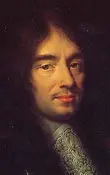
Charles Perrault

Charles Perrault was a French writer and poet, a member of the French Academy. He is world-famous for his "Tales of Mother Goose", which include classics like "Puss in Boots", "Sleeping Beauty", and "Little Red Riding Hood".

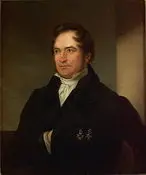
Erik Gustaf Geijer

Erik Gustaf Geijer was a Swedish writer, historian, poet, and composer. He is considered a central figure in Swedish Romanticism and had a significant impact on the development of historiography and literature in Sweden. Geijer was also a member of the Swedish Academy.

Amélia Veiga

Amélia Veiga is a contemporary Portuguese poet, recognized for her lyrical and introspective writing. Her work often explores the depths of human experience, the nuances of emotions, and the ephemerality of time, using careful and imagistic language. The poet has been consolidating her voice in current Portuguese poetry, addressing universal themes with particular sensitivity.

Ismael Enrique Arciniegas

Ismael Enrique Arciniegas was a Colombian writer, journalist, and diplomat. He stood out for his agile prose and his interest in historical and biographical topics. Throughout his career, he explored various facets of literature and journalism, leaving a legacy of works that reflect his deep connection with Hispanic-American culture. His journalistic and literary work was marked by a keen observation of reality and a polished style. Arciniegas contributed significantly to the enrichment of Colombian literature and the dissemination of his country's culture through his writings and his diplomatic work.

Died on this day

6
Afrânio Peixoto

Afrânio Peixoto was a Brazilian physician, professor, politician, and writer, a prominent figure in the culture and literature of his time. His work ranges from poetry to historical and literary studies, always with a keen eye on the particularities of Brazil and its language. Peixoto demonstrated a deep appreciation for literary tradition, while simultaneously engaging in the intellectual debates of his time, defending the importance of national culture and the purity of the Portuguese language. His work as an educator and a member of institutions such as the Brazilian Academy of Letters consolidated his position as an influential intellectual. Through his writings, he sought not only to express his poetic sensibility but also to contribute to the formation of a Brazilian cultural identity, revisiting and reinterpreting the country's history and literature.

Bento Prado Júnior

Bento Prado Júnior was a Brazilian philosopher, literary critic, and university professor, renowned for his studies on phenomenology, existentialism, and literature. His work is notable for its analytical depth and its ability to connect philosophy with literary and cultural experience. He was an important figure in the intellectual formation of several generations of students and researchers.

Foed Castro Chamma

Foed Castro Chamma was a Brazilian poet and writer known for his innovative and experimental poetry. His work frequently addresses existential, social, and political themes, using language that challenges conventions. He was an important figure in the Brazilian literary scene, actively participating in debates and cultural movements.

Angel González

Ángel González was a Spanish poet, one of the most representative figures of the so-called "Generation of the 50s" or "Post-war Generation." His poetry is characterized by a colloquial, ironic, and often critical tone, which addresses daily life, love, memory, and the human condition from a lucid and disillusioned perspective. With direct and accessible language, González managed to connect with a broad audience, distancing himself from grandiloquent rhetoric. His work is a mirror of the social and sentimental reality of his time, with a deep reflection on identity and the fleetingness of existence.