Poem of the day

Do Not Go Gentle Into That Good Night

Dylan Thomas
Do not go gentle into that good night, 
Old age should burn and rave at close of day; 
Rage, rage against the dying of the light. 

Though wise men at their end know dark is right, 
Because their words had forked no lightning they 
Do not go gentle into that good night. 

Good men, the last wave by, crying how bright 
Their frail deeds might have danced in a green bay, 
Rage, rage against the dying of the light. 

Wild men who caught and sang the sun in flight, 
And learn, too late, they grieved it on its way, 
Do not go gentle into that good night. 

Grave men, near death, who see with blinding sight 
Blind eyes could blaze like meteors and be gay, 
Rage, rage against the dying of the light. 

And you, my father, there on that sad height, 
Curse, bless, me now with your fierce tears, I pray. 
Do not go gentle into that good night. 
Rage, rage against the dying of the light.
Read full poem

Born on this day

16
Alberto de Serpa

Alberto de Serpa was a Portuguese poet whose work is part of the Neorealism context and social poetry. His writing is marked by a deep commitment to the social and political reality of his time, reflecting the struggles and aspirations of the people. With direct language and an interventionist tone, Serpa sought to give voice to the marginalized and denounce injustices. His poetic legacy is that of an engaged artist, whose poetry became an instrument of intervention and hope in building a more just world. His work is a testament to the transformative power of the poetic word.

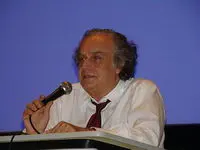
Arnaldo Jabor

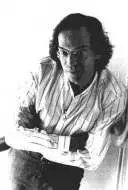
Arnaldo Jabor was a multifaceted Brazilian filmmaker, screenwriter, producer, and journalist, known for his cinematic work that frequently explored the complexities of Brazilian society and human relationships. His filmography is marked by a critical and aesthetically refined eye, addressing themes such as sexuality, social hypocrisy, and politics. In addition to his contribution to cinema, Jabor also stood out as a columnist and journalist, with incisive and reflective writing on Brazilian culture and politics, demonstrating remarkable artistic and intellectual versatility throughout his career.

Júlia Cortines

Júlia Cortines was a writer and poet whose work stands out for its lyrical depth and exploration of universal themes such as love, longing, and the passage of time. Her poetry is marked by careful language and a strong aesthetic sense, reflecting a refined sensitivity to the world and human emotions. Cortines left a poetic legacy that, although perhaps not widely publicized, represents a valuable testament to female lyrical expression.

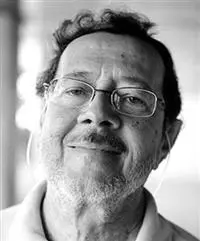
Ruy Espinheira Filho

Ruy Espinheira Filho was a Brazilian poet whose work explored the complexity of human existence, the ephemerality of time, and the search for meaning amidst modernity. His poetry is marked by deep existential reflection and a dense, imagistic language that oscillates between lyricism and social critique. Through verses that frequently engage with literary tradition and the anxieties of his time, Espinheira Filho established himself as a singular voice in contemporary Brazilian poetry, leaving a legacy of works that invite introspection and questioning.

Birago Diop

Birago Diop was a Senegalese poet, writer, and diplomat, a central figure of Négritude. His poetic work, marked by musicality and the evocation of African culture, seeks to reclaim and celebrate the continent's roots and identity. His verses transpose the oral literature, myths, and traditions of African peoples into literature, giving a powerful voice to cultural heritage.

Paulo Henriques Britto

Paulo Henriques Britto is a Brazilian poet, translator, and professor. His poetic work stands out for its formal intelligence, irony, and reflection on themes such as everyday life, the ephemerality of life, and human relationships. Britto is also a recognized English-language translator, having rendered works by authors such as Shakespeare, T.S. Eliot, and Raymond Carver into Portuguese.

Helen Dunmore

Helen Dunmore was an acclaimed British novelist, short story writer, and poet. Her work is known for its deep exploration of human psychology, often set in historical settings or evocative landscapes. She stood out for her lyrical prose and her ability to create complex and believable characters, exploring themes such as memory, loss, war, and family relationships.

María Gravina Telechea

María Gravina Telechea is an Argentine writer whose works explore the complexities of daily life and human relationships. With sensitive and engaging prose, she addresses themes such as family, love, loneliness, and the discoveries of adult life. Her writing invites introspection and identification with the characters and their journeys.

Angie Estes

Angie Estes is an American poet known for her innovative and experimental poetry, which often challenges the boundaries of language and form. Her work explores themes such as nature, mythology, memory, and the relationship between the body and the mind. Estes has published several collections of poetry that have been praised for their originality and the complexity of their textual exploration. Her writing is marked by formal boldness and a deep intellectual curiosity, inviting readers to a unique poetic experience.

Lola Ridge

Lola Ridge was an Australian-American modernist poet, known for her engaged and socially conscious poetry. Her work addresses themes such as social injustice, workers' conditions, and urban life, with a strong and innovative language.

Carolina Coronado

Carolina Coronado was a prominent Spanish poet and writer of the 19th century, a key figure of Romanticism in Spain. Known for her passionate lyricism and her commitment to social causes, she explored themes such as love, freedom, and the condition of women in her work. Her poetry is characterized by deep sensitivity and expressive force that distinguished her in her time.

María Calcaño

María Calcaño was a prominent Venezuelan poet, whose work is characterized by its lyrical intensity, its exploration of identity and sensuality, and its deep connection to the nature and culture of her homeland. Throughout her prolific career, Calcaño addressed themes such as love, eroticism, death, solitude, and the longing for transcendence, using a language rich in imagery and musicality. Recognized as one of the most important voices in 20th-century Venezuelan poetry, her work has been the subject of numerous studies and anthologies. Calcaño left a legacy of vibrant and complex poetry, which continues to resonate with new generations of readers and writers.

Died on this day

9
João Antônio

João Antônio was a notable Brazilian writer, known for his energetic prose and colloquial language that depicted the underworld of large cities, especially Rio de Janeiro. His work delves into the margins of society, exploring marginalized characters, their struggles for survival, vices, and the search for dignity amidst urban degradation. With a raw and direct style, the author distanced himself from the literary conventions of his time to give voice to a universe of bohemians, tricksters, and the dispossessed, building vibrant and musical narratives. His contribution to Brazilian literature lies in his ability to strip bare social reality with a singular expressive force, capturing the essence of urban life and its contradictions.

João Borges de Barros

João Borges de Barros is a poet whose work is part of the context of contemporary Portuguese poetry. His writing is marked by a deep reflection on existence, the human condition, and the passage of time, often expressed through lyrical and introspective language. Through themes such as memory, saudade, and the search for meaning, Barros constructs poetry that dialogues with the concerns of the modern reader, establishing himself as a singular voice in literature.

Rubens Rodrigues Torres Filho

Rubens Rodrigues Torres Filho was a Brazilian poet, born in Rio de Janeiro. His poetic work is notable for its exploration of themes such as the city, memory, and subjectivity, with a language that ranges between the colloquial and the erudite. He is recognized for his contribution to contemporary Brazilian poetry, where he stood out for his originality and the way he addressed everyday life and the complexities of urban life.

Robert Browning

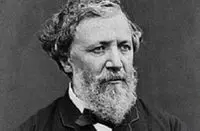
Robert Browning was a prominent English poet and playwright whose mastery of the dramatic monologue and keen psychological insight made him one of the most influential figures of the Victorian era. His work often delves into complex characters and moral dilemmas, exploring the depths of human nature with a distinctive, vigorous style. Browning's expansive vocabulary, intricate plotting, and philosophical bent continue to fascinate readers and scholars alike.

Faultless to a fault.
Raymond Radiguet

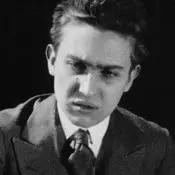
Raymond Radiguet was a notable French writer, known for his work "The Devil in the Flesh" (Le Diable au corps). His writing is often associated with French modernism, exploring themes of youth, love, and the transition to adulthood with lyrical and melancholic sensitivity. Despite his short life, Radiguet left a significant mark on the literature of his time.

François Dufrêne

François Dufrêne was a French poet and artist, known for his active participation in the Surrealist Doctrine movement. His poetic work, although sometimes less prominent than that of other surrealists, is marked by linguistic and visual experimentation, aligned with the principles of creative freedom and exploration of the unconscious.

Patrícia Galvão

Patrícia Galvão, also known by the pseudonym "Pagu", was a multifaceted figure of Brazilian modernism, excelling as a writer, journalist, playwright, and political activist. Her literary work, marked by boldness and social criticism, reflects the cultural effervescence and transformations of her time. Pagu is remembered as a pioneering intellectual, whose life and artistic production challenged conventions and paved the way for new forms of expression and female action in the public sphere.

Carlos Barral

Carlos Barral was a key Spanish poet and editor in post-war poetry. His work is characterized by an intellectualized poetry, conversational in tone, with a deep reflection on the passage of time, memory, and identity. As an editor, he was a fundamental figure in the renewal of the Spanish literary scene, promoting the publication of authors who would mark an era. His figure represents the confluence of poetic creation and editorial work, leaving an important legacy in 20th-century Spanish literature. His poetry, despite its apparent simplicity, hides great thematic and formal complexity.