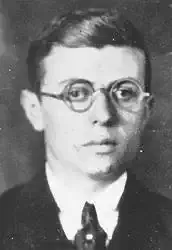
Juan Ramón Jiménez
Author of the day

Juan Ramón Jiménez

Juan Ramón Jiménez was a Spanish poet, awarded the Nobel Prize in Literature in 1956. His work, profoundly marked by symbolism and the desire for "pure poetry," evolved towards an incessant search for beauty and transcendence. His poetry explores themes such as nature, spirituality, love, and the very essence of poetry, with a refined, musical, and visionary style. He is considered one of the great renovators of 20th-century Spanish poetry.

Poem of the day

Grass

Carl Sandburg
Pile the bodies high at Austerlitz and Waterloo.
Shovel them under and let me work
-I am the grass; I cover all.

And pile them high at Gettysburg
And pile them high at Ypres and Verdun.
Shovel them under and let me work.
Two years, ten years, and the passengers ask the conductor:

What place is this?
Where are we now?

I am the grass.
Let me work.
Read full poem

Born on this day

10
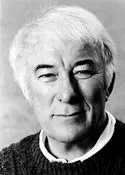
Seamus Heaney

Seamus Heaney was an Irish poet, writer, and translator, awarded the Nobel Prize in Literature in 1995. His poetry is known for its deep connection to the Irish rural landscape, its reflections on identity, memory, and violence, and its use of rich, sensory language. Heaney explored the human experience through imagery drawn from rural life, history, and mythology, creating a body of work that resonates with universal themes of belonging, loss, and transcendence. His poetic voice is simultaneously personal and collective, offering a unique perspective on the human condition.

Joaquim Azinhal Abelho

Joaquim Azinhal Abelho was a Portuguese poet, professor, and essayist, known for his work that explores the Alentejo landscapes, regional identity, and memory. His poetry is marked by a lyrical and evocative language, which rescues the cultural traditions and the soul of Alentejo. Abelho dedicated himself to the valorization of popular culture and the reflection on time and permanence. His literary work, inserted in the context of neorealism and interventionist poetry, but with a strong lyrical and memorialistic tendency, contributed to the consolidation of an authentic poetic voice deeply connected to its roots. His essays were also important for the understanding of Alentejo culture.

Daniel Jonas

Daniel Jonas is a contemporary poet whose work is characterized by a deep exploration of language and the human condition, addressing themes such as memory, time, identity, and the relationship with the other. His poetry is distinguished by its formal complexity and the incessant search for new forms of expression, engaging with literary tradition while simultaneously innovating in terms of structure and vocabulary. Jonas is an important voice in contemporary poetry, marked by an intense reflection on existence.

Morais Lopes

Morais Lopes is a name that stands out in contemporary poetry, although his work is marked by a discretion that contrasts with the depth and resonance of his verses. His writing explores the complexities of the human condition, addressing themes such as memory, identity, and the passage of time with a unique sensitivity. Through careful language and a strong imagistic charge, Lopes invites the reader to an introspective reflection on their own experiences and feelings, consolidating himself as an important voice in Portuguese-language poetry.

Lincoln Fitzell

Lincoln Fitzell was a writer whose works often explore the human condition and the complexities of American life. His prose is known for its clarity and its ability to capture the essence of his characters and settings. Fitzell addressed themes such as society, morality, and the search for identity in his writings, leaving a mark on literature for his unique perspective and narrative skill.

Enrique González Martínez

Enrique González Martínez was a Mexican poet, doctor, and diplomat, a central figure of late modernism and a precursor of avant-garde poetry in Mexico. His work is characterized by a deep reflection on time, the fleeting nature of life, and the search for transcendence, with a refined language and great musicality. Through his poetry, he explored themes such as melancholy, solitude, and death, but also the beauty of the moment and the persistence of the spirit. His influence on subsequent generations of Mexican poets was considerable.

Jorge Eduardo Eielson

Jorge Eduardo Eielson was a Peruvian poet and artist, a key figure in the Latin American literary avant-garde. His poetic work is distinguished by profound formal and linguistic experimentation, exploring the materiality of language and its relationship with identity and memory. With a career spanning poetry, sculpture, and performance, Eielson was characterized by his constant search for new forms of expression. His poetry, often dense and enigmatic, delves into the depths of being, existence, and the human condition, leaving a legacy of originality and artistic boldness.

José Agustín Goytisolo

José Agustín Goytisolo was a Spanish poet and translator, recognized for his socially and existentially oriented poetry. His work, marked by a deep commitment to reality and a lucid, often critical poetic voice, addresses themes such as injustice, memory, identity, and the human condition. In addition to his literary work, Goytisolo was an intellectual committed to the social and political causes of his time, which was reflected in his writing and activism.

Died on this day

15
Eduardo Martins

Eduardo Martins is a Brazilian poet whose work stands out for its lyrical depth and exploration of existential themes and the human condition. His poetry is marked by a dense and imagistic language, capable of evoking sensations and reflections on love, death, time, and the search for meaning. With a style that moves between the confessional and the universal, Martins has built a body of work that resonates with its authenticity and its ability to touch the deepest chords of the reader, consolidating himself as a significant voice in contemporary Portuguese-language literature.

João Ribeiro

João Ribeiro was a notable Portuguese poet, professor, and essayist. Recognized for his poetic work, which explored themes such as identity, memory, and the passage of time, Ribeiro also dedicated himself to the study of literature and culture, being an influential figure in the Portuguese intellectual landscape. His writing is marked by deep reflection and careful language, consolidating him as one of the important names in contemporary poetry.

Georges Duhamel

Georges Duhamel was a French novelist, poet, and surgeon. He is best known for his novel series "Chronique des Pasquier", which chronicles the life of a Parisian family over several decades. His work often addresses themes such as family, society, and the consequences of war.

Jean de La Fontaine

Jean de La Fontaine was a French poet and fabulist, widely regarded as one of the greatest masters of universal literature. He is best known for his Fables, collections of short stories, often featuring animals, that convey moral lessons with wit and humor. His work reflects a deep observation of human nature and society, expressed in elegant and musical language. La Fontaine developed a unique style, combining the apparent simplicity of narratives with a subtle complexity of meanings, exploring themes such as justice, cunning, weakness, and strength. His fables continue to be read and appreciated for their universality and their ability to entertain and educate readers of all ages.

Günter Grass

Günter Grass was a German writer, born in 1927 and died in 2015, winner of the Nobel Prize in Literature in 1999. He is one of the most influential and recognized German-language authors of the post-war period, known for his works that address German history, guilt, and collective memory.

Students who don’t want to get anywhere are sure t
Mercè Rodoreda

Mercè Rodoreda was one of the most important Catalan writers of the 20th century, recognized for her poetic and intimate prose, which explores the complexity of human relationships, memory, and identity. Her work, predominantly written in Catalan, addresses themes such as love, loss, the Spanish Civil War, and the search for a place in the world. Rodoreda is considered a central figure of modern Catalan literature and a powerful female voice in universal literature.

Nicolas Chamfort

Nicolas Chamfort was an 18th-century French writer and essayist, known for his witty and cynical aphorisms and thoughts. His works reflect a pessimistic view of human nature and society, criticizing the hypocrisy and social conventions of his time. He is considered a precursor to existentialist thought.

Jaime Salazar Sampaio

Jaime Salazar Sampaio was a Portuguese jurist and poet, known for his literary work that explored universal themes with a careful and reflective language. His poetry, although sometimes less prominent in the literary landscape, reveals a refined sensibility and a profound look at the human condition. Throughout his life, he dedicated himself to both the practice of law and poetic expression, demonstrating a multifaceted facet. His contribution to literature, although discreet in volume, is valued for its quality and the introspection it offers its readers.

Bernard Noël

Bernard Noël was a French poet, novelist, and essayist, whose work was characterized by an intense exploration of language and its relationship with the body, desire, and death. His writing is marked by expressive force and a constant search for the radicality of the word. Known for his formal daring and his ability to strip bare human anguish and impulses, Noël built a singular literary universe. His poetry and prose are an invitation to confront the deepest and often darkest aspects of existence, with a sharp sensitivity to the tensions between silence and voice, life and nothingness.

Francisca Aguirre

Francisca Aguirre was a Spanish poet and writer, known for her lyrical work and her unique poetic voice. Her poetry is characterized by emotional intensity, the exploration of themes such as freedom, passion, and rebellion against social conventions. She is considered an important figure in Spanish poetry.