Poem of the day

Do Not Go Gentle Into That Good Night

Dylan Thomas
Do not go gentle into that good night, 
Old age should burn and rave at close of day; 
Rage, rage against the dying of the light. 

Though wise men at their end know dark is right, 
Because their words had forked no lightning they 
Do not go gentle into that good night. 

Good men, the last wave by, crying how bright 
Their frail deeds might have danced in a green bay, 
Rage, rage against the dying of the light. 

Wild men who caught and sang the sun in flight, 
And learn, too late, they grieved it on its way, 
Do not go gentle into that good night. 

Grave men, near death, who see with blinding sight 
Blind eyes could blaze like meteors and be gay, 
Rage, rage against the dying of the light. 

And you, my father, there on that sad height, 
Curse, bless, me now with your fierce tears, I pray. 
Do not go gentle into that good night. 
Rage, rage against the dying of the light.
Read full poem

Born on this day

7
Jorge Melícias

Jorge Melícias is a contemporary Portuguese poet, known for his poetry marked by existential reflection, the musicality of verse, and precise and evocative language. His work moves between introspective lyricism and careful observation of the world, addressing themes such as time, memory, nature, and the search for meaning. He is also recognized for his academic activity and his connection to literary circles.

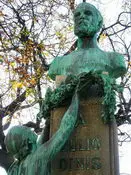
Júlio Dinis

Joaquim Guilherme Gomes Correia, better known by the pseudonym Júlio Dinis, was a Portuguese doctor and writer. He is considered one of the main representatives of Realism in Portuguese literature, with works that portray the society and customs of the time.

Carlos Torres Figueiredo

Carlos Torres Figueiredo was a Portuguese poet, whose work is part of a literary context rich in experimentation and reflection. His poetry is marked by a constant search for new forms of expression, exploring language and the limits of poetry itself. With a poetic voice that moves between the personal and the universal, Carlos Torres Figueiredo addressed themes such as identity, memory, and the human condition, leaving behind a body of poems that invite meditation and dialogue with the reader, in a style that, at times, challenges literary conventions.

Norman MacCaig

Norman MacCaig was a Scottish poet known for his lyrical and observational poetry, often centered on the landscape of the Scottish Highlands and the lives of its inhabitants. His work is marked by a subtle humor, precise language, and a deep appreciation for the beauty of the natural world and the interconnectedness of life. He also explored themes of identity and belonging.

Jos Charles

Jos Charles is a contemporary American poet known for his innovative approach to poetic form and his exploration of themes such as race, desire, and queer experience. His work challenges expectations and expands the boundaries of language. He is admired for his authentic voice and his courage in addressing complex subjects with clarity and beauty. Charles is an important figure in modern poetry, influencing other writers with his artistic vision.

Died on this day

12
Antônio Sales

Antônio Sales was a Brazilian poet and professor, known for his work that bridges regionalism and lyrical poetry. His writing often addresses themes related to the Northeastern backlands (sertão), exploring the culture, landscape, and daily life of its people, without neglecting reflections on the human condition.

Homero Prates

Homero Prates was a Portuguese poet whose work is part of the context of contemporary poetry, exploring universal themes through lyrical and reflective language. His writing is marked by sensitivity in approaching human emotions and by the search for meaning in existence. Although he did not achieve the same notoriety as other names in Lusophone poetry, his poetic contribution is recognized for the depth and aesthetic quality of his verses. His work reflects an attentive gaze on the human condition, its fragilities, and its capacity for resilience in the face of life's challenges. His legacy endures in the memory of those who connected with his poetic voice.

Luiz Guimarães

Luiz Guimarães was a Brazilian poet, writer, and journalist, whose works explored the social and cultural complexities of Brazil with a critical and sensitive eye. His writing often addressed the realities of the Northeast, its people, struggles, and hopes, using a poetic language that was strong and rooted in popular culture. Guimarães stood out for his ability to give voice to the marginalized and to portray social inequalities, which earned him an important place in engaged Brazilian literature. His work, though sometimes stark in its rawness, is a valuable testament to the identity and contradictions of the Brazilian people.

Mariana Angélica de Andrade

Mariana Angélica de Andrade was a writer and poet whose work is situated within the cultural and historical context of her time, reflecting the social nuances and literary ideals of the era. Her writing is marked by a particular sensitivity and an exploration of themes that resonate with the human experience.

Garcia Rosa

Garcia Rosa is a contemporary Brazilian poet, whose work stands out for its exploration of profound themes and formal experimentation. His poetry is marked by a dense, imagistic, and introspective language, which reflects on the human condition, the passage of time, and the search for meaning. With a singular poetic voice, Rosa has built a literary career that solidifies him as a relevant figure in contemporary Portuguese-language poetry.

Ronaldo Azeredo

Brazilian poet and professor, Ronaldo Azeredo stood out for his poetry marked by rigorous language and a profound reflection on existence, time, and language. His work, often hermetic and challenging, explores the nuances of the human condition and the very materiality of the poetic word. Azeredo was also an important literary critic and translator, contributing significantly to intellectual debate and the dissemination of foreign works in Brazil. His poetry represents a point of maturity and complexity in the literary landscape.

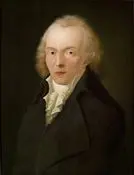
Jean Paul

Jean Paul, pseudonym of Johann Paul Friedrich Richter, was a German writer, known for his satirical and sentimental novels and essays. His works often address themes such as daily life, nature, and the human condition, with a unique and imaginative style.

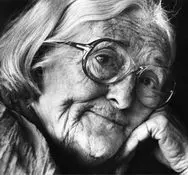
Meridel Le Sueur

Meridel Le Sueur was an American writer whose works addressed the struggles of the working class and women, especially during the Great Depression. Through powerful and often lyrical prose, she gave voice to the marginalized, exploring themes of social injustice, resistance, and the pursuit of dignity in times of adversity. Her writing is marked by a deep sense of empathy and a commitment to social justice, making her an important figure in American progressive literature.

Amélia Cristina de Avelar

Amélia Cristina de Avelar was a Portuguese literary figure, whose poetic legacy is part of an artistic and cultural production sometimes less visible in terms of formal recognition. Her work, although it may not have achieved the projection of other contemporaries, reflects sensibilities and themes that dialogue with the poetry of her time. Her contribution to literature lies in the expression of an authorial voice with its own characteristics, enriching the Portuguese literary landscape with her lyrical and reflective perspective.

Charles Le Quintrec

Charles Le Quintrec was a French poet and novelist, whose work often portrays the landscape and life in Brittany. His writing is marked by deep lyricism and a strong connection to the land and traditions. He is recognized for his ability to capture the soul of his native region in his poems and narratives, offering a sensitive look at nature and the human condition.

Manolo Cuadra

Manolo Cuadra was a distinguished Uruguayan poet and literary critic, recognized for his deep connection with the literary tradition of his country and for his work in cultural dissemination. His poetic work, although not extensive, is characterized by an intimate and reflective lyricism, exploring themes such as nature, the passage of time, and the search for identity. In addition to his role as a poet, Cuadra played a crucial role as a literary critic and editor, contributing significantly to the study and promotion of Uruguayan literature. His legacy lies both in his verses and in his tireless work of rescuing and analyzing the work of other authors, establishing himself as a fundamental figure in Uruguay's literary landscape.