Poem of the day

Grass

Carl Sandburg
Pile the bodies high at Austerlitz and Waterloo.
Shovel them under and let me work
-I am the grass; I cover all.

And pile them high at Gettysburg
And pile them high at Ypres and Verdun.
Shovel them under and let me work.
Two years, ten years, and the passengers ask the conductor:

What place is this?
Where are we now?

I am the grass.
Let me work.
Read full poem

Born on this day

10
Carlos Frydman

Carlos Frydman is a Brazilian poet whose verses explore the complexity of human relationships and the ephemerality of time. His work is marked by a lyrical and introspective language, which invites reflection on existence and the deepest feelings. With a writing that moves between the personal and the universal, Frydman addresses themes such as love, longing, and the search for meaning, using rich metaphors and subtle musicality in his poems. His poetry stands out for its sensitivity and its ability to evoke vivid images in the reader's mind.

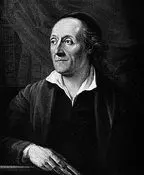
Johann Kaspar Lavater

Johann Kaspar Lavater was a Swiss poet, theologian, and art critic. He is best known for his work on physiognomy, the art of judging a person's character from the appearance of their face. Lavater believed that facial features could reveal personality traits and morality, and his publications on the subject had a significant influence on 18th-century European thought.

Anna de Noailles

Anna de Noailles was a Franco-Romanian poet and novelist, born in 1876. She is considered one of the most important poetic voices in France in the early 20th century. Her work is marked by intense lyricism, sensuality, and a deep reflection on life, death, and nature.

Gesualdo Bufalino

Gesualdo Bufalino was an Italian writer, known for his lyrical prose and deep exploration of memory, identity, and time. His work is marked by rich language and an introspective atmosphere, often set in his native Sicily. Bufalino is considered one of the great names in contemporary Italian literature, appreciated for his originality and the complexity of his themes.

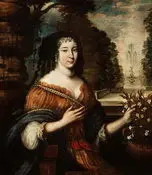
Madeleine de Scudéry

Madeleine de Scudéry was a 17th-century French writer, known for her novels and literary salons. She became a prominent figure in the Parisian literary scene, despite the social restrictions imposed on women of her time. Scudéry was admired for her intelligence and erudition, and her salons attracted many of the most important intellectuals and artists of her day.

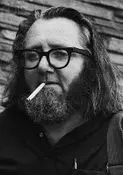
Ted Berrigan

Ted Berrigan was an American poet associated with the Second Generation of the New York School. His work is known for its colloquial, humorous, and often irreverent approach to language and everyday life. He experimented with poetic forms, integrating elements of popular culture and direct conversation into his poems, which gave him a distinctive and influential style in American experimental poetry.

Boaventura de Sousa Santos

Boaventura de Sousa Santos is an internationally renowned Portuguese sociologist and political activist, known for his contributions to critical theory, legal sociology, and post-colonial studies. He is a staunch advocate of the epistemology of the South, arguing for the need to recognize and value forms of knowledge produced outside the global North. His work challenges hegemonic power structures and proposes alternatives for broader and more inclusive social justice.

Guilherme Afonso

Guilherme Afonso is a poet whose work is part of the context of contemporary Portuguese poetry, marked by formal experimentation and the exploration of existential and social themes. His writing is characterized by incisive language, sometimes fragmented, which reflects the complexities of the modern world and the search for meaning in a constantly changing reality. Afonso's poetry tends to address the human condition, its anxieties, its longings, and its relationship with the urban space and society. With a style that can vary from lyrical to more interventionist, the poet seeks to challenge the reader, inviting them to reflect on their own existence and their place in the world.

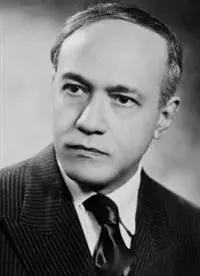
José Marques da Cruz

José Marques da Cruz was a Portuguese poet, considered one of the important names in contemporary poetry. His work is characterized by deep reflection on existence, time, memory, and the human condition, with a refined language and a contained, but intensely powerful, lyricism. He explored the existential and metaphysical dimension of life, engaging with literary tradition and modernity.

Gerhart Hauptmann

Gerhart Hauptmann was a German playwright and novelist, considered one of the most important representatives of naturalism in German theater. Born in 1862, his work explored social themes, poverty, and the struggles of the working class, often in rural settings in Silesia. He was awarded the Nobel Prize in Literature in 1912 for his artistic output, which included dramas such as 'The Weavers' and 'Hannele's Ascension'. Hauptmann passed away in 1946.

Died on this day

6
Jorge de Lima

Jorge de Lima was a Brazilian poet, doctor, and novelist, a central figure of the second generation of Modernism in Brazil. His work is marked by a deep religiosity, by the exploration of language, and by the influence of diverse aesthetic currents, such as Symbolism and Surrealism. He began with regionalist poetry and evolved towards formal experimentation and universal themes, masterfully addressing the sacred, the profane, love, and death.

Margaret Mead

Margaret Mead was an American cultural anthropologist known for her research on tribal societies in Oceania and her advocacy for understanding cultural differences. Her publications had a significant impact on public discourse surrounding sexuality, family, and social change. Her pioneering work, though sometimes controversial, paved the way for future anthropological research and highlighted the importance of culture in shaping human behavior. Mead was a prolific and influential communicator, using the media to share her findings with a wider audience.

João de Deus Ramos

João de Deus Ramos was a Portuguese poet, pedagogue, and politician, known for his influence in the field of education and for his poetic work of a lyrical and social nature. He stood out for creating an innovative reading method, widely adopted in Portuguese schools. In his poetry, he addressed themes such as love, the homeland, and religiosity, with a language that sought simplicity and musicality, characteristics that made him one of the unavoidable names in 19th-century Portuguese literature.

Emília Pomar de Sousa Machado

Emília Pomar de Sousa Machado was a Portuguese writer, whose work encompassed poetry and prose. She stood out for her sensitivity and exploration of themes such as nature, love, and existential questions. Her writing reveals lyrical depth and attention to detail, placing her within the Portuguese literary landscape.