

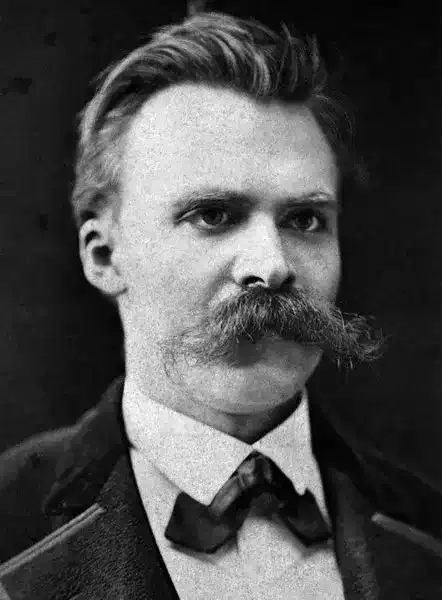
Walt Whitman
Author of the day

Walt Whitman

Walt Whitman was an American poet, essayist, journalist, and a deliberate humanist who became one of the most influential figures in American poetry. He is often called the "father of free verse." His seminal work, "Leaves of Grass," was a radical departure from the conventional poetry of its time, celebrating the individual, democracy, the body, and the spirit in expansive, cataloging lines. Whitman's poetry embraced a wide range of subjects, from the natural world and urban life to the experi…

Poem of the day

Grass

Carl Sandburg
Pile the bodies high at Austerlitz and Waterloo.
Shovel them under and let me work
-I am the grass; I cover all.

And pile them high at Gettysburg
And pile them high at Ypres and Verdun.
Shovel them under and let me work.
Two years, ten years, and the passengers ask the conductor:

What place is this?
Where are we now?

I am the grass.
Let me work.
Read full poem

Born on this day

7
Hans Arp

Hans Arp, also known as Jean Arp, was a Franco-German visual artist and poet, a prominent figure in the 20th-century avant-garde movements. His artistic work, characterized by organic and biomorphic forms, often abstract and playful, extended to poetry, where he explored language experimentally, breaking with semantic and syntactic conventions. A key collaborator of Dadaism and co-founder of Surrealism, Arp sought to liberate art and poetry from rational and bourgeois constraints. His poetry, often composed of word and sound collages, reflects a quest for spontaneity, the unconscious, and pure creative energy, leaving a lasting legacy in Surrealist art and literature.

Fernando Lanhas

Fernando Lanhas is a Portuguese poet whose work is characterized by its formal complexity and the exploration of existential and philosophical themes. With dense language and an innovative use of poetic resources, Lanhas addresses the human condition, temporality, and the search for meaning. His poetry is often associated with intellectualized lyricism and a deep reflection on art and life. He is considered a key author in contemporary Portuguese poetry.

Moreira das Neves

Moreira das Neves was a poet whose work is notable for its introspection and exploration of existential themes. His writing is characterized by careful language and refined sensitivity, capturing the nuances of the human soul and the complexity of the world. Although his poetic production may not have achieved widespread popularity, his work represents a valuable testament to Portuguese poetry, marked by a deep reflection on life, time, and the human condition. His literary contribution, though discreet in terms of notoriety, is appreciated for its authenticity and aesthetic quality.

Frans Eemil Sillanpää

Frans Eemil Sillanpää was a Finnish writer who became the first and only Finn to receive the Nobel Prize in Literature. His work is known for portraying rural Finnish life and the relationship between man and nature, with a lyrical and introspective style.

Jacques Brenner

Jacques Brenner was a French writer, literary critic, and editor. His work encompasses essays, criticisms, and texts on literature, with a particular interest in contemporary poetry and prose. Brenner dedicated himself to analyzing and promoting the work of various writers, contributing to intellectual debate and literary dissemination in France. His role as an editor was also fundamental to launching new talents.

Died on this day

8
Víctor Jara

Víctor Jara was a Chilean singer, songwriter, teacher, and political activist, a central figure in the Nueva Canción Chilena movement. His deeply engaged musical and poetic work addressed themes such as social justice, workers' rights, and Latin American identity, making him a symbol of resistance and hope for many generations. His artistic journey was brutally interrupted by his death, but his legacy transcends borders and continues to inspire struggles for a more just and dignified world. Jara's poetry, expressed both in his song lyrics and his poems, is marked by strength, clarity, and passion for the people's cause.

D. Lopo de Almeida

D. Lopo de Almeida was a medieval Galician-Portuguese troubadour and nobleman. He belongs to the Galician-Portuguese songbooks, where his lyrical production can be found, characterized by the poetic forms of the time, such as the cantiga de amor or cantiga de amigo. His work, although limited in number, is part of the rich tradition of Iberian medieval poetry, reflecting the customs and sentiments of the nobility of his era.

Luís Forjaz Trigueiros

Luís Forjaz Trigueiros was a Portuguese poet and essayist, a figure linked to surrealism in Portugal. His poetic work is marked by formal experimentation, the exploration of the unconscious, and dreamlike language, characteristic of the surrealist movement. Besides poetry, he dedicated himself to essays, analyzing literature and culture with a critical and innovative eye.

Howard Moss

Howard Moss was an American poet and editor, known for his lyrical and insightful poetry, which often touched on themes of everyday life, nature, and the complexities of human relationships. His work is distinguished by its clarity, elegance, and keen observation of detail. As an editor for the renowned magazine <em>The New Yorker</em> for many years, Moss had a significant influence on the American literary scene. His poetry is valued for its musicality, the precision of its language, and a tone that balances the introspective with the accessible.

Antonio Arraíz

Antonio Arraíz was a prominent Venezuelan poet, essayist, and diplomat, recognized for his profound lyricism and his commitment to the social reality of his country. His work is characterized by an intense reflection on the human condition, homeland, and the search for identity. Throughout his career, Arraíz explored various poetic forms, merging tradition with experimentation, and left a significant legacy in Hispano-American literature. He was an influential figure in the intellectual and cultural circles of Venezuela, actively participating in public life through his diplomatic work.

Juan Luis Panero

Juan Luis Panero was a Spanish poet whose work is part of the generation of the 60s, also known as the Generation of the 50 or 'poetry of experience'. His poetry is characterized by deep introspection, the use of colloquial yet careful language, and the exploration of themes such as memory, the passage of time, solitude, and the human condition. Despite not having an extensive output, his lyrical voice possesses great intensity and authenticity.