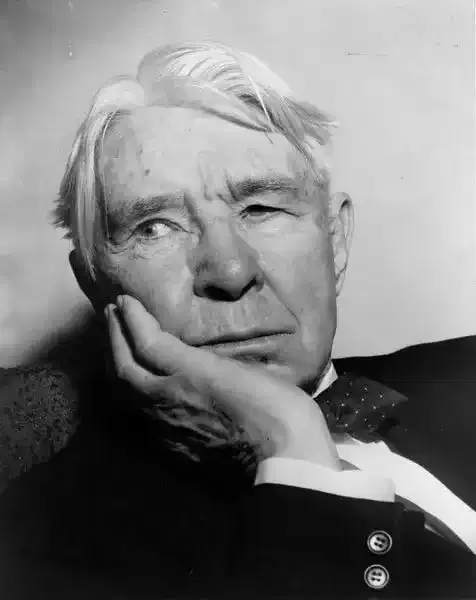
Dylan Thomas
Author of the day

Dylan Thomas

Dylan Thomas was a celebrated Welsh poet whose vivid imagery, lyrical intensity, and unique use of language captivated readers worldwide. His work, often characterized by its passionate exploration of life, death, love, and nature, combined a deep connection to his Welsh heritage with a modernist sensibility. Despite a tragically short and often tumultuous life, his poems possess an enduring power and musicality that have secured his place as one of the 20th century's most important poets.

Poem of the day

Do Not Go Gentle Into That Good Night

Dylan Thomas
Do not go gentle into that good night, 
Old age should burn and rave at close of day; 
Rage, rage against the dying of the light. 

Though wise men at their end know dark is right, 
Because their words had forked no lightning they 
Do not go gentle into that good night. 

Good men, the last wave by, crying how bright 
Their frail deeds might have danced in a green bay, 
Rage, rage against the dying of the light. 

Wild men who caught and sang the sun in flight, 
And learn, too late, they grieved it on its way, 
Do not go gentle into that good night. 

Grave men, near death, who see with blinding sight 
Blind eyes could blaze like meteors and be gay, 
Rage, rage against the dying of the light. 

And you, my father, there on that sad height, 
Curse, bless, me now with your fierce tears, I pray. 
Do not go gentle into that good night. 
Rage, rage against the dying of the light.
Read full poem

Born on this day

15
Guerra Junqueiro

Abílio Manuel Guerra Junqueiro was a Portuguese poet, a prominent figure of the Parnassian and Symbolist movements. Known for his satirical vein and social criticism, his work addresses themes such as religion, politics, and the customs of the time, often with an ironic and biting tone. Despite his critical bent, he also explored amorous lyricism and religiosity with sensitivity.

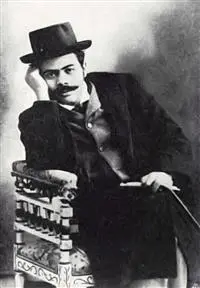
Manuel Laranjeira

Manuel Laranjeira was a Portuguese physician and writer, a prominent figure of the Portuguese Renaissance. He stood out as one of the first poets to use Portuguese in works of a scientific and philosophical nature, addressing themes such as the human soul, morality, and nature. His work is a testament to the erudition and critical spirit of his time, contributing to the affirmation of the Portuguese language as a vehicle for complex thought.

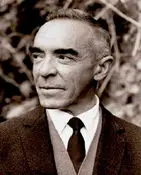
José Régio

José Régio was an influential Portuguese writer, professor, and essayist, a central figure in the Neorealist movement in Portugal. His work, which spans poetry, short stories, essays, and literary criticism, is notable for the psychological depth of its characters, social analysis, and exploration of themes such as morality, religion, the human condition, and social hypocrisy. With a rigorous style and a critical view of society, José Régio left a significant legacy in 20th-century Portuguese literature.

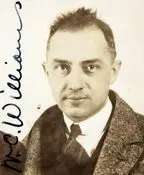
William Carlos Williams

William Carlos Williams was an American poet, physician, and writer closely associated with the Modernist movement. His poetry is characterized by its focus on everyday American life, colloquial speech, and vivid imagery, often drawing inspiration from the ordinary objects and experiences of his surroundings. Williams championed the idea of a distinctly American poetry, free from European influences, and his work significantly impacted the development of Imagism and later poetic movements.

Libertad! Igualdad! Fraternidad!
Aléxandros Papadópoulos Evremídis

Aléxandros Papadópoulos Evremídis was a Greek poet whose work was distinguished by its philosophical depth and symbolic charge, exploring themes such as mortality, the search for truth, and the complex relationship between man and the cosmos. His poetry, often marked by erudite language and mythological and classical references, reflects a deep meditation on the human condition and its place in the universe. Evremídis sought, through his writing, to achieve a universal dimension, using language to unveil the essential truths of existence. His work, although sometimes hermetic, has been the subject of study and admiration for its rigorous formal construction and the intensity of its reflections.

Arruda Furtado

Arruda Furtado is a poet whose work is part of the context of modern Portuguese poetry. He explored themes such as the ephemerality of life, melancholy, and the search for meaning, using careful and imagistic language. His poetry is marked by a unique sensibility and a deep reflection on the human condition, dialoguing with the literary tradition while embracing the innovations of his time. His contribution to Portuguese-language poetry is recognized for its originality and lyrical depth.

Leila Cristina de Carvalho

Leila Cristina de Carvalho is an emerging figure in contemporary poetry, whose work has been captivating readers with its sensitivity and depth. Her work explores the complexities of the human experience, addressing themes such as love, loss, and the search for identity in a constantly changing world. Through careful language and evocative imagery, the author builds a poetic universe that resonates with the experiences of many, inviting reflection on the human condition and its fragilities.

Ovídio Martins

Ovídio Martins was an Azorean poet, playwright, and short story writer, whose work is deeply rooted in the identity and landscapes of the islands. His writing explores themes such as saudade, the human condition, religiosity, and social relations, with a language that reflects the orality and sensibility of the Azorean people. A central figure in Azorean culture, Martins dedicated himself to the preservation and valorization of local culture, leaving a literary legacy that continues to echo the soul and traditions of the archipelago.

Garcia Rosa

Garcia Rosa is a contemporary Brazilian poet, whose work stands out for its exploration of profound themes and formal experimentation. His poetry is marked by a dense, imagistic, and introspective language, which reflects on the human condition, the passage of time, and the search for meaning. With a singular poetic voice, Rosa has built a literary career that solidifies him as a relevant figure in contemporary Portuguese-language poetry.

Mário da Silveira

Mário da Silveira was a Portuguese poet whose work is characterized by lyrical depth and the exploration of themes such as love, death, and transcendence. His writing, marked by rich language and keen sensibility, contributed significantly to Portuguese-language poetry, leaving a legacy of verses that continue to resonate with readers.

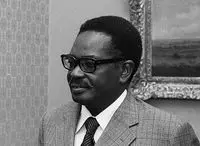
Agostinho Neto

António Agostinho Neto was an Angolan poet, physician, and politician, considered one of the central figures in the struggle for Angola's independence and one of the most important African poets writing in Portuguese. His poetic work is marked by strong lyricism, denunciation of social injustices, and the exaltation of the Angolan land and people, becoming a symbol of national identity and aspiration.

Kaoberdiano Dambará

Kaoberdiano Dambará was a Mozambican poet, a prominent figure in Lusophone African literature. His poetic work is distinguished by its exploration of themes such as identity, the human condition, and social critique, often imbued with strong musicality and expressive use of language. Dambará contributed significantly to Mozambique's literary landscape, addressing the complexity of the African experience in post-colonialism.

Eugénia de Vasconcelos

Eugénia de Vasconcelos is a notable figure in Portuguese poetry, known for her lyrical sensitivity and exploration of intimate and social themes. Her work, marked by careful language and a strong sense of observation, addresses the human condition, interpersonal relationships, and reflection on the world around her. The poet reveals a unique ability to transform the everyday into poetry, giving it a universal and touching dimension.

Carlos Rangel

Carlos Rangel was a multifaceted intellectual, known for his work as a journalist, critic, columnist, and a prominent figure in the Brazilian cultural scene. He stood out for his insight in analyzing society and culture, addressing various topics with a sharp and often irreverent gaze. His work reflects a deep knowledge of Brazil and a critical view on national identity, modernity, and foreign influence.

José María Hinojosa

Spanish poet, a prominent figure of the Generation of '27, although his work is inscribed within the avant-garde and surrealism. His poetry, marked by a deep sensuality and a bold exploration of the erotic and the Dionysian, is characterized by its impactful language and provocative imagery. Despite a brief literary production, his influence was felt in the avant-garde currents of the time.

Died on this day

7
Carlos Saraiva Pinto

Carlos Saraiva Pinto is a poet whose work is distinguished by his ability to capture the essence of everyday life and transform it into lyricism. His poetic compositions explore the nuances of human relationships and the beauty found in the simple moments of life. With accessible yet profound language, Saraiva Pinto manages to touch the reader through his attentive and sensitive observation of the world. His poetry is an invitation to contemplation and recognition of the poetry that resides in every instant.

André de Figueiredo Mascarenhas

André de Figueiredo Mascarenhas was a Portuguese poet whose literary contributions fall within a context of poetic transition and renewal. His work is marked by a profound reflection on the human condition, exploring universal themes with carefully crafted language. His poetry is distinguished by its musicality and its ability to evoke vivid imagery, consolidating his place in the literary landscape of his time.

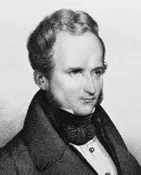
Alfred de Vigny

Alfred de Vigny was a French poet, playwright, and novelist, one of the prominent figures of French Romanticism. His work is marked by a melancholic tone, by reflection on the human destiny, solitude, and the condition of the artist.

The existence of the soldier, next to capital puni
Filomena Furtado de Serpa

Filomena Furtado de Serpa was a Portuguese writer whose work stood out for her engaging prose and exploration of social and psychological themes. Her narratives, often set in rural contexts or small communities, sensitively portray the complexities of human relationships, inner conflicts, and the aspirations of her characters. With meticulous and detail-oriented writing, Furtado de Serpa built a literary career marked by depth and reflection on the human condition.

Nelo Risi

Nelo Risi was an Italian poet and filmmaker, known for his work that bridges lyrical poetry and social commentary, frequently exploring themes such as memory, war, urban experience, and human relationships. His poetry is characterized by direct and concise language, yet is laden with emotion and reflection. As a filmmaker, Risi directed several documentaries and fiction films, addressing social and political issues with an attentive and critical eye. His dual role as a poet and audiovisual director makes him a unique figure in Italian culture, capable of expressing his visions through different artistic languages, always with a strong commitment to reality and the human condition.

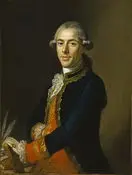
Tomás de Iriarte

Tomás de Iriarte was a distinguished Spanish fabulist and poet of the 18th century, primarily known for his collection of moral fables. His work, imbued with the spirit of the Enlightenment, uses animal allegory to convey ethical teachings and social criticism in an ingenious and accessible way. Through his verses, Iriarte explored human nature and criticized vices such as hypocrisy and ambition, establishing himself as a key figure of Spanish Neoclassical literature.