John Milton
Author of the day

John Milton

John Milton was an English poet, polemicist, and civil servant for the Commonwealth of England under Oliver Cromwell. He is best known for his epic poem "Paradise Lost," one of the greatest works of English literature. Milton's work is characterized by its grand scope, theological depth, and masterful use of blank verse. His life and work were deeply intertwined with the political and religious turmoil of 17th-century England. Despite facing significant personal challenges, including blindness,…

Poem of the day

Grass

Carl Sandburg
Pile the bodies high at Austerlitz and Waterloo.
Shovel them under and let me work
-I am the grass; I cover all.

And pile them high at Gettysburg
And pile them high at Ypres and Verdun.
Shovel them under and let me work.
Two years, ten years, and the passengers ask the conductor:

What place is this?
Where are we now?

I am the grass.
Let me work.
Read full poem

Born on this day

8
Rosa Leonor Pedro

Rosa Leonor Pedro is a poetic figure distinguished by her refined sensibility and the depth with which she addresses the complexities of the human condition. Her lyrical work, marked by evocative language and strong emotional charge, explores themes such as love, loss, memory, and the passage of time. Pedro's poetry invites the reader to an introspective immersion, where the beauty of words intertwines with the melancholy of existence. Through carefully crafted verses, the author establishes an intimate dialogue with her readers, inviting them to reflect on their own feelings and experiences.

Odete Silva

Odete Silva was a discreet but influential figure in Portuguese poetry, whose work is distinguished by introspection and a deep exploration of the human condition. Her writing, marked by a refined sensibility, addresses universal themes such as time, memory, and the ephemerality of life, with a language that combines clarity and subtle complexity. Her literary contribution, although less publicized during her lifetime, has been rediscovered and valued for its originality and the strength of its poetic imagery, consolidating her as a singular voice in contemporary poetry.

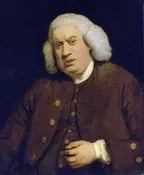
Samuel Johnson

Samuel Johnson was a prominent 18th-century English writer, lexicographer, essayist, poet, and literary critic. He is widely regarded as one of the most important literary figures in British history, famous for his 'A Dictionary of the English Language'.

It is advantageous to an author that his book shou
Manuel Sousa

Manuel Sousa is a poet recognized for his multifaceted work, which transitions between lyricism and formal experimentation. His poetry is characterized by precise and evocative language, exploring themes such as memory, identity, and man's relationship with his time. Sousa has contributed significantly to the contemporary literary landscape, with a unique poetic voice and a style that challenges conventions.

Nuno Álvares Pereira Pato Moniz

Nuno Álvares Pereira Pato Moniz was a Portuguese poet whose work is part of the symbolism movement, exploring the musicality of the word and the suggestion of states of mind. His poetic compositions are marked by an ethereal atmosphere and a search for transcendence. His literary production, although concise in volume, left a mark for the delicacy and depth of his aesthetic and spiritual explorations, contributing to the renewal of Portuguese poetry in his time.

Maria Judite de Carvalho

Maria Judite de Carvalho was a Portuguese writer, journalist, and translator, a prominent figure in 20th-century literature. Her literary work, which spans novels, short stories, and chronicles, is recognized for its psychological depth, exploration of the human condition, and subtle social critique, often focused on the complexities of relationships and female identity. With a style marked by conciseness and insight in analyzing emotions, Maria Judite de Carvalho established herself as a singular voice in Portuguese literature, addressing universal themes such as love, loneliness, death, and the search for meaning, leaving a significant legacy in contemporary prose.

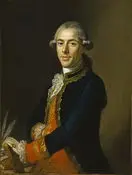
Tomás de Iriarte

Tomás de Iriarte was a distinguished Spanish fabulist and poet of the 18th century, primarily known for his collection of moral fables. His work, imbued with the spirit of the Enlightenment, uses animal allegory to convey ethical teachings and social criticism in an ingenious and accessible way. Through his verses, Iriarte explored human nature and criticized vices such as hypocrisy and ambition, establishing himself as a key figure of Spanish Neoclassical literature.

Jorge Carrera Andrade

Jorge Carrera Andrade was an Ecuadorian poet recognized for his lyrical work of profound universal resonance and his commitment to the reality of his time. His poetry is characterized by a cosmic and telluric vision, where nature, the American landscape, and the great forces of the universe intertwine with reflection on the human condition, love, death, and history. He developed a vigorous yet intimate style, with a language that combines imagistic precision with deep emotion, establishing him as one of the most important poetic voices in 20th-century Hispanic America.

Died on this day

4
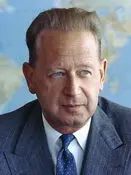
Dag Hammarskjöld

Dag Hammarskjöld was a Swedish diplomat and economist who served as the second Secretary-General of the United Nations from 1953 to 1961. He is widely regarded as one of the most influential diplomats of the 20th century and played a key role in resolving several international crises during the Cold War.

Benjamin Péret

Benjamin Péret was a French surrealist poet, known for his work that challenged conventions and explored the irrational, the dreamlike, and the erotic with transgressive freedom. His poetry is marked by an exuberant imagination, black humor, and fierce criticism of social and religious institutions. Péret was a central figure in the surrealist movement, actively participating in its demonstrations and publications, leaving a legacy of verses that celebrate revolt, love, and the beauty of the absurd.

León Felipe

Spanish poet, León Felipe is an unmistakable voice in 20th-century poetry, marked by a deep religiosity and an existential commitment. His work is characterized by the apparent simplicity of his language, the depth of his reflections on life, death, and transcendence, and a constant search for authenticity. Through a style that is both colloquial and elevated, he explored universal themes with a compassionate and hopeful outlook.