Poem of the day

Do Not Go Gentle Into That Good Night

Dylan Thomas
Do not go gentle into that good night, 
Old age should burn and rave at close of day; 
Rage, rage against the dying of the light. 

Though wise men at their end know dark is right, 
Because their words had forked no lightning they 
Do not go gentle into that good night. 

Good men, the last wave by, crying how bright 
Their frail deeds might have danced in a green bay, 
Rage, rage against the dying of the light. 

Wild men who caught and sang the sun in flight, 
And learn, too late, they grieved it on its way, 
Do not go gentle into that good night. 

Grave men, near death, who see with blinding sight 
Blind eyes could blaze like meteors and be gay, 
Rage, rage against the dying of the light. 

And you, my father, there on that sad height, 
Curse, bless, me now with your fierce tears, I pray. 
Do not go gentle into that good night. 
Rage, rage against the dying of the light.
Read full poem

Born on this day

11
Lúcia Afonso

Lúcia Afonso is a poet whose work is characterized by its strong lyrical charge and exploration of intimate and existential themes. Her poetry is marked by careful language and a sensibility that deepens the human experience, often addressing love, longing, and the passage of time. With a poetic voice that moves between introspection and attentive observation of the world, Lúcia Afonso builds a personal and moving literary universe. Her writing invites reflection on the complexities of the soul and on human relationships, establishing a deep connection with the reader through the authenticity of her verses.

Carlos Nóbrega

Carlos Nóbrega is a Brazilian comedian, presenter, and scriptwriter, widely recognized for his long career in television. Creator and anchor of highly successful comedy shows, he became known for his sharp observation of daily life and for creating iconic characters that satirize Brazilian society. His work is marked by intelligent and critical humor, which addresses social and behavioral themes with originality and insight.

Estrigas

Estrigas, pseudonym of Manuel da Fonseca Martins Júnior, was a Portuguese poet whose work is part of the context of modernism and surrealism in Portugal. His poetry is characterized by irreverent language, exploration of the unconscious, and social criticism. Estrigas stood out for his formal and thematic daring, using humor and irony as tools of expression. His figure is associated with avant-garde poetry, which challenged the literary conventions of his time, leaving a legacy marked by experimentation and creative freedom.

Fábio Peres

Fábio Peres is a poet whose work is distinguished by his ability to weave verses that explore the human condition with accessible yet profound language. His poems frequently address the ephemerality of time, the nuances of human relationships, and the search for meaning in a constantly changing world. With a style that combines lyricism and keen observation of daily life, Peres invites the reader to reflect on life's small and large questions, presenting a poetic voice that resonates with authenticity.

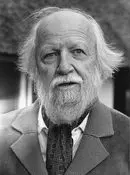
William Golding

Sir William Golding (1911-1993) was an English novelist, winner of the Nobel Prize in Literature in 1983. His most famous work is "Lord of the Flies" (1954), a dystopian novel that explores the nature of evil and the fragility of civilization. Golding wrote other novels that frequently deal with themes of morality, human nature, and the confrontation between order and chaos, often with historical or mythological settings.

Cândido de Figueiredo

Cândido de Figueiredo was a Portuguese intellectual, poet, and lexicographer, known for his vast erudition and his work compiling the "Novo Dicionário Popular da Língua Portuguesa" (New Popular Dictionary of the Portuguese Language). His poetic work, although less prominent than his lexicographical work, reflects the spirit of his time and his deep connection to the Portuguese language.

Paulo da Costa Domingos

Paulo da Costa Domingos is a contemporary poet whose works explore the complexities of human existence with lyrical and introspective language. His poetry often addresses themes such as memory, the passage of time, interpersonal relationships, and the search for meaning in a constantly changing world. His writing is characterized by sensitivity and the ability to evoke deep emotions.

Hernán del Solar

Hernán del Solar was a notable Chilean writer, known for his contribution to children's and youth literature. His work frequently explored themes of folklore and Chilean culture, presenting captivating stories and memorable characters. He dedicated himself to creating narratives that educated and entertained, leaving an important legacy in children's literature in Chile and other Spanish-speaking countries. His style was characterized by clarity and imagination, seeking to awaken young readers' interest in reading and discovering new stories. Del Solar is remembered as an author who knew how to translate the essence of Chilean culture into accessible and charming tales.

Ignazio Buttitta

Ignazio Buttitta was an Italian poet, considered one of the most important voices of Sicilian dialect poetry. His work stands out for its strong connection with popular traditions, peasant culture, and the social struggles of Sicily. With an authentic and expressive language, Buttitta gave voice to the aspirations, pains, and dignity of his people. His poetry is a vibrant testimony of Sicilian identity and a call for justice and solidarity, consolidating him as a poet of profound social and cultural significance.

Ange Mlinko

Ange Mlinko is an American poet and literary critic. Her poetic work is known for its liveliness, intelligence, and for addressing themes such as contemporary culture, history, and personal experience with an original perspective. Mlinko also writes influential literary criticism, analyzing poetry and fiction insightfully.

Died on this day

10
J. Veiga

J. Veiga is a poet whose work is part of a context of exploration of language and the human condition. His poetry is characterized by deep introspection, addressing themes such as memory, time, and the ephemerality of existence. The exploration of innovative poetic forms and the musicality of verse mark his writing, inviting reflection on subjectivity and the complexity of being.

Renato Castelo Branco

Renato Castelo Branco was a Brazilian poet whose works explore the depths of the human soul and the complexities of everyday life. His poetry is marked by accessible language, yet imbued with emotion and meaning, addressing themes such as love, longing, the passage of time, and the search for meaning. Throughout his career, Castelo Branco established himself as a singular poetic voice in the Brazilian literary landscape, with a body of work that resonates with its authenticity and sensitivity.

Jean-Antoine de Baïf

Jean-Antoine de Baïf was a French poet and scholar, a founding member of the 'Pléiade', a group of poets who sought to revitalize French poetry. He is known for his metric innovations and for attempting to reform the French language in poetry, introducing verses with regular meters inspired by classical antiquity.

Marcel Marien

Marcel Marien (1920-2014) was a Belgian poet, essayist, and photographer, a prominent figure in surrealism. Born in Antwerp, Marien dedicated his life to exploring the boundaries of art and imagination. He passed away in Uccle.

Helmut Heissenbüttel

Helmut Heissenbüttel was a German writer, a pioneer of concrete and experimental poetry in Germany. His work explored the potentialities of language and poetic form, challenging traditional literary conventions. Heissenbüttel is recognized for his avant-garde approach, which significantly influenced contemporary German-language poetry, opening new paths for linguistic and aesthetic experimentation.

Robert Horan

Robert Horan is an American writer and poet whose works frequently explore the complexities of the human experience and the nuances of interpersonal relationships. His poetry is known for its introspection and its ability to capture everyday moments with emotional depth. Horan has built a literary career focused on exploring existential themes and the keen observation of the world around him. His style is characterized by clear and evocative language, which resonates with readers through its honesty and sensitivity.

Marilina Rébora

Marilina Rébora is an Argentine writer and poet whose work is characterized by a profound exploration of identity, memory, and nature. Her poetry, often marked by introspective lyricism, addresses the human experience with particular sensitivity and careful language. She has also cultivated narrative and essay writing, establishing herself as a relevant voice in the contemporary literature of her country, with a body of work that dialogues between the personal and the universal.

Ventura Gassol

Ventura Gassol was a Spanish poet, doctor, and politician, a relevant figure in Catalan literature. His poetic work, deeply rooted in Catalan culture and tradition, is characterized by its lyricism, its connection with nature, and its commitment to the ideals of his land. He was an intellectual committed to his time and a defender of the Catalan language and culture.

José Antonio Labordeta

José Antonio Labordeta was a Spanish poet, singer-songwriter, politician, and professor, an emblematic figure of Aragonese culture and singer-songwriter tradition in Spain. His poetic and musical work is characterized by deep social and political commitment, a strong connection to his native land, Aragon, and an authentic, combative voice. Labordeta is remembered for his defense of freedoms, his criticism of power, and his ability to express the concerns of his people.